Nous utilisons des cookies essentiels au fonctionnement du site. Nous aimerions aussi déposer des cookies de mesure d’audience et des cookies publicitaires, uniquement avec votre accord. Vous pouvez choisir séparément pour chacun. Lire notre politique relative aux cookies

Loading
Recettes South Africa
Parcourez les archives par pays, par plat et par temps de cuisson.
Firm white fish, floured and fried, then layered under a sweet-sour curried onion sauce and left in the fridge for at least a day before it is eaten. It is Cape Malay, it is South African, and in Cape Town it is inseparable from Easter.
The Cape Malay community descends from people brought to the Cape from Southeast Asia, largely from the Indonesian archipelago, as slaves and political exiles by the Dutch from the seventeenth century onwards. Their cooking is the origin of much of what is now considered characteristically Cape cuisine, and pickled fish belongs squarely to it, the turmeric, the coriander seed, the bay leaves and the sweet-sour balance are all markers of that lineage.
The Easter association is real but the explanations for it vary, and the dish is not exclusively Christian: it is eaten in Muslim Cape Malay households too, which is one of the reasons the "made for Good Friday" account is contested. Its practical origin is simpler. Vinegar and sugar preserve cooked fish for weeks without refrigeration, which mattered a great deal in the early colonial Cape.
It genuinely improves with time. A day in the fridge is the minimum; two or three is better, and it holds for several weeks. The source's nutritional claims have not been carried across.
Beetroot pancakes are ordinary pancakes with cooked beetroot blended into the batter, which turns them deep pink and adds an earthy sweetness.
The beetroot does two things. It colours the batter dramatically, which is most of the appeal and the main reason the recipe exists for children. And it contributes moisture and a mild natural sweetness, so the pancakes need less sugar than a plain batter would.
They are made in the ordinary way, blended, rested briefly, cooked on a moderately hot pan, and the technique holds no surprises. Cooking them slightly slower than plain pancakes helps, because the extra moisture from the beetroot means the middle needs a little longer while the outside is already colouring.
Served with fresh fruit or berries on top, which is the usual suggestion, they make a breakfast that looks considerably more elaborate than it is.
**Filed as Worldwide**, the source describes it as a Continental recipe, and it makes no African claim. The page is kept and reclassified rather than removed.
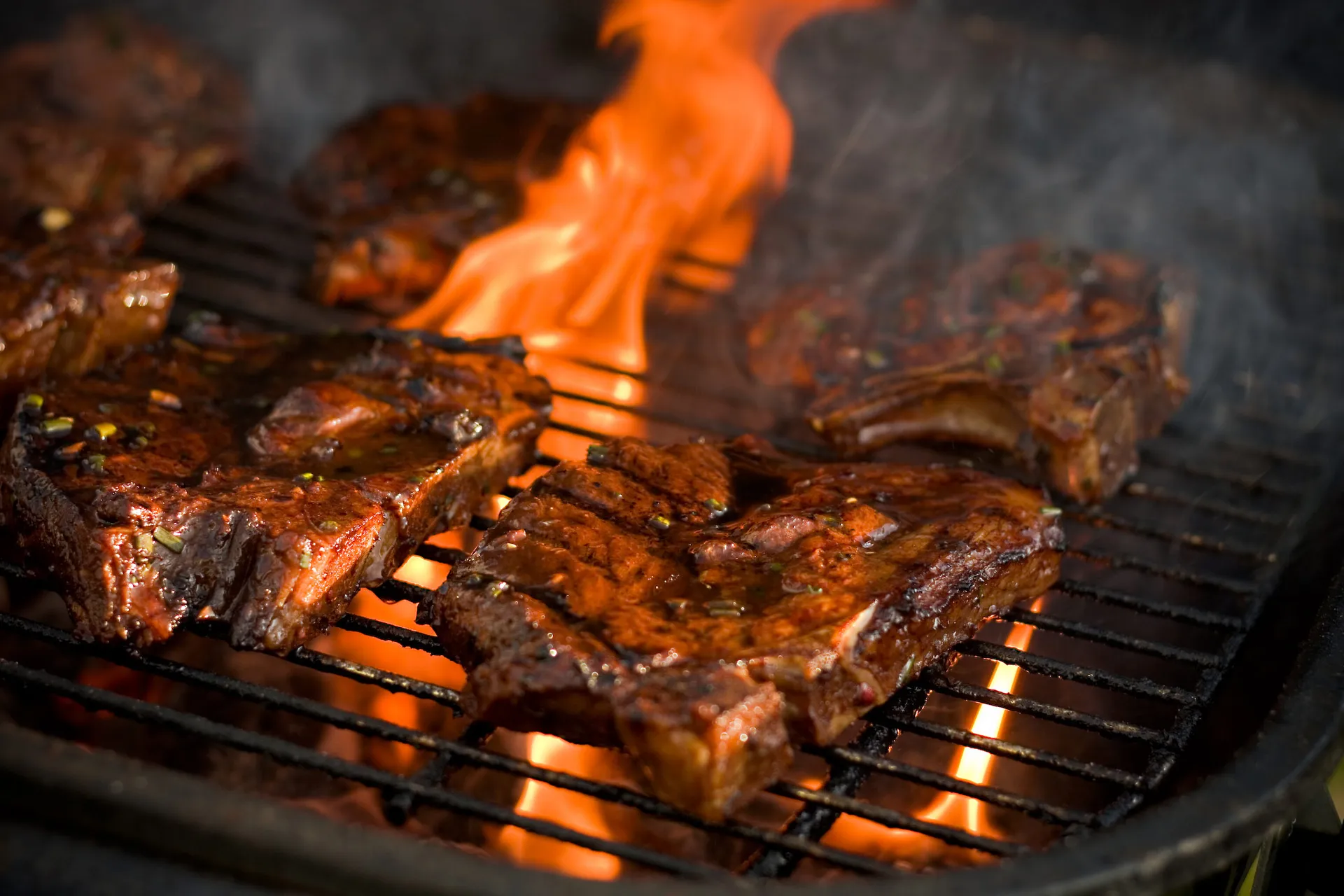
A braai is South African cooking over an open wood or charcoal fire, and it is as much a social occasion as a cooking method. The word comes from braaivleis, Afrikaans for grilled meat, from the Dutch braden, to roast.
The distinction South Africans draw between a braai and a barbecue is about the fire, and it is taken seriously. A braai is cooked over wood or charcoal, with wood preferred because of what it does to the flavour; gas is generally not accepted as a braai at all. The fire is also the point of the gathering rather than a means to an end, people build it, wait for it, cook on it and then stay around it long after the food is finished. And unlike a Northern Hemisphere barbecue, it is not seasonal. South Africans braai in any weather, and 24 September is a national braai day.
What goes on the fire is broad: boerewors, lamb chops, steak, chicken, snoek and other fish, sweetcorn, and braaibroodjies, the grilled cheese, tomato and onion sandwiches that go on once the coals have died down. Potjiekos, cooked in a cast-iron pot over the same fire, is a close relative.
The source for this page contains no recipe card at all. The method below is reconstructed from its description, and that is flagged.
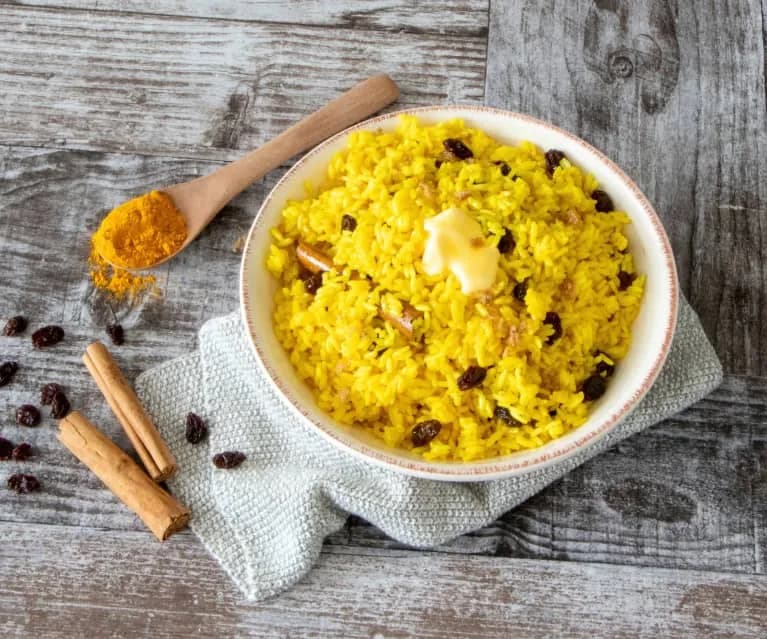
Rice cooked with turmeric, cinnamon, raisins and sugar into a sweet golden side dish. It is South African, from the Cape Malay tradition, and it is served alongside savoury curries and meat.
Sweet rice as a savoury accompaniment is the thing to understand. Cape Malay yellow rice contains sugar, raisins and cinnamon, and it goes with curry, bobotie and roast meat, the sweetness is deliberately set against savoury and spiced food rather than served as a dessert. That contrast runs right through Cape Malay cooking and it is the same instinct behind bobotie's fruit chutney and the apricot jam in pickled fish.
The community it comes from was formed by people brought to the Cape from Southeast Asia as slaves and political exiles by the Dutch from the seventeenth century onwards, and the dish is one of many that carries that history directly. Related yellow rices exist across the world, nasi kuning in Indonesia, kaha buth in Sri Lanka, and the family resemblance is not coincidental.
Turmeric is what colours it. Saffron is used in more expensive versions and annatto elsewhere.
**A significant problem with this page.** Its ingredient list merges two separate recipes, a yellow rice and a marinated roast chicken, into one list, and its method covers both. Only the rice belongs here.