Nous utilisons des cookies essentiels au fonctionnement du site. Nous aimerions aussi déposer des cookies de mesure d’audience et des cookies publicitaires, uniquement avec votre accord. Vous pouvez choisir séparément pour chacun. Lire notre politique relative aux cookies

Loading
Recettes South Africa
De Butternut Soup à Cape Malay Pickled Fish, de Beetroot Pancakes à Cape Malay Yellow Rice. Toute la cuisine South Africa, telle qu'on la prépare chez soi.
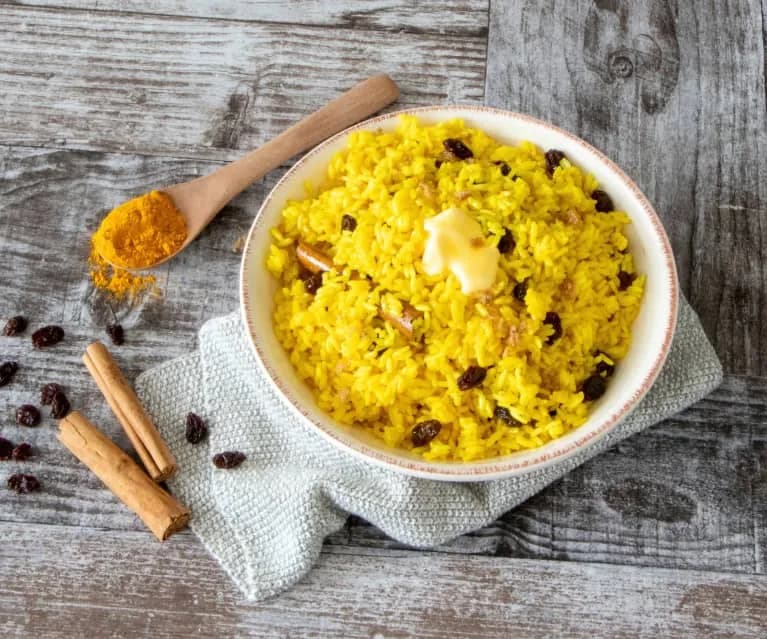
Rice cooked with turmeric, cinnamon, raisins and sugar into a sweet golden side dish. It is South African, from the Cape Malay tradition, and it is served alongside savoury curries and meat.
Sweet rice as a savoury accompaniment is the thing to understand. Cape Malay yellow rice contains sugar, raisins and cinnamon, and it goes with curry, bobotie and roast meat, the sweetness is deliberately set against savoury and spiced food rather than served as a dessert. That contrast runs right through Cape Malay cooking and it is the same instinct behind bobotie's fruit chutney and the apricot jam in pickled fish.
The community it comes from was formed by people brought to the Cape from Southeast Asia as slaves and political exiles by the Dutch from the seventeenth century onwards, and the dish is one of many that carries that history directly. Related yellow rices exist across the world, nasi kuning in Indonesia, kaha buth in Sri Lanka, and the family resemblance is not coincidental.
Turmeric is what colours it. Saffron is used in more expensive versions and annatto elsewhere.
**A significant problem with this page.** Its ingredient list merges two separate recipes, a yellow rice and a marinated roast chicken, into one list, and its method covers both. Only the rice belongs here.
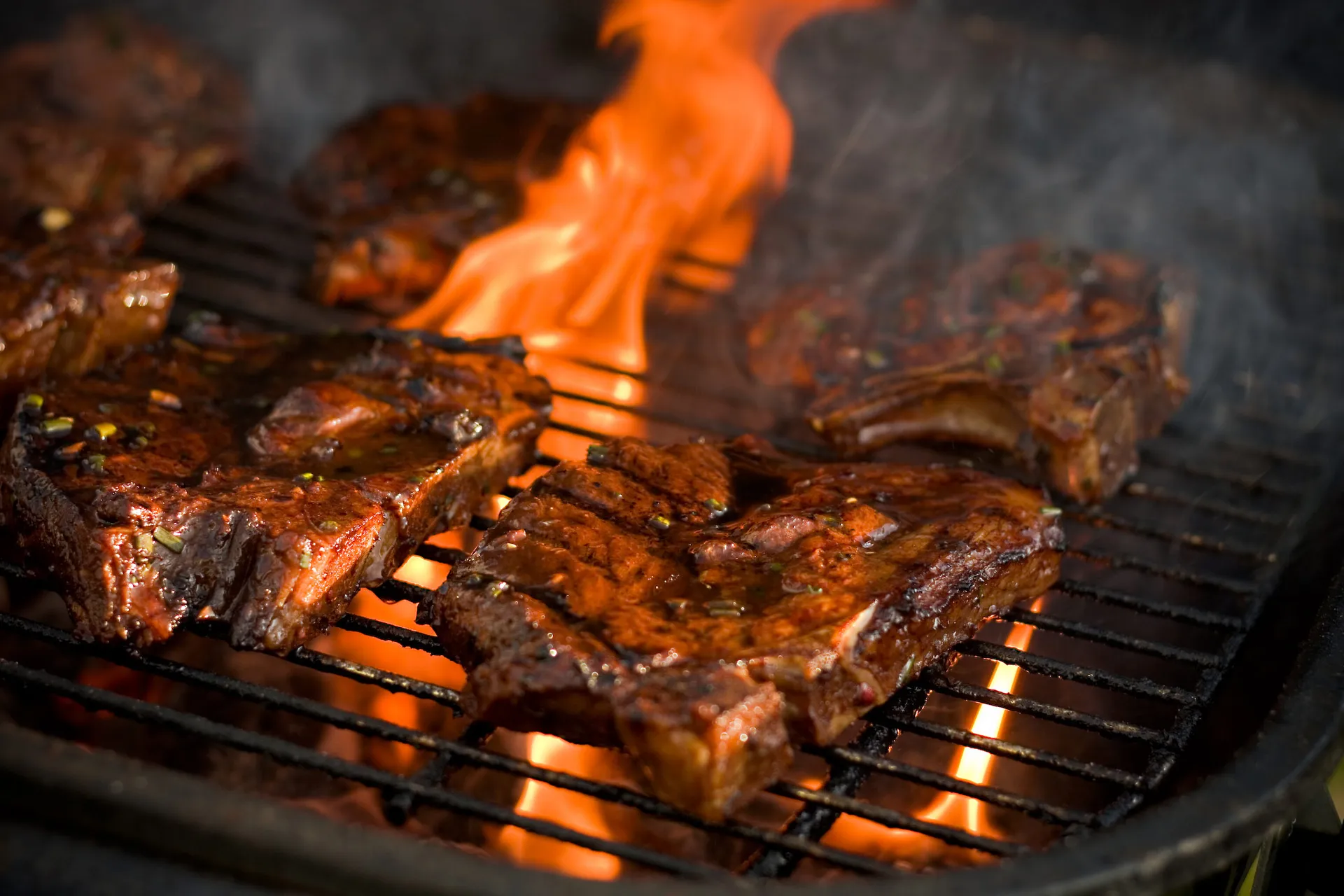
A braai is South African cooking over an open wood or charcoal fire, and it is as much a social occasion as a cooking method. The word comes from braaivleis, Afrikaans for grilled meat, from the Dutch braden, to roast.
The distinction South Africans draw between a braai and a barbecue is about the fire, and it is taken seriously. A braai is cooked over wood or charcoal, with wood preferred because of what it does to the flavour; gas is generally not accepted as a braai at all. The fire is also the point of the gathering rather than a means to an end, people build it, wait for it, cook on it and then stay around it long after the food is finished. And unlike a Northern Hemisphere barbecue, it is not seasonal. South Africans braai in any weather, and 24 September is a national braai day.
What goes on the fire is broad: boerewors, lamb chops, steak, chicken, snoek and other fish, sweetcorn, and braaibroodjies, the grilled cheese, tomato and onion sandwiches that go on once the coals have died down. Potjiekos, cooked in a cast-iron pot over the same fire, is a close relative.
The source for this page contains no recipe card at all. The method below is reconstructed from its description, and that is flagged.
Pork shoulder braised in milk and orange juice for two hours, then roasted and grilled until the edges crisp. Carnitas are Mexican, and the page sits in Worldwide Recipes with its URL unchanged.
The name means little meats, and the technique is what defines it. Traditionally the pork is confited, cooked slowly submerged in lard until it is soft enough to shred, then briefly crisped at high heat. That two-stage structure is the whole point: soft and unctuous inside, browned and crunchy at the edges. Braising in milk instead of lard is a variation, and a sensible one for a domestic kitchen, since it produces the same tenderness with far less fat.
Milk braising is worth understanding. The acid in the citrus curdles the milk, which looks alarming and is correct, the curds break down over a long cook and the whey tenderises the meat, giving a texture and a faint sweetness that water or stock cannot. It is an old Italian technique as well as a Mexican one.
The source describes barbacoa as originating in the Caribbean. The word is Taíno and reached Spanish that way, but barbacoa as eaten in Mexico is Mexican. Recorded as the muddle it is.
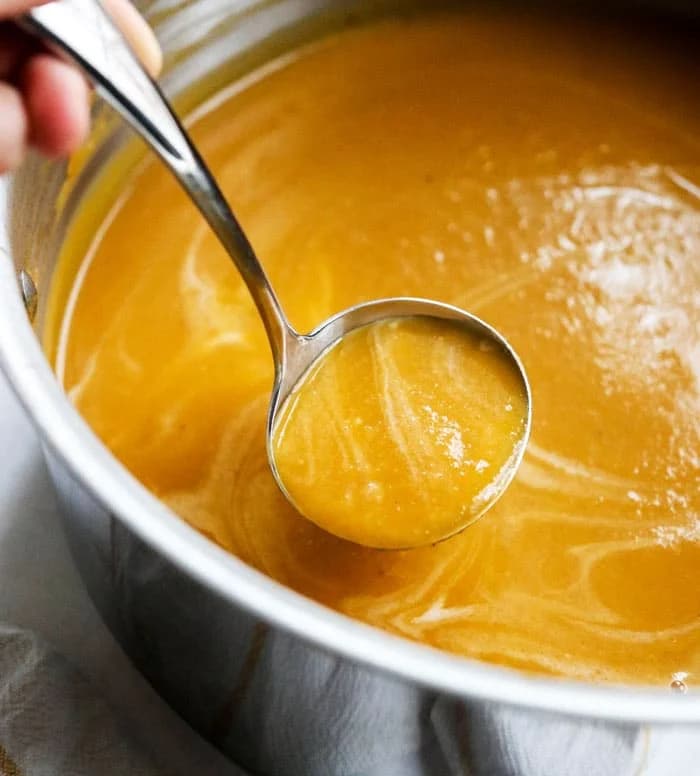
Butternut soup is butternut squash cooked down and blended smooth, thick, sweet, deep orange, and eaten across a wide stretch of Africa as well as far beyond it.
Its African presence is genuine and spread out. It appears in North African cooking and in southern Africa, particularly in Mozambique and Namibia, and it is a fixture of South African winter cooking. That distribution reflects the crop rather than a single tradition: butternut grows well across a range of African climates and is cheap and widely available.
What varies is the seasoning, and it splits roughly along regional lines. Northern versions lean towards cumin, coriander and warm spice. Southern African versions more often use curry powder, ginger and a little sugar, and finish with cream. Chilli appears in both.
The squash does most of the work. Roasting rather than boiling it concentrates the sugars and deepens the flavour considerably, at the cost of extra time.
**Country left blank deliberately**, the dish is documented across several African cuisines and attributing it to one would be a guess.