



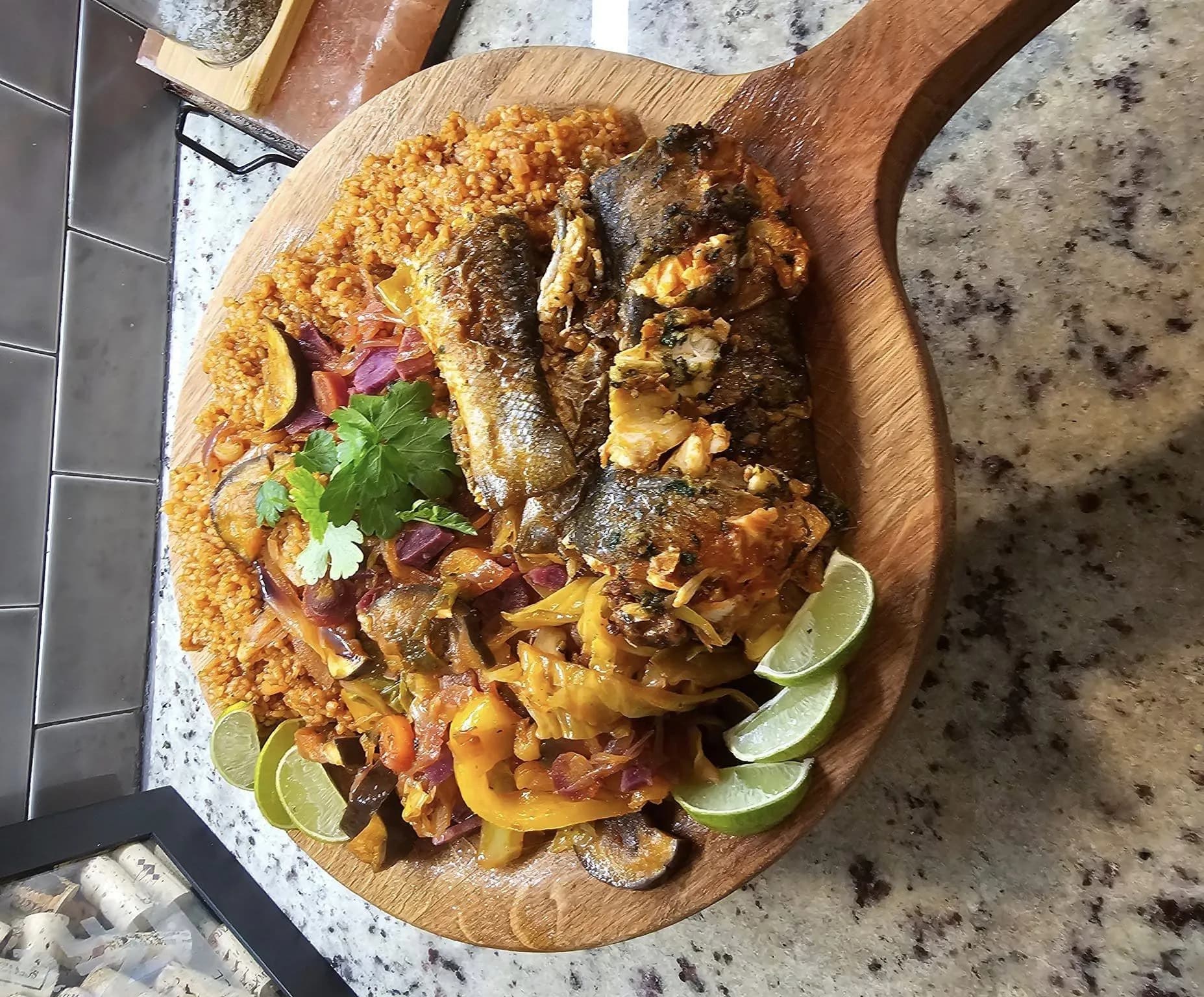
Thieboudienne
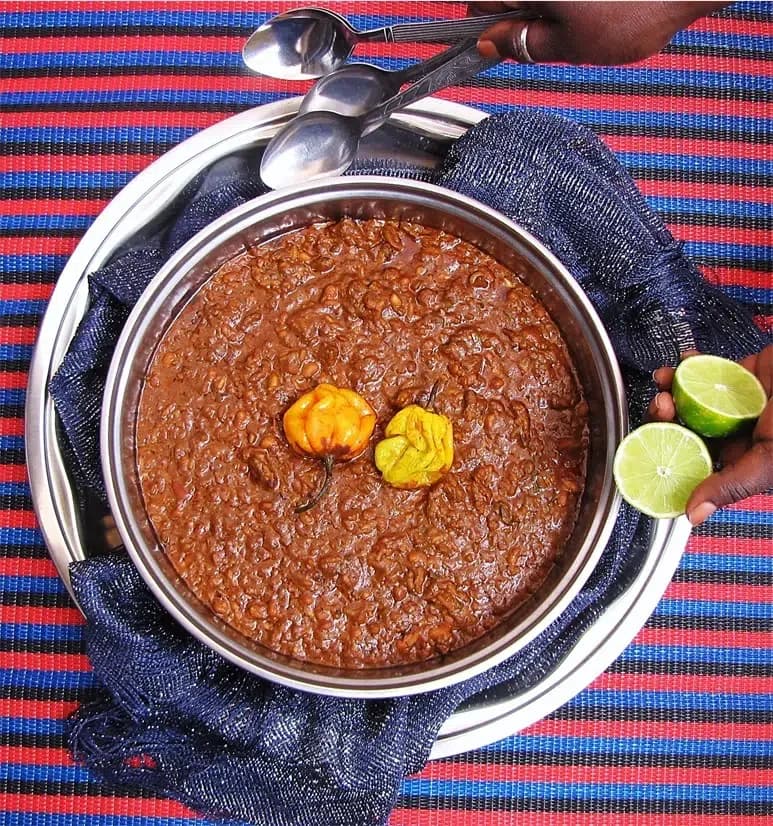
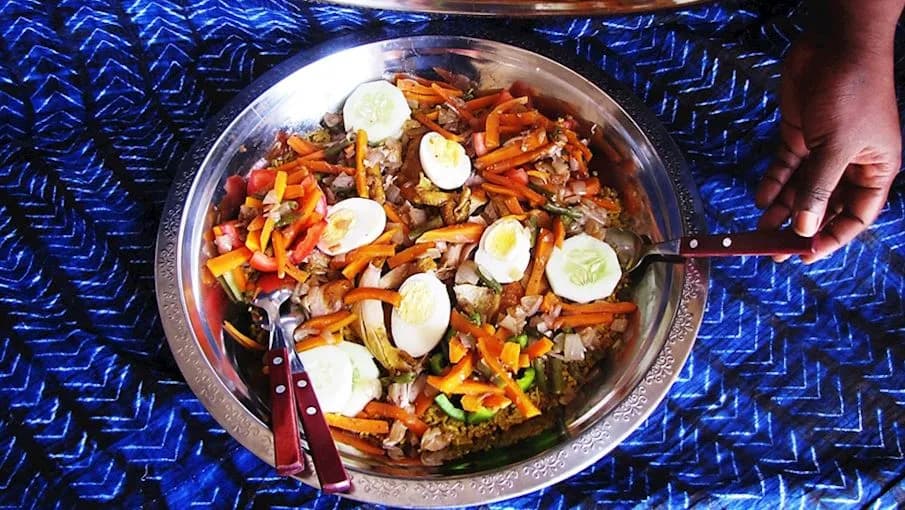
Thieboudienne is the national dish of Senegal and the origin point of the rice tradition that spread along the whole West African coast. The name is Wolof and means rice and fish, which understates it considerably: the dish involves a stuffed whole fish, a long braise of tomato and vegetables, and a rice cooked in the liquid all of that produced. Its history reaches the modern table through oral tradition rather than through documents, and it carries more than one account. One attributes the dish to the city of Saint-Louis in the nineteenth century, where a version known as thieboudienne Penda Mbaye was prepared. Another holds that it emerged in a colonial governor's kitchen when rice was substituted for barley during a shortage. Senegalese tradition names Penda Mbaye, and that named attribution matters in Senegal, where the dish is held as an inheritance with an author rather than an anonymous custom. It is eaten from a large communal platter, each person working the section in front of them, and it is what opens a significant family lunch. Its relatives are everywhere: riz gras in Côte d'Ivoire and Guinea, jollof rice across Anglophone West Africa, and Savannah red rice in the American South, which many hold was carried there and adapted by Creole cooks.
Senegal1 hr 15 minFoodChef