Nous utilisons des cookies essentiels au fonctionnement du site. Nous aimerions aussi déposer des cookies de mesure d’audience et des cookies publicitaires, uniquement avec votre accord. Vous pouvez choisir séparément pour chacun. Lire notre politique relative aux cookies

Loading
Recettes
Parcourez les archives par pays, par plat et par temps de cuisson.
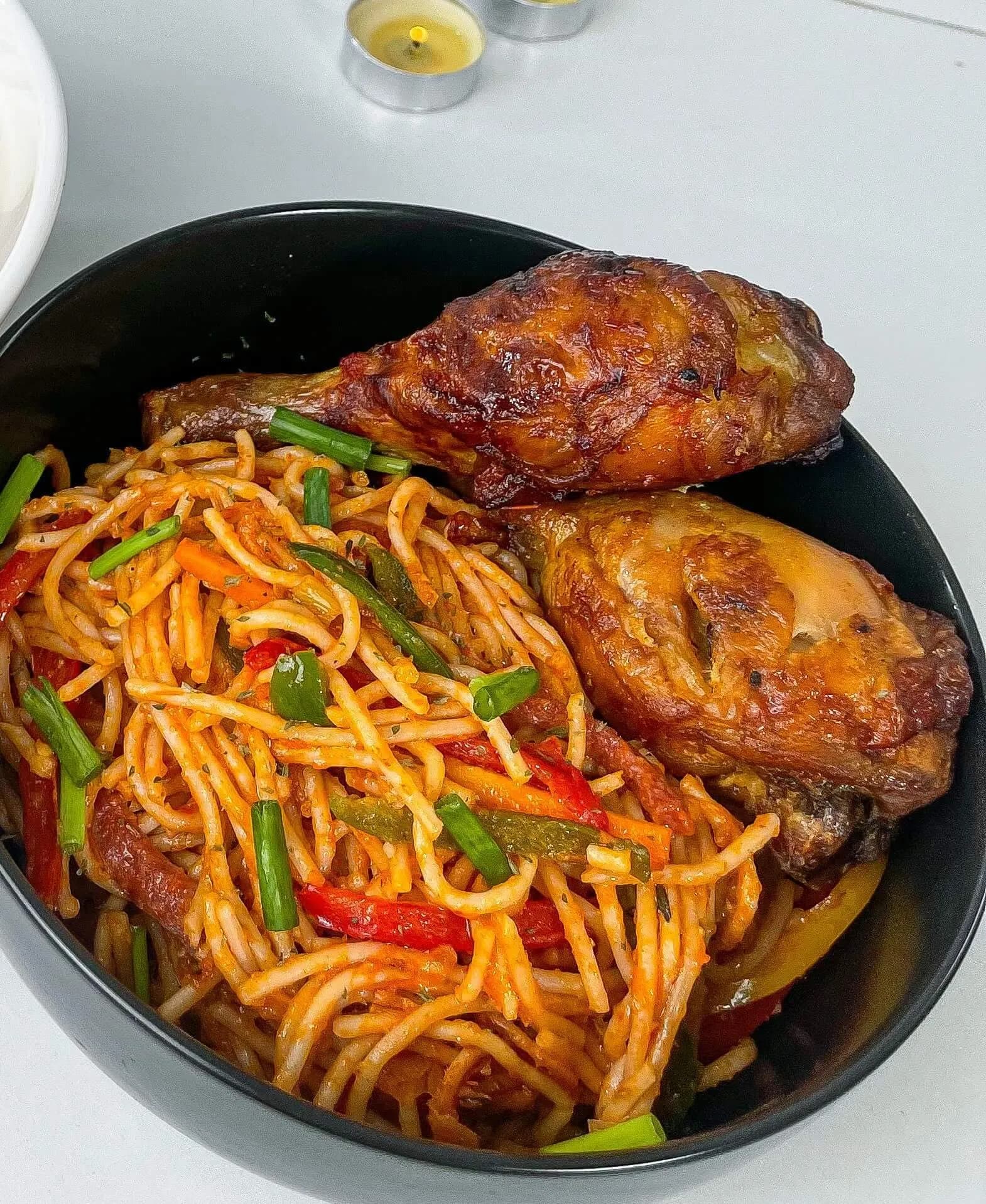
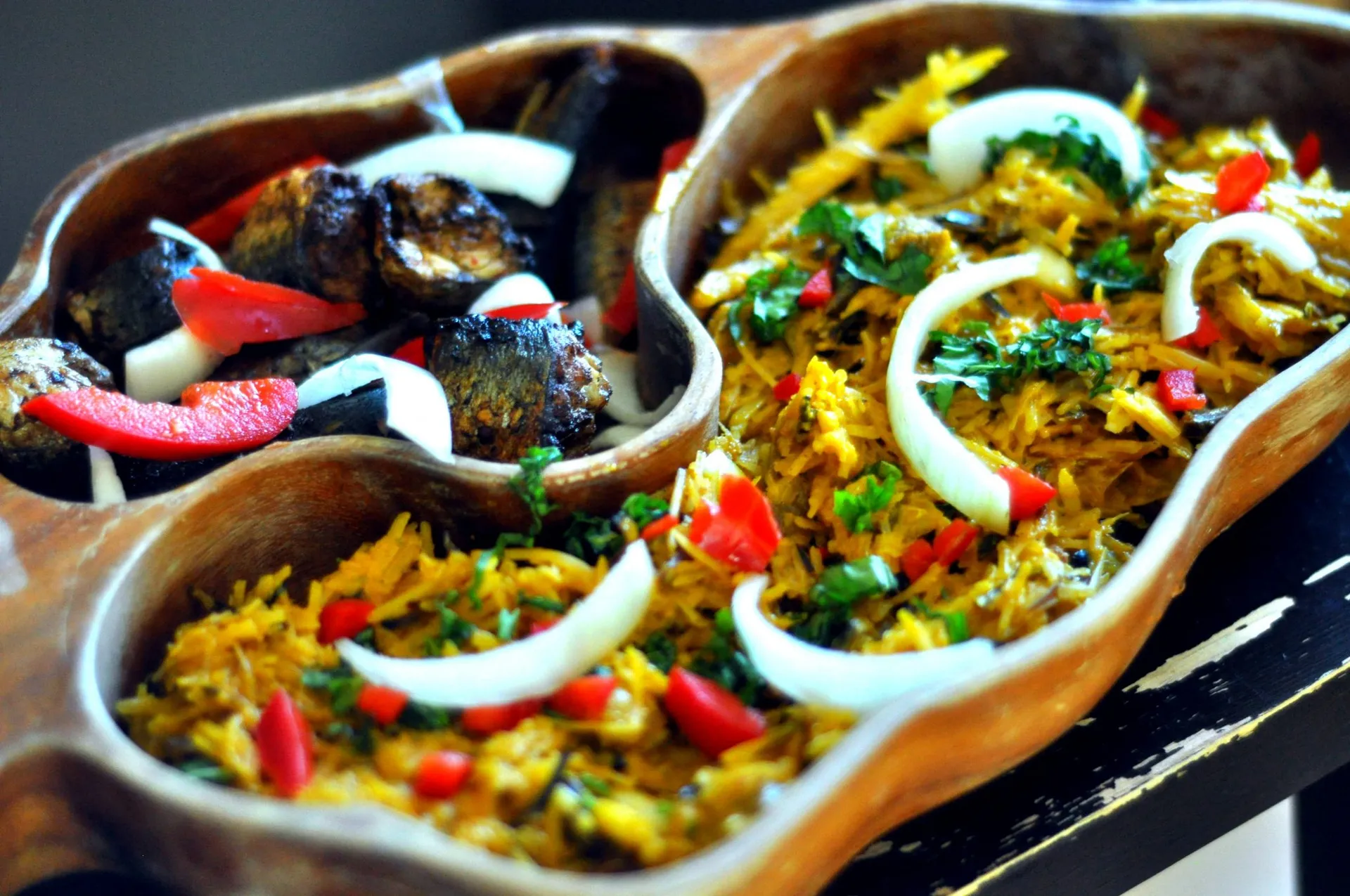
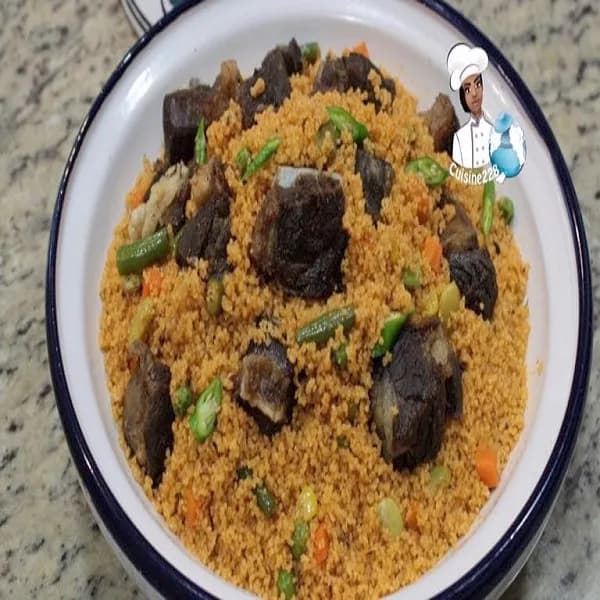
Jollof spaghetti applies the jollof method to pasta, and it is one of the most widely made contemporary dishes in Nigerian home kitchens. The pepper base is built exactly as it would be for rice, with blended tomato, tatashe and scotch bonnet reduced in oil with onion, ginger and garlic, and the spaghetti is finished in it so the strands take on the colour and the flavour rather than merely wearing it.
Spaghetti arrived in Nigeria through mid twentieth century trade and has become one of the country's most eaten starches, particularly in urban households where it is quick and cheap. What Nigerians did with it is characteristic: rather than adopting Italian technique, they applied their own most important cooking method to it. The same has happened with jollof couscous, jollof penne and jollof noodles.
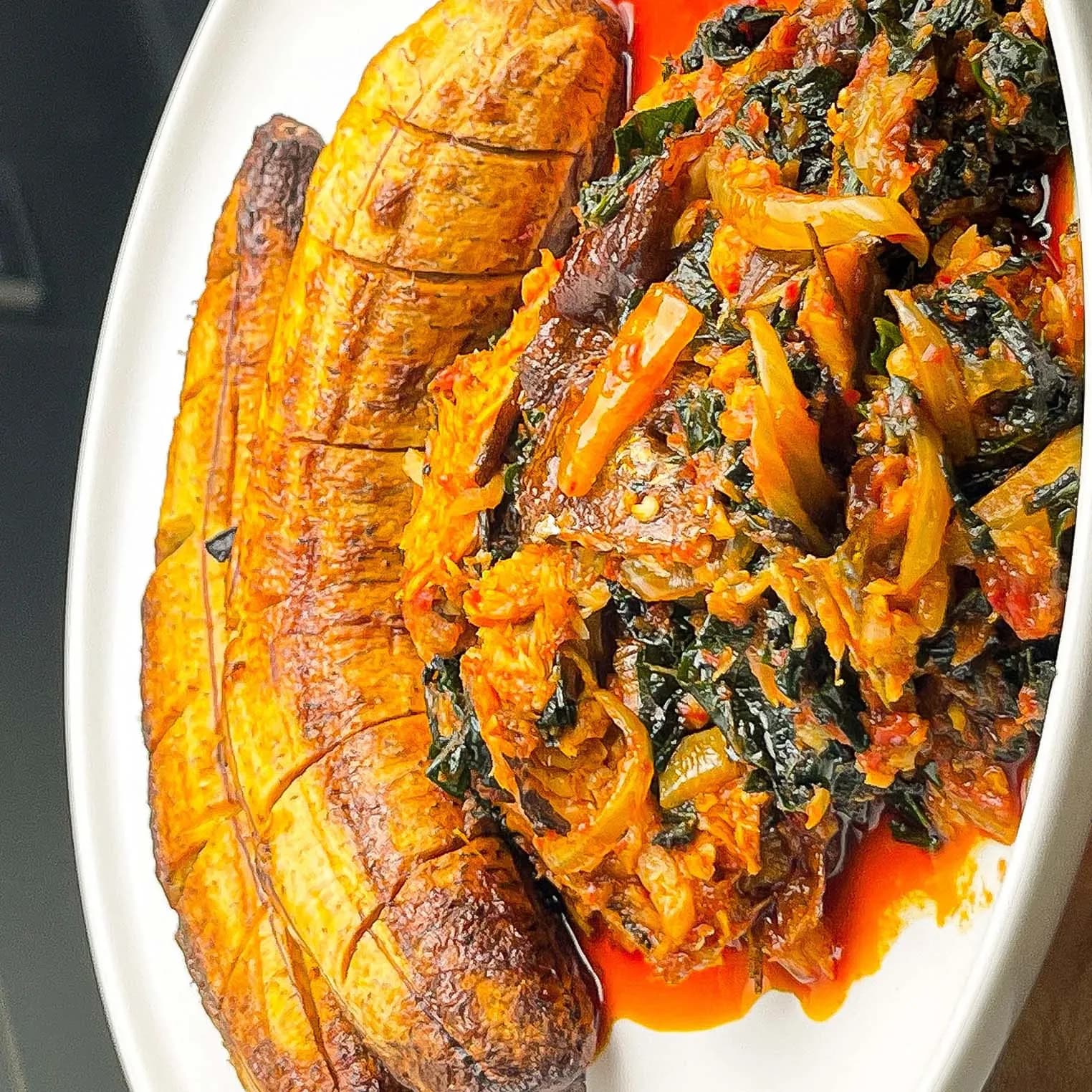
It is weekday food rather than occasion food. Where jollof rice is the centrepiece of a party, jollof spaghetti is what gets made on a Tuesday, often with sausage or leftover chicken and whatever vegetables are in the house. It is served with eggs, fried plantain or chicken, and its status as a real Nigerian dish rather than a novelty is no longer in question among the people who eat it.
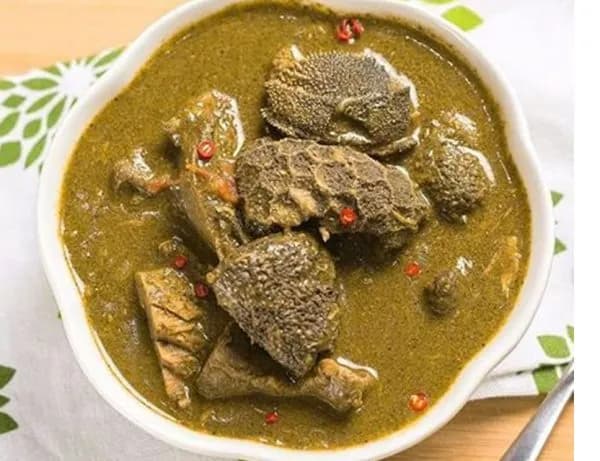
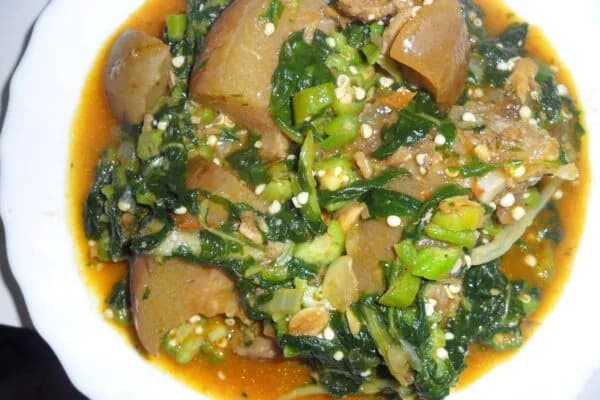
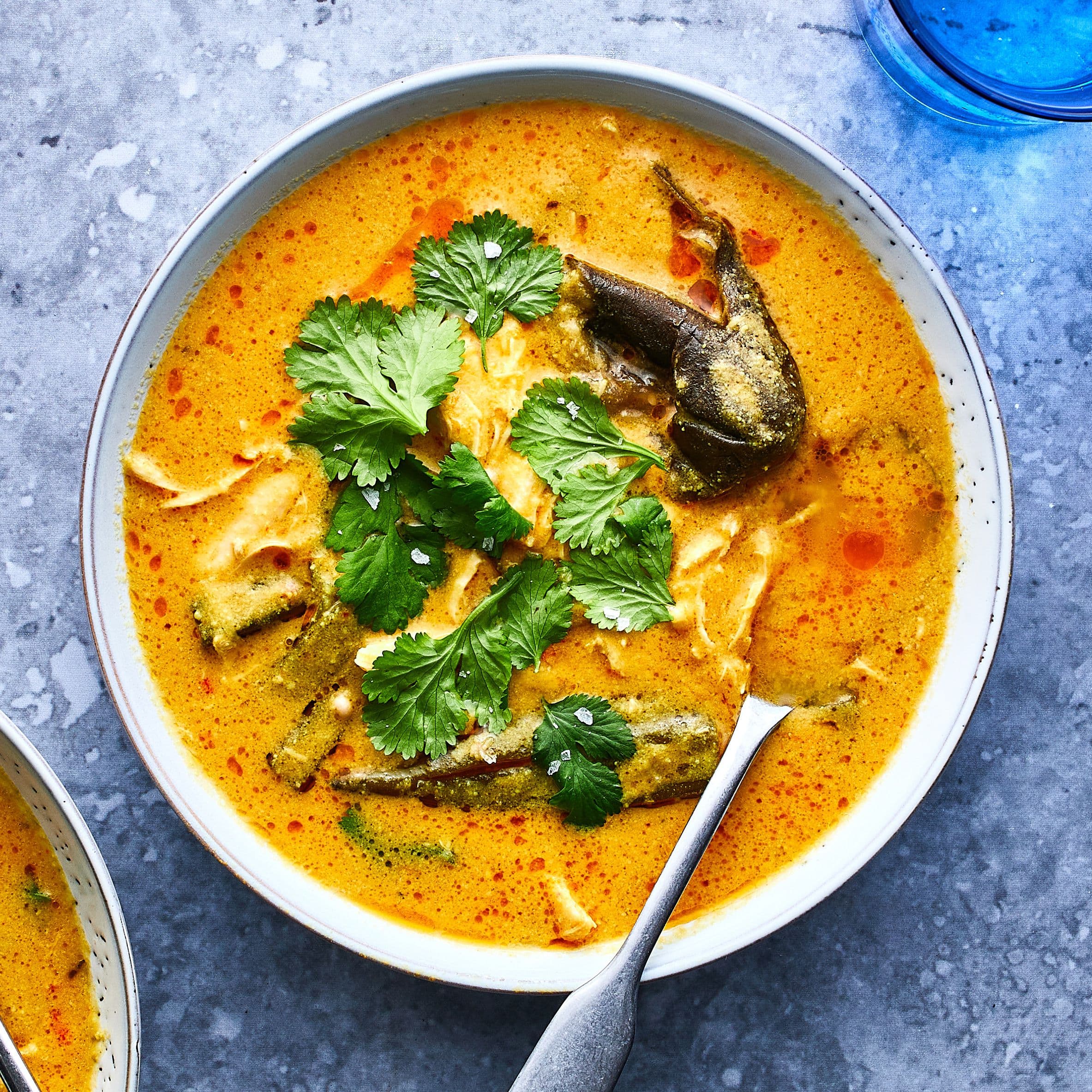
Okro soup is among the quickest Nigerian soups to make and among the most eaten. Okra is chopped, cooked briefly in a stock built on assorted meat, dried fish and crayfish, finished with palm oil, and taken off the heat while it is still green. The whole thing takes minutes once the vegetables are cut, which is the trade off: most of the work is chopping.
Okra is native to Africa, with its origin generally placed in the Ethiopian highlands, and it has spread from there across the continent and well beyond it. The draw it produces, the viscous quality that thickens the soup, is the entire point in West African cooking and the thing that people elsewhere often try to eliminate. Here it is what makes the soup work with a swallow: it slides.
The names change across Nigeria. Ila asepo among the Yoruba, okwuru among the Igbo, miyan kubewa in Hausa, otong among the Efik, and okro generally. Potash, called kaun, is traditional for increasing the draw and is now optional and somewhat contested, with many cooks leaving it out entirely. Used at all it must be used sparingly, since too much kills the elasticity it is meant to increase. It is eaten with eba, fufu, semo, amala or pounded yam.
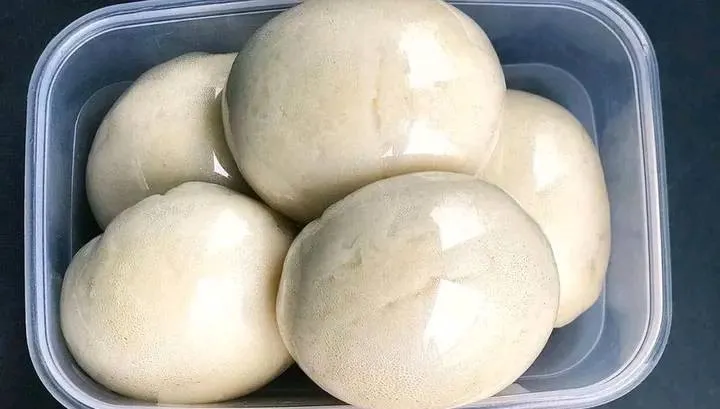
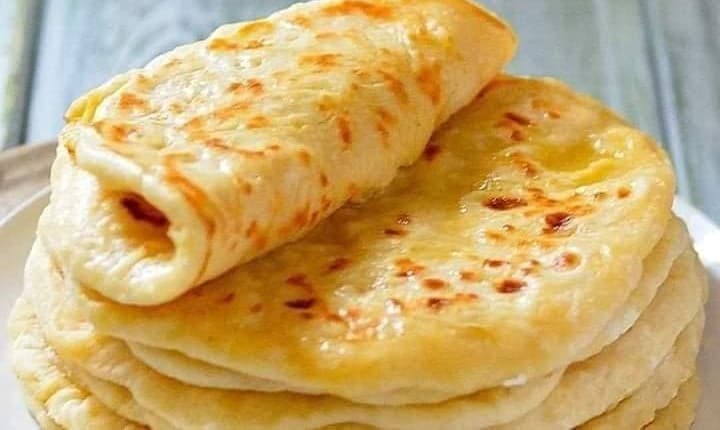
Alkubus is a Hausa steamed wheat bread from Northern Nigeria, plain by design and made to be eaten with something else. It is soft, faintly sour from the yeast, and it holds its shape well enough to be cut into rounds or wedges.
Its role on the plate is the role bread plays across the north: the thing that carries the soup. Alkubus is eaten most often with miyan taushe, the pumpkin and groundnut soup, and it also goes with agushi soup, vegetable soup, cabbage stew or a plain tomato sauce. That pairing with miyan taushe is the one Northern Nigerians name first.
There are two ways to make it and they produce different things. Baked in a greased pan and topped with carrot and onion, it is a loaf to be cut and eaten in slices. Portioned into wrappers and steamed over boiling water, it comes out softer and denser, closer to a dumpling, and that is the method the recipe here follows. Steaming rather than baking runs through a great deal of Hausa cooking, from dambu to danwake to masa, and alkubus belongs to that family more than it does to any oven tradition.
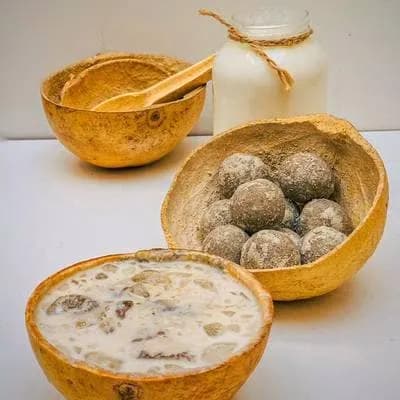
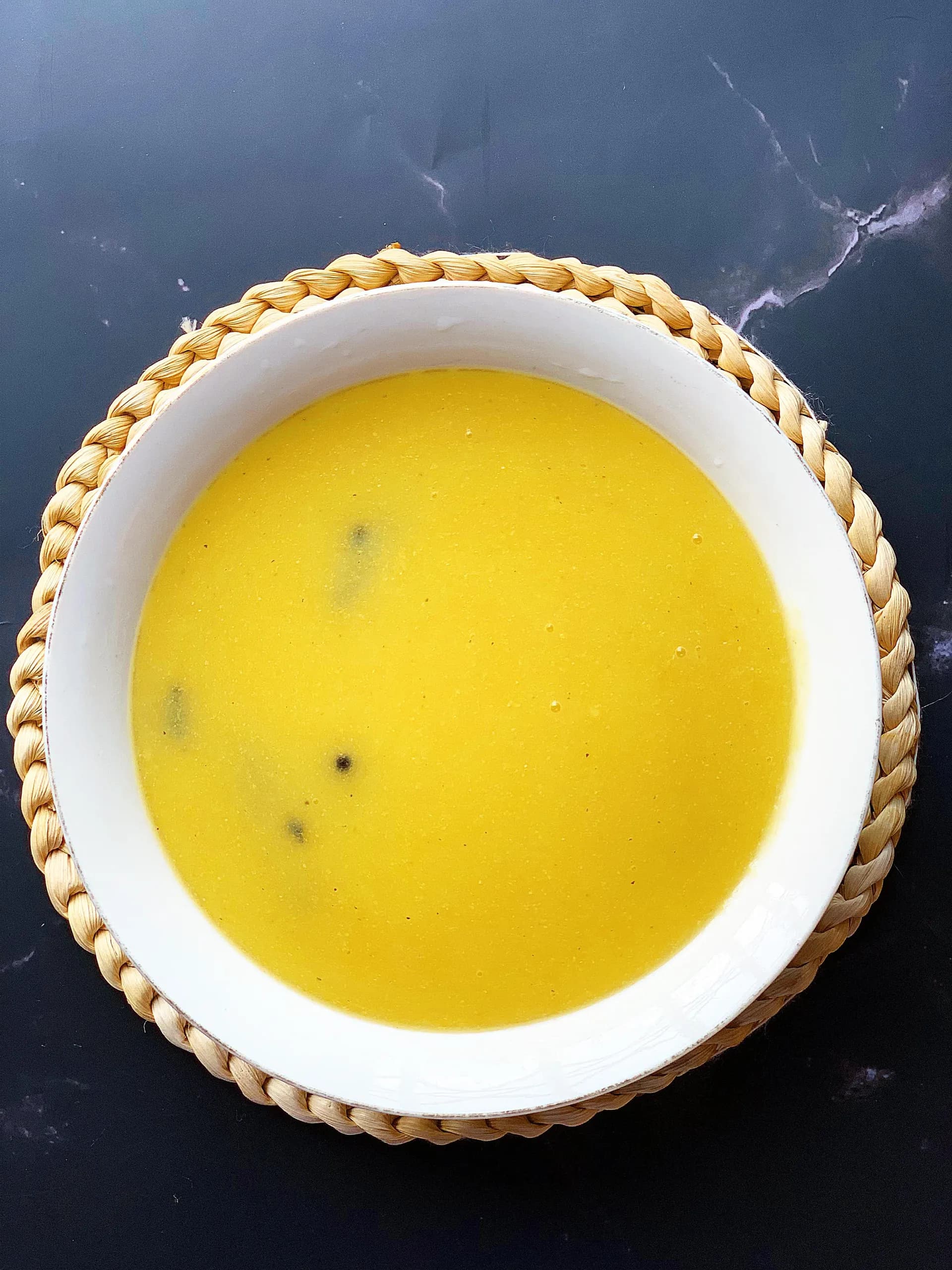
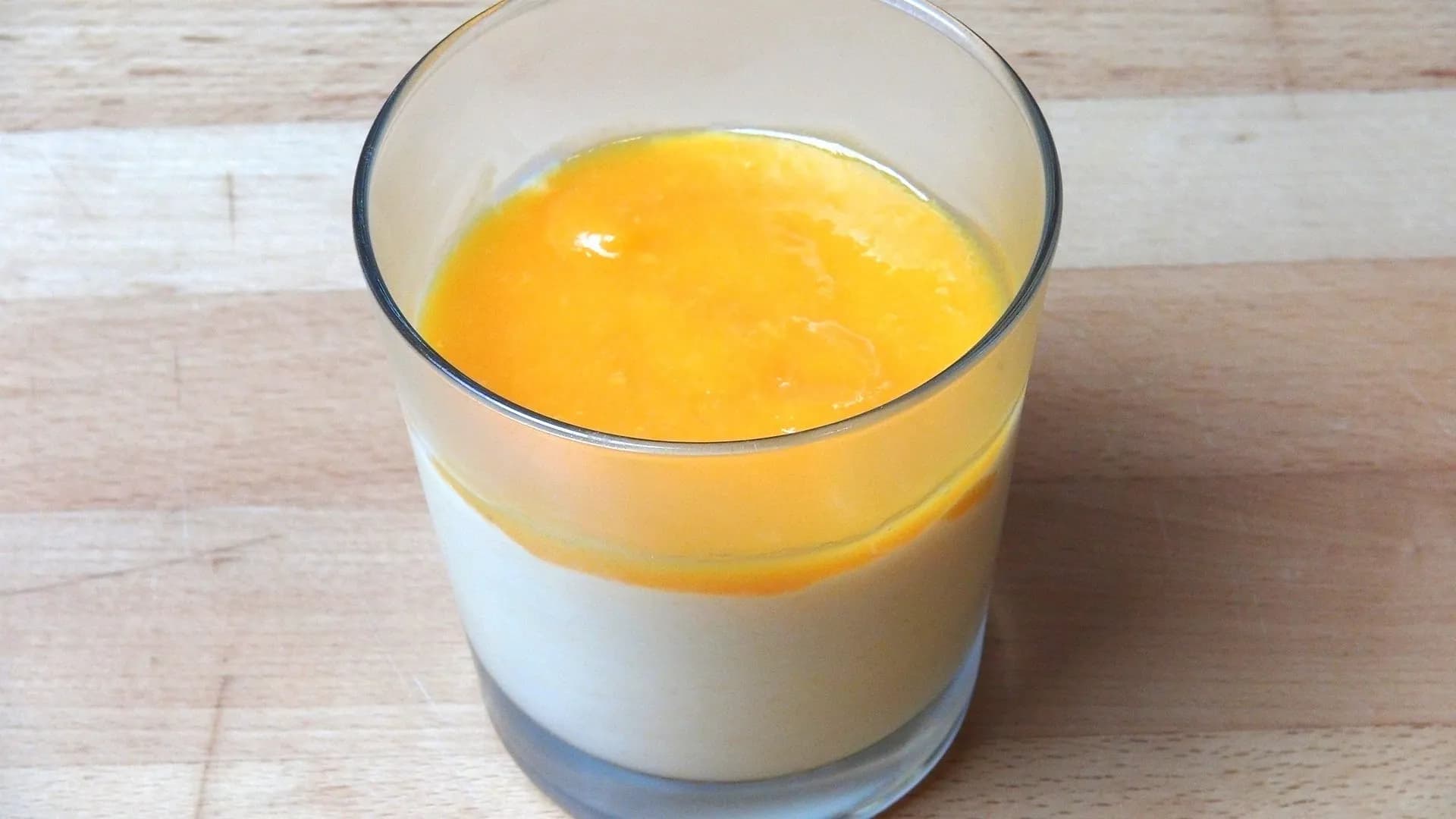
Fura da nono is millet and milk, and the name says exactly that: fura is the millet ball, nono is the fermented milk. Spiced millet dough is rolled into balls, then mashed into soured milk and drunk from a bowl or a calabash. It is both a meal and a drink and Nigerians do not find that ambiguous.
It belongs to the Sahel and to the peoples who move across it. The Fulani, the Hausa and the Zarma-Songhai all make it, and it is eaten across northern Nigeria, Niger and Ghana. Its logic is the logic of cattle keeping: milk that will not keep in the heat is soured deliberately, and millet that grows where little else does is what goes with it.
The way it is sold explains its form. Vendors carry the fura balls and the nono separately and combine them to order, mashing the millet into the milk in front of the customer, which lets them sell two products from one stand and keeps the fura from going soggy before it is bought. In a hot climate, a cold, sour, filling drink that costs very little is a serious thing rather than a refreshment, and fura da nono has held its place in northern Nigerian life without needing to modernise.