Nous utilisons des cookies essentiels au fonctionnement du site. Nous aimerions aussi déposer des cookies de mesure d’audience et des cookies publicitaires, uniquement avec votre accord. Vous pouvez choisir séparément pour chacun. Lire notre politique relative aux cookies

Loading
Recettes
Parcourez les archives par pays, par plat et par temps de cuisson.
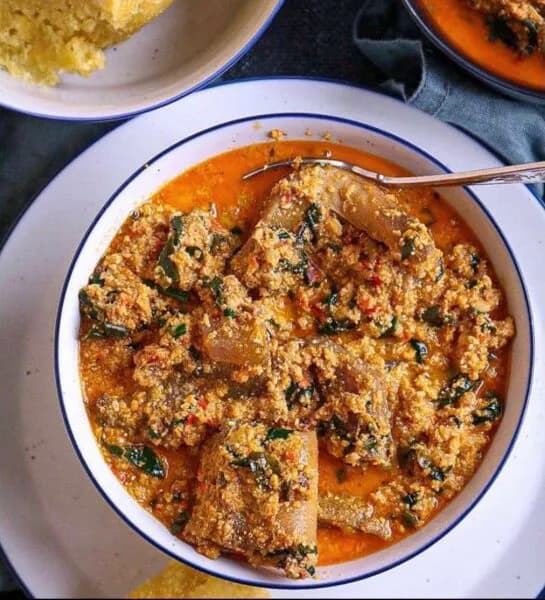
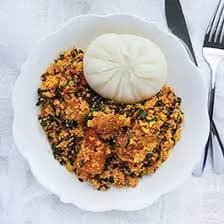
Egusi soup is eaten across every region of Nigeria, every ethnic group and every economic class, which is a claim very few dishes anywhere can support. Its name changes with the language and the dish does not: miyan gushi in Hausa, ofe egusi in Igbo, efo elegusi in Yoruba.
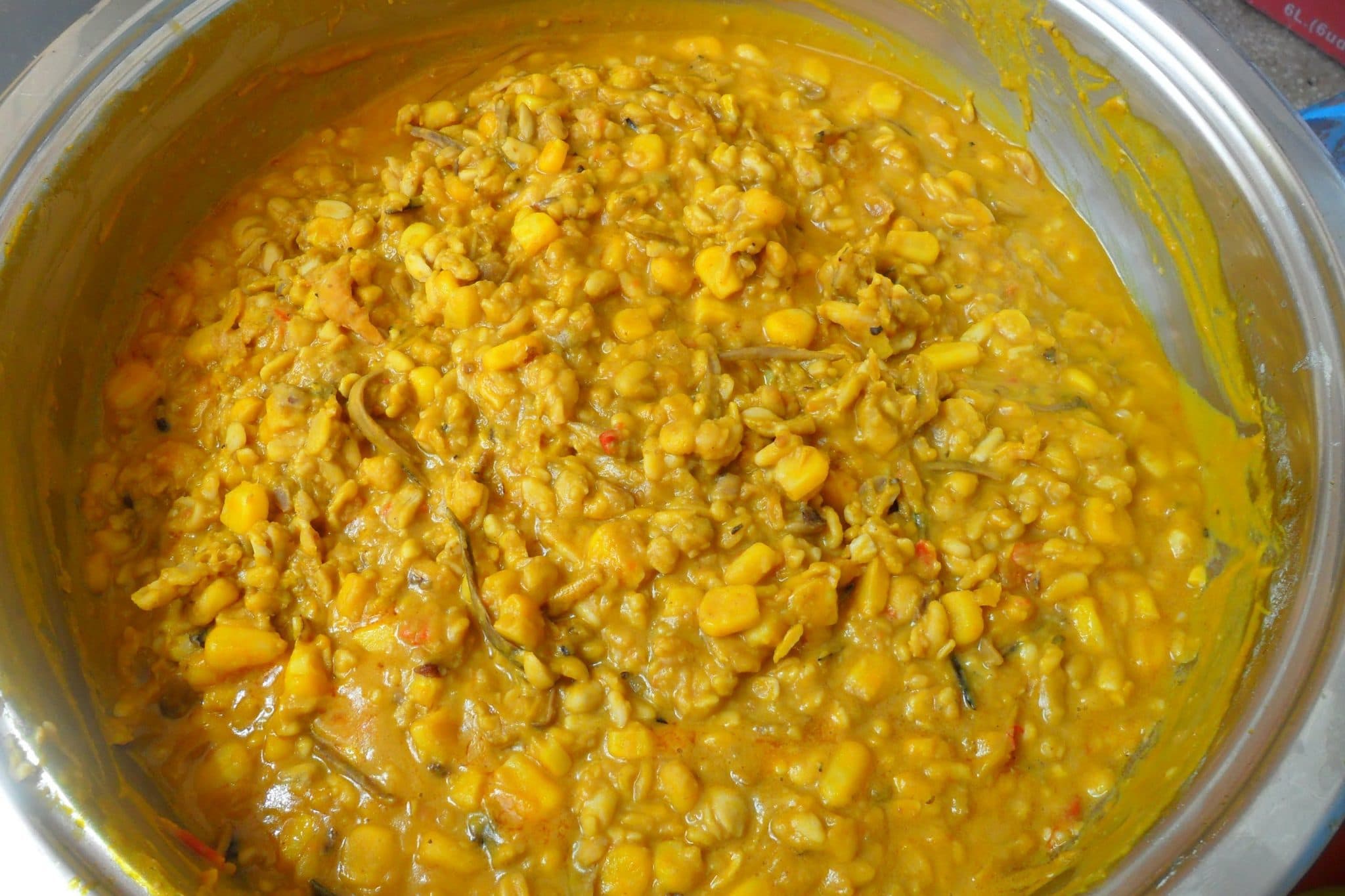
Its defining ingredient is ground egusi, the dried seed of a gourd related to the watermelon, milled to a meal that thickens and enriches the soup around it. The seeds are ground dry, without water, until the powder turns to a paste under the blade. Nothing else produces the particular nutty, faintly bitter depth that egusi gives, which is why the soup is named for the seed rather than for the meat or the greens that also go into it.
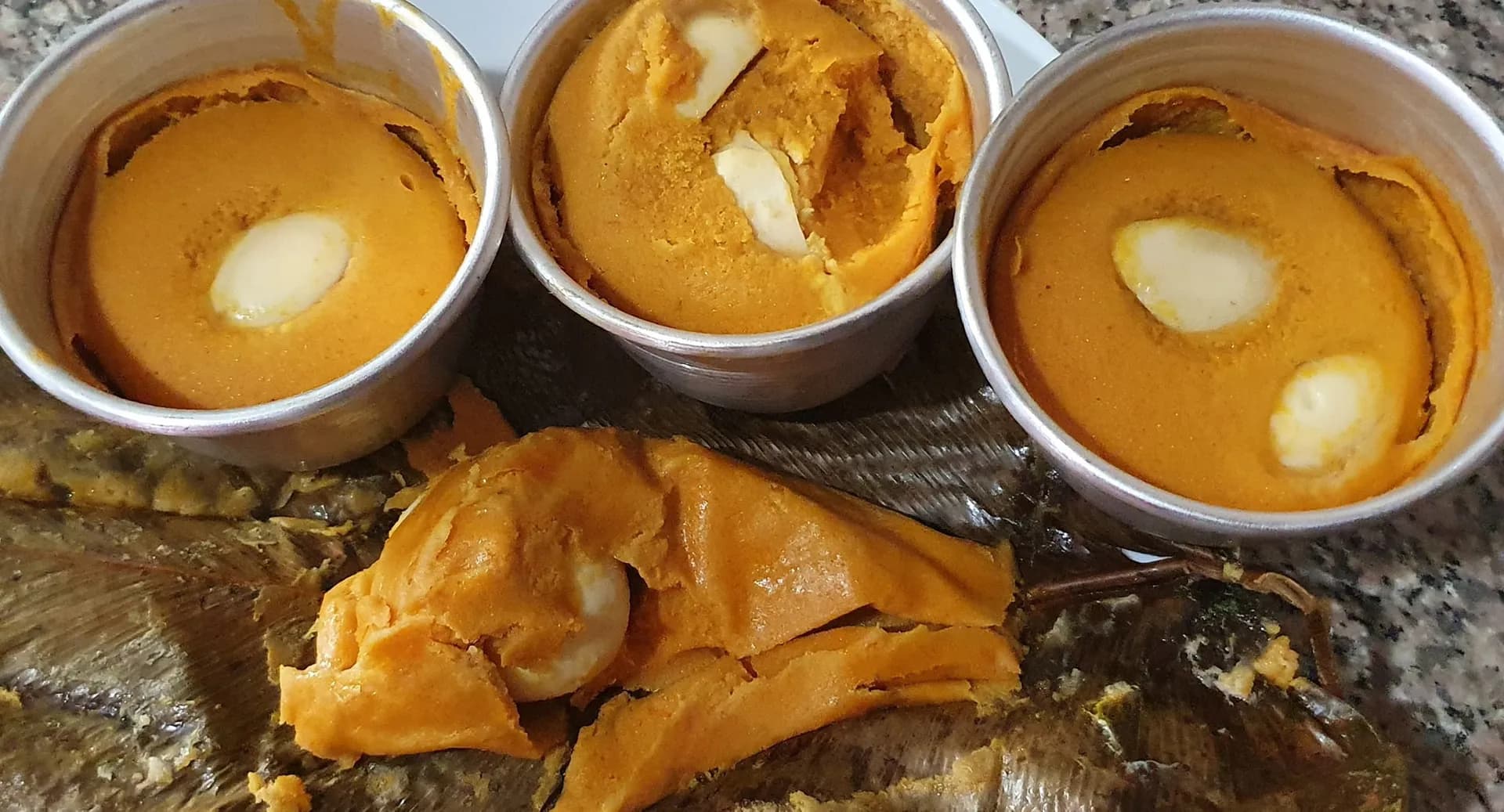
There is no single method. The caking approach lets the ground seed set into soft curds in the stock; the frying approach starts the egusi in palm oil; the moulding approach forms it into balls that are eaten like meat. Ijebu cooks in Ogun State make it with no vegetables at all. Every one of these is egusi soup, and Nigerians will argue for their own without seriously disputing anyone else's. It is eaten with pounded yam, fufu, eba, amala or any swallow at hand.
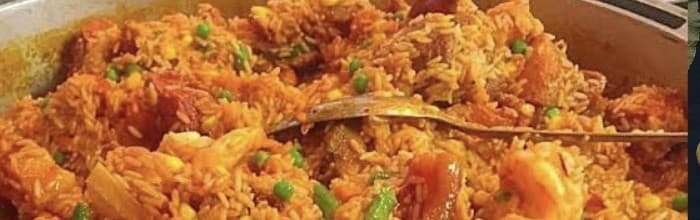
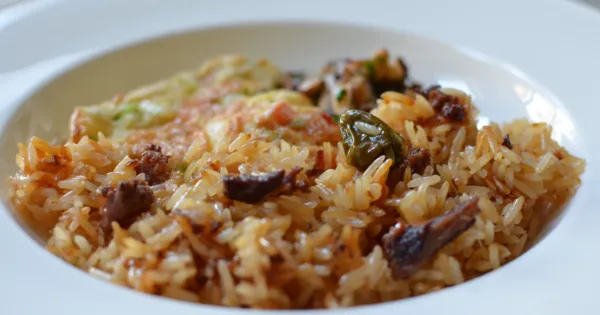
Angwa moo is oiled rice, and the Akan name says it plainly. Onions are browned in oil, rice goes in and is fried briefly, then water is added and the whole thing cooks together. The result is golden, faintly sweet from the caramelised onion, and unlike fried rice in one important respect: the rice is raw when it enters the oil rather than cooked and cooled.
Ghanaians treat it as the emergency dish, and they are cheerful about saying so. It is what a child cooks when a parent is not home, what a young man living alone makes because it needs almost nothing, and what gets made when there is no time and no plan. That does not make it lesser. The browning of the onion is doing real work, and a well made angwa moo has a depth that its ingredient list does not predict.
The traditional accompaniment is ground pepper made in an earthenware asanka, with tinned sardines or fried eggs alongside, and that combination is the version most Ghanaians picture. The salted beef known as tolobeef, cured at home over two days, is the more considered addition. The crisp scorched layer at the bottom of the pot is prized and fought over, which is the case for rice dishes across the continent, and the way to get it is to let the rice finish in its own steam without stirring.
Whole tilapia scored, marinated in an oil-based spice mixture, oven-grilled, then coated in a fresh green pepper base and returned to the heat. The two-stage seasoning is what makes it, and it is a West African approach rather than a simple marinade.
The first stage is a dry-spice oil: vegetable oil with fish seasoning, white and black pepper, ginger, garlic, onion powder and lemon juice, worked into the cuts. The second is a green pepper base built in a food processor from green and red scotch bonnets, bell peppers, spinach, dill, coriander, ginger, garlic and onion, fried briefly in oil and then smeared over the part-cooked fish.
That green base is the interesting part. Blending leafy greens and fresh herbs into a pepper sauce is characteristic of Ghanaian and wider West African fish cookery, and it gives colour and a fresh, sharp finish that a marinade applied only at the start cannot. The scoring is not decorative either: two or three cuts on each side let both stages of seasoning reach the flesh rather than sitting on the skin. Tilapia is native to African fresh waters and is the fish most associated with Ghanaian grilling, usually eaten with banku.
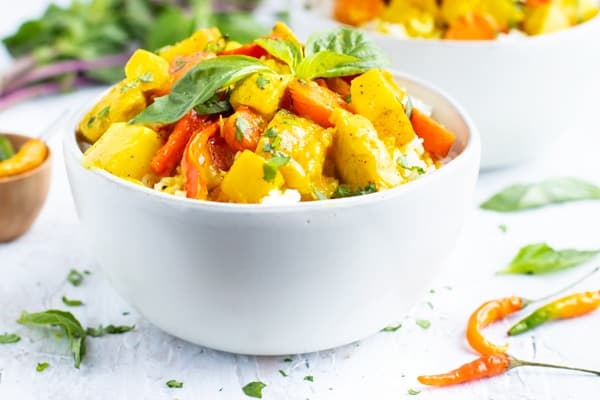
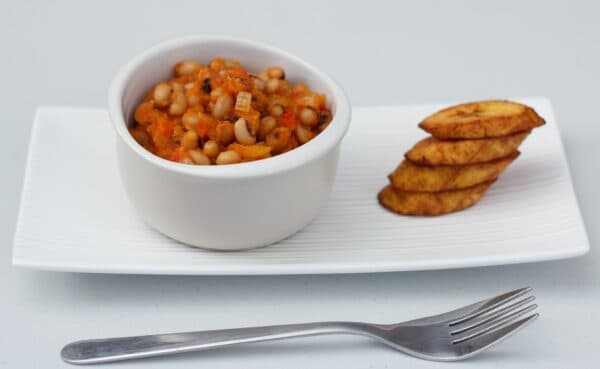
Ripe plantains mashed to a paste, combined with rice flour and turmeric-infused oil, then baked in a loaf tin and sliced. The source places it in Ivory Coast, where plantain in every form is close to universal.
It is worth being clear about what this is, because the title is misleading in two directions. It is not sliced plantain roasted in an oven, which is what most people mean by baked plantain. And the recipe uses rice flour as a binder and turmeric for colour, which makes it a plantain loaf or cake, closer in construction to a steamed pudding than to a side dish. The slug says load rather than loaf, which appears to be a typo in the original; the URL has been kept exactly as it is.
One ingredient does not fit the stated origin. Chilli sambal is Indonesian and Malay, and it is not part of Ivorian cooking. It may be a substitution the contributor made for a local pepper paste, but the source does not say so, and rather than invent an explanation it has been flagged.
The source's nutritional comparisons with potato have not been carried across. What matters for cooking is that ripe plantain is sweet and starchy, and that is what makes the loaf hold together.