Nous utilisons des cookies essentiels au fonctionnement du site. Nous aimerions aussi déposer des cookies de mesure d’audience et des cookies publicitaires, uniquement avec votre accord. Vous pouvez choisir séparément pour chacun. Lire notre politique relative aux cookies

Loading
Recettes
Parcourez les archives par pays, par plat et par temps de cuisson.
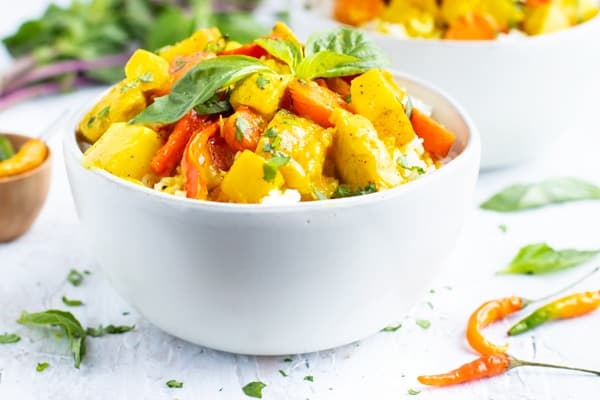
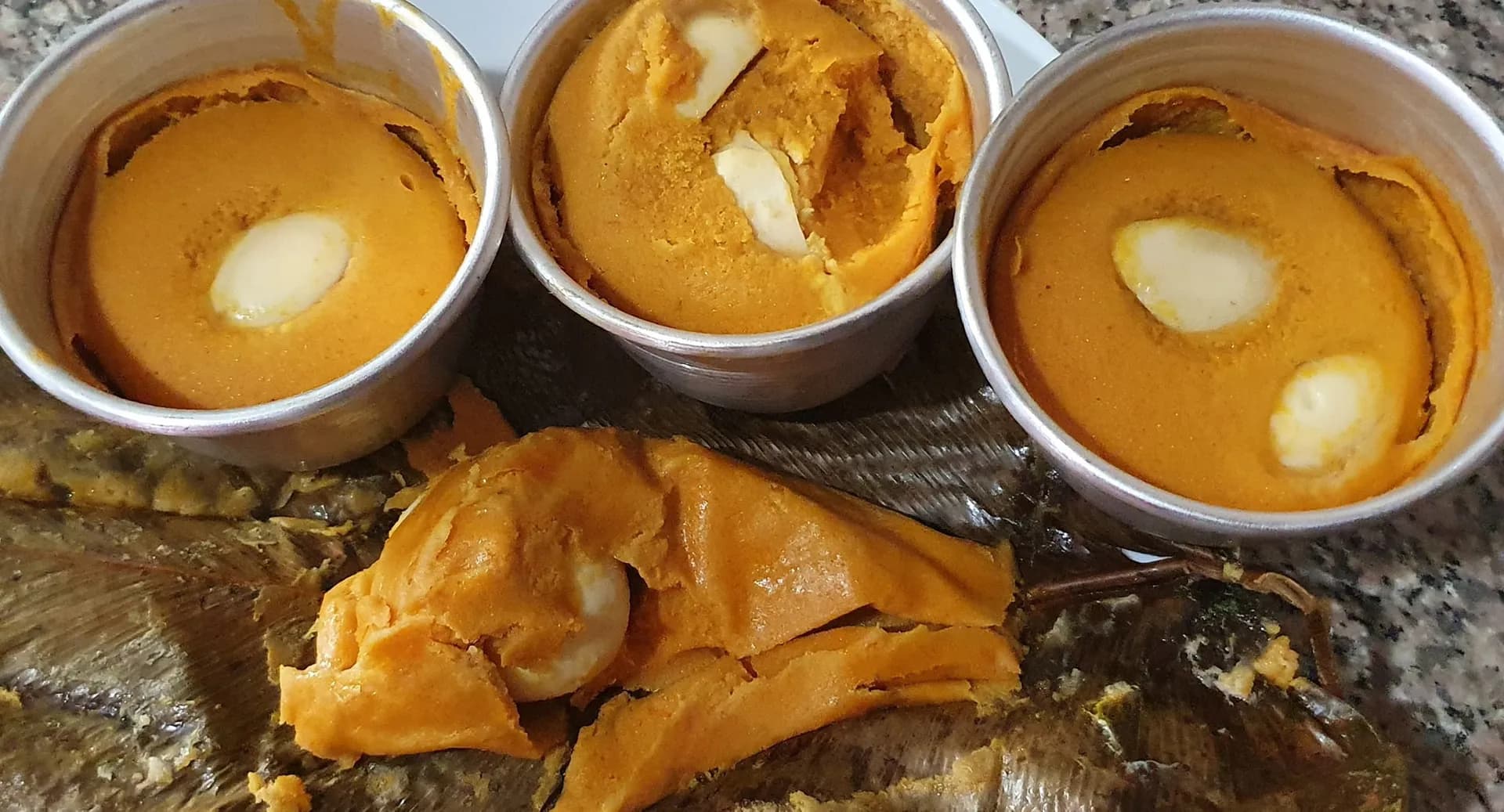
Ripe plantains mashed to a paste, combined with rice flour and turmeric-infused oil, then baked in a loaf tin and sliced. The source places it in Ivory Coast, where plantain in every form is close to universal.
It is worth being clear about what this is, because the title is misleading in two directions. It is not sliced plantain roasted in an oven, which is what most people mean by baked plantain. And the recipe uses rice flour as a binder and turmeric for colour, which makes it a plantain loaf or cake, closer in construction to a steamed pudding than to a side dish. The slug says load rather than loaf, which appears to be a typo in the original; the URL has been kept exactly as it is.
One ingredient does not fit the stated origin. Chilli sambal is Indonesian and Malay, and it is not part of Ivorian cooking. It may be a substitution the contributor made for a local pepper paste, but the source does not say so, and rather than invent an explanation it has been flagged.
The source's nutritional comparisons with potato have not been carried across. What matters for cooking is that ripe plantain is sweet and starchy, and that is what makes the loaf hold together.
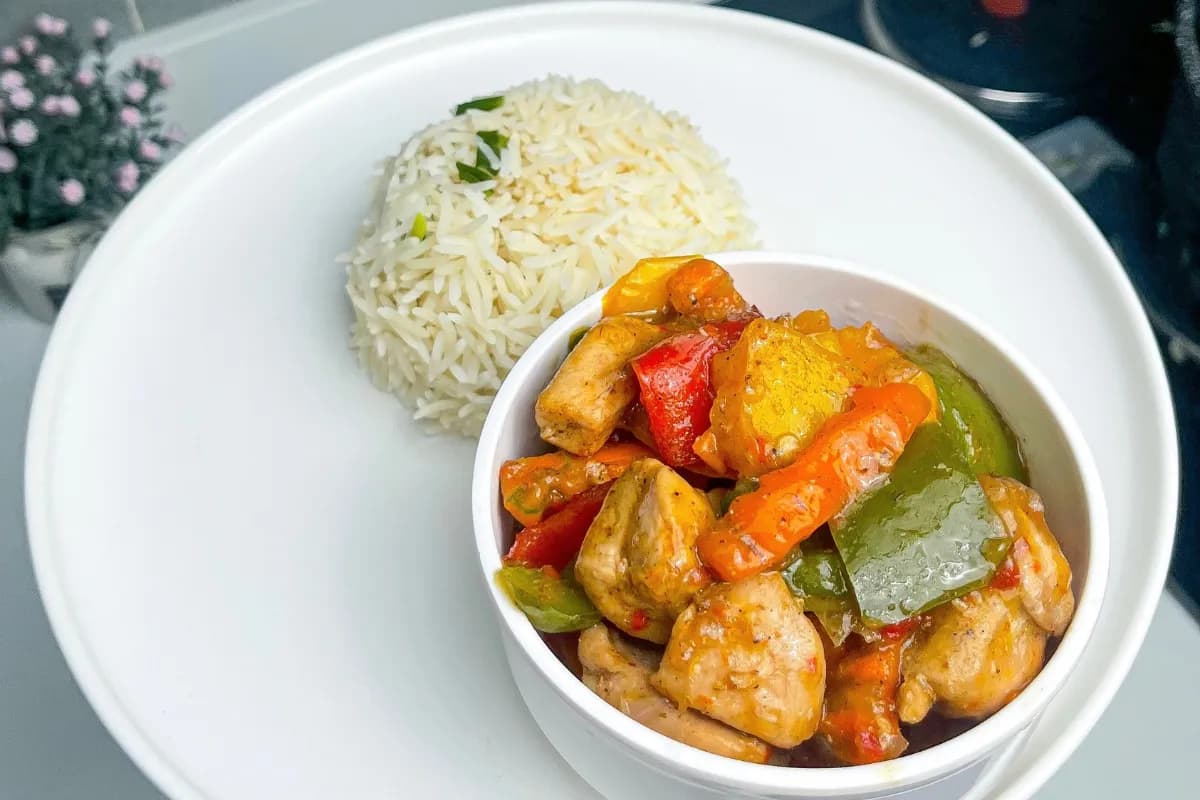
Coconut chicken curry is a one-pan dish of chicken simmered in coconut milk with a curry spice blend and whatever vegetables are to hand, broccoli, cabbage, peppers, potato, carrot.
The word curry is worth being precise about. It is not a single spice or a single dish. It comes from English usage during colonial rule in India, applied broadly to spiced saucy dishes, and it now covers an enormous range of unrelated cooking across South Asia, Southeast Asia, the Caribbean and East Africa. A curry powder sold in a jar is a blend, and the blends differ substantially between manufacturers and regions.
Coconut milk versions belong mainly to the coastal and tropical end of that range, southern India, Thailand, Malaysia, the Caribbean, and the Swahili coast of East Africa, where coconut is grown and used heavily.
This particular recipe is a general one rather than a regional tradition, which is its strength: it tolerates substitution well and is designed to be varied.
**Filed as Worldwide**, the recipe as written makes no specific national claim, so attributing it to any one cuisine would be inventing detail.
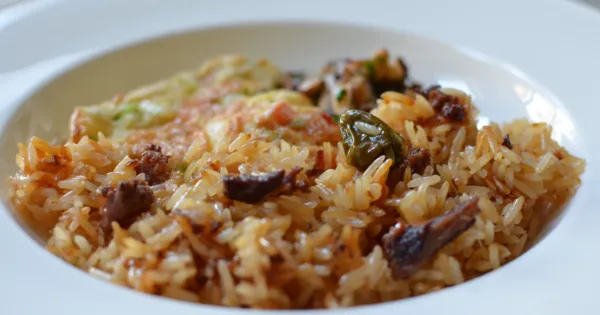
Angwa moo is oiled rice, and the Akan name says it plainly. Onions are browned in oil, rice goes in and is fried briefly, then water is added and the whole thing cooks together. The result is golden, faintly sweet from the caramelised onion, and unlike fried rice in one important respect: the rice is raw when it enters the oil rather than cooked and cooled.
Ghanaians treat it as the emergency dish, and they are cheerful about saying so. It is what a child cooks when a parent is not home, what a young man living alone makes because it needs almost nothing, and what gets made when there is no time and no plan. That does not make it lesser. The browning of the onion is doing real work, and a well made angwa moo has a depth that its ingredient list does not predict.
The traditional accompaniment is ground pepper made in an earthenware asanka, with tinned sardines or fried eggs alongside, and that combination is the version most Ghanaians picture. The salted beef known as tolobeef, cured at home over two days, is the more considered addition. The crisp scorched layer at the bottom of the pot is prized and fought over, which is the case for rice dishes across the continent, and the way to get it is to let the rice finish in its own steam without stirring.
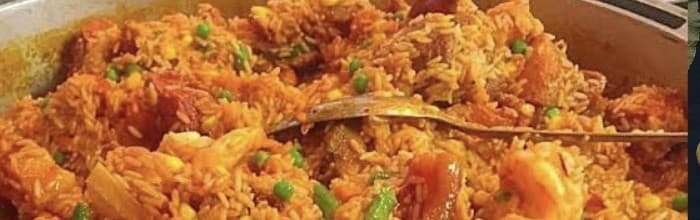
Jollof rice belongs to the whole of West Africa, and every country that claims it claims it as its own. The Liberian version sits inside that family without being anyone's copy. It is a tomato rice, built on long grain parboiled grains, sweetened by onion and sweet pepper, sharpened with garlic and ginger, and carrying a smokiness that Liberian cooks treat as the mark of a pot done properly.
Rice is the centre of the Liberian diet rather than an accompaniment to it, and a one pot rice that can be built around whatever protein a household has, or around no protein at all, earns its place in an everyday kitchen as readily as at a gathering. It feeds a room from a single vessel, which is part of why it survives.
Across West Africa the jollof pot is argued over with genuine feeling, and the loudest of those arguments runs between Nigeria and Ghana. Liberia is rarely named in that particular fight. That says less about the quality of the Liberian pot than about who is holding the microphone.