Nous utilisons des cookies essentiels au fonctionnement du site. Nous aimerions aussi déposer des cookies de mesure d’audience et des cookies publicitaires, uniquement avec votre accord. Vous pouvez choisir séparément pour chacun. Lire notre politique relative aux cookies

Loading
Recettes
Parcourez les archives par pays, par plat et par temps de cuisson.
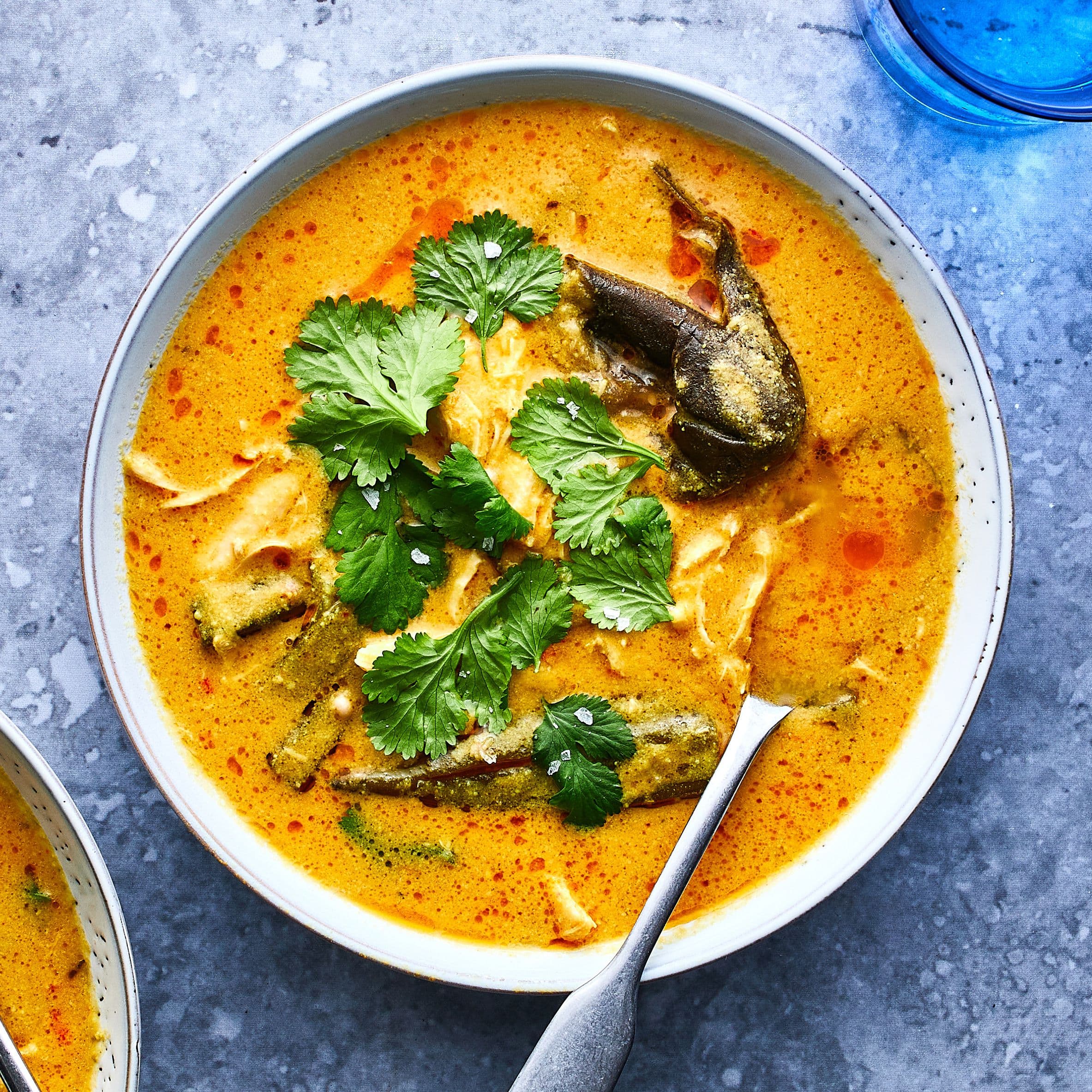
Oyster mushrooms grilled and tossed in suya spice. It is a plant-based version of the Nigerian street food, and it works better than most meat substitutions do.
**The traditional suya spice contains ground peanuts, and this recipe includes them.** The source flags it and offers to leave them out, which is honest, but it is worth stating clearly, because a peanut allergy and a suya spice blend are a genuinely dangerous combination and the name gives no warning.
Suya proper is skewered beef, ram or chicken rubbed in yaji, the spice blend of ground roasted peanuts, ginger, cayenne, garlic, onion powder and paprika, and grilled over open coals. It is Hausa in origin, from northern Nigeria, and it is sold across Nigeria, Cameroon, Niger, Ghana and parts of Sudan. Kyinkyinga is the Ghanaian name, agashe the Sudanese.
Oyster mushrooms are the right substitution and not an arbitrary one. Shredded, they have a fibrous, layered structure that genuinely resembles pulled meat, they take on the dry rub readily, and they char well. Most vegetables do neither.
The source's method is very compressed, one step reads "put in a preheated medium", with the word oven missing, and has been filled out below.
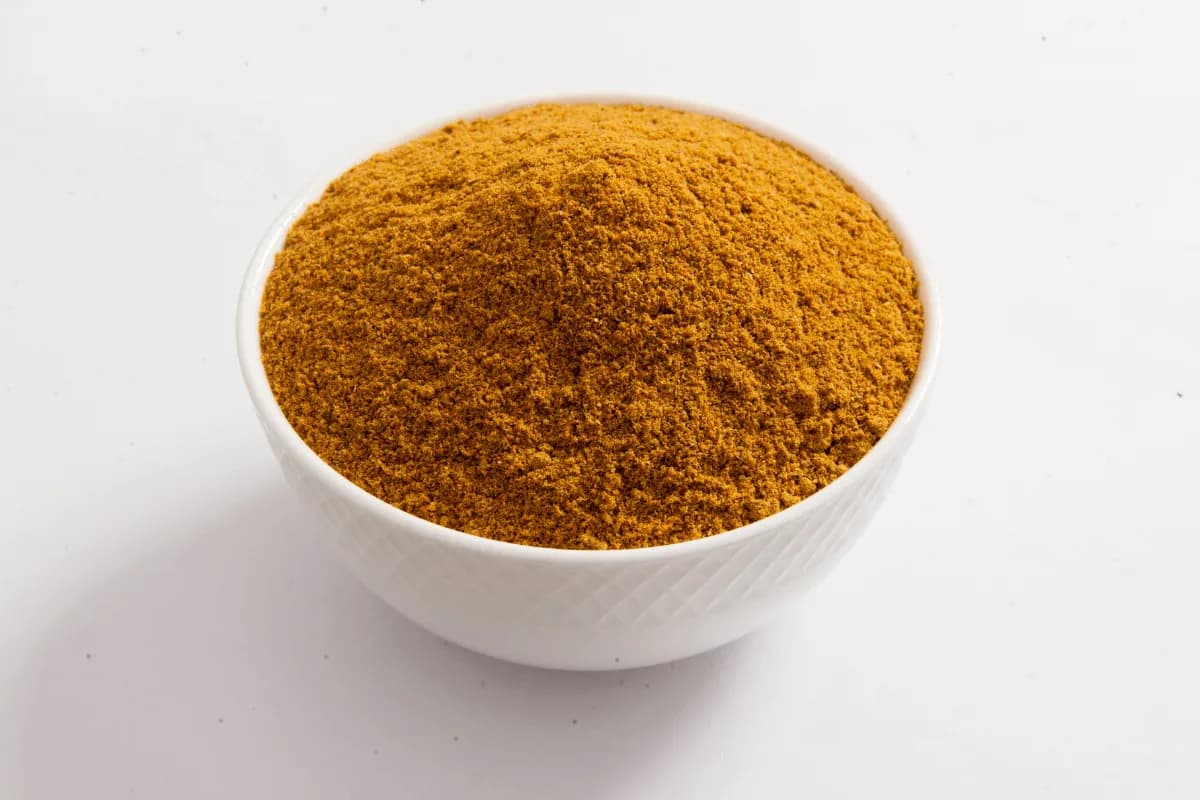
Yaji is the spice blend that makes suya suya. Ground roasted groundnuts form its base, and that is what separates it from every other dry rub in the world: a spice mixture built on a nut rather than on seeds and chillies alone. Ginger, garlic, onion and paprika go in around it, with cayenne carrying the heat.
It belongs to the Hausa of Northern Nigeria, and the recipes are held closely. Every suya vendor guards a proprietary arrangement of spices, and the specific balance is treated as commercial property rather than shared knowledge, which is why no two suya taste quite the same and why the exact composition is genuinely difficult to pin down. What is consistent is the groundnut, the aromatics and the heat.
Its use extends well past the meat it is named for. Yaji is a marinade, a dry rub applied before grilling, and a finishing powder scattered over meat as it comes off the fire, and Nigerians use it on roasted vegetables, on fish, on chips, on plantain and on nuts. It is sold ready made at Nigerian grocers, and having a jar of it in the house is the single fastest route to making Nigerian food taste like itself.
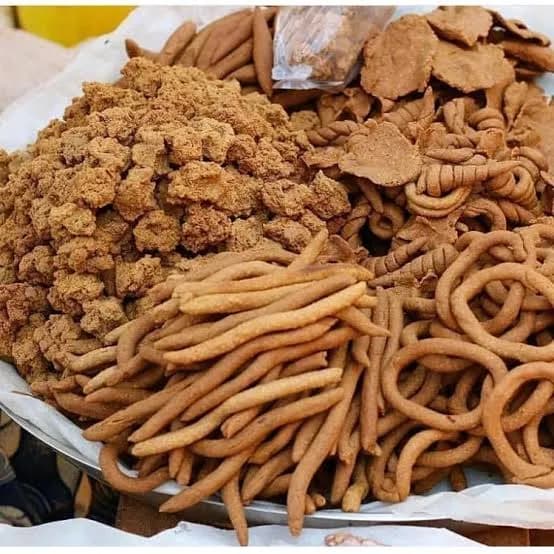
Gullisuwa is a Hausa fried pastry from Northern Nigeria, made from wheat flour worked with ground roasted peanuts and fried until crisp. The groundnuts are what distinguish it. They give the pastry a toasted, faintly sweet base that a plain flour dough does not have, and groundnuts are one of the defining crops of the northern Nigerian savannah.
It belongs to celebration rather than to the everyday. Gullisuwa appears at weddings, at festive occasions and as street food, made in quantity because it keeps well and travels well, and it is offered to guests as part of the spread rather than served as a course. That is the usual position of a fried snack in Hausa hospitality: present, plentiful and not the point of the meal.
Its exact origin is not documented. What can be said is that it belongs to the Hausa, that it has been made for generations, and that Northern Nigeria's long trade and cultural connection with the Sahara and the Arab world is visible in a good deal of its sweet and fried food. Beyond that, the specific lineage of gullisuwa is not recorded, and the honest position is to say so rather than to construct one.
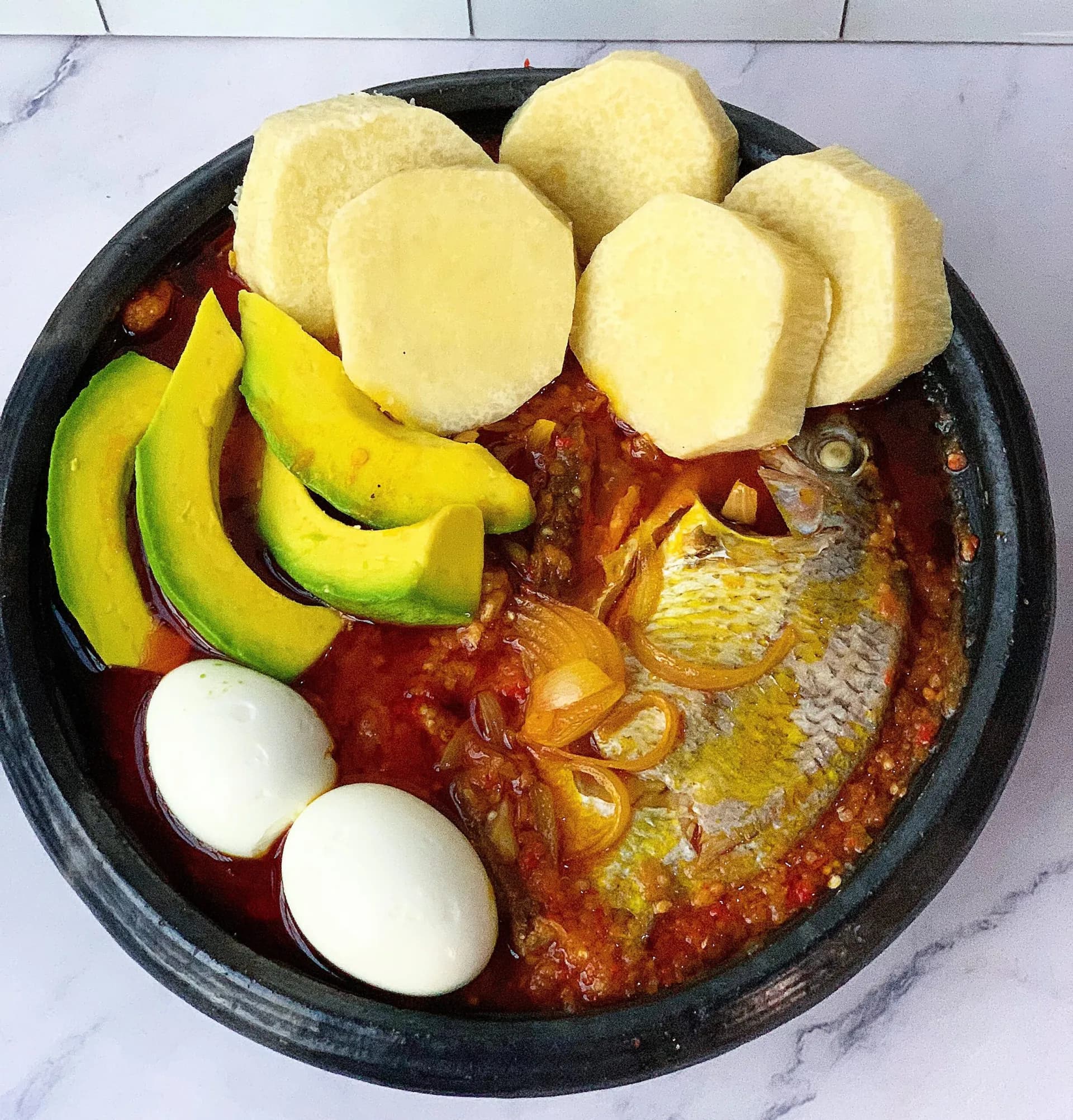
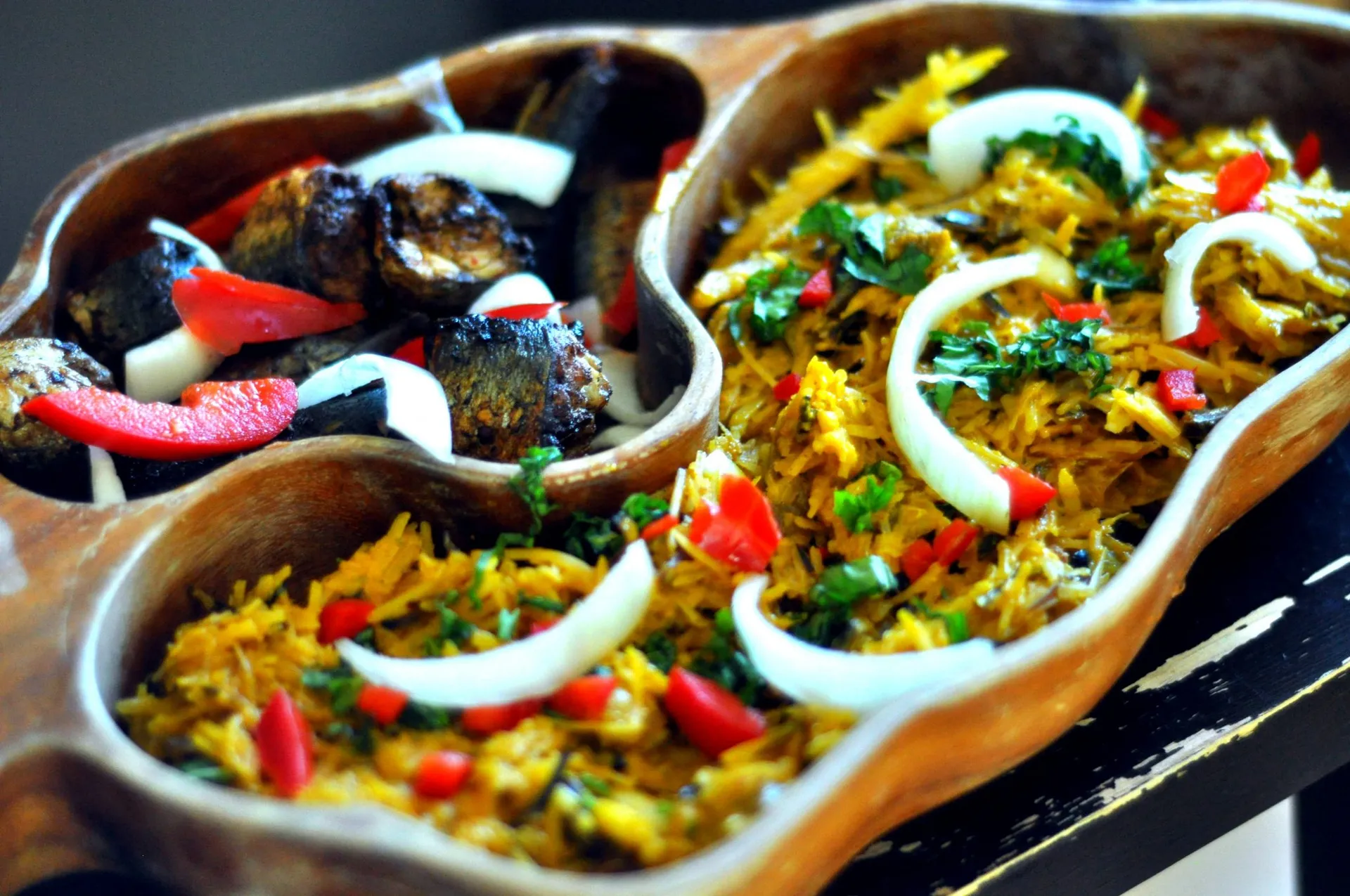
Garden eggs are the small white and pale green African aubergines that give this stew its name and its body. They are firmer and more bitter than the large purple aubergine, and when they are cooked soft and ground down they produce a thick, faintly bitter base that no other vegetable substitutes for.
This is the earthenware bowl version, and the bowl is not incidental. The pepper, onion, roasted tomato and cooked garden eggs are ground directly in an asanka, the ridged clay bowl used across Ghana, which crushes rather than purees and leaves a coarse, uneven texture. A blender produces a different dish. The other common preparation fries the components instead, and Ghanaian cooks treat the two as separate recipes rather than as variations.
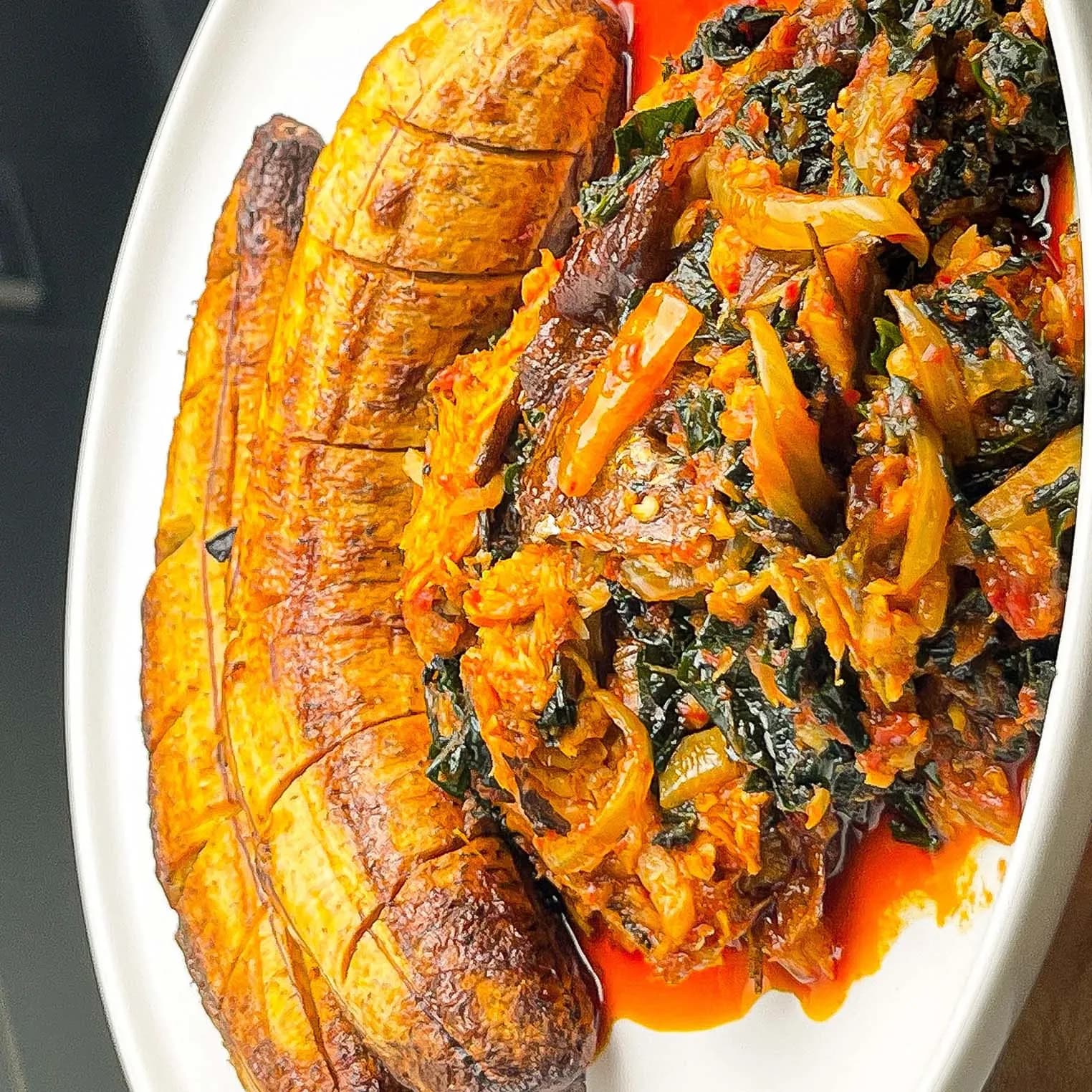
The stew is most closely associated with the Akan of Ghana, and its usual partners on the plate are yam or plantain. Koobi, salted and cured fish, is what supplies the savoury weight, alongside smoked mackerel and herring, and palm oil finishes it. Egg and avocado go on top. It is a dish assembled at the table as much as made at the stove.