Nous utilisons des cookies essentiels au fonctionnement du site. Nous aimerions aussi déposer des cookies de mesure d’audience et des cookies publicitaires, uniquement avec votre accord. Vous pouvez choisir séparément pour chacun. Lire notre politique relative aux cookies

Loading
Recettes
Parcourez les archives par pays, par plat et par temps de cuisson.
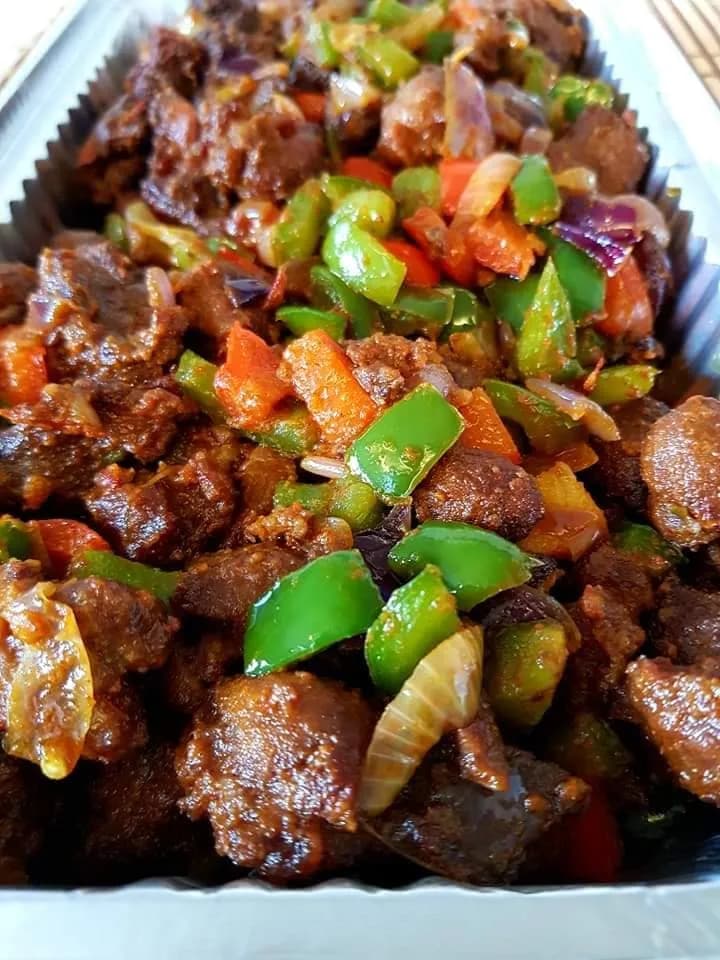
Suya is skewered meat coated in yaji, a dry peanut based spice blend, and it is the best known street food in Nigeria. It comes from the Hausa people of the north, where it is also called tsire, and it spread from there across West Africa. Sudan has a close relative in agashe.
Yaji is what makes it suya rather than grilled meat. The blend is built on ground peanut, usually in the form of kuli kuli crushed to a powder, with ginger, chilli, onion powder and other seasonings, and the peanut is what gives suya its particular nuttiness and the slightly gritty coating that clings to the meat. Meat without yaji is not suya, whatever else is done to it.
Beef and ram are the traditional cuts, along with kidney, liver and tripe, and chicken is the newer arrival that has become common. It is sold at night from roadside grills, cut on a board and handed over in newspaper with sliced raw onion, tomato and cabbage, and the raw onion alongside the hot spice is not a garnish but part of how it is eaten. The one thing worth knowing before making it is that yaji contains peanut, which matters to anyone with an allergy.
Oyster mushrooms grilled and tossed in suya spice. It is a plant-based version of the Nigerian street food, and it works better than most meat substitutions do.
**The traditional suya spice contains ground peanuts, and this recipe includes them.** The source flags it and offers to leave them out, which is honest, but it is worth stating clearly, because a peanut allergy and a suya spice blend are a genuinely dangerous combination and the name gives no warning.
Suya proper is skewered beef, ram or chicken rubbed in yaji, the spice blend of ground roasted peanuts, ginger, cayenne, garlic, onion powder and paprika, and grilled over open coals. It is Hausa in origin, from northern Nigeria, and it is sold across Nigeria, Cameroon, Niger, Ghana and parts of Sudan. Kyinkyinga is the Ghanaian name, agashe the Sudanese.
Oyster mushrooms are the right substitution and not an arbitrary one. Shredded, they have a fibrous, layered structure that genuinely resembles pulled meat, they take on the dry rub readily, and they char well. Most vegetables do neither.
The source's method is very compressed, one step reads "put in a preheated medium", with the word oven missing, and has been filled out below.
Dan wake is a northern Nigerian dish of dumplings made from bean flour and kuka, the powdered leaf of the baobab tree. The name translates from Hausa as son of beans, and the dumplings cook in water until they float, then are drained and dressed with oil and spice, and eaten with a salad of raw vegetables and hard egg.
Kuka is what colours it and what makes it northern. Baobab leaf powder is used across the Sahel as a thickener and a green vegetable, and its slightly mucilaginous quality helps bind the bean flour dough. Potash, kanwa, is the third component, a traditional alkaline salt used across West African cooking to soften and to alter texture, and it is what gives dan wake its particular chew.
It is deliberately plain on its own. The dumplings carry almost no seasoning and rely entirely on what is put on them: yaji, the peanut based suya spice, fried oil, sliced onion, cabbage, tomato and cucumber, and often a sauce alongside. That construction, a neutral base plus an assertive dressing, is common across northern Nigerian street food and it is why dan wake is sold from stalls rather than mainly cooked at home.
Tilapia is native to Africa, including Ghana, and it is one of the fish Ghanaians eat most. It belongs to the Cichlidae family, grows fast, and has a mild flavour and tender flaky flesh that takes on whatever seasoning it is given, which is why it appears in so many different preparations.
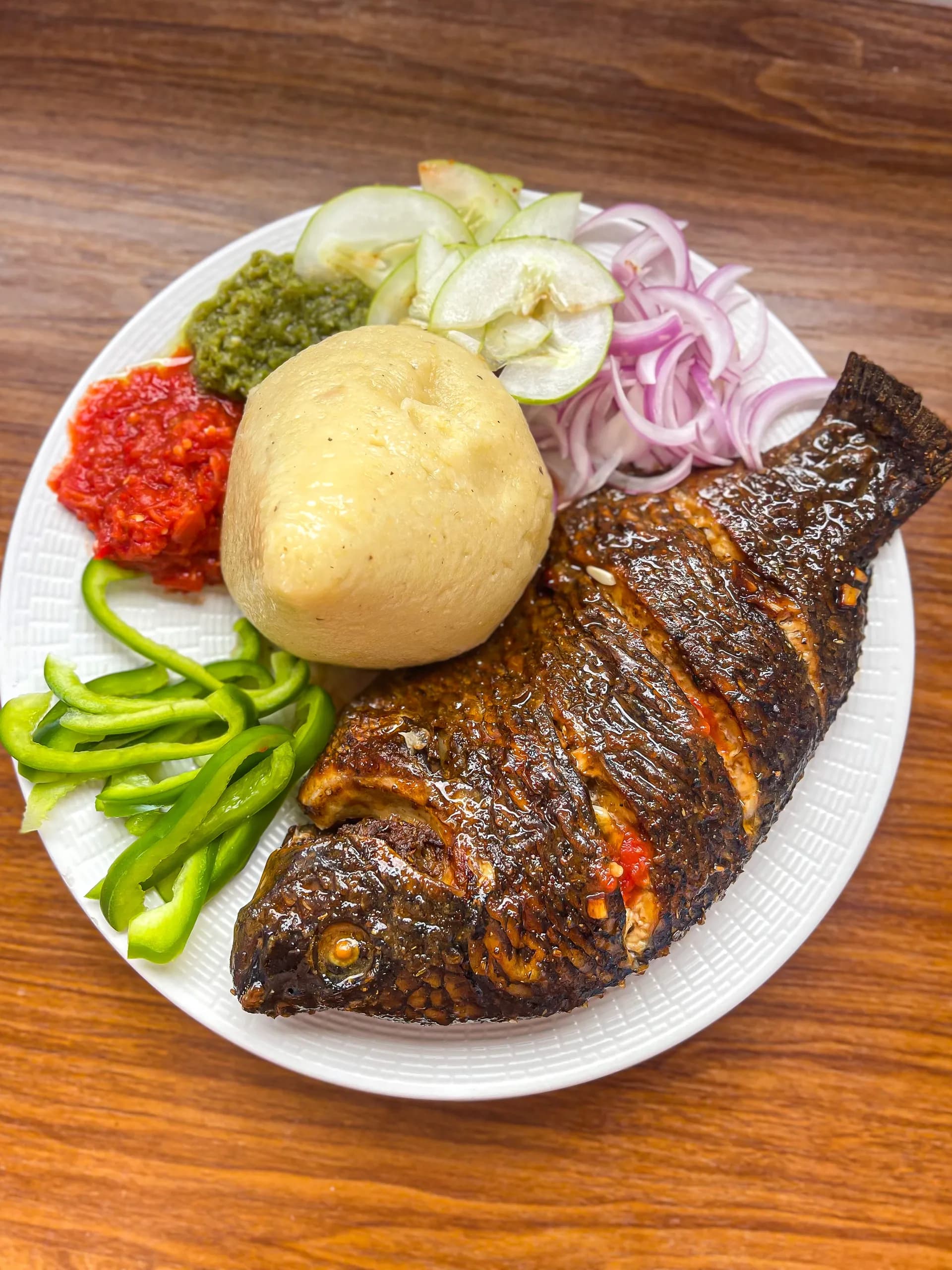
In Ghana it is most closely associated with banku, the fermented corn and cassava dough. Grilled tilapia with banku and a fierce pepper sauce is one of the country's defining meals, sold from roadside grills and chop bars and eaten with the fingers. The tang of the fermented banku against the mild fish is the whole reason the pairing works.
This version bakes rather than grills, which is the practical domestic method and gives a cleaner result without a charcoal grill. The seasoning is a marinade rather than a rub, built on oil, garlic, ginger, chilli and soy sauce, and the source names two commercial Ghanaian spice blends among the ingredients. Any all purpose seasoning stands in. Banku and tilapia is generally eaten as lunch or dinner rather than breakfast, though the source is relaxed about that, noting there are no strict rules.