Nous utilisons des cookies essentiels au fonctionnement du site. Nous aimerions aussi déposer des cookies de mesure d’audience et des cookies publicitaires, uniquement avec votre accord. Vous pouvez choisir séparément pour chacun. Lire notre politique relative aux cookies

Loading
Recettes
Parcourez les archives par pays, par plat et par temps de cuisson.
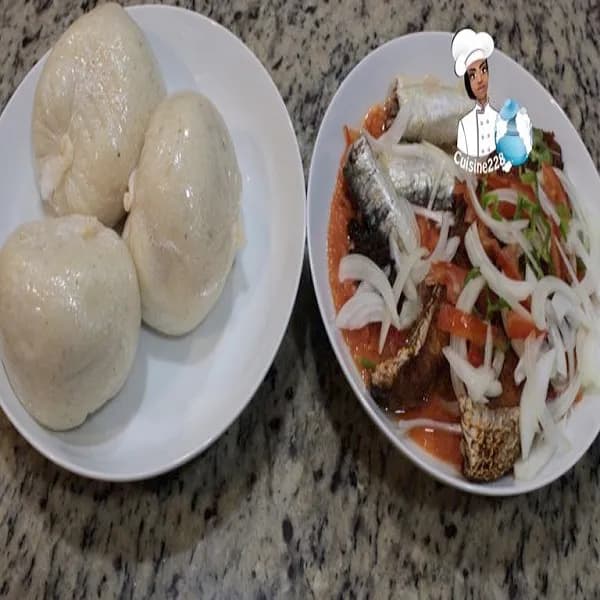
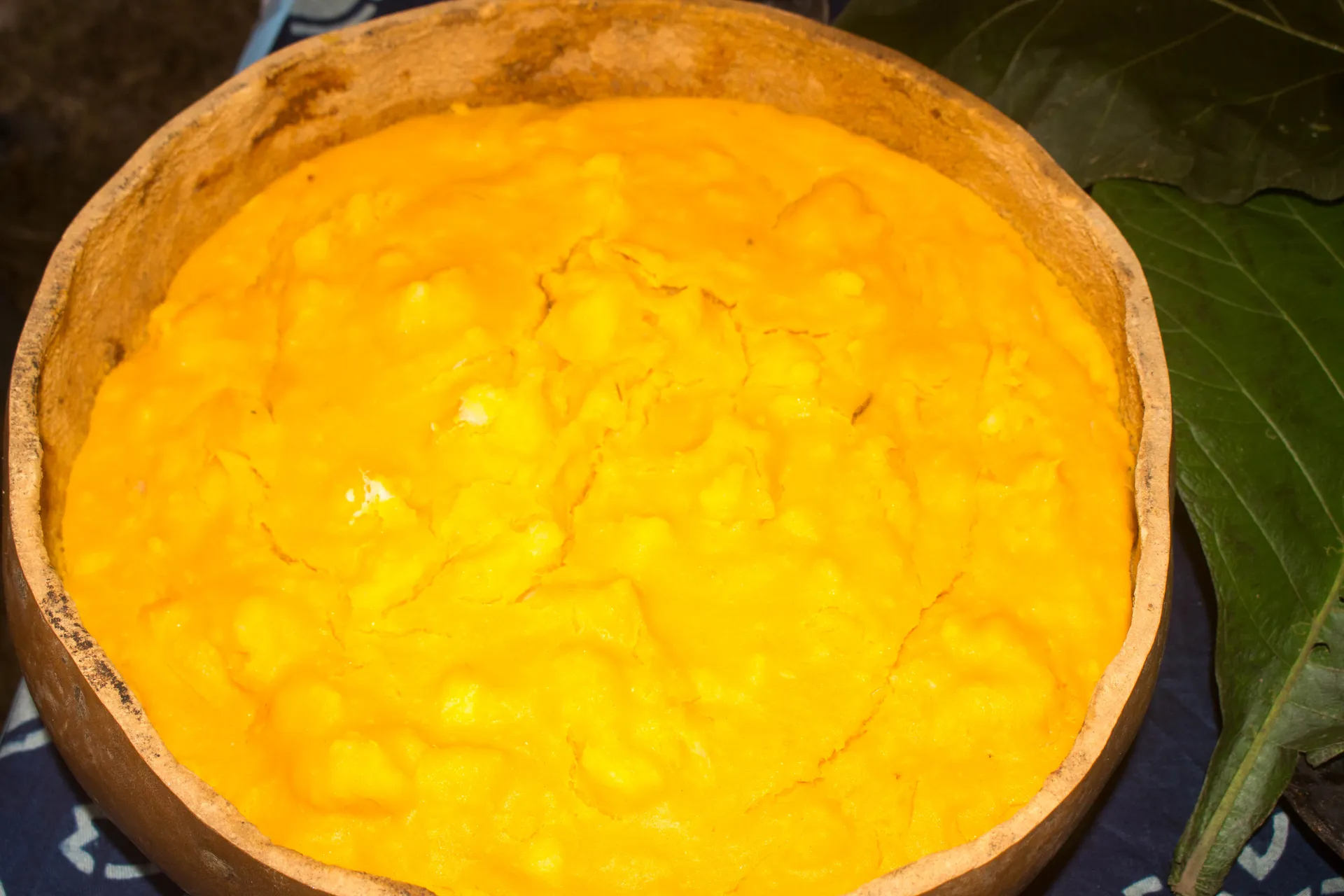
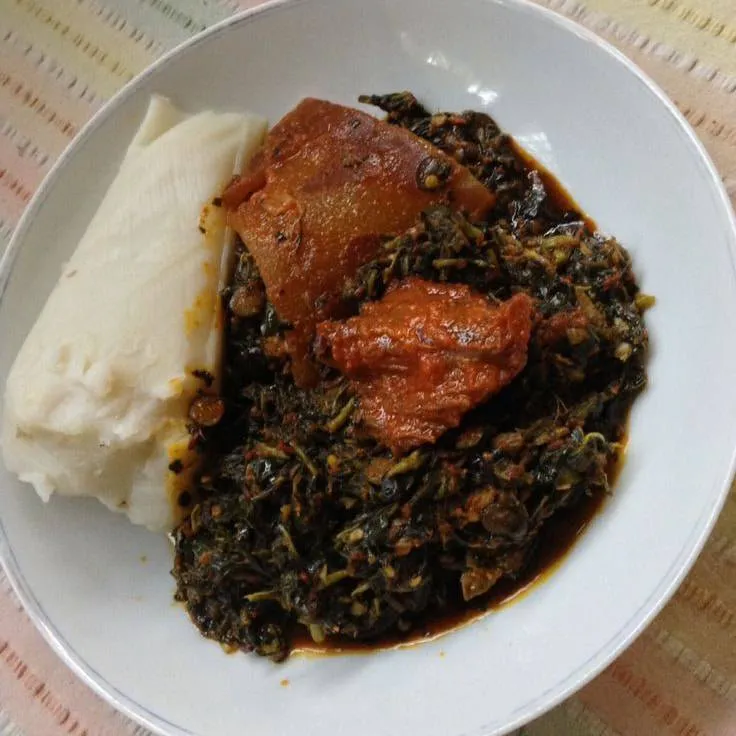
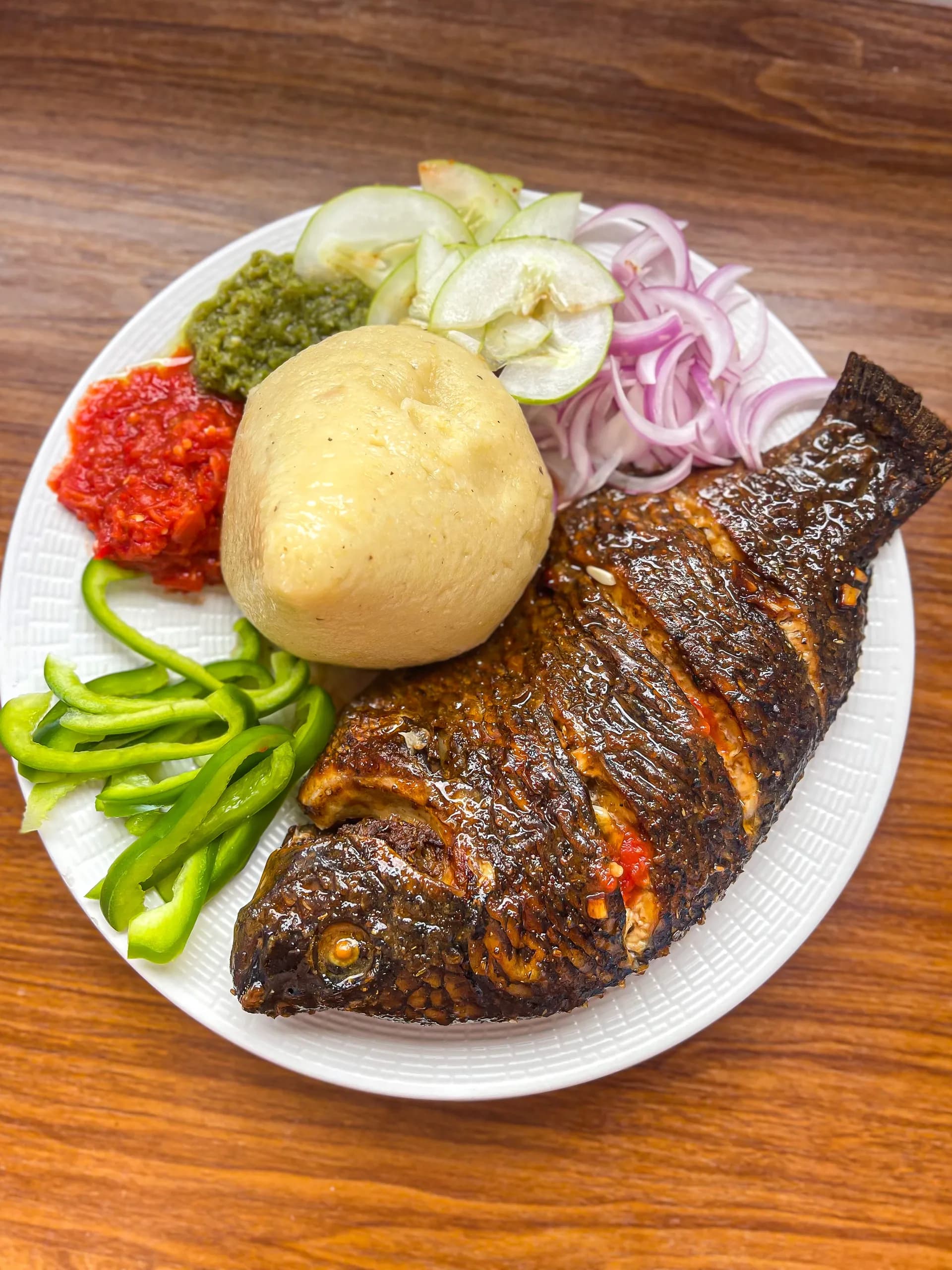
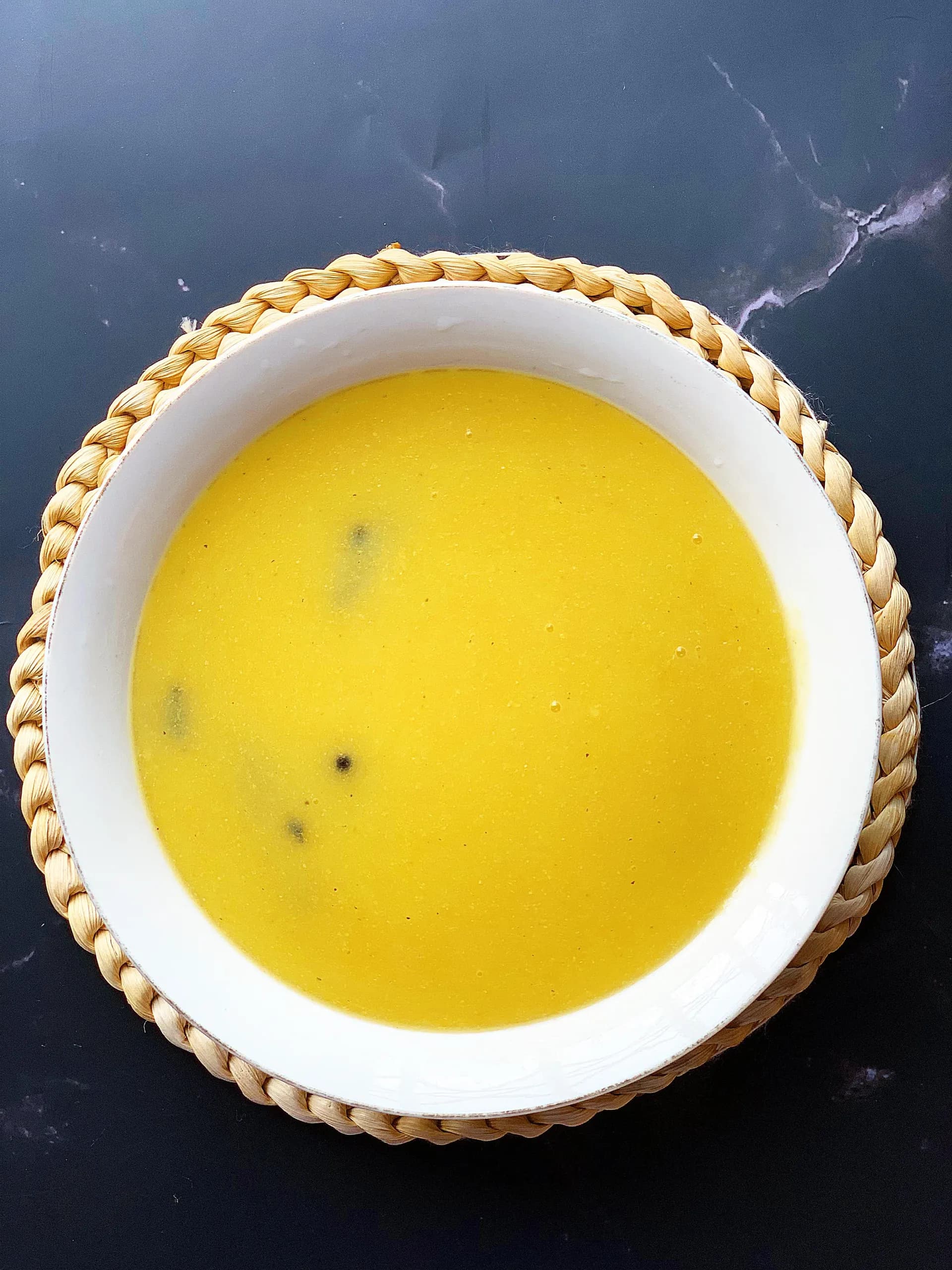
Eba is garri turned into a swallow, cassava that has already been peeled, grated, fermented, pressed and dry-fried into granules, then reconstituted with boiling water into a smooth, firm dough eaten with soup.
It is probably the most-eaten swallow in Nigeria, and its dominance has an entirely practical explanation. Garri keeps for months without refrigeration, needs no cooking to store, is cheap, and turns into a meal in about three minutes with nothing but hot water. In a country where power and cold storage are not guaranteed, that combination is difficult to beat. Pounded yam may carry more prestige, but garri carries the country.
Two kinds are in general use. Yellow garri has palm oil worked in during frying, which gives it colour and a richer taste. White garri is fried without it and is plainer and more neutral. Which one a household keeps is largely regional and partly personal.
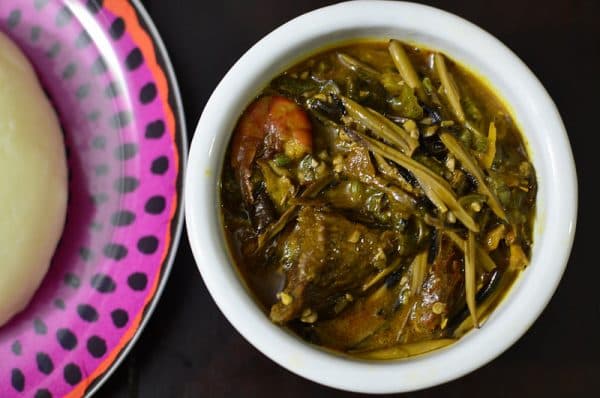
Eba is not eaten on its own. It is a vehicle, pinched off with the fingers, rolled lightly, dipped into soup and swallowed rather than chewed, which is where the English name for the category comes from. Egusi, okra, afang, ogbono and every other Nigerian soup are all served with it.
The fermentation that produces garri also removes the cyanogenic compounds present in raw cassava, which is why the processing matters as much as it does.
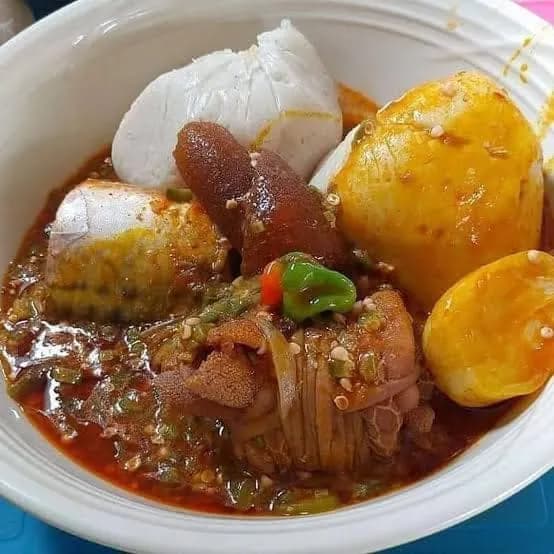
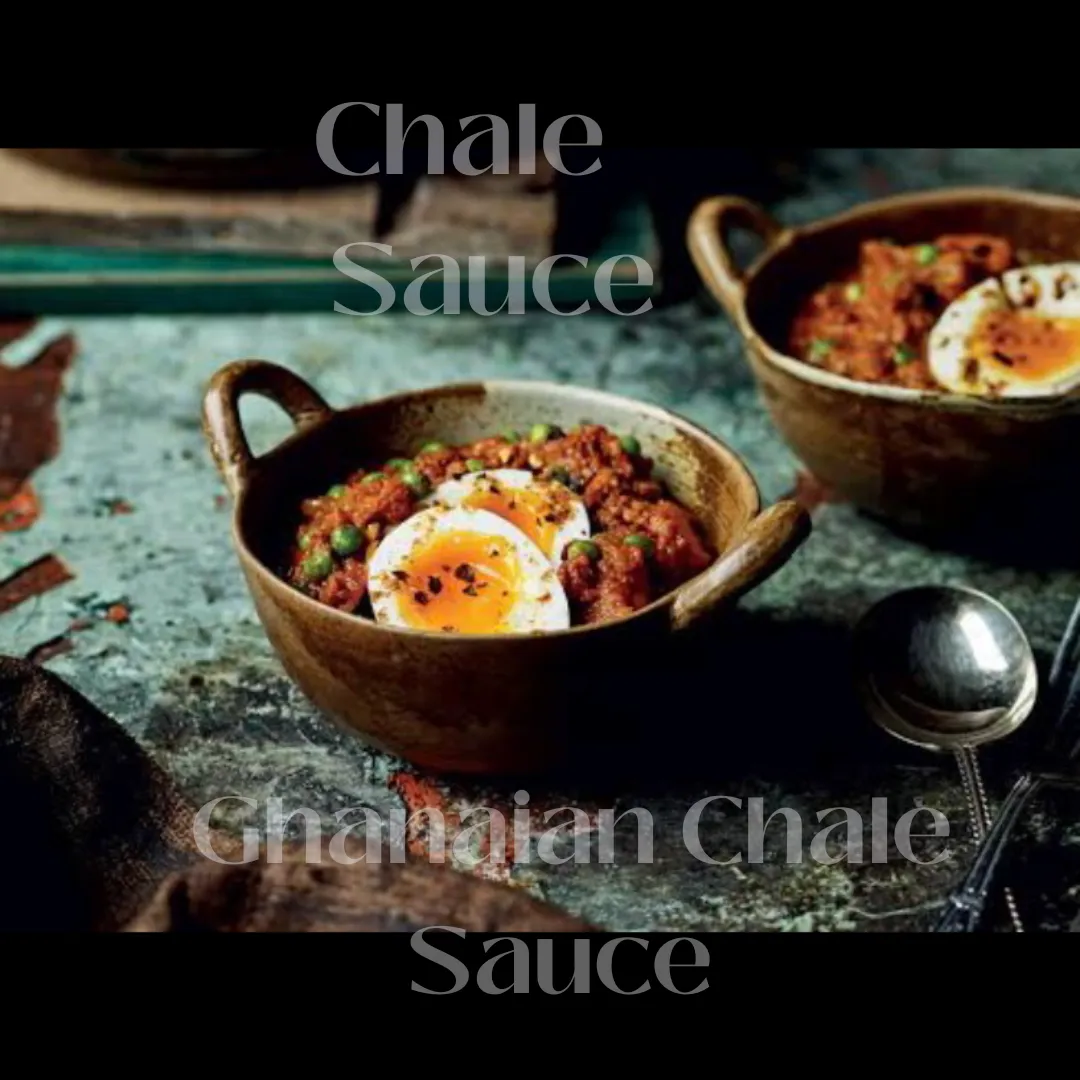
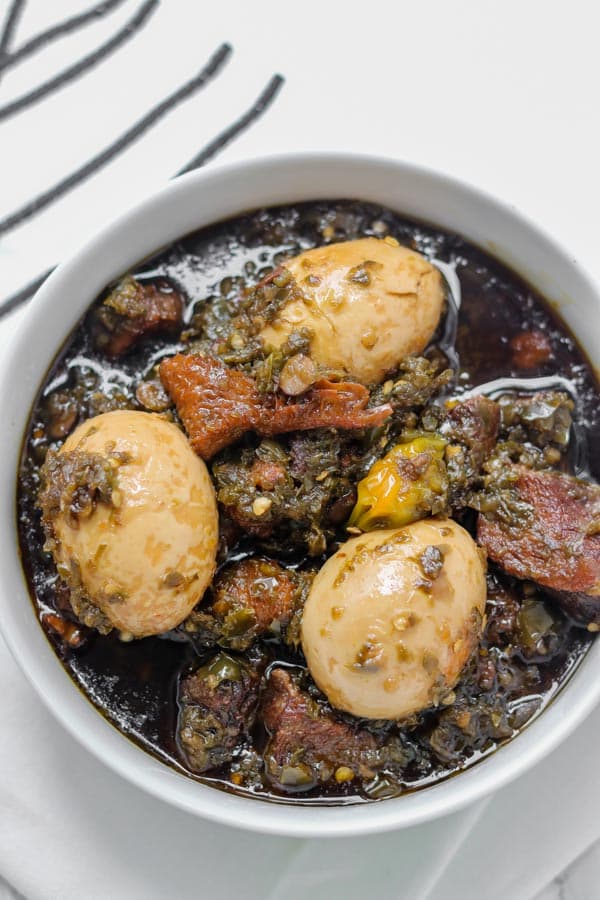
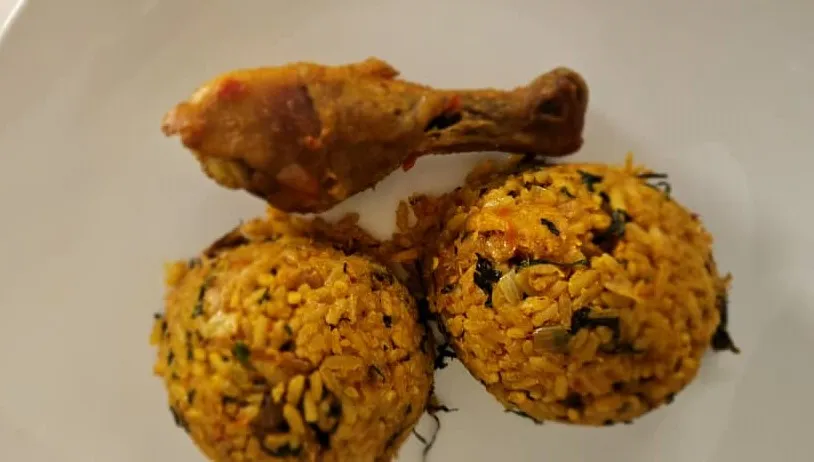
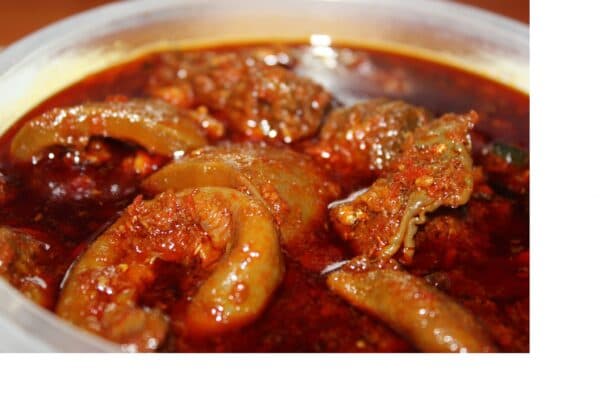
Ayamase is the green pepper stew of southwestern Nigeria, known almost as widely by two other names, ofada sauce, after the rice it is served with, and designer stew, which is what Lagos took to calling it.
It is defined by two things that would be faults in almost any other stew. The peppers are green rather than red, which gives the sauce its unusual dark olive colour. And the palm oil is deliberately bleached, heated until it stops smoking and loses its red pigment, which strips out the characteristic palm flavour and leaves something nuttier and smokier behind. That bleaching step is the whole signature of the dish, and a version made with unbleached oil is a different sauce.
Around that sit iru, the fermented locust bean that carries the deep savoury note, assorted meats including offal, and boiled eggs, which are close to obligatory.
The name points to a person. Ayamase is traced to Ikenne-Remo in Ogun State and to a woman remembered as Mrs Felicia, Iya Mase, the wife of Mase, who is credited with the dish. It travelled from there into Lagos party food, where its reputation as something special was made.
It is served with ofada rice, the short, unpolished local rice whose earthy flavour is the intended partner.
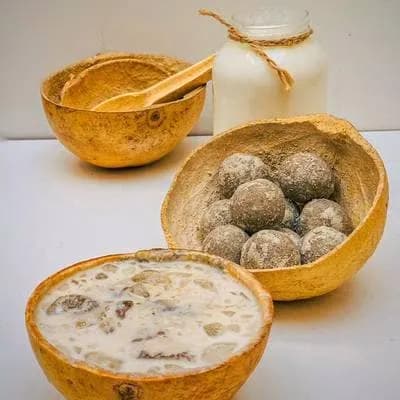
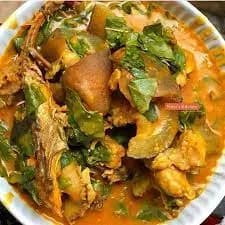
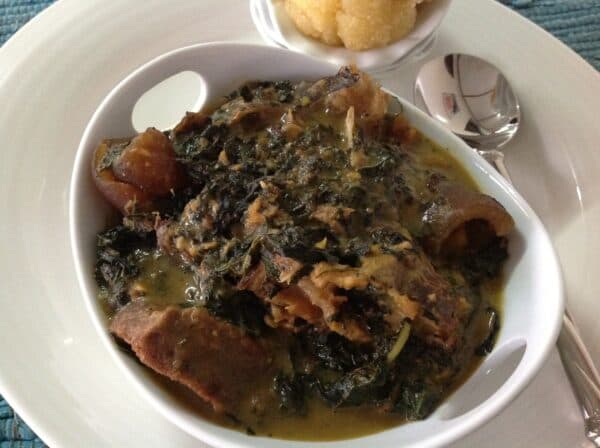
Oha soup is an Igbo soup from southeastern Nigeria, built on the leaves of Pterocarpus mildbraedii, an African evergreen tree. The leaves are seasonal, which makes the soup an occasion rather than an everyday dish, and there is no substitute that reproduces its flavour.
The leaves are shredded by hand, never cut with a knife. The reason given is that a blade turns the soup bitter, and whether or not that holds chemically, the practice is observed universally and is one of the more widely known food rules in Igbo cooking. It is worth following on its own terms.
Thickening is where families diverge. Cocoyam, pounded smooth after boiling, is the standard, though achi and ofor are both used and give slightly different bodies. The oil divides along geography: Anambra households use akwu, raw palm kernel oil, while Imo households use ordinary palm oil, and each considers its own version correct. Uziza leaves go in alongside the oha for a peppery counterpoint, and ogiri igbo, the fermented seasoning paste, supplies the deep savoury note the soup is built around.
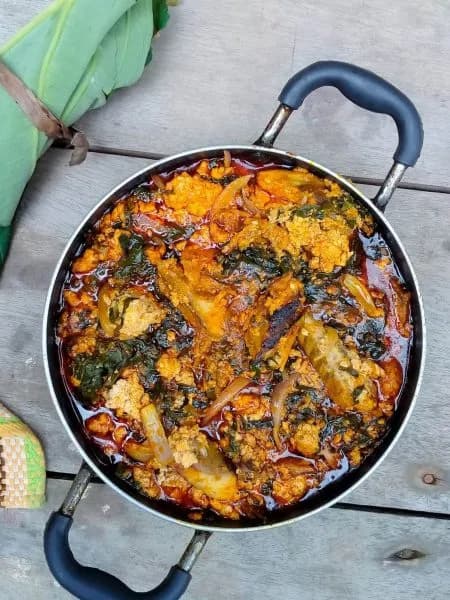
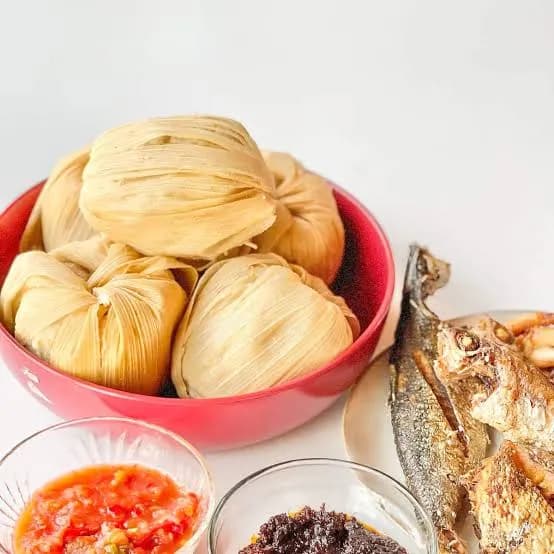
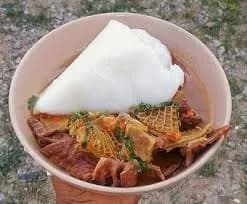
Eko and efo riro is a Yoruba pairing, and each half is a substantial dish in its own right. Eko, also called agidi, is a firm pudding set from fermented corn starch, sliced and eaten cold or at room temperature. Efo riro is the Yoruba vegetable stew, built on palm oil, blended pepper, locust beans and leafy greens with assorted meat and smoked fish through it.
The contrast is the point. Eko is cool, firm and slightly sour from the fermentation, with a clean corn flavour and almost nothing else going on. Efo riro is hot, oily, salty and densely flavoured. Putting them together works in the way that plain rice and a heavy curry work, and neither is quite right without the other.
Eko is traditionally set in wrapped leaves, which give it its characteristic shape and a faint aroma the greased mould does not reproduce. It is sold that way across southwestern Nigeria, most often alongside akara or moin moin at breakfast, though the pairing with efo riro makes it an evening meal. Riro means stirred, and the name describes the technique: the vegetables are stirred into the finished stew base rather than cooked in it, so they hold their texture.