Nous utilisons des cookies essentiels au fonctionnement du site. Nous aimerions aussi déposer des cookies de mesure d’audience et des cookies publicitaires, uniquement avec votre accord. Vous pouvez choisir séparément pour chacun. Lire notre politique relative aux cookies

Loading
Recettes
Parcourez les archives par pays, par plat et par temps de cuisson.
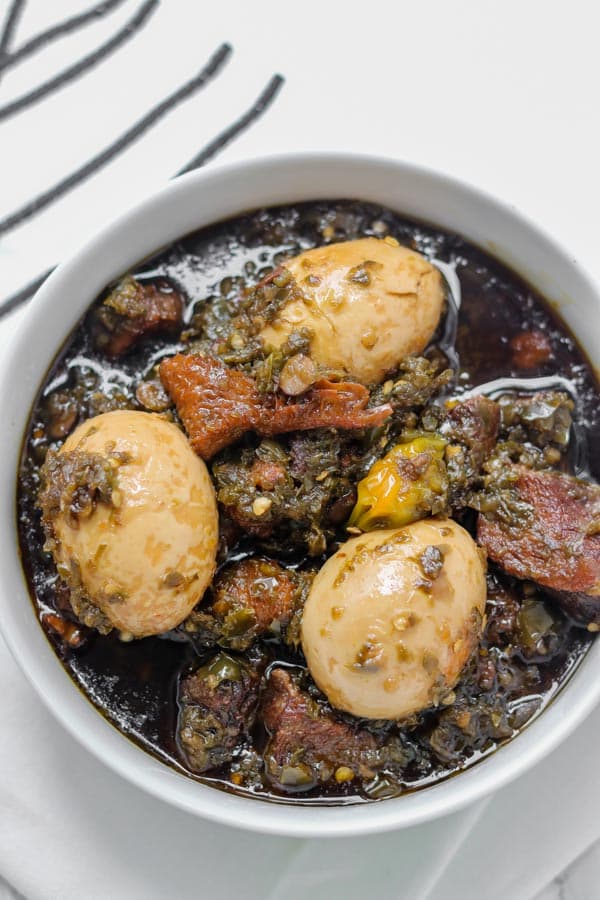
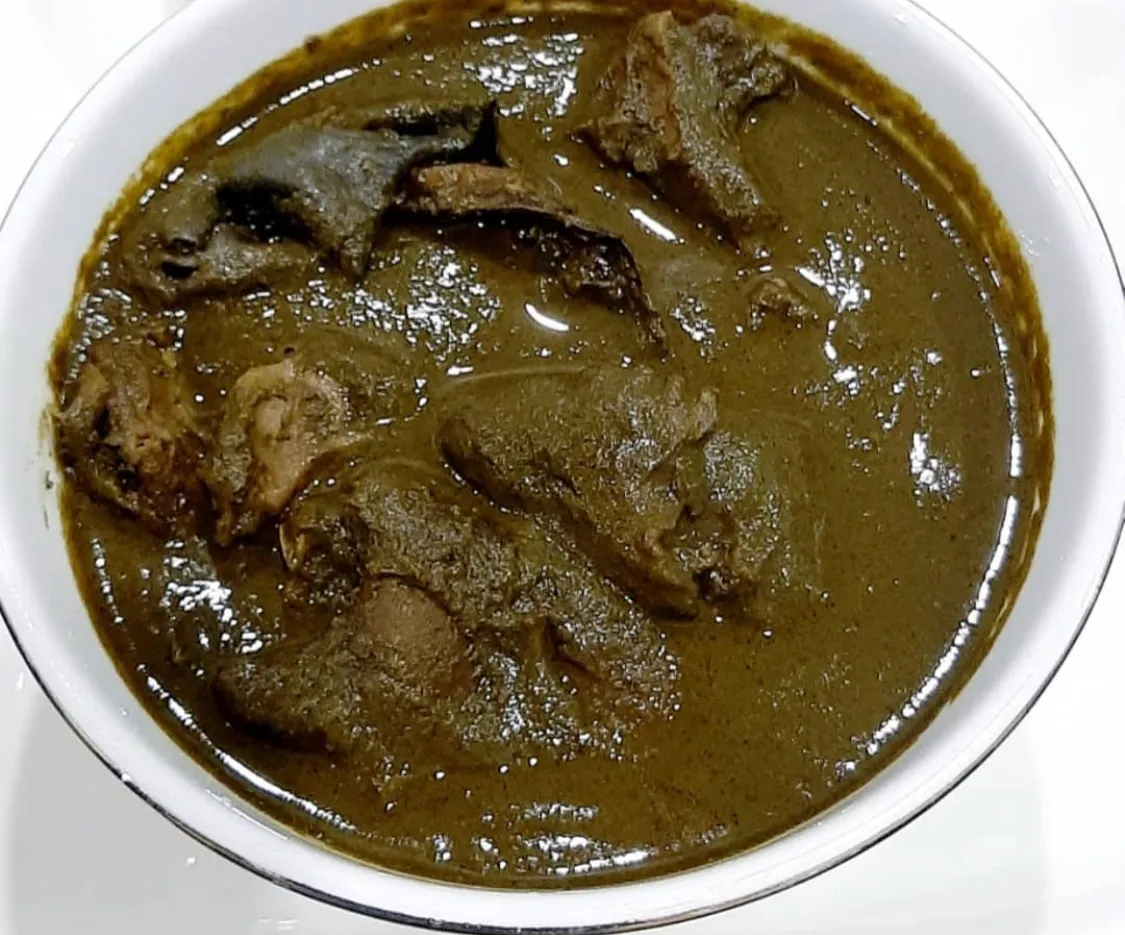
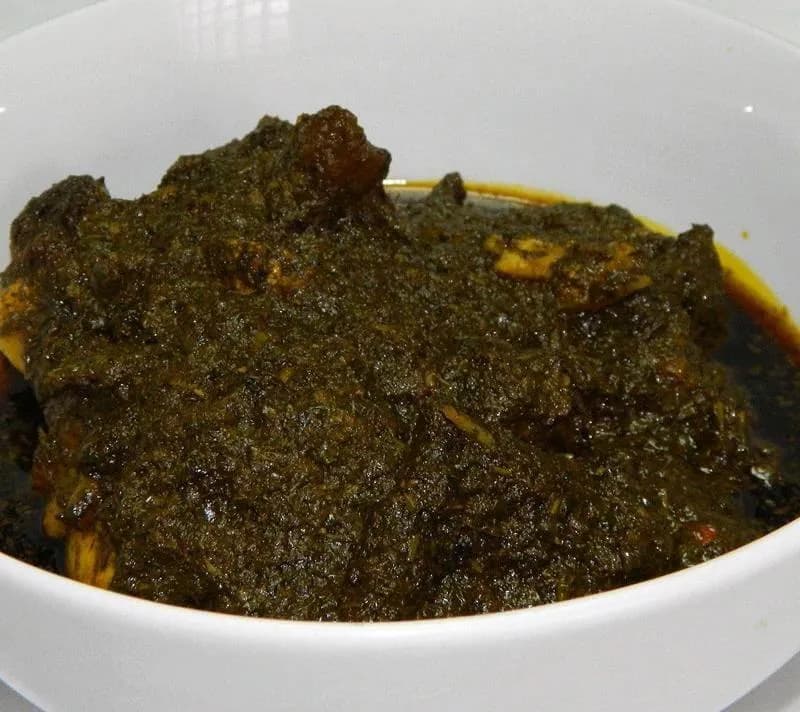
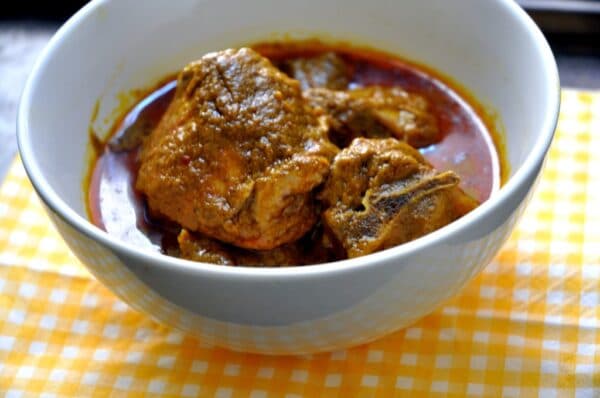
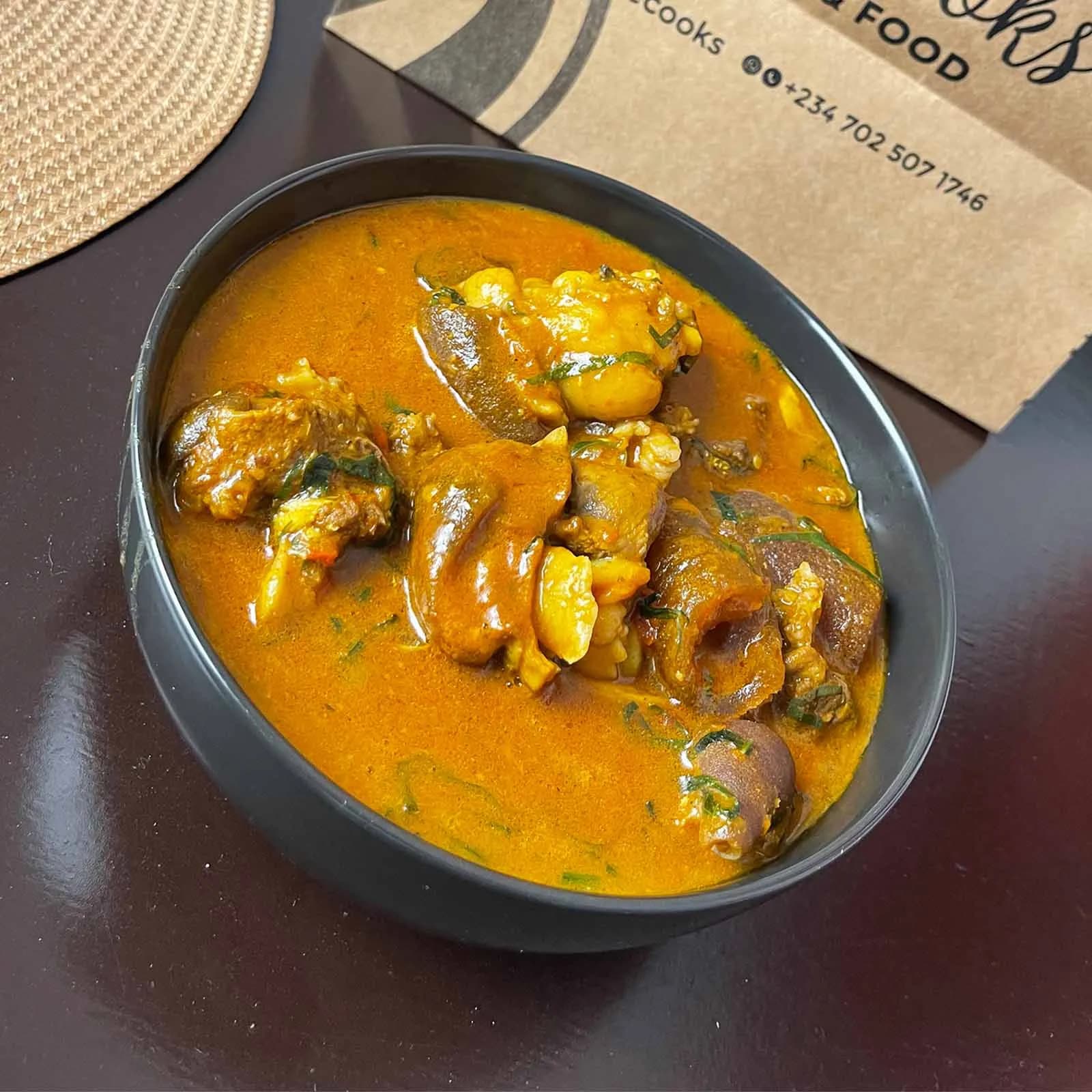
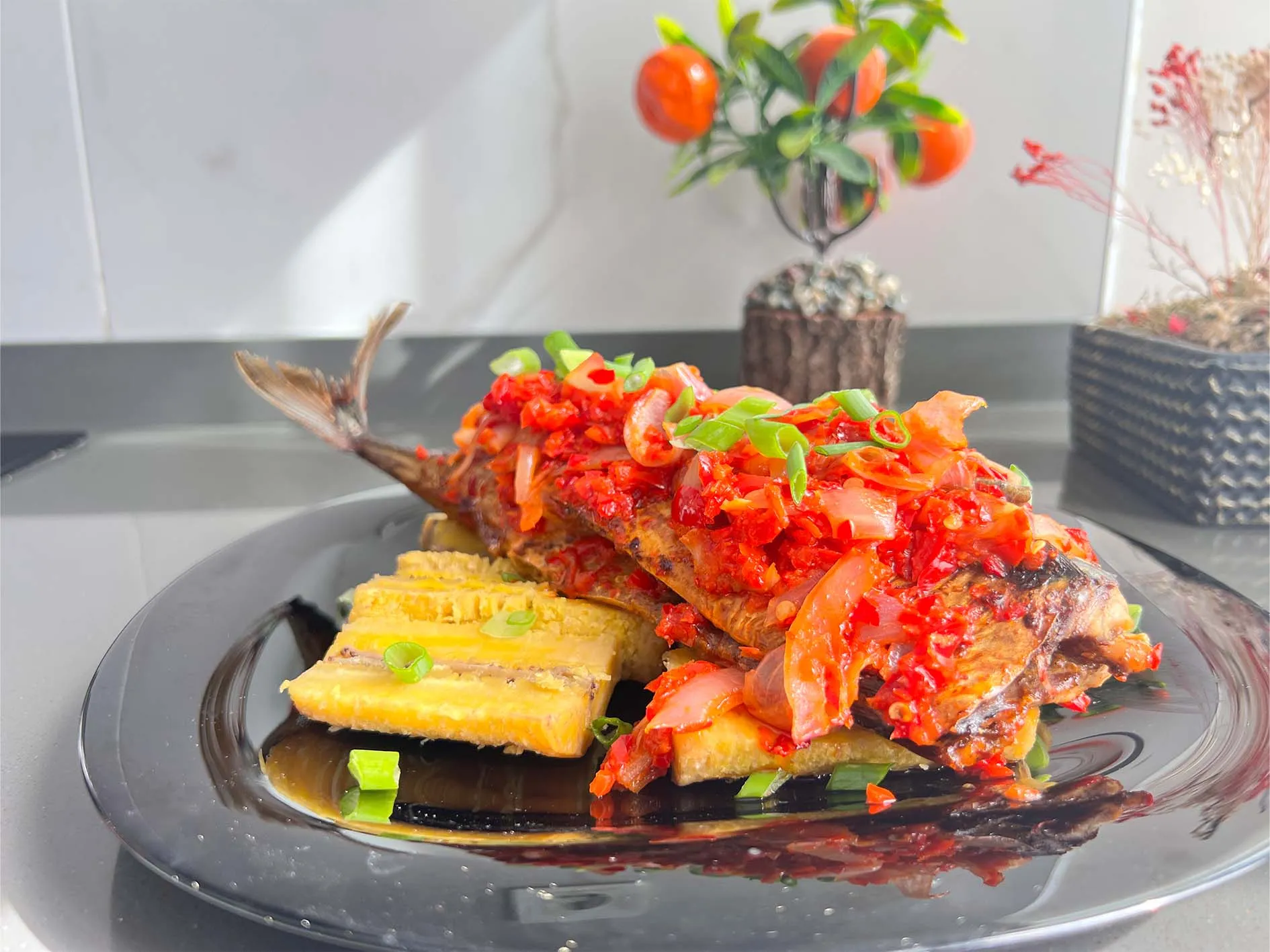
Ayamase is the green pepper stew of southwestern Nigeria, known almost as widely by two other names, ofada sauce, after the rice it is served with, and designer stew, which is what Lagos took to calling it.
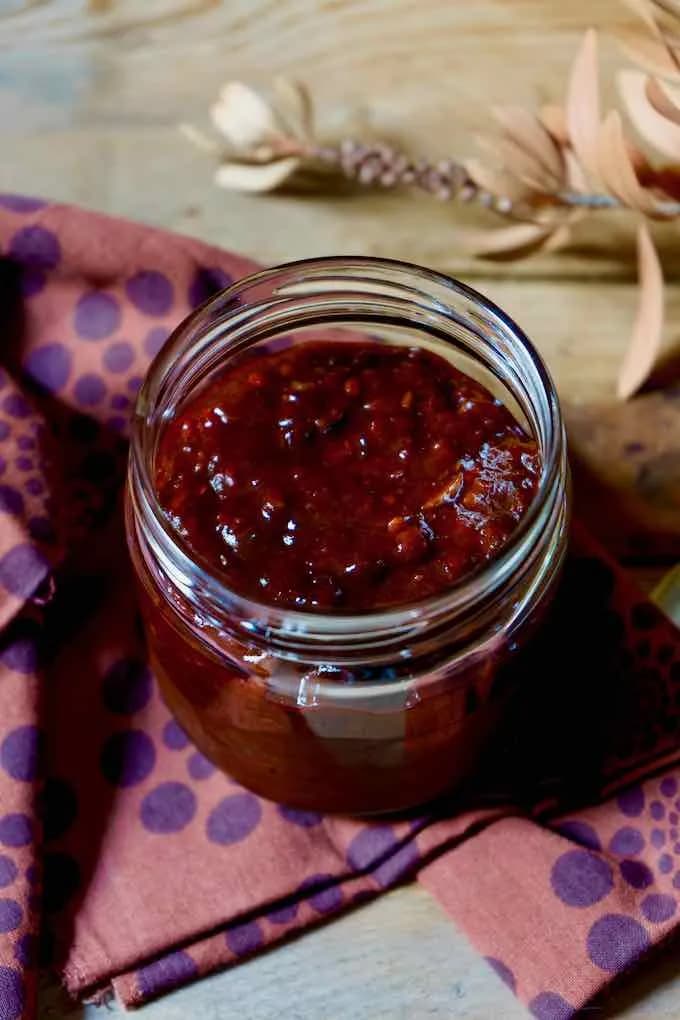
It is defined by two things that would be faults in almost any other stew. The peppers are green rather than red, which gives the sauce its unusual dark olive colour. And the palm oil is deliberately bleached, heated until it stops smoking and loses its red pigment, which strips out the characteristic palm flavour and leaves something nuttier and smokier behind. That bleaching step is the whole signature of the dish, and a version made with unbleached oil is a different sauce.
Around that sit iru, the fermented locust bean that carries the deep savoury note, assorted meats including offal, and boiled eggs, which are close to obligatory.
The name points to a person. Ayamase is traced to Ikenne-Remo in Ogun State and to a woman remembered as Mrs Felicia, Iya Mase, the wife of Mase, who is credited with the dish. It travelled from there into Lagos party food, where its reputation as something special was made.
It is served with ofada rice, the short, unpolished local rice whose earthy flavour is the intended partner.
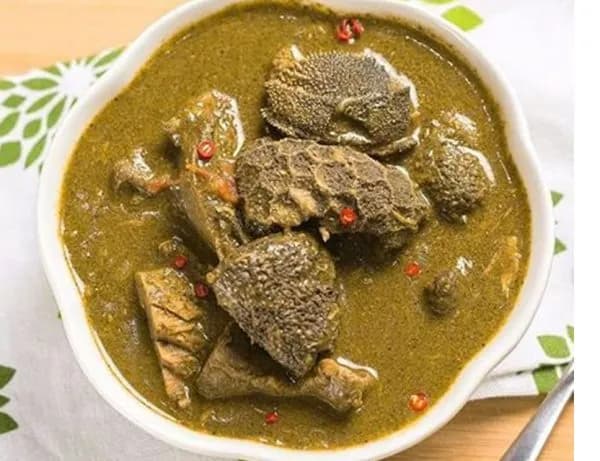
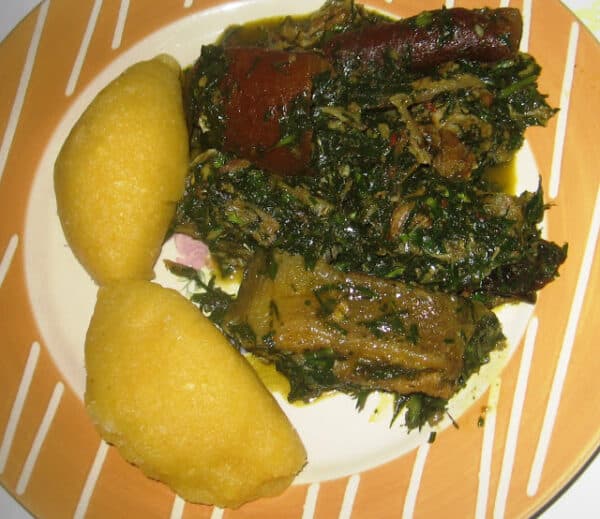
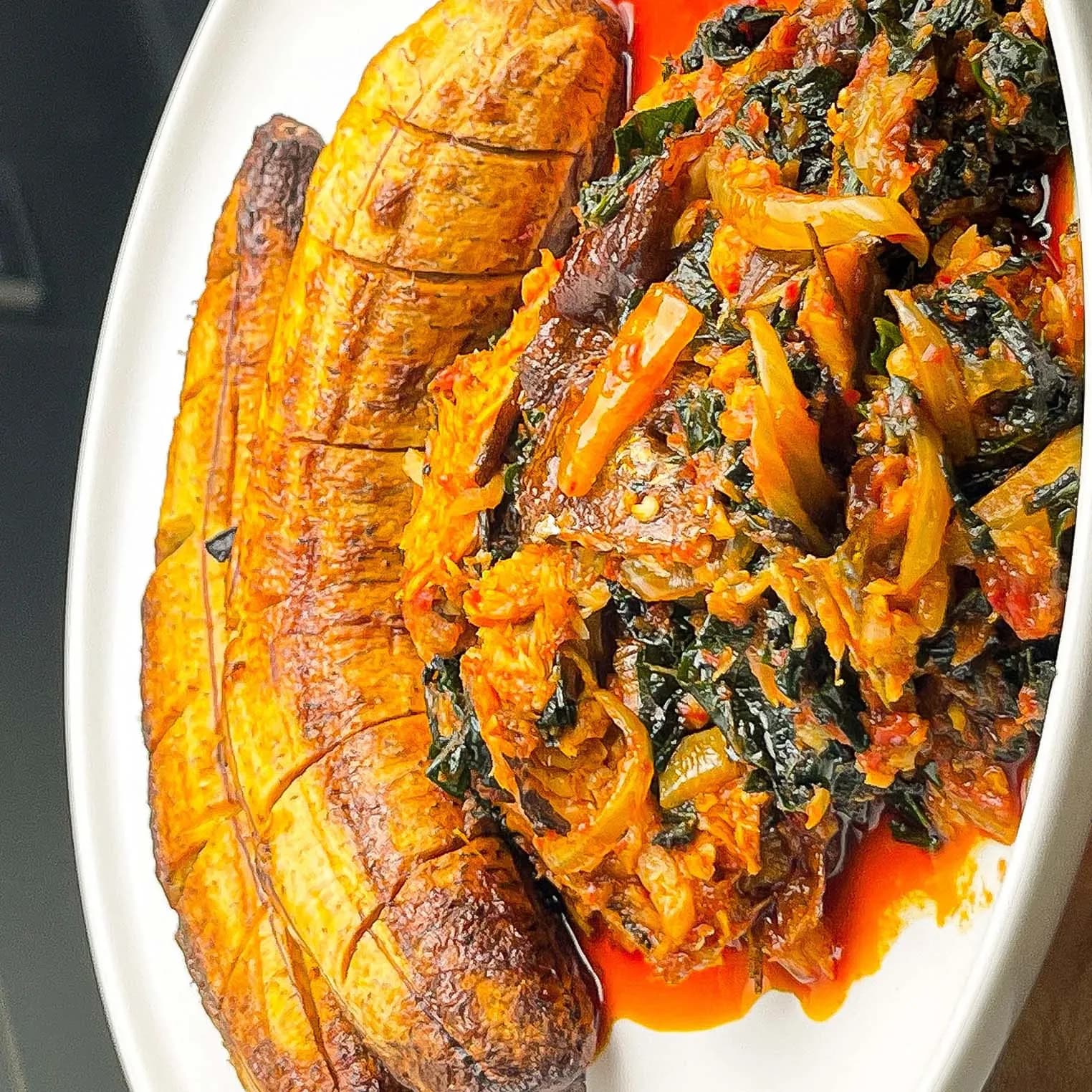
Afang soup belongs to the Efik and Ibibio people of Cross River and Akwa Ibom in southeastern Nigeria, and it is built on two vegetables that do quite different jobs.
Afang, okazi to the Igbo, and known botanically as Gnetum africanum, is a tough, wiry forest leaf with a faintly bitter edge. It is sliced extremely finely, almost shredded, because whole it would be unpleasant to eat. Waterleaf is the counterweight: soft, quick to wilt, and full of moisture, which is what gives the soup its body without much added liquid.
The pairing is the point, and it is what separates afang from edikang ikong, the other great vegetable soup of the same region. Edikang ikong uses waterleaf and ugu, the pumpkin leaf, and reads as sweeter and greener. Afang uses waterleaf and okazi, and carries that characteristic bitterness. People from the region can tell them apart instantly, and the leaf is the whole distinction.
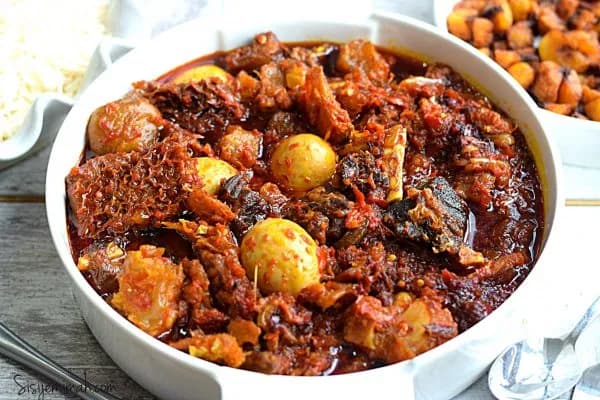
Around the vegetables sits an assortment that scales with the household budget, beef, shaki, dried and fresh fish, periwinkle, crayfish, palm oil, pepper. It is a soup that has long been read as a marker of a generous table, and it is served with any of the swallows.
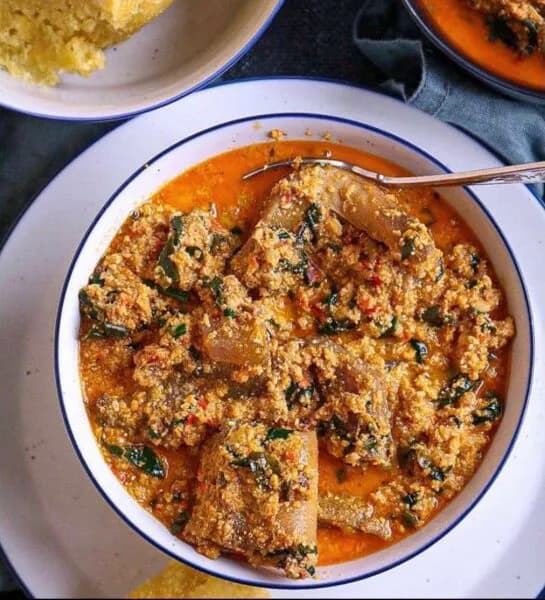
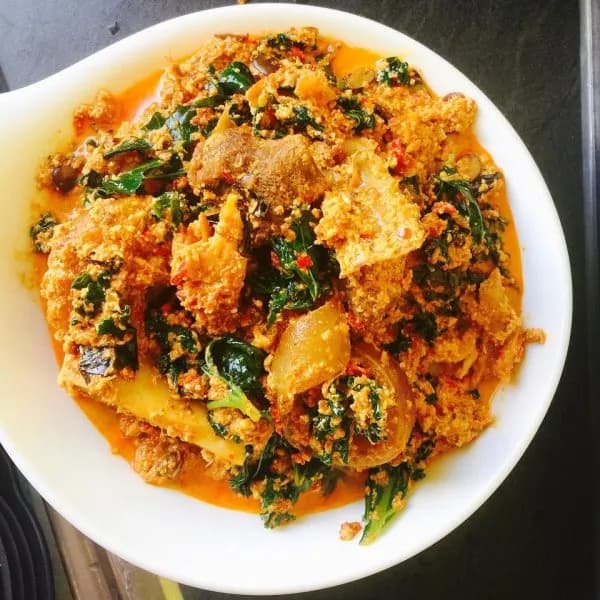
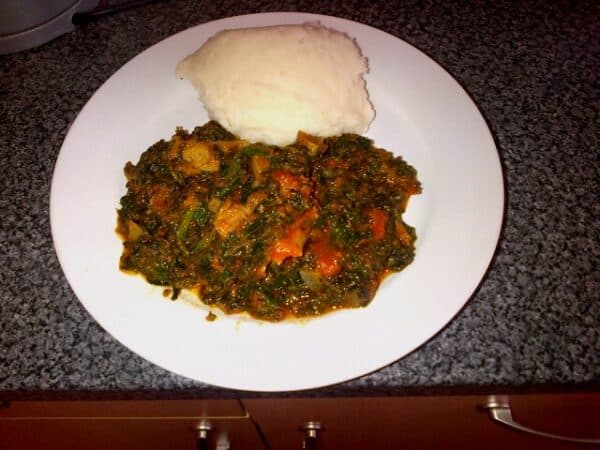
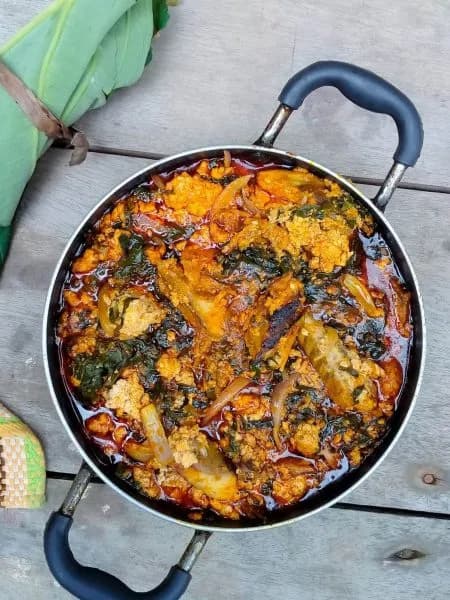
Uziza egusi is egusi soup made with uziza leaves, and the leaf is what distinguishes it. Egusi soup itself is one of Nigeria's most widely eaten dishes, thickened with ground melon seed and made differently by almost every group that makes it: miyan gushi in Hausa, ofe egusi in Igbo, efo elegusi in Yoruba.
Uziza is Piper guineense, a climbing pepper vine native to West and Central Africa. Its leaves carry a sharp peppery flavour quite distinct from chilli heat, bright green when fresh and dark when dried, and it is the leaf that carries the version made in eastern Nigeria. It also goes by West African pepper, Ashanti pepper, Benin pepper, iyere and sorowisa, and its dried fruits and seeds are used as a separate aromatic spice.
Quantity is the thing cooks warn each other about. Uziza is assertive and a heavy hand turns the soup harsh rather than fragrant, so it is added shredded in the last fifteen minutes rather than cooked through. The melon seed is scooped into the pot in small portions and left undisturbed to set into lumps, which is the technique that gives egusi its texture and the reason experienced cooks resist stirring.
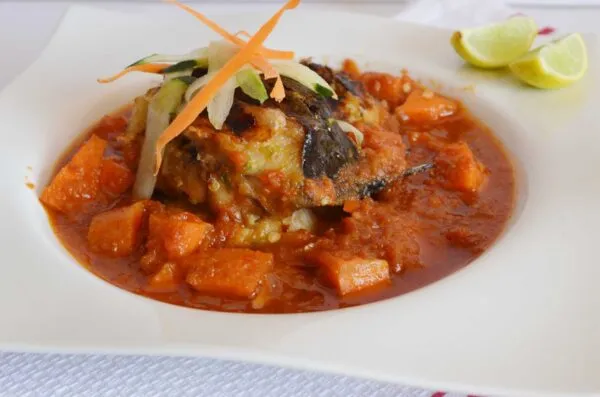
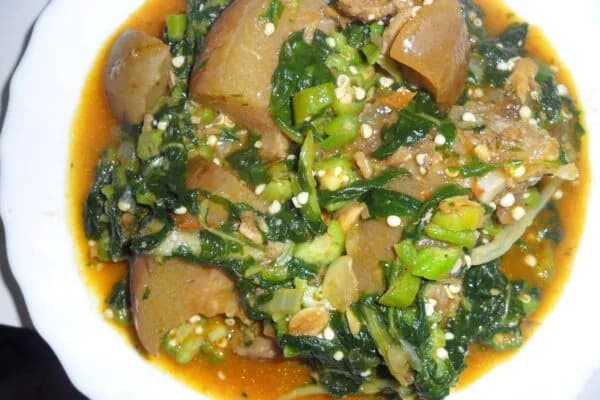
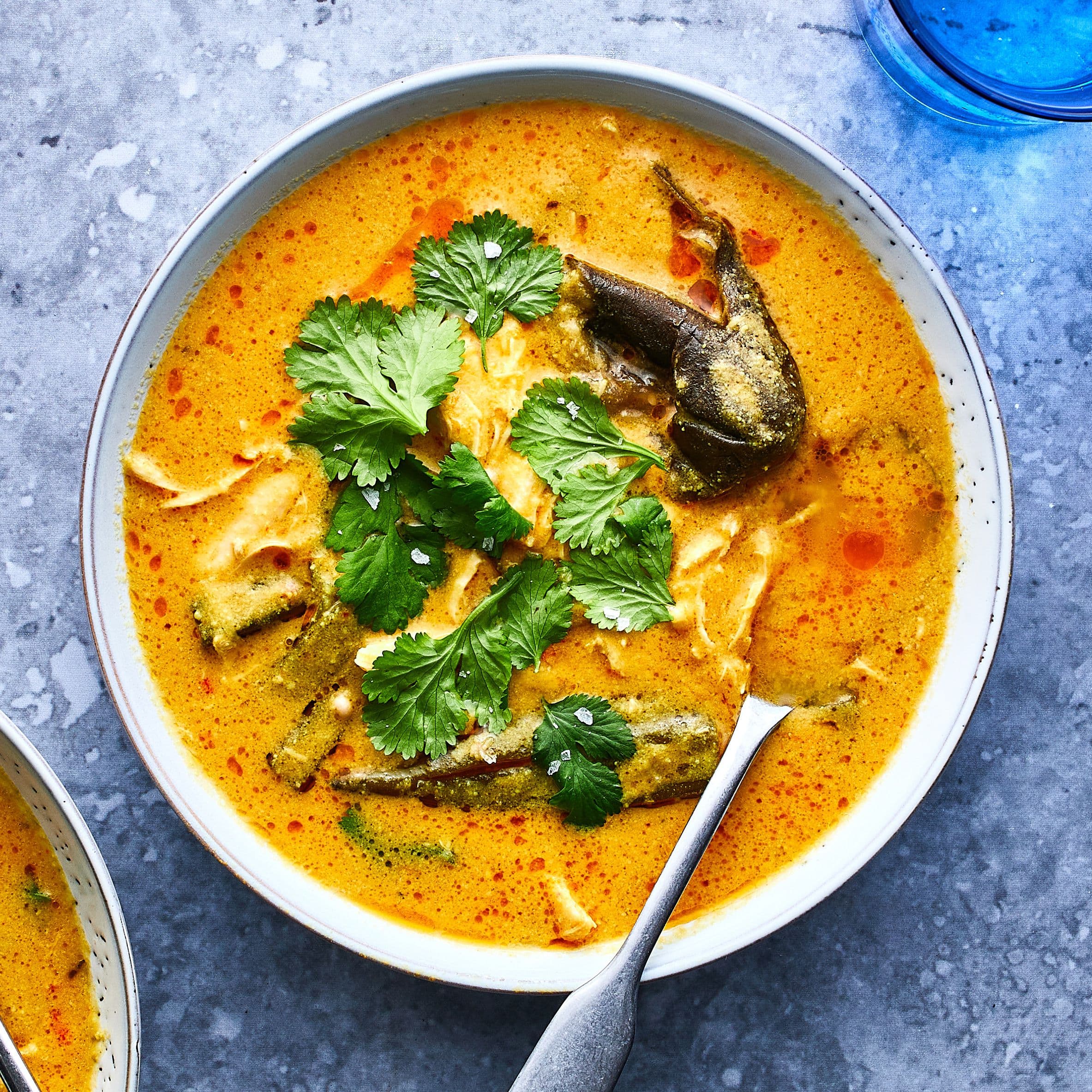
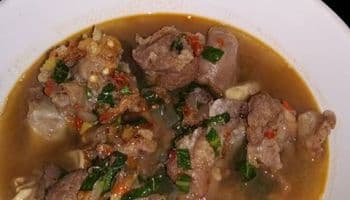
Okro soup is among the quickest Nigerian soups to make and among the most eaten. Okra is chopped, cooked briefly in a stock built on assorted meat, dried fish and crayfish, finished with palm oil, and taken off the heat while it is still green. The whole thing takes minutes once the vegetables are cut, which is the trade off: most of the work is chopping.
Okra is native to Africa, with its origin generally placed in the Ethiopian highlands, and it has spread from there across the continent and well beyond it. The draw it produces, the viscous quality that thickens the soup, is the entire point in West African cooking and the thing that people elsewhere often try to eliminate. Here it is what makes the soup work with a swallow: it slides.
The names change across Nigeria. Ila asepo among the Yoruba, okwuru among the Igbo, miyan kubewa in Hausa, otong among the Efik, and okro generally. Potash, called kaun, is traditional for increasing the draw and is now optional and somewhat contested, with many cooks leaving it out entirely. Used at all it must be used sparingly, since too much kills the elasticity it is meant to increase. It is eaten with eba, fufu, semo, amala or pounded yam.