Nous utilisons des cookies essentiels au fonctionnement du site. Nous aimerions aussi déposer des cookies de mesure d’audience et des cookies publicitaires, uniquement avec votre accord. Vous pouvez choisir séparément pour chacun. Lire notre politique relative aux cookies

Loading
Recettes
Parcourez les archives par pays, par plat et par temps de cuisson.
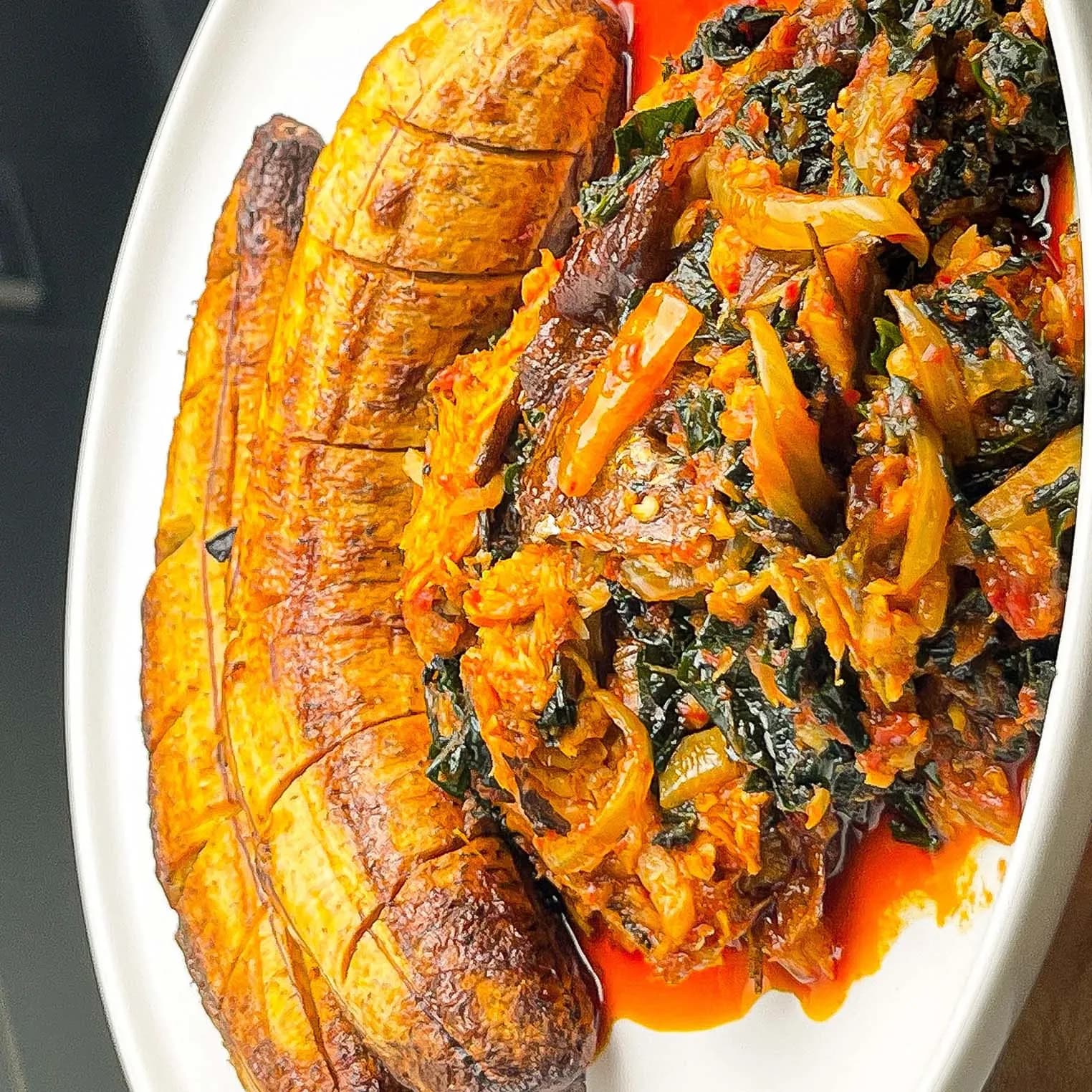
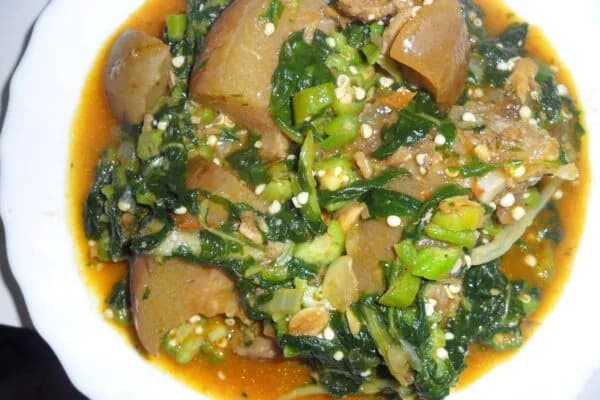
Native sauce is a palm oil sauce with smoked fish, crayfish and pumpkin leaves, made in southern Nigeria and served alongside roasted or plain starches. Native in this context means locally sourced and traditionally seasoned rather than anything about the technique, and it distinguishes the sauce from tomato-based stews.
What defines it is the absence of tomato. Palm oil, blended pepper, onion, crayfish and smoked fish carry the whole thing, and the result is darker, oilier and considerably more savoury than a stew built on tomato. The same principle produces native jollof rice and the family of dishes described as native across southeastern Nigeria.
Ugwu goes in at the end and needs only a few minutes to wilt while keeping its colour. The sauce is quick, around twenty-five minutes from start to finish, which is unusual for a Nigerian sauce with this depth of flavour, and it comes from the fact that the smoked fish and crayfish are already concentrated. It is served with roasted yam or plantain, or with any starch, and it functions as a sauce to be spooned over rather than as a soup to be eaten with a swallow.
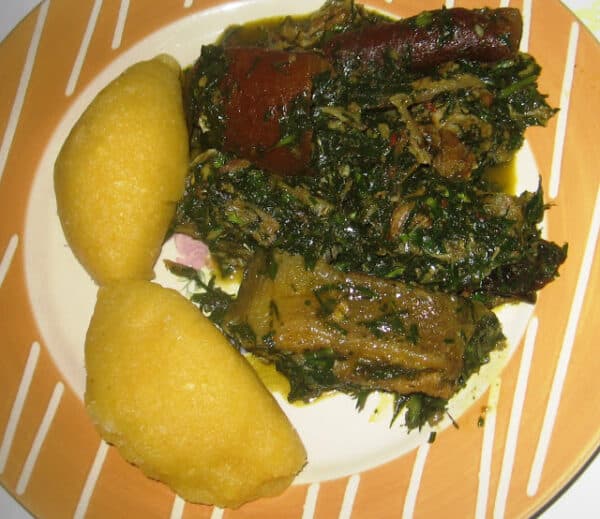
Afang soup belongs to the Efik and Ibibio people of Cross River and Akwa Ibom in southeastern Nigeria, and it is built on two vegetables that do quite different jobs.
Afang, okazi to the Igbo, and known botanically as Gnetum africanum, is a tough, wiry forest leaf with a faintly bitter edge. It is sliced extremely finely, almost shredded, because whole it would be unpleasant to eat. Waterleaf is the counterweight: soft, quick to wilt, and full of moisture, which is what gives the soup its body without much added liquid.
The pairing is the point, and it is what separates afang from edikang ikong, the other great vegetable soup of the same region. Edikang ikong uses waterleaf and ugu, the pumpkin leaf, and reads as sweeter and greener. Afang uses waterleaf and okazi, and carries that characteristic bitterness. People from the region can tell them apart instantly, and the leaf is the whole distinction.
Around the vegetables sits an assortment that scales with the household budget, beef, shaki, dried and fresh fish, periwinkle, crayfish, palm oil, pepper. It is a soup that has long been read as a marker of a generous table, and it is served with any of the swallows.
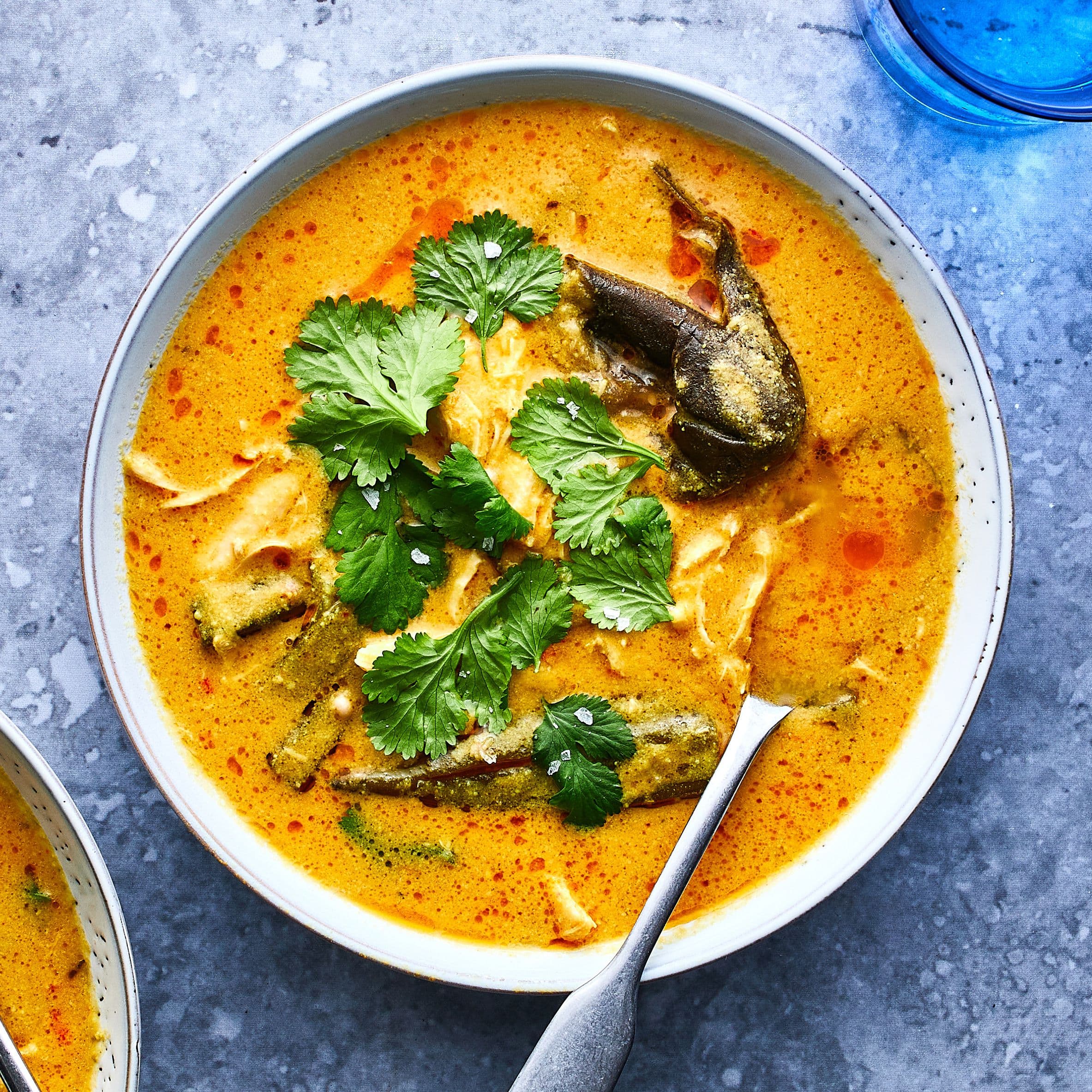
Peanut butter soup, nkatenkwan in Twi, is one of Ghana's defining dishes, and versions of it are cooked right across West Africa under different names.
It is built by combining peanut butter, or blended roasted peanuts, with stock and a tomato base, then simmering until the oil separates and rises. That separation is the marker of a finished soup and it takes time; rushed, the soup tastes raw and pasty.
The dish belongs to a wider family. Nigerian groundnut soup and Senegalese mafé share the same foundation, and the differences are in what goes with it, meat, chicken or fish, and the vegetables that accompany.
It is served most classically with fufu, the pounded cassava and plantain swallow, and also with rice or omo tuo, the rice balls.
The soup is naturally rich and quite heavy, and it is usually made with chilli to balance that. Without heat it can be cloying.
Peanuts are one of the most serious food allergens, and there is no version of this dish without them.
Alaskan king crab legs, steamed briefly and served with melted butter and lemon. There is no African connection here and none is claimed: king crab is a cold-water North Pacific species fished off Alaska and the Russian Far East, and this is the standard American way of serving it.
The single most useful thing to know is that king crab legs are sold already cooked. They are steamed aboard the boat or on the pier immediately after they are caught, then frozen, because crab meat spoils very quickly once the animal dies. What you are doing at home is reheating, not cooking, and that is why every instruction here is measured in a few minutes rather than tens of them. Treat them like a raw ingredient and you will get rubbery, stringy meat.
The source is right to steer away from submerging them in water, which waterlogs the meat and washes out the flavour that the initial cooking sealed in. Steaming and a foil-wrapped spell in the oven both work because they warm the meat through without soaking it.
Africa has a long coastline and a serious crab tradition of its own, Ghanaian akotonshi, stuffed crab served in the shell, is on this site, but it is built around warm-water species, and king crab is not one of them.