Nous utilisons des cookies essentiels au fonctionnement du site. Nous aimerions aussi déposer des cookies de mesure d’audience et des cookies publicitaires, uniquement avec votre accord. Vous pouvez choisir séparément pour chacun. Lire notre politique relative aux cookies

Loading
Recettes
Parcourez les archives par pays, par plat et par temps de cuisson.
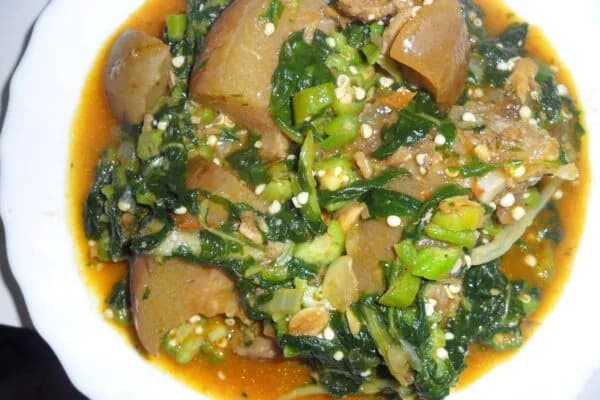
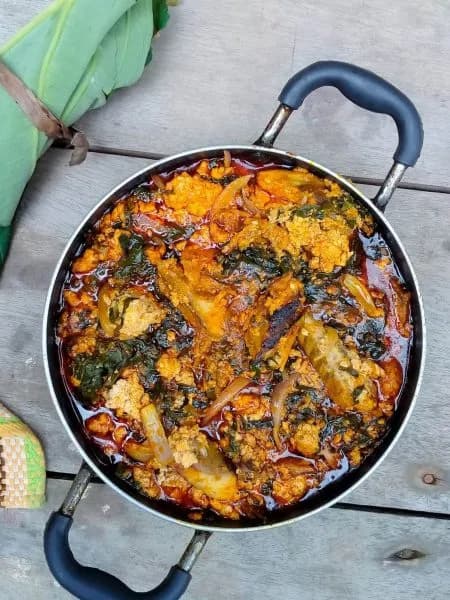
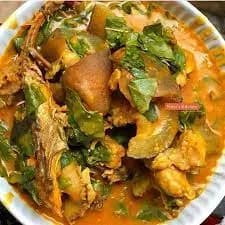
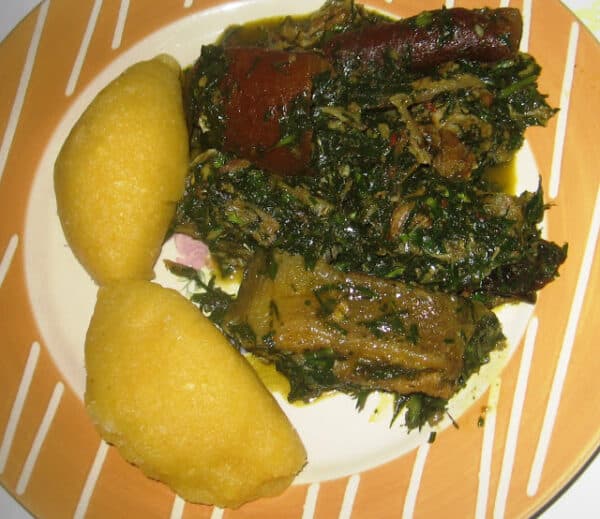
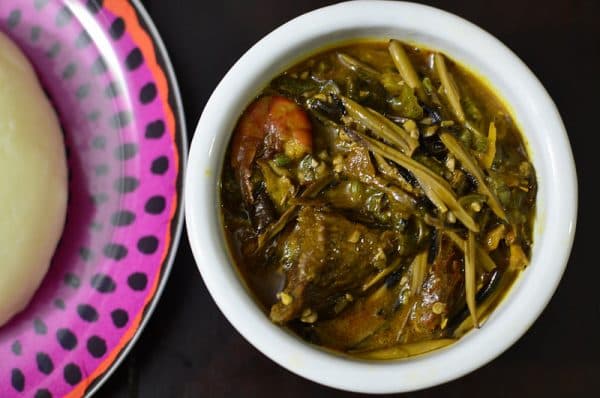
Okro soup is among the quickest Nigerian soups to make and among the most eaten. Okra is chopped, cooked briefly in a stock built on assorted meat, dried fish and crayfish, finished with palm oil, and taken off the heat while it is still green. The whole thing takes minutes once the vegetables are cut, which is the trade off: most of the work is chopping.
Okra is native to Africa, with its origin generally placed in the Ethiopian highlands, and it has spread from there across the continent and well beyond it. The draw it produces, the viscous quality that thickens the soup, is the entire point in West African cooking and the thing that people elsewhere often try to eliminate. Here it is what makes the soup work with a swallow: it slides.
The names change across Nigeria. Ila asepo among the Yoruba, okwuru among the Igbo, miyan kubewa in Hausa, otong among the Efik, and okro generally. Potash, called kaun, is traditional for increasing the draw and is now optional and somewhat contested, with many cooks leaving it out entirely. Used at all it must be used sparingly, since too much kills the elasticity it is meant to increase. It is eaten with eba, fufu, semo, amala or pounded yam.
Catfish is everywhere in Nigeria now, and the reason is farming rather than fishing. Catfish aquaculture expanded enormously across the country from the 1990s onward, at both household and commercial scale, and a fish that was once a river catch became one of the most available proteins in the market. Dishes built around it have multiplied accordingly.
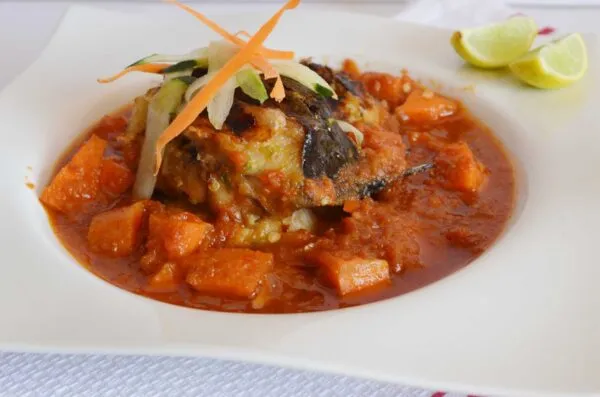
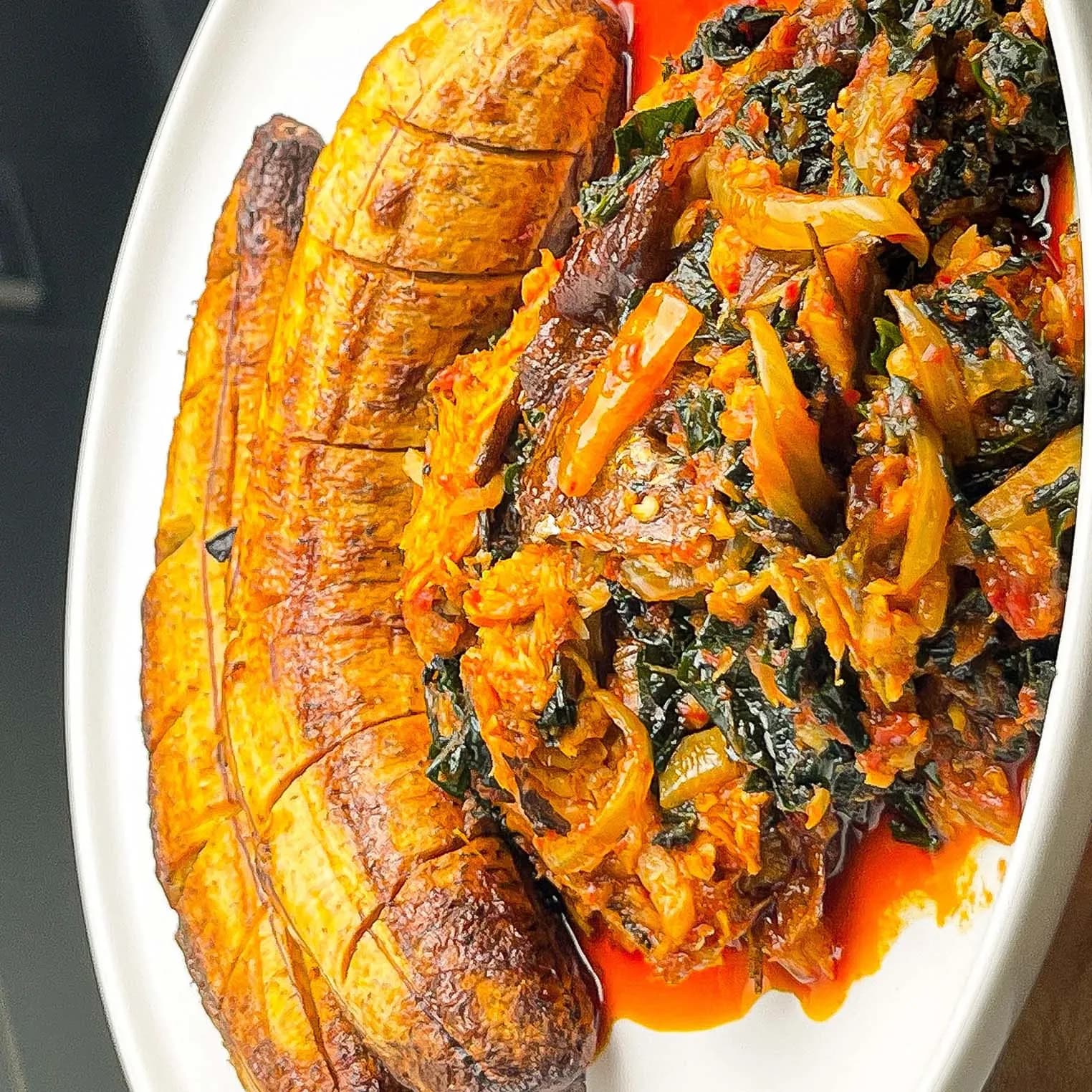
This one is a contemporary Nigerian preparation rather than an inherited dish. Carrot and tomato are blended into a sauce in a three to one ratio, so the carrot rather than the tomato carries it, giving a sweeter and thicker base than a standard Nigerian stew. The fish is marinated, grilled or baked separately, and set into the sauce at the end rather than cooked in it.
Cleaning is the part that determines whether it works. Catfish is naturally slimy and has to be scrubbed with salt, alum, potash or maize chaff, and soaking it briefly in hot water both removes the remaining slime and firms the flesh so it holds together instead of breaking apart. Grilling rather than frying keeps that firmness. It is served with rice, potato or yam.
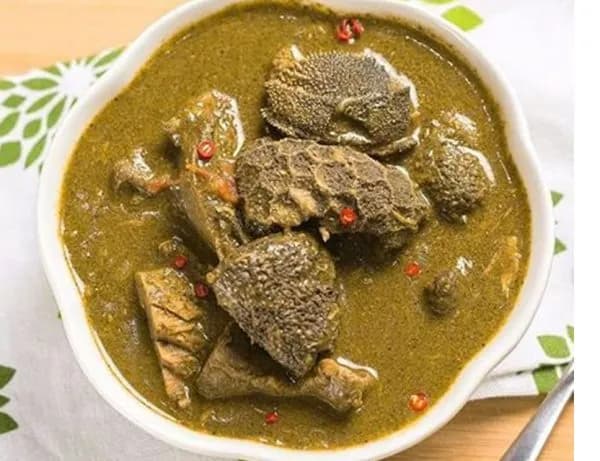
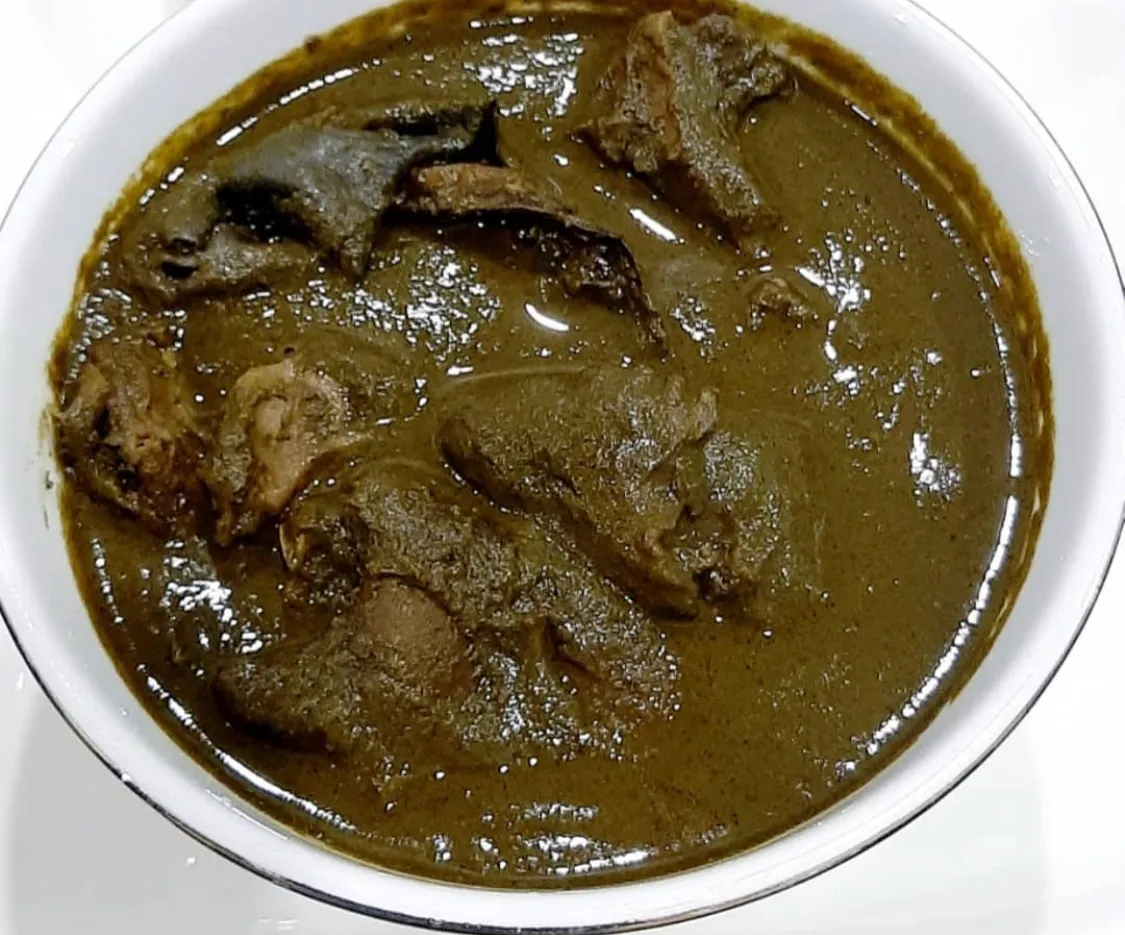
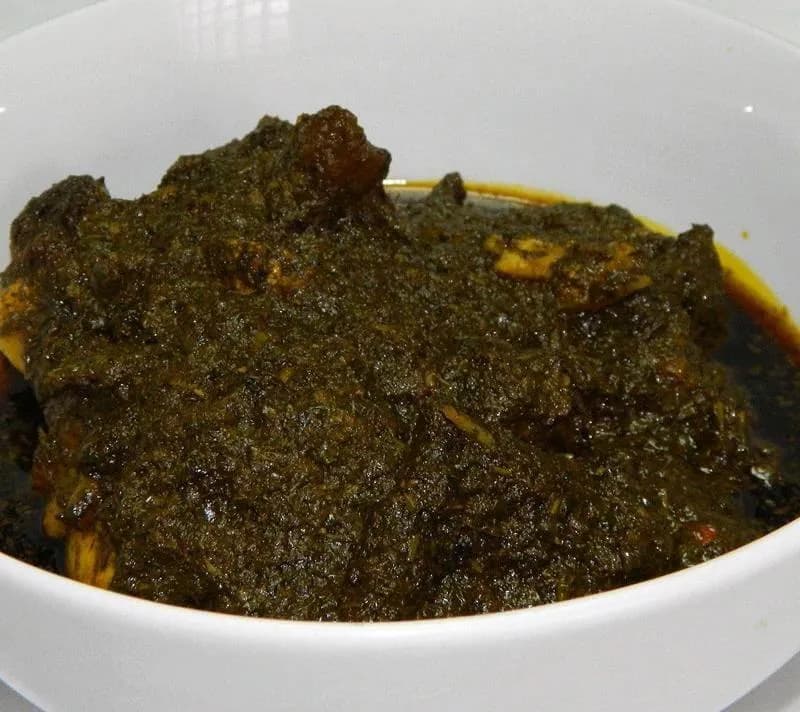
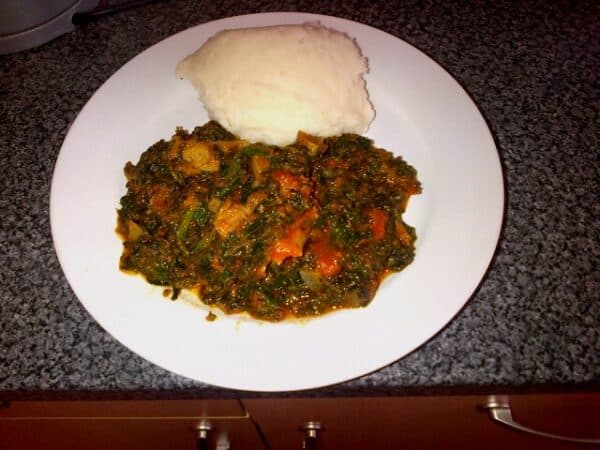
Cassava leaf soup is eaten across West and Central Africa, and its names map the geography: saka saka and pondu in the Congo basin, and simply cassava leaf in Liberia, Sierra Leone and Guinea. Wherever cassava is grown for its root, the leaves are eaten too, and a great many countries have arrived at some version of this independently.
The West African version this recipe follows is built on groundnut. Peanut butter goes in with the leaves and palm oil, which gives a thicker, richer, nuttier result than the Central African versions that lean on palm oil alone. Smoked turkey, fish or chicken supplies the savoury depth, and scotch bonnet supplies the heat.
The leaves themselves carry very little flavour, which is precisely why the dish works: they absorb whatever they are cooked with, so the palm oil, the groundnut and the smoked protein are doing all the talking. That also means the quality of those three decides the pot. It is served over rice, and the one non negotiable is cooking: cassava leaves must be thoroughly cooked, since they are not safe raw. Frozen leaves sold commercially have generally been blanched already, which is why this version cooks relatively briefly.
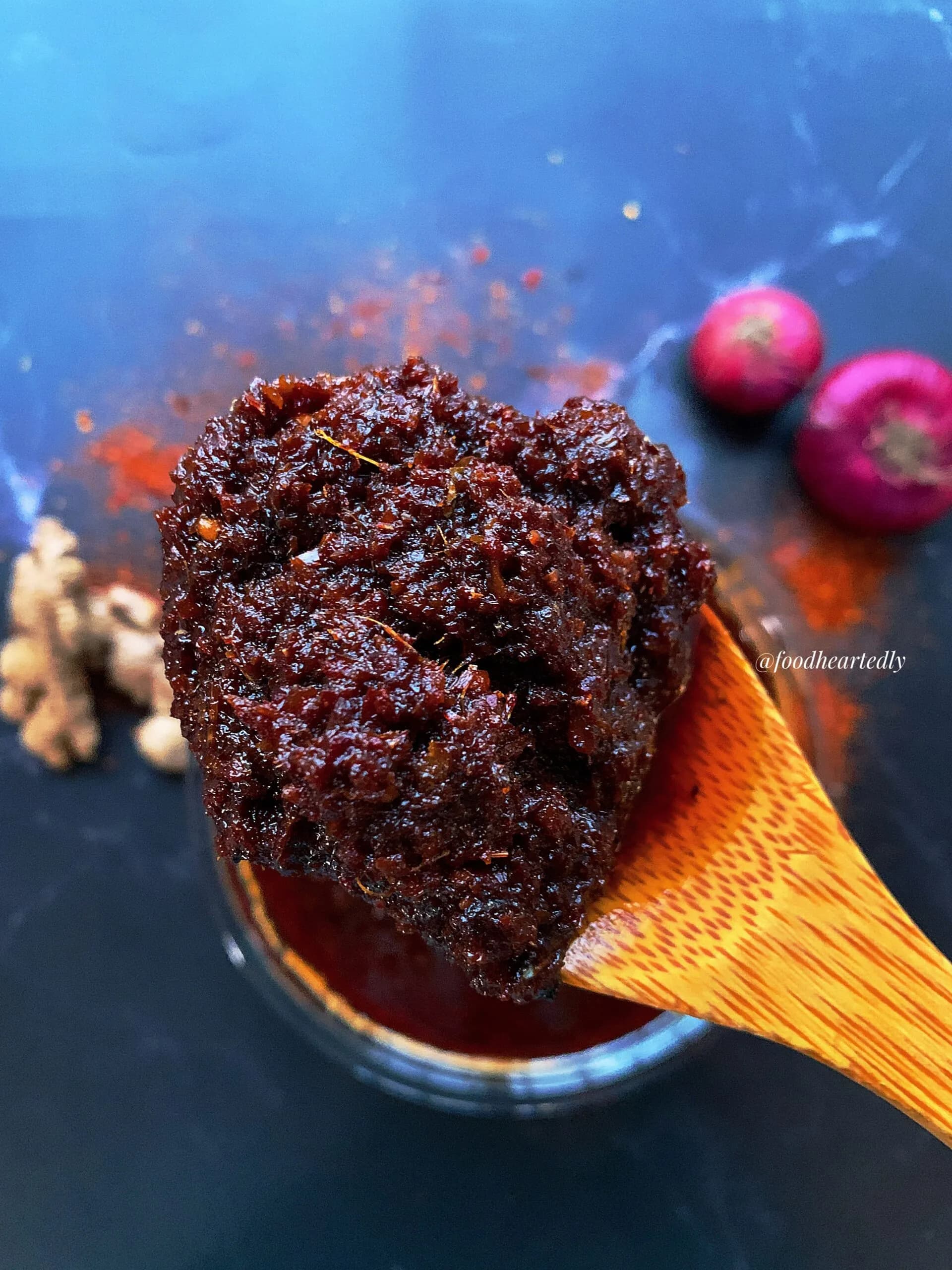
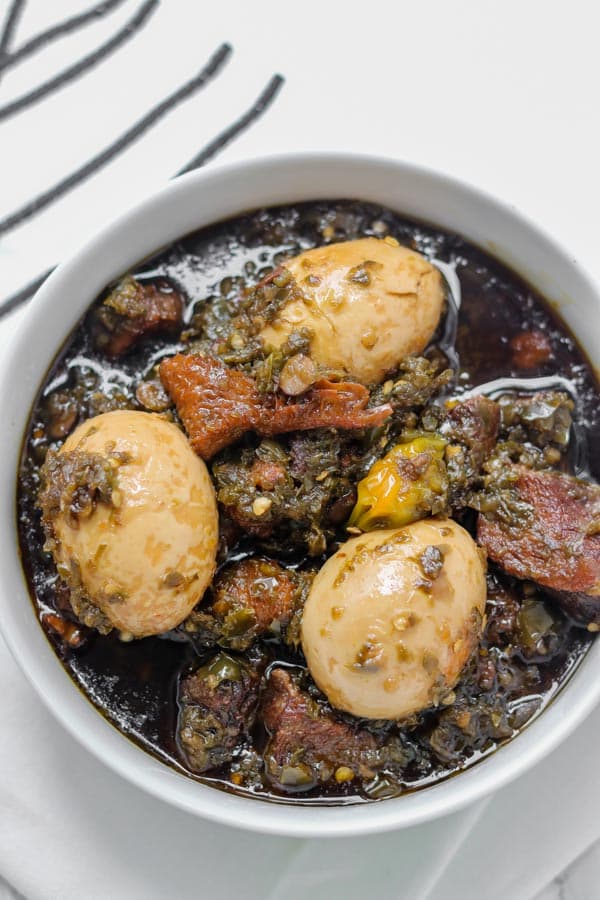
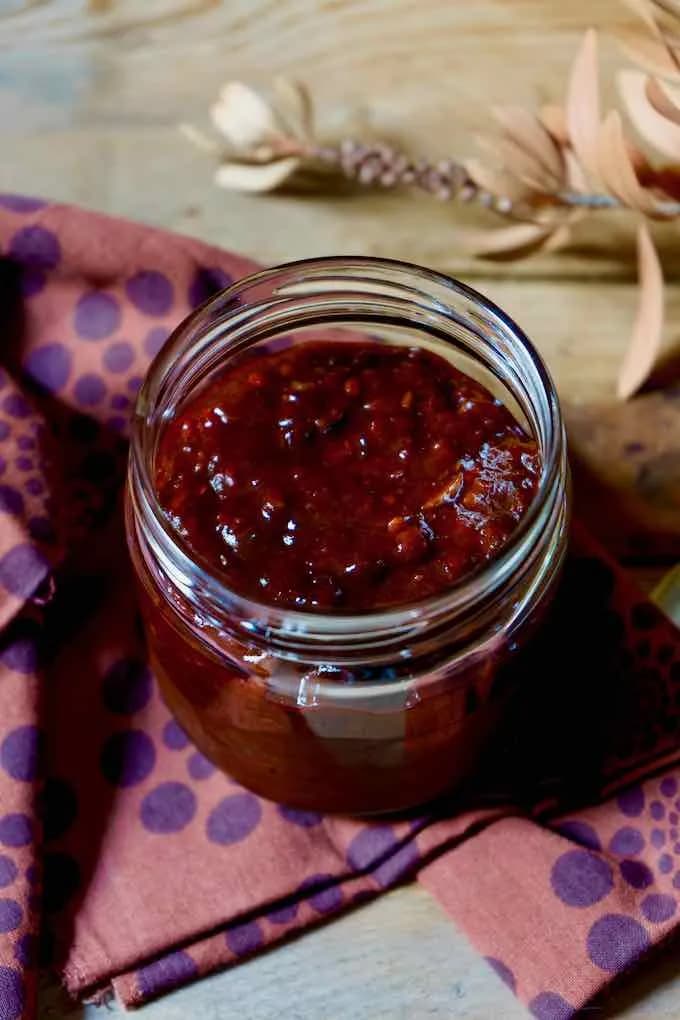
Shito is Ghana's black pepper sauce, and it is the condiment the country's food is built around. Dried fish, dried shrimp, onion, ginger and a very large quantity of ground pepper are cooked down in oil until the whole thing turns near black and the oil separates and rises. It is intensely savoury, genuinely hot, and used a spoonful at a time.
What makes it structurally interesting is that it keeps. Fried properly, shito lasts weeks or months on a shelf without refrigeration, because the oil seals it and there is almost no water left in it. That is why Ghanaians abroad carry jars of it in luggage and why it is made in large batches rather than small ones.
Its reach across the Ghanaian table is close to total. Waakye, kenkey and banku are barely considered complete without it. Beyond those it goes with jollof, fried rice, braised rice, gari, fried yam, fried plantain, grilled meat and, as the source for this recipe points out, bread. It is the thing that carries Ghanaian food, and the one rule about keeping it matters: only ever take shito out with a clean dry spoon, because a wet spoon introduces water and the jar will spoil.