Nous utilisons des cookies essentiels au fonctionnement du site. Nous aimerions aussi déposer des cookies de mesure d’audience et des cookies publicitaires, uniquement avec votre accord. Vous pouvez choisir séparément pour chacun. Lire notre politique relative aux cookies

Loading
Recettes
Parcourez les archives par pays, par plat et par temps de cuisson.
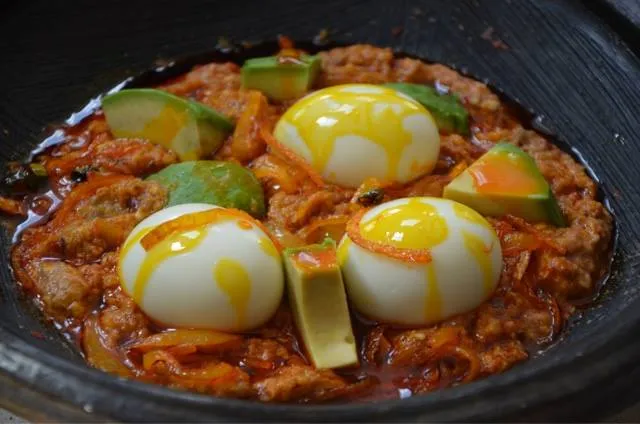
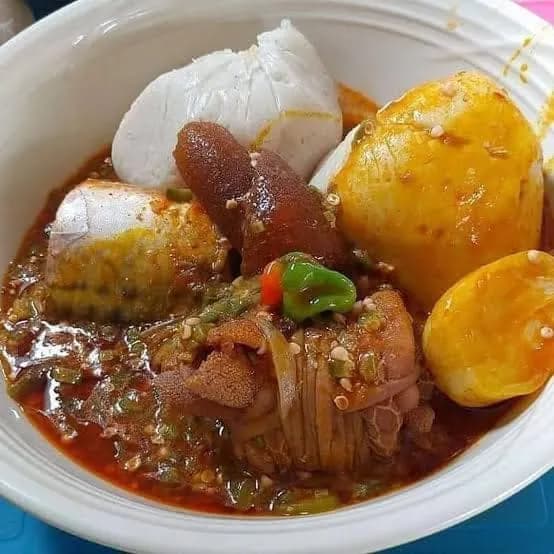
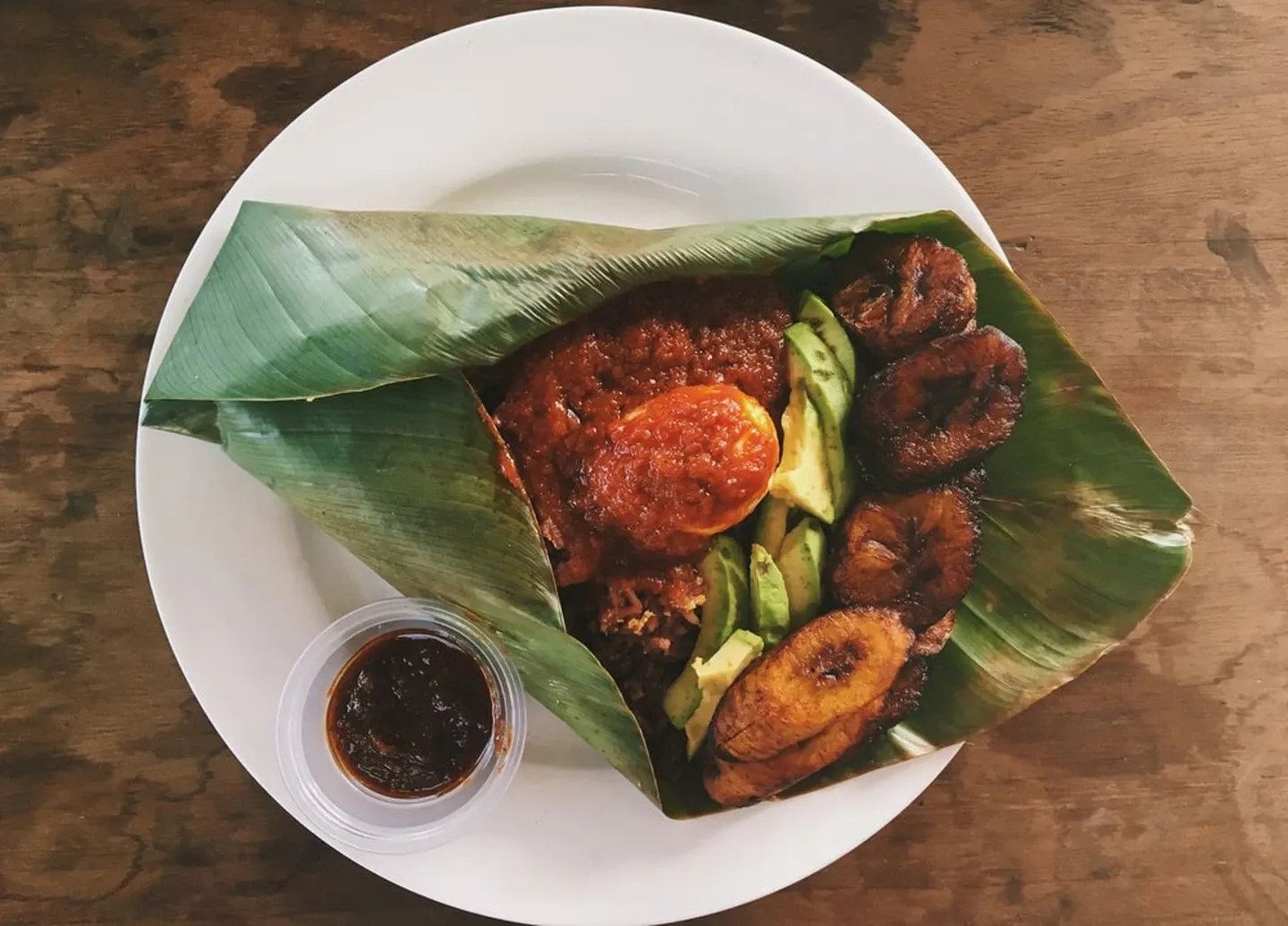
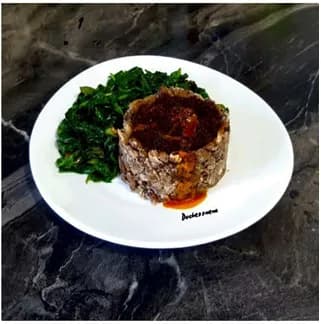
Abom, written abomu here, is the simpler of the two main Ghanaian cocoyam leaf preparations. Where the tomato based kontomire stew is thickened with ground melon seed and cooked in a pot, abom is steamed leaves ground in an asanka with onion, pepper and ginger, finished with hot palm oil poured over the top. It is closer to a relish than to a stew.
The asanka is the tool that defines it. The ridged earthenware bowl grinds rather than purees, and everything in an abom passes through it: the aromatics first, then the salted fish, then the greens, each stage mashed into the last. That produces a coarse, uneven texture that a blender cannot reproduce and that Ghanaians would notice immediately.
It is Asante food particularly, and it is assembled rather than cooked in the ordinary sense. Plantain, egg, avocado and several kinds of fish, koobi, kakro, smoked mackerel and smoked turkey, go onto the plate around the greens, and hot palm oil is ladled over at the end. Kontomire is the proper leaf. Ghanaians abroad substitute spinach, which the source acknowledges directly, and the result is milder and softer than the cocoyam leaf gives.
Fried yam is called dundun in Yoruba, and it is one of the most eaten street foods in Nigeria. Yam is peeled, cut into thick chips, salted and fried until the outside crisps and the inside stays soft and floury. It is sold from roadside stands with a pepper sauce, and it is eaten at breakfast, at lunch and late at night.
Yam is the crop that Nigeria produces more of than anywhere else in the world, and dundun is the most direct thing to do with it. It costs almost nothing, needs three ingredients, and the frying takes minutes. That combination is what makes it street food: a vendor with a pot of oil and a sack of yam is in business.
Its usual partner is akara, the fried bean cake, and the pairing of dundun and akara with a ground pepper sauce is a standard Nigerian breakfast. It is also eaten with egg sauce, with fried fish, with stew, or on its own. The word dundun covers the fried treatment specifically, as distinct from the plain, pounded and porridge treatments of the same tuber, each of which occupies its own place on the Nigerian table.
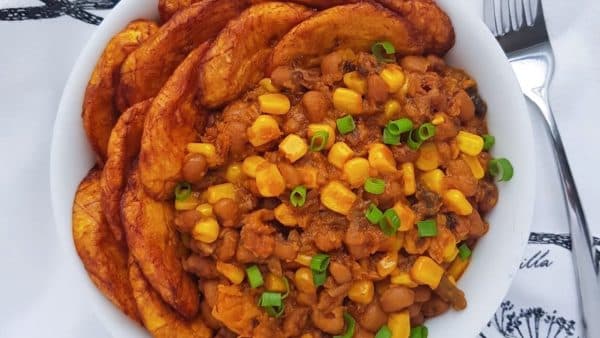
Black-eyed peas soaked, cooked until tender and seasoned with salt. That is the entire recipe, and it is deliberately so: this is the base that a great many Nigerian bean dishes are built from, and it is eaten plainly in its own right.
In Nigerian usage, beans without further qualification usually means black-eyed peas, ewa in Yoruba, agwa in Igbo, wake in Hausa. They are indigenous to West Africa, domesticated there thousands of years ago and carried to the Americas through the transatlantic slave trade, which is why they are as central to Southern American cooking as to Nigerian.
Eaten plainly, boiled beans go with a pepper sauce, fried plantain, fried yam or bread, and that combination, beans and bread, beans and dodo, is everyday food across the country. From this same pot come the more elaborate dishes: ewa agoyin with its dark fried pepper sauce, honey beans, beans porridge.
Two things in the method deserve keeping. Picking through dried beans for stones is not fussiness, small stones do get through commercial sorting and they break teeth. And salting only at the end is correct, because salt added early toughens the skins and lengthens the cooking considerably.
The source's extensive nutritional and weight-loss claims have not been carried across.
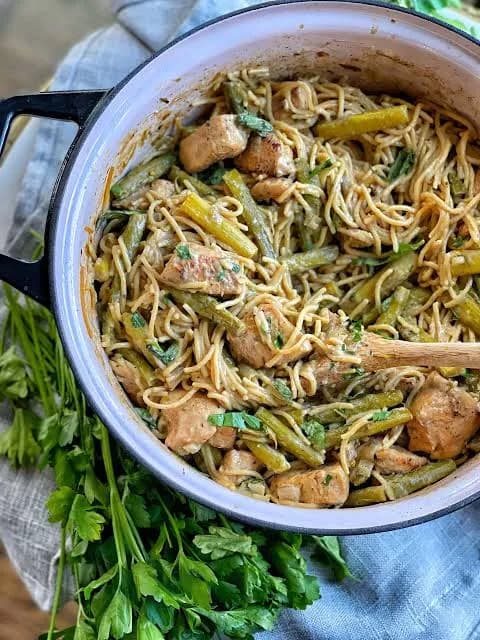
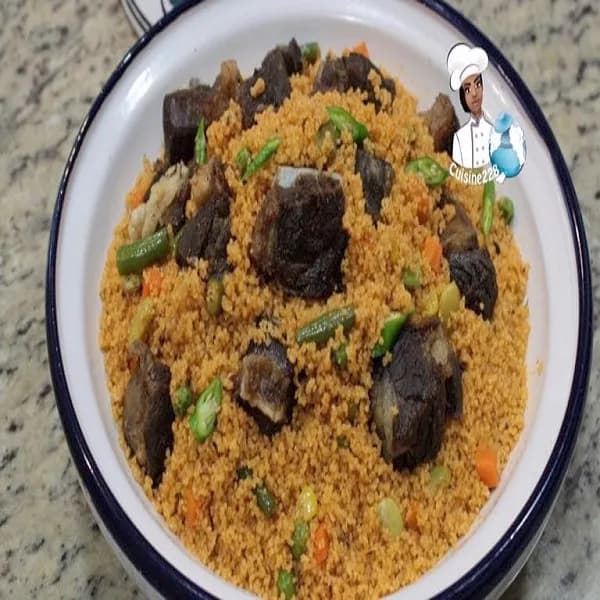
Bassi salté is Senegalese millet couscous served with a meat and vegetable sauce, studded with raisins, chickpeas and white beans. Its full name is thiéré bassi salté, and it is one of the most demanding dishes in the Senegalese repertoire.
The grain is the point of difference. This is not wheat couscous but thiakry, made from millet, the ancestral West African cereal, cultivated in the Sahel for thousands of years before wheat or maize arrived. That matters both culturally and practically: millet couscous is naturally gluten-free, and it needs a binder, which is where lalo comes in. Lalo is powdered baobab leaf, and it holds the steamed grains together in a way that wheat gluten would do on its own.
It is festival food. Bassi salté is traditionally eaten at Tamkharit, the Senegalese observance of Ashura, and the effort involved, steaming the couscous twice, building the sauce over hours, forming the diaga meatballs separately, is part of what makes it appropriate to the occasion.
Its defining flavour is the balance between savoury and sweet. Raisins and sometimes dates go in alongside the mutton and root vegetables, which is deliberate rather than incidental.
The source's ingredient list is badly scrambled and its sauce timing is not credible; both are flagged below.