Nous utilisons des cookies essentiels au fonctionnement du site. Nous aimerions aussi déposer des cookies de mesure d’audience et des cookies publicitaires, uniquement avec votre accord. Vous pouvez choisir séparément pour chacun. Lire notre politique relative aux cookies

Loading
Recettes
Parcourez les archives par pays, par plat et par temps de cuisson.
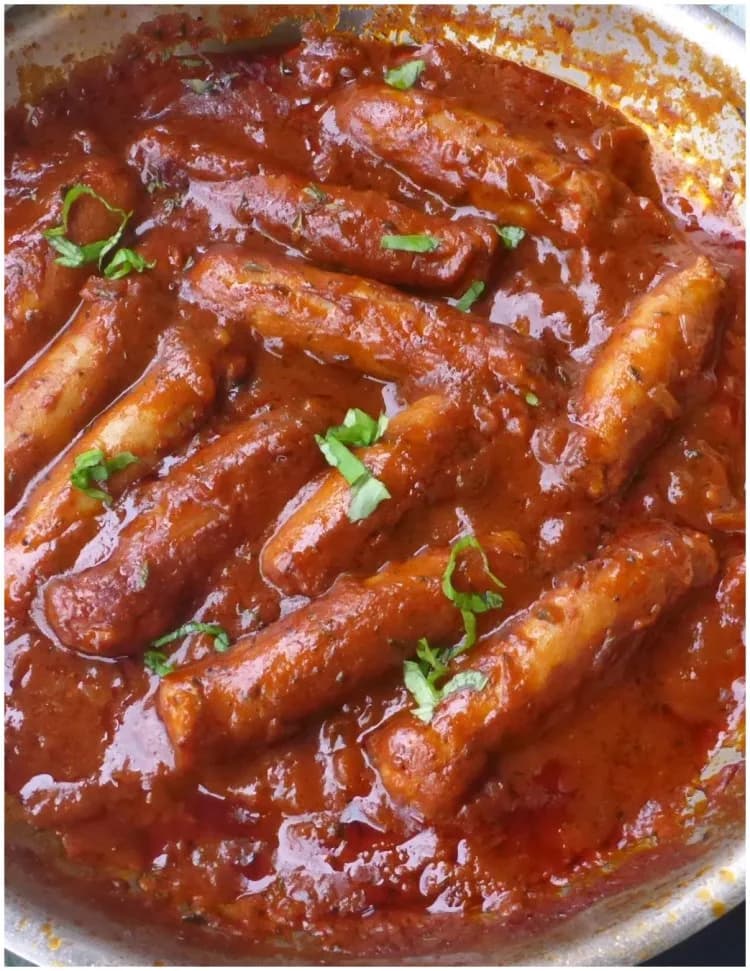
Boerewors is South African sausage, and the name is Afrikaans: boer for farmer, wors for sausage. It is coarsely minced beef, sometimes with pork or lamb, seasoned with toasted coriander seed, black pepper, nutmeg, cloves and allspice, and it is made in one continuous coil rather than in links.
Its identity is protected in law. South African regulation sets out what may be sold as boerewors, including a minimum meat content and a cap on other ingredients, which is an unusual level of legislative attention for a sausage and a fair measure of how seriously the country takes it. That regulation is also why boerewors is genuinely hard to buy outside South Africa and why South Africans abroad end up making their own.
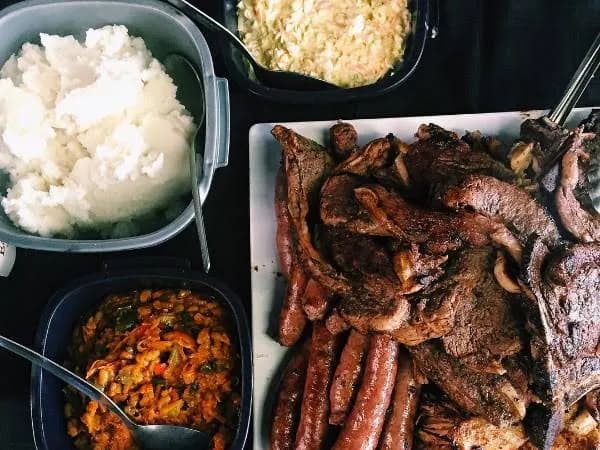
The sausage belongs to the braai above all, grilled in its coil over coals. This stew is what happens to it indoors: cut into pieces, browned, and simmered with tomato, garlic and spices into something closer to a weeknight dish. Boerewors is also eaten with pap and a tomato and onion sauce, which is the standard plate across the country. The stew is a newer treatment of an old sausage, and its spread beyond South Africa has come with the diaspora.
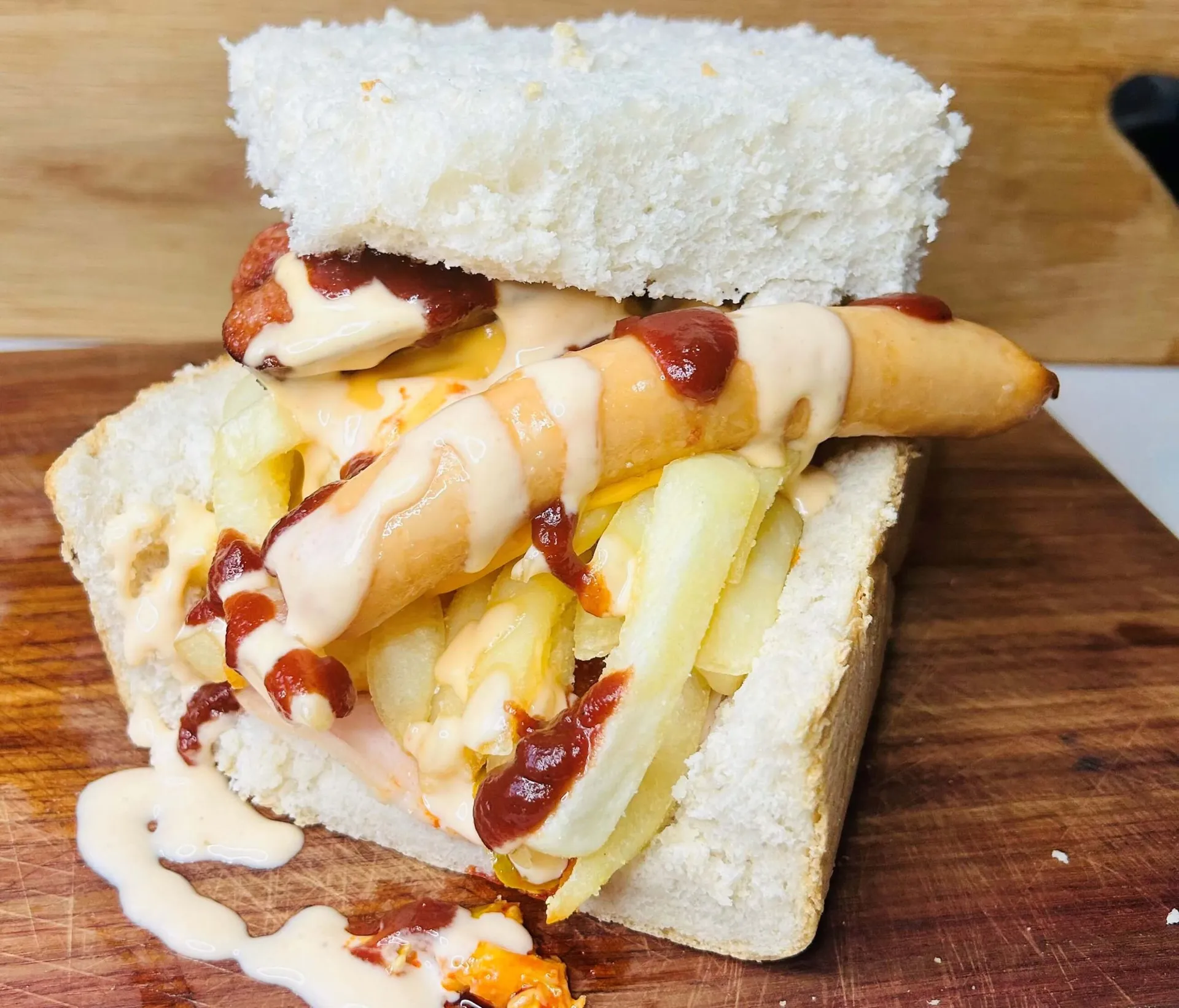
A kota is a quarter loaf of bread, hollowed out and packed with fried food. The word is township English for quarter, and that is the whole description: bread cut in four, the soft centre pulled out, and the cavity filled with chips, polony, russians, viennas, cheese, egg, atchar and sauce, then capped with the bread that was removed.
It belongs to the townships of Gauteng, where it is sold from small takeaway windows and eaten in the hand without a plate. Kota shops compete on what they will fit into a quarter loaf, and the size of the fill is a large part of the reputation. It is cheap, it is a complete meal, and it is built for people who need to eat between one thing and the next.
Atchar is what makes it South African rather than generically stuffed bread. The pickled green mango relish, oily and sour and hot, came to South Africa through Indian indenture and cuts the fried starch that dominates everything else in the cavity. Kota is often described as a version of bunny chow, and the two are related without being the same: bunny chow is Durban Indian, a hollowed loaf filled with curry, and kota is a Gauteng township form filled with fried items. They share an ancestor and are not interchangeable.
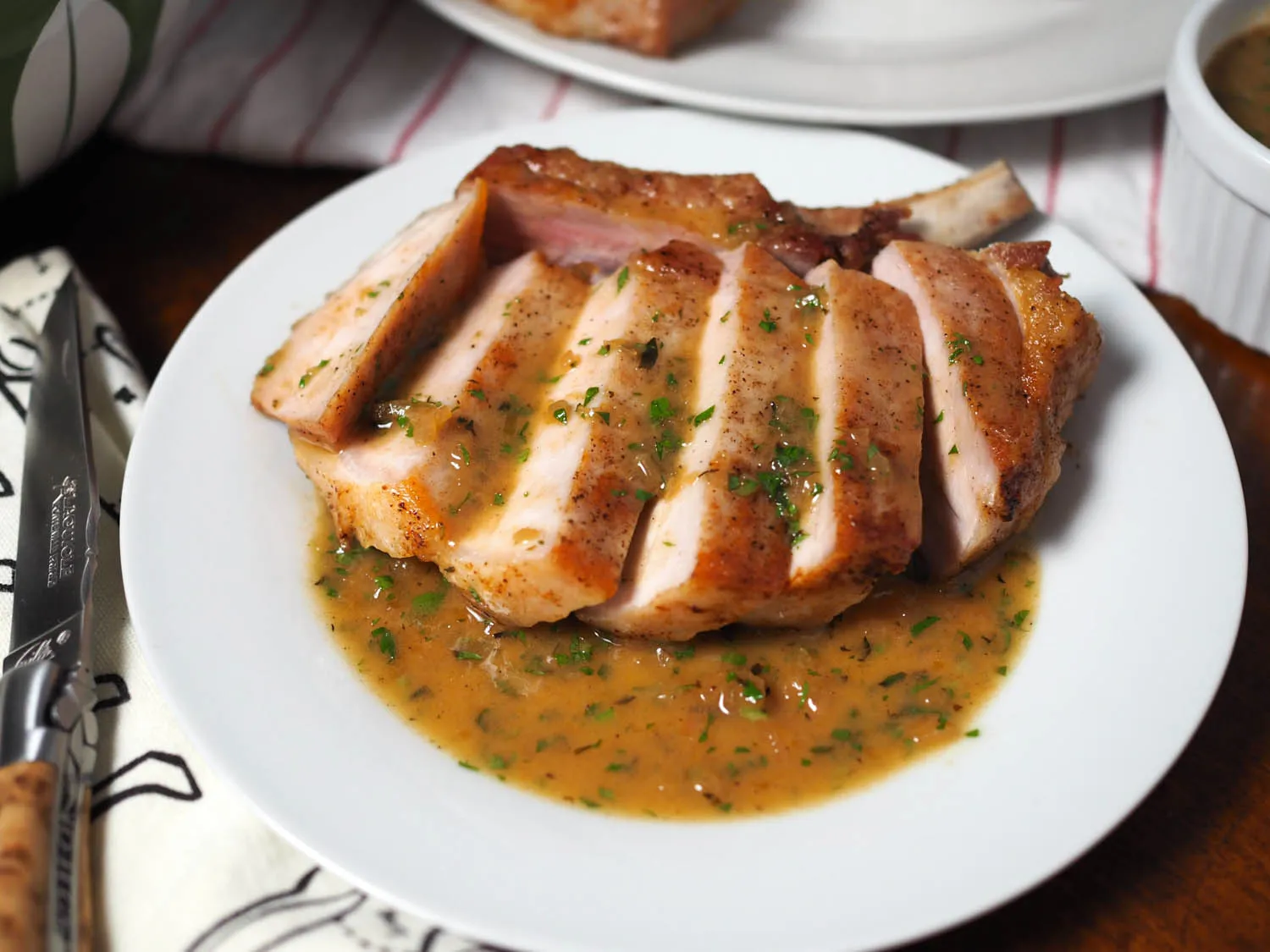
Pork loin chops browned and then baked in apple cider with Worcestershire sauce, finished with a sherry-reduced pan sauce. No country is claimed; it is an autumn dish in a broadly Northern European register.
The technique that matters is the one the source explains best. Pork loin is very lean and usually cut thin, so it dries out faster than almost any other chop, the fix is to brown it hard for colour and then finish it in liquid, which is exactly what this method does. Braising is also why the source recommends shoulder chops as a second choice: they have more gristle, and braising is what breaks that down.
Two gaps worth naming. The article promises onions, garlic, thyme, cream and apple slices; none of those appear in the ingredient list or the method. And the ingredient list itself is mangled, one entry runs four separate seasonings together into a single unbroken string.
The dish contains both dry sherry and apple cider concentrate. The alcohol in the sherry largely cooks off during the reduction, but it is worth knowing it is there.
The source recommends serving it over sweet potato and swede mash.
Firm white fish, floured and fried, then layered under a sweet-sour curried onion sauce and left in the fridge for at least a day before it is eaten. It is Cape Malay, it is South African, and in Cape Town it is inseparable from Easter.
The Cape Malay community descends from people brought to the Cape from Southeast Asia, largely from the Indonesian archipelago, as slaves and political exiles by the Dutch from the seventeenth century onwards. Their cooking is the origin of much of what is now considered characteristically Cape cuisine, and pickled fish belongs squarely to it, the turmeric, the coriander seed, the bay leaves and the sweet-sour balance are all markers of that lineage.
The Easter association is real but the explanations for it vary, and the dish is not exclusively Christian: it is eaten in Muslim Cape Malay households too, which is one of the reasons the "made for Good Friday" account is contested. Its practical origin is simpler. Vinegar and sugar preserve cooked fish for weeks without refrigeration, which mattered a great deal in the early colonial Cape.
It genuinely improves with time. A day in the fridge is the minimum; two or three is better, and it holds for several weeks. The source's nutritional claims have not been carried across.