Nous utilisons des cookies essentiels au fonctionnement du site. Nous aimerions aussi déposer des cookies de mesure d’audience et des cookies publicitaires, uniquement avec votre accord. Vous pouvez choisir séparément pour chacun. Lire notre politique relative aux cookies

Loading
Recettes
Parcourez les archives par pays, par plat et par temps de cuisson.
This page needs its most important detail stated first, because it is a safety point: **the recipe contains peanut butter, and nothing in its title says so.**
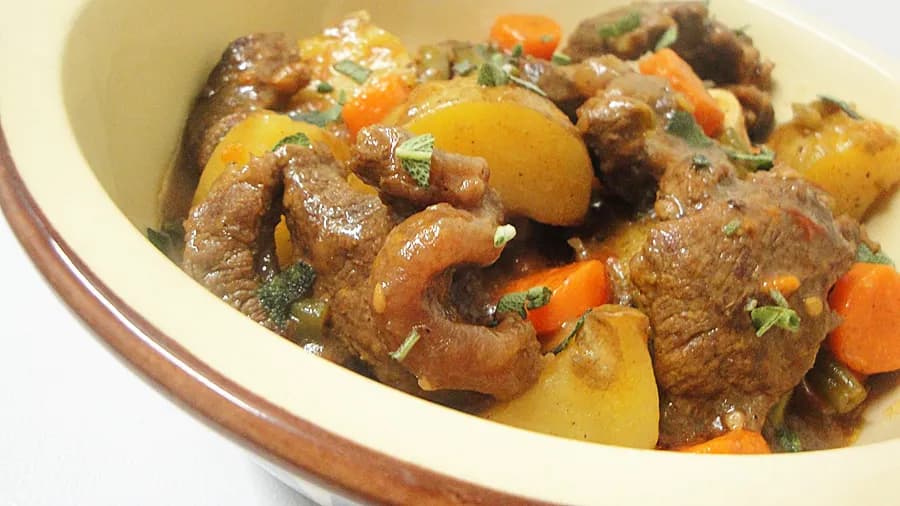
The article attached to this page describes an ordinary chicken and vegetable soup, celery, squash, chicken tenders poached in broth, a little tomato paste. The recipe card is a different dish entirely: a West African groundnut soup, built on peanut butter whisked into stock with tomatoes, chilli flakes, cabbage, sweet potato, carrot, turnip and okra. Anyone with a peanut allergy reading the title and the article would have no reason to expect it.
The recipe itself, taken on its own terms, is a good one and belongs to a real tradition. Groundnut soups are eaten across West Africa, Ghanaian nkatenkwan, Nigerian and Senegalese versions, and the mafe family more broadly, and peanuts, though originally South American, have been grown in West Africa since the sixteenth century and are now completely embedded in its cooking. Okra is used here for both flavour and thickening.
The title has been changed to name the peanut, and the URL is unchanged. The source's stated preparation time is not credible.
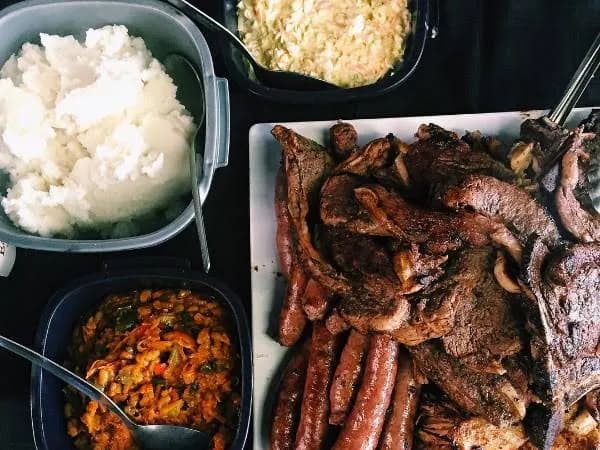
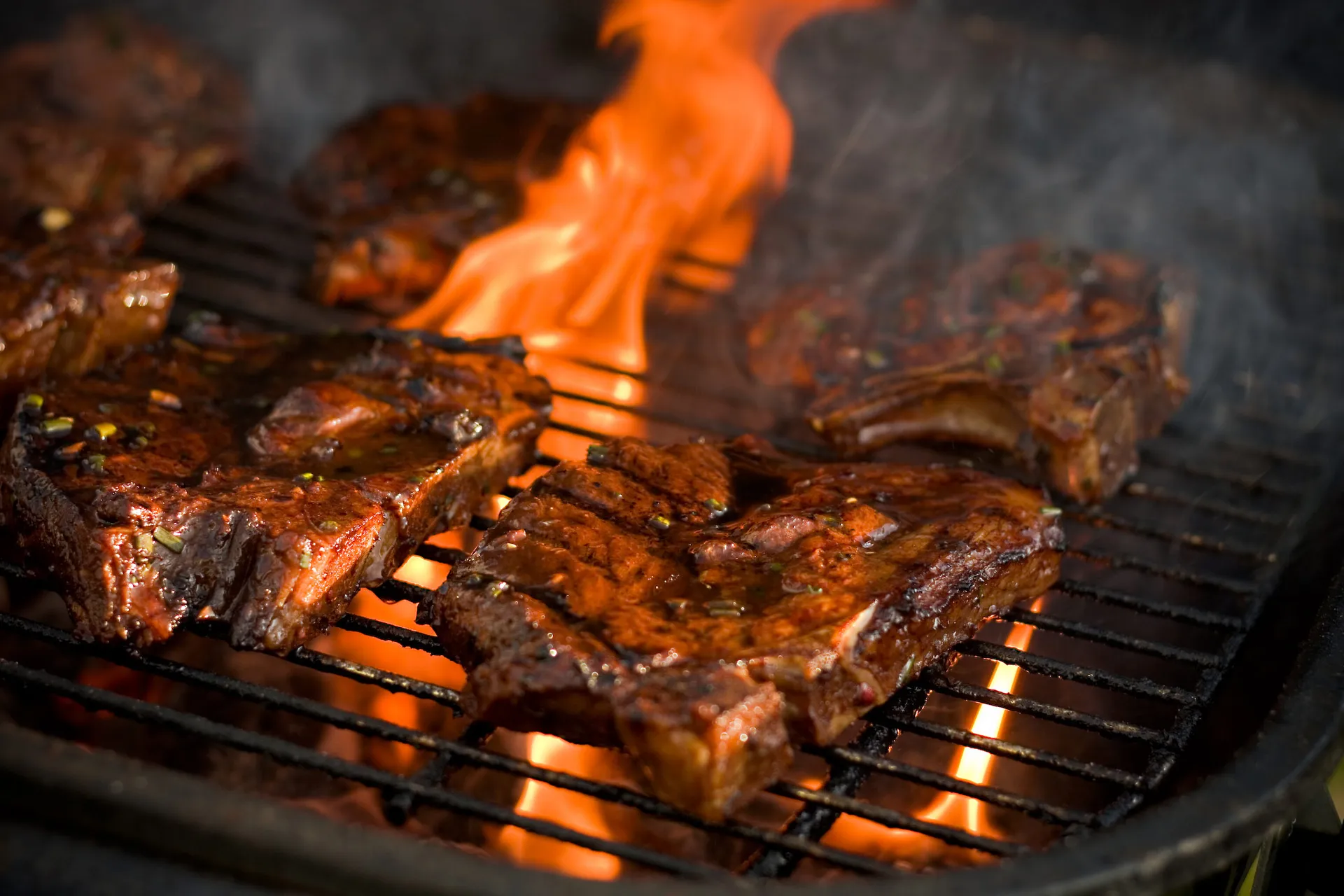
A braai is South African cooking over an open wood or charcoal fire, and it is as much a social occasion as a cooking method. The word comes from braaivleis, Afrikaans for grilled meat, from the Dutch braden, to roast.
The distinction South Africans draw between a braai and a barbecue is about the fire, and it is taken seriously. A braai is cooked over wood or charcoal, with wood preferred because of what it does to the flavour; gas is generally not accepted as a braai at all. The fire is also the point of the gathering rather than a means to an end, people build it, wait for it, cook on it and then stay around it long after the food is finished. And unlike a Northern Hemisphere barbecue, it is not seasonal. South Africans braai in any weather, and 24 September is a national braai day.
What goes on the fire is broad: boerewors, lamb chops, steak, chicken, snoek and other fish, sweetcorn, and braaibroodjies, the grilled cheese, tomato and onion sandwiches that go on once the coals have died down. Potjiekos, cooked in a cast-iron pot over the same fire, is a close relative.
The source for this page contains no recipe card at all. The method below is reconstructed from its description, and that is flagged.
Pork shoulder braised in milk and orange juice for two hours, then roasted and grilled until the edges crisp. Carnitas are Mexican, and the page sits in Worldwide Recipes with its URL unchanged.
The name means little meats, and the technique is what defines it. Traditionally the pork is confited, cooked slowly submerged in lard until it is soft enough to shred, then briefly crisped at high heat. That two-stage structure is the whole point: soft and unctuous inside, browned and crunchy at the edges. Braising in milk instead of lard is a variation, and a sensible one for a domestic kitchen, since it produces the same tenderness with far less fat.
Milk braising is worth understanding. The acid in the citrus curdles the milk, which looks alarming and is correct, the curds break down over a long cook and the whey tenderises the meat, giving a texture and a faint sweetness that water or stock cannot. It is an old Italian technique as well as a Mexican one.
The source describes barbacoa as originating in the Caribbean. The word is Taíno and reached Spanish that way, but barbacoa as eaten in Mexico is Mexican. Recorded as the muddle it is.
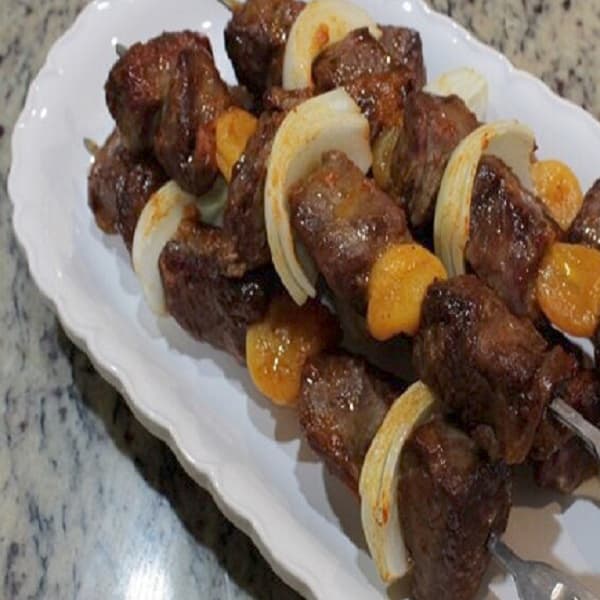
Sosaties are South African kebabs, marinated meat threaded onto skewers with dried apricots and grilled over a braai. Lamb is the national favourite.
The name comes from Afrikaans, from sate, the Malay word for skewered meat, and saus for sauce. That etymology points directly at the origin: sosaties are a Cape Malay dish, developed by the community descended from people brought to the Cape from the Indonesian archipelago and South Asia under Dutch colonial rule. The curried, fruit-sweetened marinade is characteristic of that cooking, and it is where South African food gets much of its sweet-savoury instinct.
The apricots are the distinctive part. Dried apricots are threaded between the meat, and during grilling they soften and caramelise while the curry and vinegar marinade cuts through the lamb fat. Some of the marinade is usually thickened into a sauce and served alongside.
They belong at a braai alongside boerewors, chops and steaks, which is where most South Africans encounter them.
Marinating overnight is standard and makes a substantial difference, the acid in the marinade works on the meat over hours.