

Nous utilisons des cookies essentiels au fonctionnement du site. Nous aimerions aussi déposer des cookies de mesure d’audience et des cookies publicitaires, uniquement avec votre accord. Vous pouvez choisir séparément pour chacun. Lire notre politique relative aux cookies

Loading
Recettes
Parcourez les archives par pays, par plat et par temps de cuisson.
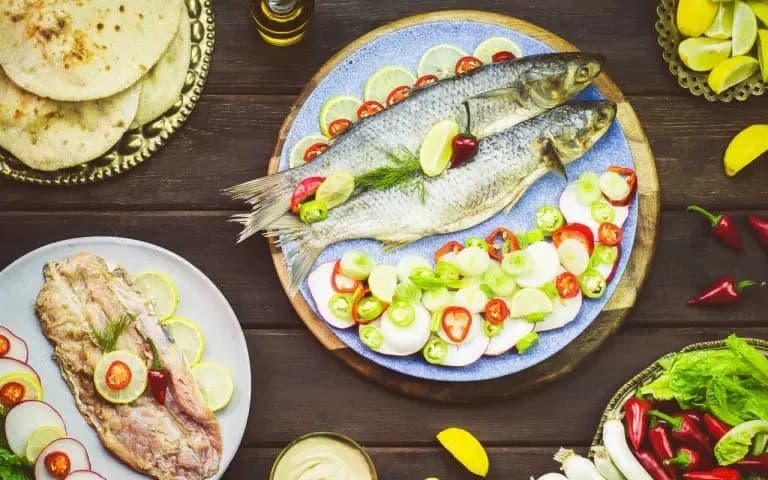
Feseekh is mullet salted heavily and left to ferment for two to three weeks until it turns silvery and develops its notoriously powerful smell. It is eaten at Sham El-Nessim, the Egyptian spring festival whose origins reach back to pharaonic times, and it is one of the oldest continuously eaten preparations anywhere.
**This preparation carries a serious and well-documented food safety risk, and it must be stated plainly.** Improperly prepared feseekh causes botulism poisoning in Egypt every year, sometimes fatally, and the Egyptian health ministry issues public warnings before Sham El-Nessim annually. The conditions the method describes, fish sealed in airtight containers, without refrigeration, for weeks, are precisely those in which *Clostridium botulinum* produces its toxin. In Egypt feseekh is traditionally bought from licensed fassakhani, specialist salters who do this professionally, and the strong advice is to buy it from a reputable source rather than attempting it at home.
The recipe is recorded here because it is a genuine and historically significant part of Egyptian foodways, and because AFN's job is to document rather than to omit. It is not recommended as a home project.
One error worth noting: feseekh is made from mullet, and the source's ingredient list specifies herring, a different fish, and the basis of a different preparation, renga, which is eaten alongside it.
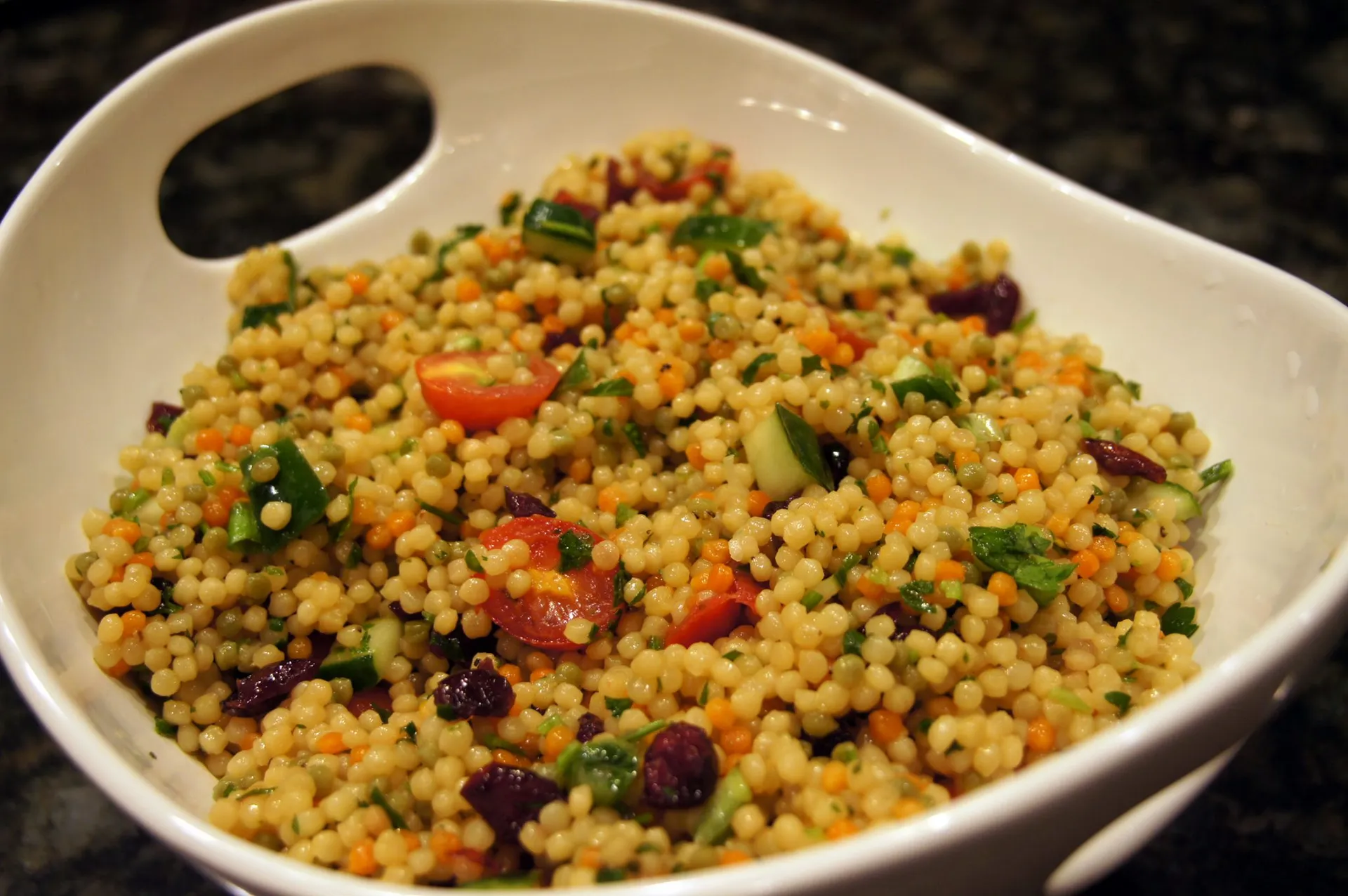
How to prepare instant couscous: boiling water or stock poured over, covered, left to steam, then fluffed. This is a technique page for a staple ingredient rather than a recipe for a dish, and it is filed as such.
Couscous is North African, specifically Berber in origin, and it is a staple across Morocco, Algeria, Tunisia and Libya. Its status was recognised by UNESCO in 2020, when the knowledge and practices around couscous were inscribed on the Representative List of the Intangible Cultural Heritage of Humanity in a joint submission by Algeria, Mauritania, Morocco and Tunisia.
It is not a grain, despite looking like one. Couscous is pasta, durum wheat semolina moistened, rolled into tiny granules and dried. Three sizes are common: Moroccan, the smallest; Israeli or pearl couscous, about the size of peppercorns; and Lebanese, the largest.
The traditional method has nothing to do with pouring boiling water on. Couscous is steamed, usually more than once, in the upper chamber of a couscoussier over a stew whose vapours flavour it as it cooks. That is how it is made for a proper meal in North Africa and the results are much lighter.
Almost all couscous sold in supermarkets is pre-steamed and dried, which is why the rehydration method here works.
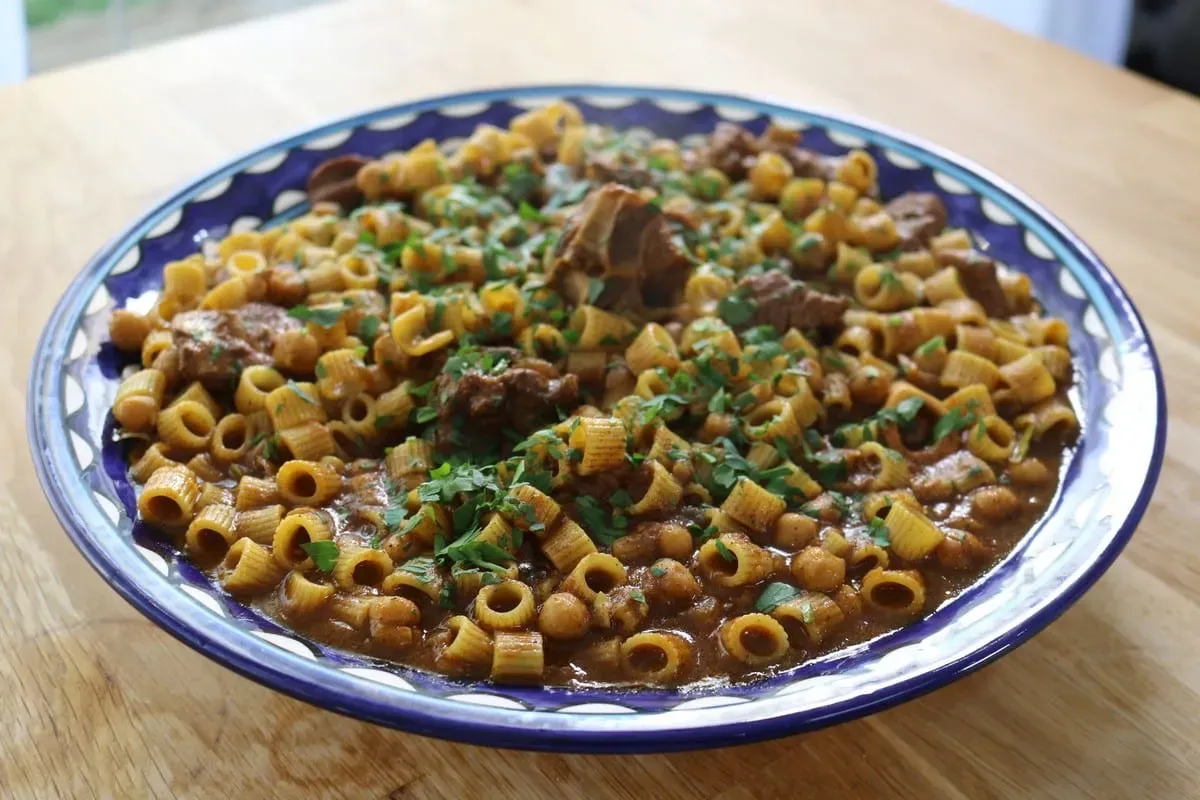
Mbakbaka, also written imbakbaka, is Libya's one pot pasta stew and it is a direct product of Italian colonisation. Italy occupied Libya from 1911 to 1943, pasta arrived with the occupation, and Libyan cooks absorbed it into a North African spice framework rather than adopting Italian technique alongside it.
The result is a pasta dish that no Italian would recognise. Turmeric, ginger, curry powder, chilli and mixed spices go into a tomato base with lamb or beef, and the pasta cooks directly in that liquid rather than being cooked separately and sauced afterwards. Potatoes go in too. Cooking the pasta in the sauce is the defining decision: the starch thickens the liquid and the pasta absorbs the spice, which is what makes it a stew rather than pasta with sauce on it.
Macaroni elbows are the traditional shape, and ditalini, gemelli and other small pastas all suit it for the same reason: the tubes and twists hold the sauce. Harissa is a common addition for heat. The comparison people reach for is minestrone, which captures the one pot logic and misses the spicing entirely. It is winter food and family food, and it is eaten across Libya and among the Libyan diaspora.
Tunisian sabayon is a frozen custard of whipped egg, sugar and oil, scented with orange blossom water and served very cold under crushed pistachios or almonds. It resembles its Italian namesake in ingredients and method, with one substitution that changes it entirely: oil replaces the alcohol.
Sabayon comes from the Italian zabaione, and the word appears in French as sabaillon in 1803, apparently brought back by soldiers from the Italian and Swiss expedition of 1799 to 1800. Older origins are claimed, an introduction to the French court in 1533, or an invention in Turin, but these are unverified and some are frankly legendary. The Tunisian version is much more recent than any of them, arriving through Italian influence in Tunisia.
There is one thing to be clear about. Italian zabaione is cooked, whisked over a bain-marie until the eggs thicken. **This version is not cooked at any point.** The eggs are whipped raw, folded together and frozen. That makes it a raw egg dessert, which matters for anyone pregnant, elderly, very young or immunocompromised, and pasteurised eggs are the sensible answer if you are serving it to any of them. It needs at least eight hours in the freezer, so it has to be made the day before.