

Nous utilisons des cookies essentiels au fonctionnement du site. Nous aimerions aussi déposer des cookies de mesure d’audience et des cookies publicitaires, uniquement avec votre accord. Vous pouvez choisir séparément pour chacun. Lire notre politique relative aux cookies

Loading
Recettes
Parcourez les archives par pays, par plat et par temps de cuisson.
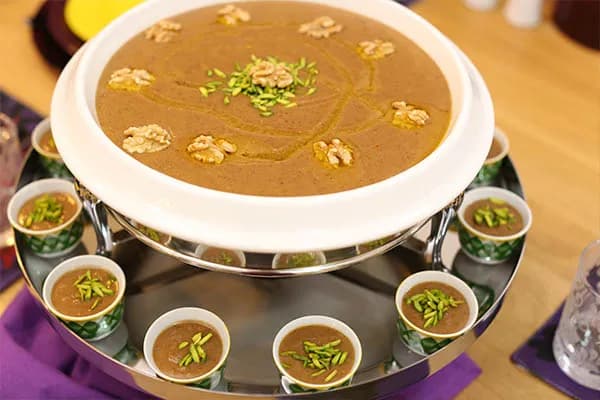
Asida is a cooked flour pudding from the Maghreb, eaten with honey or date syrup and melted butter. Its first recorded appearance is in the Arabic cookbook Kitab al-Tabikh, around the tenth century, which makes it one of the older dishes in this collection with a documented date.
It is communal food. Like bazeen, asida is served on a large flat plate called a gas'a and eaten with the fingers, though spoons are used. The distinction the source draws between the two is worth keeping: bazeen has Amazigh origins and is purely North African, while asida has an Arabic name and versions of it are made across the Arabian Peninsula as well.
In Libya it is a breakfast dish, eaten to carry someone through a working day, and it appears at celebrations: births, Eid, Mawlid. The plain version is simply flour cooked in water, turned out, and served with a hollow pressed into the top for honey or date syrup, with melted butter or ghee poured around it. This particular recipe is a considerably richer version built on a date paste with cardamom, cinnamon, fenugreek, saffron, rose water and walnuts, which is a celebration preparation rather than the everyday one.
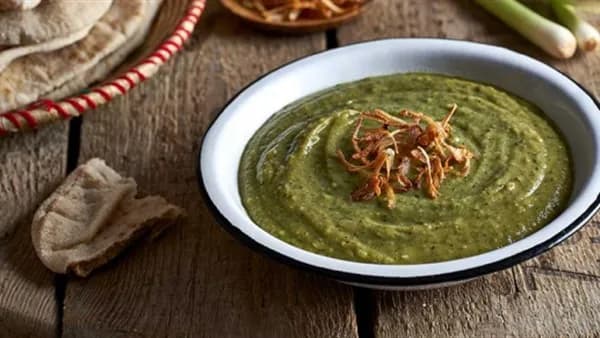
Ful medames is stewed fava beans dressed with olive oil, cumin, garlic and lemon, and it is Egypt's national dish. It is eaten at any hour, though breakfast is when it belongs most, and it is sold from carts across Cairo and Giza in the mornings.
Traditionally it is cooked and served in a large metal jug, the qedra, over a very long slow heat, often overnight, which is why street ful has a depth that a quick home version does not. What the beans are dressed with varies endlessly: parsley, onion, chilli, tomato, hard eggs, tahini.
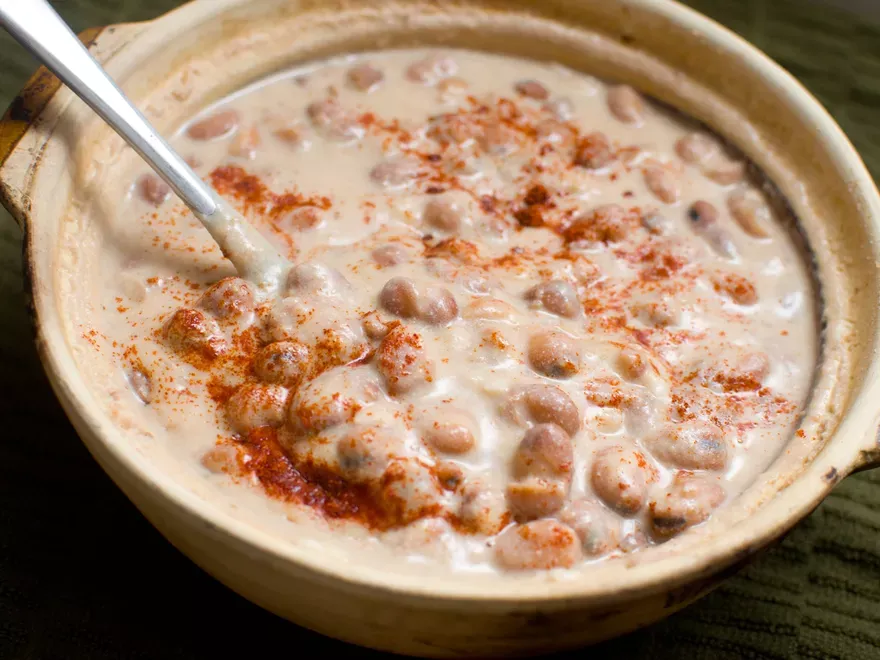
Its versions across the region are worth knowing. In Somalia, fuul is a breakfast staple served with eggs and laxoox or canjeero flatbread, spiced with xawaash, the blend of cumin, coriander, cardamom, cloves, turmeric and more that makes it noticeably hotter than the Egyptian version. In Morocco it is bissara, made from fava beans and split green peas cooked with garlic, eaten especially in the north during cold weather. This particular recipe includes tahini, which is a Levantine addition rather than a classic Egyptian one, and it uses tinned beans rather than the overnight cook.
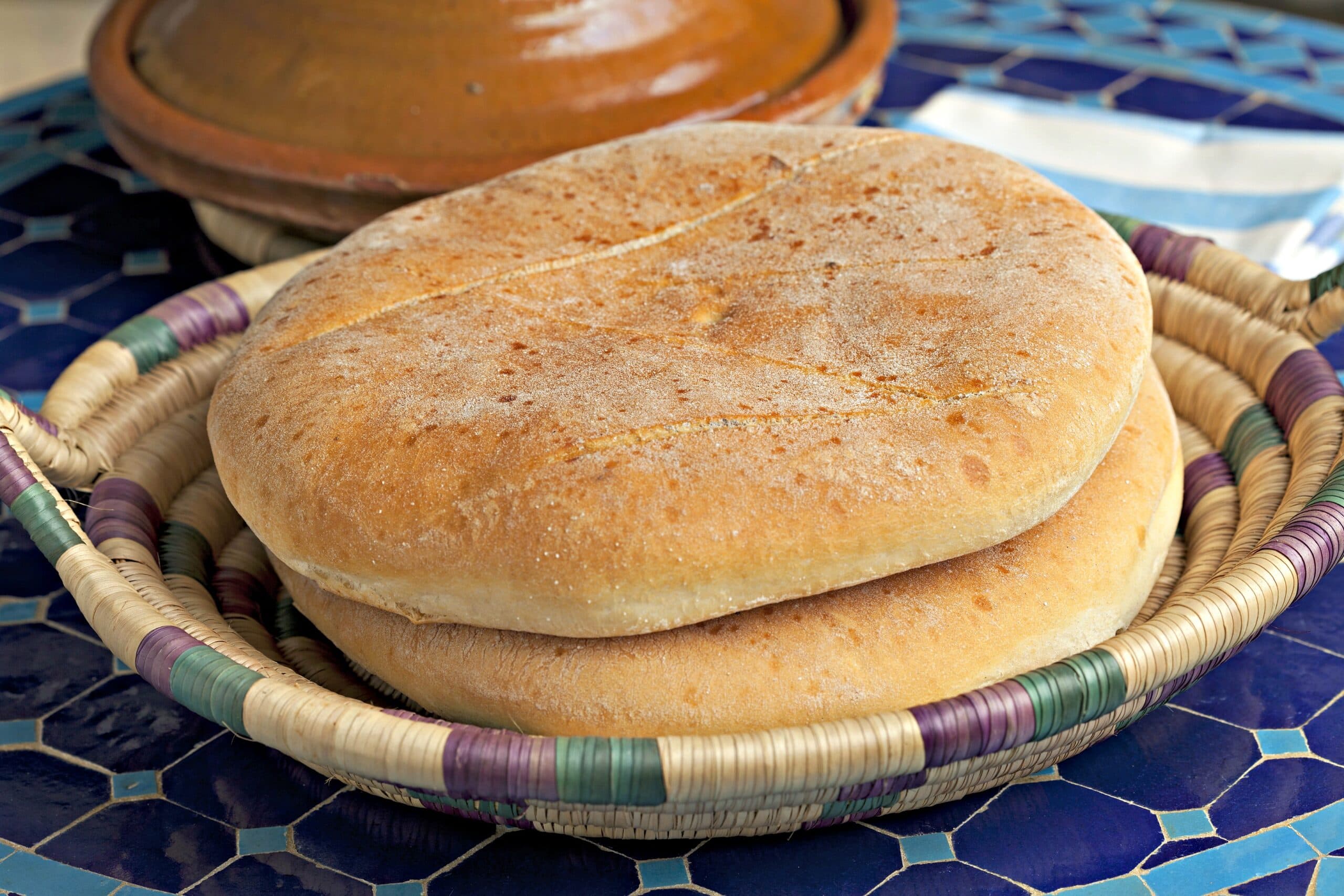
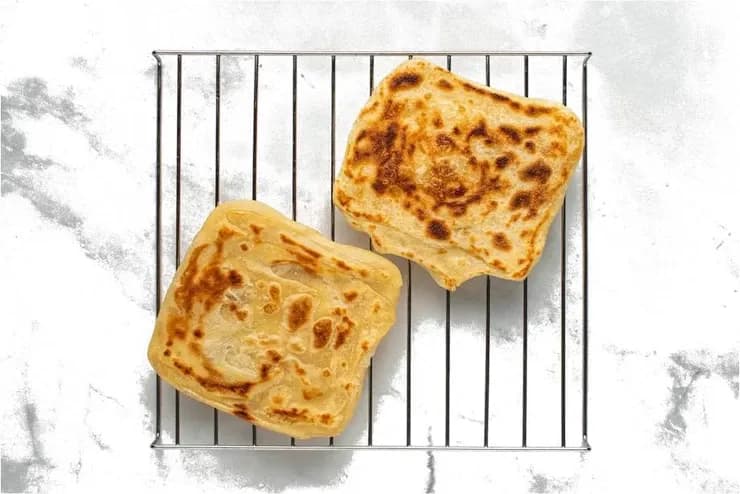
Msemen is a Moroccan flatbread made by spreading dough paper-thin, dotting it with butter and semolina, and folding it into a square, twice, before frying. The folding is what creates the layers, and the layers are the entire dish.
The name is a description of the method. Msemen means oiled in Arabic, and the recipe uses a great deal of oil: on the work surface, on the hands, in the dough, dotted through the folds. That is not excess, it is technique. Oiled hands slide over the dough rather than tearing it, which is how you get it thin enough to see the surface through.
The double fold is the structural step. Spread thin, dot with butter and semolina, fold into thirds, dot again, fold into thirds the other way. Each fold multiplies the layers, and the semolina between them keeps them from fusing, which is exactly the job flour does in a laminated puff pastry, arrived at from a completely different direction.
Two things separate msemen from its Moroccan neighbours. Beghrir is the yeasted thousand-hole pancake, a different thing entirely. Rghaif is a broader family name that msemen belongs to.
Cooking them in the order they were folded matters. The first ones have rested longest and spread most easily.
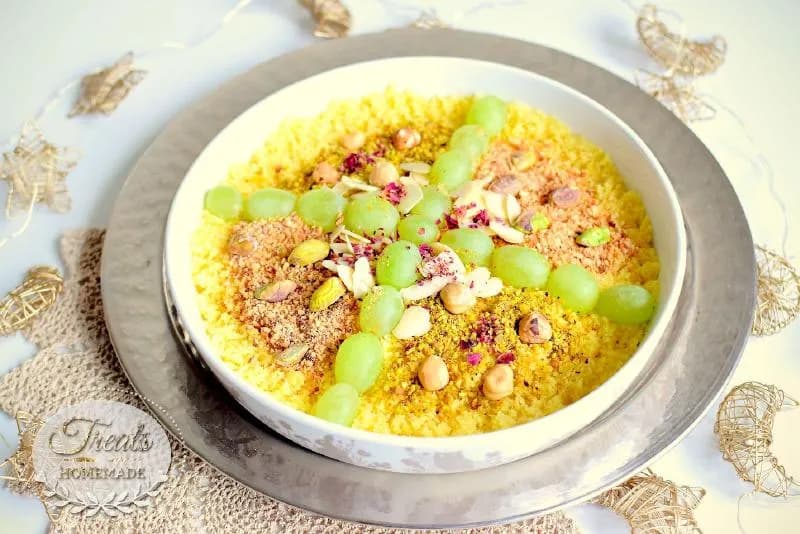
Masfouf is steamed couscous sweetened with milk and honey and mixed with dates, raisins, nuts and banana, layered with a vanilla custard. It is Tunisian and it belongs to Ramadan.
It is the sweet counterpart to Tunisian couscous, which is otherwise a savoury dish, and that inversion is the whole idea, the same grain, the same steaming technique, turned into a dessert or a breakfast. During Ramadan it appears at suhoor, the meal before dawn, because it is filling and sustaining, and at iftar as a sweet.
Geranium water is the ingredient that places it. Distilled from scented geranium leaves, it is used across Tunisian sweets in the way rose water and orange blossom water are used further east, and it has a green, faintly citrus perfume that neither of those reproduces. Middle Eastern and North African grocers stock it.
Steaming the couscous properly rather than pouring boiling water over it is what the recipe asks for, and it is the difference between light separate grains and a claggy mass. This is a dessert made from properly cooked couscous rather than instant.
**It contains almonds and walnuts, which the title gives no indication of.**
The source's ingredient list repeats milk, honey and geranium water without indicating that the second set belongs to the custard.