Nous utilisons des cookies essentiels au fonctionnement du site. Nous aimerions aussi déposer des cookies de mesure d’audience et des cookies publicitaires, uniquement avec votre accord. Vous pouvez choisir séparément pour chacun. Lire notre politique relative aux cookies

Loading
Recettes
Parcourez les archives par pays, par plat et par temps de cuisson.
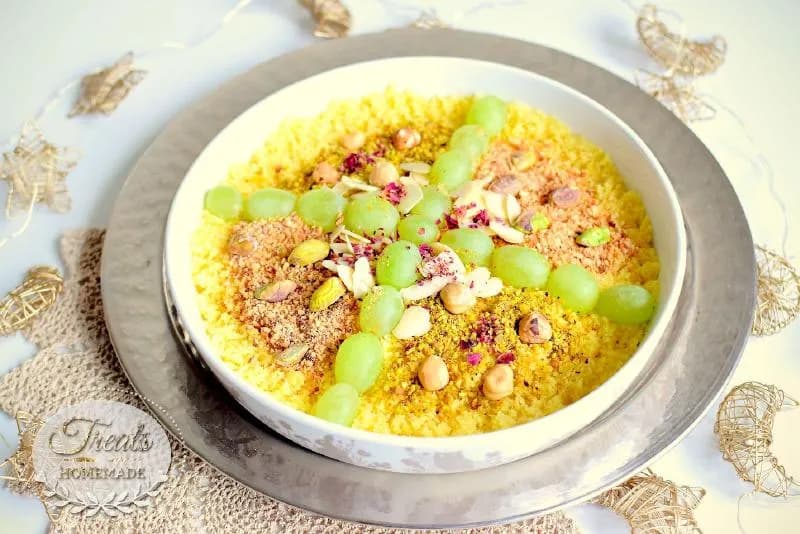
Masfouf is steamed couscous sweetened with milk and honey and mixed with dates, raisins, nuts and banana, layered with a vanilla custard. It is Tunisian and it belongs to Ramadan.
It is the sweet counterpart to Tunisian couscous, which is otherwise a savoury dish, and that inversion is the whole idea, the same grain, the same steaming technique, turned into a dessert or a breakfast. During Ramadan it appears at suhoor, the meal before dawn, because it is filling and sustaining, and at iftar as a sweet.
Geranium water is the ingredient that places it. Distilled from scented geranium leaves, it is used across Tunisian sweets in the way rose water and orange blossom water are used further east, and it has a green, faintly citrus perfume that neither of those reproduces. Middle Eastern and North African grocers stock it.
Steaming the couscous properly rather than pouring boiling water over it is what the recipe asks for, and it is the difference between light separate grains and a claggy mass. This is a dessert made from properly cooked couscous rather than instant.
**It contains almonds and walnuts, which the title gives no indication of.**
The source's ingredient list repeats milk, honey and geranium water without indicating that the second set belongs to the custard.
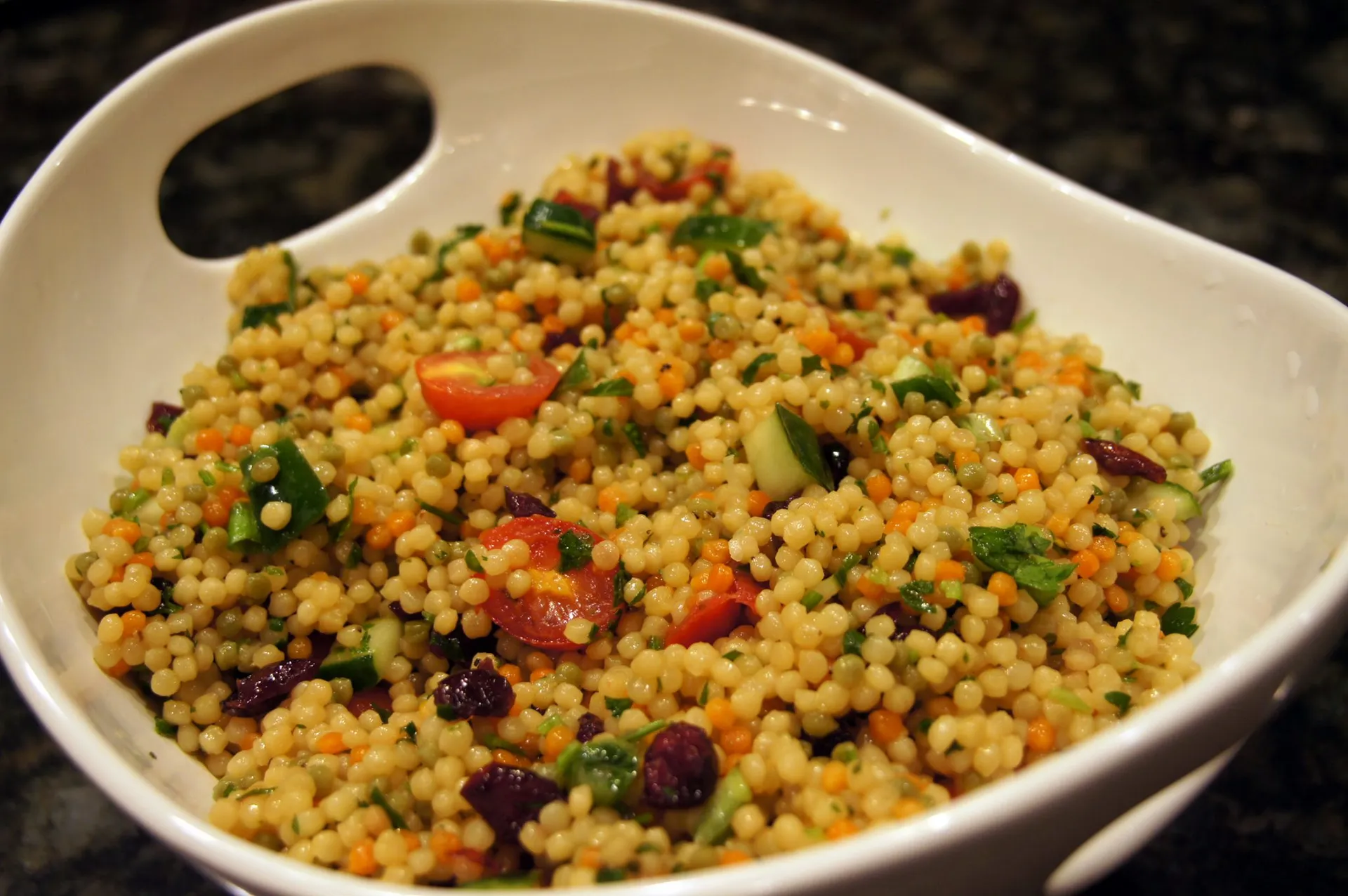
How to prepare instant couscous: boiling water or stock poured over, covered, left to steam, then fluffed. This is a technique page for a staple ingredient rather than a recipe for a dish, and it is filed as such.
Couscous is North African, specifically Berber in origin, and it is a staple across Morocco, Algeria, Tunisia and Libya. Its status was recognised by UNESCO in 2020, when the knowledge and practices around couscous were inscribed on the Representative List of the Intangible Cultural Heritage of Humanity in a joint submission by Algeria, Mauritania, Morocco and Tunisia.
It is not a grain, despite looking like one. Couscous is pasta, durum wheat semolina moistened, rolled into tiny granules and dried. Three sizes are common: Moroccan, the smallest; Israeli or pearl couscous, about the size of peppercorns; and Lebanese, the largest.
The traditional method has nothing to do with pouring boiling water on. Couscous is steamed, usually more than once, in the upper chamber of a couscoussier over a stew whose vapours flavour it as it cooks. That is how it is made for a proper meal in North Africa and the results are much lighter.
Almost all couscous sold in supermarkets is pre-steamed and dried, which is why the rehydration method here works.
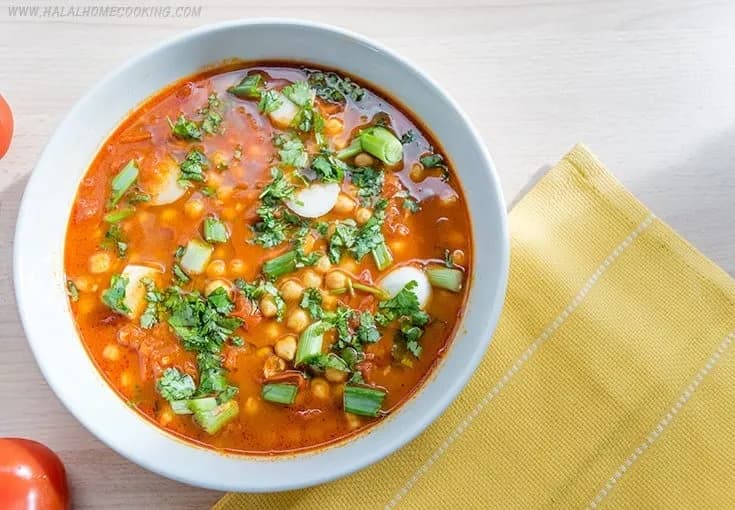
Dobara is a chickpea and fava bean soup from Biskra in northeastern Algeria, and it is winter food in a place that gets genuinely cold at night despite sitting on the edge of the Sahara. It is also spelled doubara, and it is known widely enough by its region that Algerians call it doubara Biskra.
It is vegan by construction rather than by choice. Meat is expensive in Algeria and many households cannot buy it regularly, and dobara is one of the dishes that answers that directly: beans, chickpeas, spices and bread, filling enough that nobody at the table is thinking about what is missing. It is also the dish that gets made when a guest arrives unannounced, because the components are always in the house.
The heat is not incidental. Harissa goes in, and so do chilli, black pepper and paprika, and Algerians describe the warmth it produces as the reason to eat it in winter. What makes it distinctive is that the fresh elements go in at the table rather than in the pot: grated tomato, chopped coriander, garlic, pickled peppers, lemon slices and olive oil are added to each bowl as it is served, so the dish is finished by whoever is eating it.
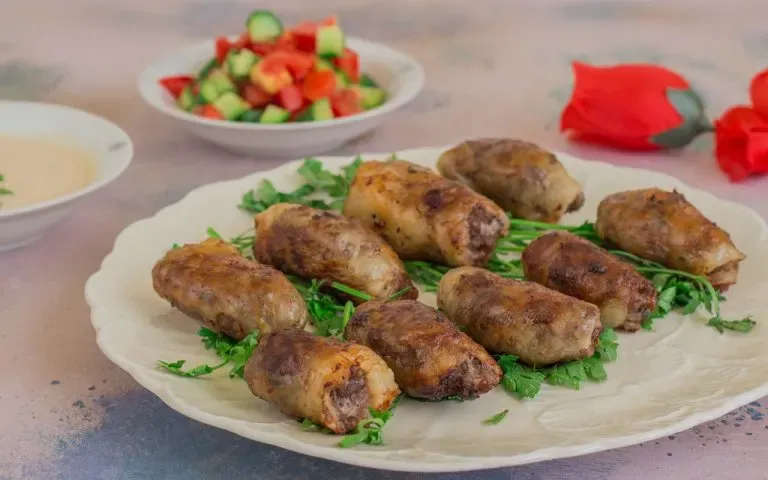
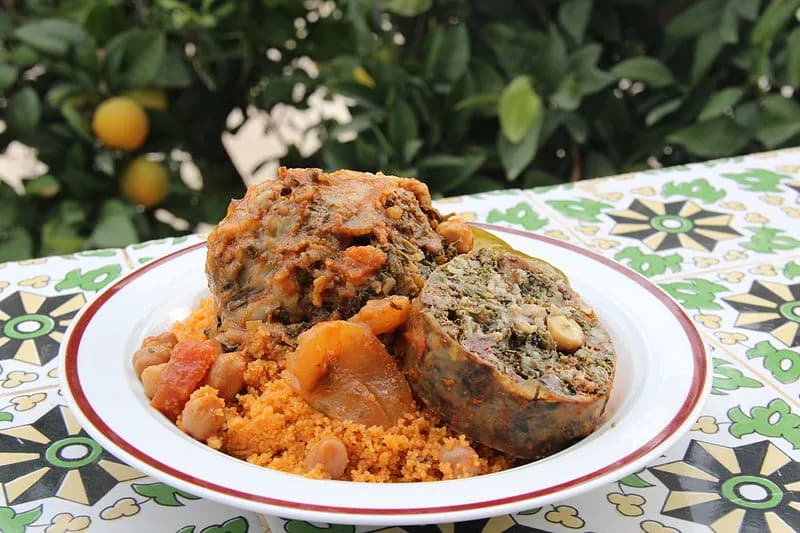
Usban is a North African sausage made from the parts of a sheep that a whole animal butchery yields and nothing else does: the stomach, the liver, the lungs and the heart, chopped and mixed with rice, herbs and spices, sewn into pouches and cooked in a sauce. It is eaten in Tunisia, Algeria and Libya, and it is written both usban and osban.
Its occasion is Eid al-Adha, and the connection is structural rather than customary. The festival involves the sacrifice of an animal and the use of all of it, and usban is what the offal becomes. It cannot be made casually because it requires a quantity of organ meat that only arrives when a whole sheep is broken down at home. Tunisian households make it on the day of Eid despite the considerable labour, and the effort is part of what the dish means.
The work is real. The stomach must be scrubbed, blanched, scraped of its lining until it turns white, cut and sewn into pouches by hand with a needle and butcher's twine, then filled and sewn shut. Usban is documented in Tunisian references as far back as the 13th century, and it is held up as a demonstration of skill: proof that a cook can use every part of the sacrifice properly. It is served alongside rice or couscous.