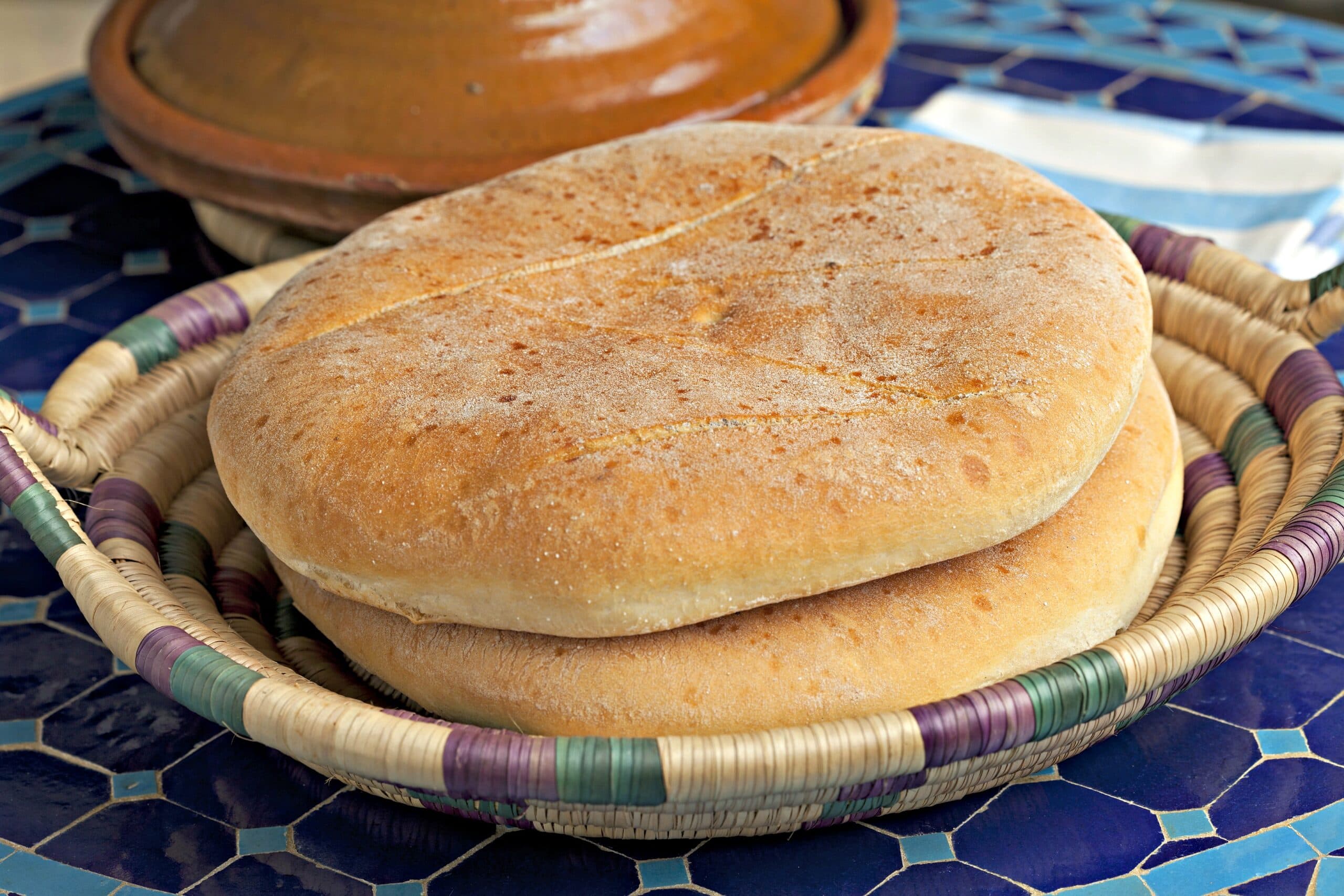
Moroccan Khobz
Medium


Cookies sur African Food Network
Nous utilisons des cookies essentiels au fonctionnement du site. Nous aimerions aussi déposer des cookies de mesure d’audience et des cookies publicitaires, uniquement avec votre accord. Vous pouvez choisir séparément pour chacun. Lire notre politique relative aux cookies

Parcourez les archives par pays, par plat et par temps de cuisson.
Moroccan Khobz is the daily bread of Morocco, a slightly leavened, round flatbread topped with sesame seeds and sometimes nigella seeds, baked until the crust is firm and golden and the interior is soft and chewy. It is present at every Moroccan meal from breakfast to dinner, used to scoop tagines, dip into olive oil, and accompany cooked vegetable salads. Moroccan families traditionally made their Khobz daily at home and took it to the communal neighbourhood baker (farran) to bake. This tradition persists in many Moroccan cities and villages, and the quality of local farran bread remains a point of neighbourhood pride. The bread's neutral, slightly wheaty flavour and sturdy texture make it the ideal vehicle for Moroccan food.
MediumMorocco
Recette de Blessing · Africook
Rien ici pour le moment
