Nous utilisons des cookies essentiels au fonctionnement du site. Nous aimerions aussi déposer des cookies de mesure d’audience et des cookies publicitaires, uniquement avec votre accord. Vous pouvez choisir séparément pour chacun. Lire notre politique relative aux cookies

Loading
Recettes
Parcourez les archives par pays, par plat et par temps de cuisson.
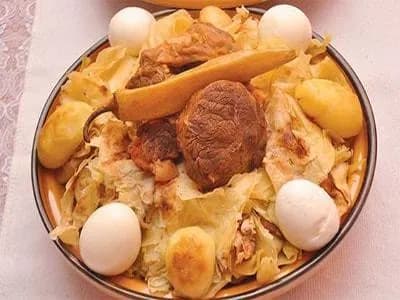
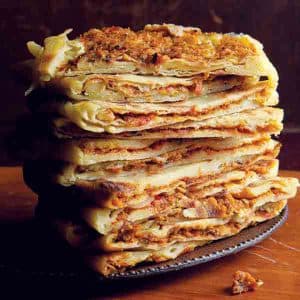
Chekhchoukha, also written chakhchoukha, is torn flatbread under a spiced meat and chickpea sauce, and the name describes the tearing. It comes from tacherchert in the Chaouia language, meaning to crumble or to tear into small pieces, and the bread is broken by hand rather than cut.
It is a Chaoui dish, from the Aurès mountains of eastern Algeria, and it spread from there into Constantine, Biskra and the rest of the country. Its origin is in shepherds' food, the substantial thing eaten on returning home on cold winter nights, and it kept that character even as it became a dish for festive occasions and celebrations rather than everyday eating.
The bread is rougag, also called trid, a very thin round flatbread made from fine semolina. It is torn, steamed briefly to soften, then heaped on a plate and covered with marqa, the sauce of diced lamb, tomato, onion and chickpeas spiced with dried red chilli, caraway, ras el hanout, black pepper and cumin. Two versions are recognised: chakhchoukha of Biskra, which is this one, and chakhchoukha dfar, which uses a different flatbread and differs in taste and thickness. Which pot it is made in also varies, with some cities using clay and others iron.
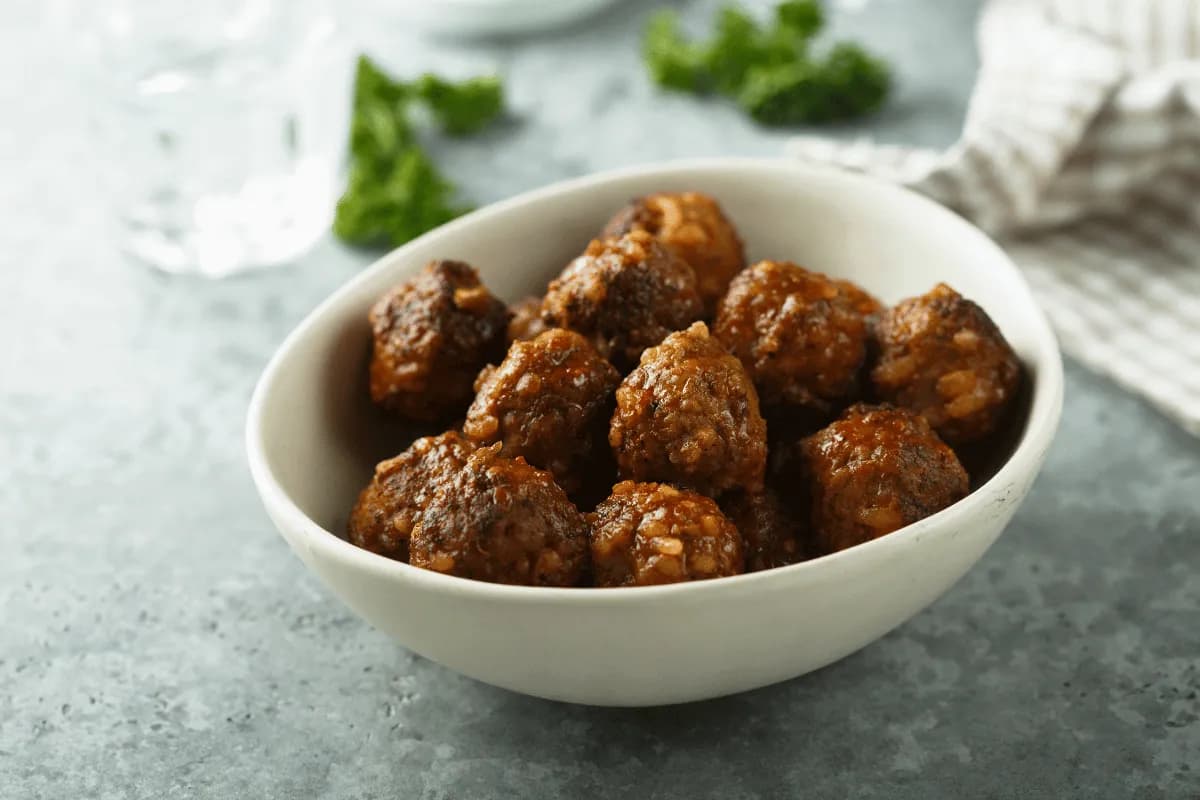
Tinned sardines puréed with egg and breadcrumbs, rolled into balls and cooked in a spiced tomato sauce. It is Moroccan, and the source is right that it is the forerunner of the sardine meatball sandwiches sold widely on the coast.
Sardines matter enormously to Morocco. The country is the world's largest exporter of tinned sardines, the fishery is a major part of the coastal economy, and sardines are cheap and abundant enough to be genuinely everyday food rather than a delicacy. That economic fact is why a sardine kefta exists at all, ground sardine is now sold ready-prepared at Moroccan fish markets, which the source notes and which tells you how ordinary the dish is.
The technique is standard kefta construction applied to fish. Puréeing rather than flaking is what makes the mixture hold together, since sardine flesh is soft and would fall apart otherwise, and the breadcrumbs and egg do the binding a meat kefta would not need.
The spicing, paprika, turmeric, ginger, coriander and cumin, is the Moroccan tagine vocabulary rather than anything specific to fish.
The source's discussion of sardine oil in paint and linoleum manufacture is accurate and not especially appetising; it has not been carried across. Nor have its omega-3 claims.
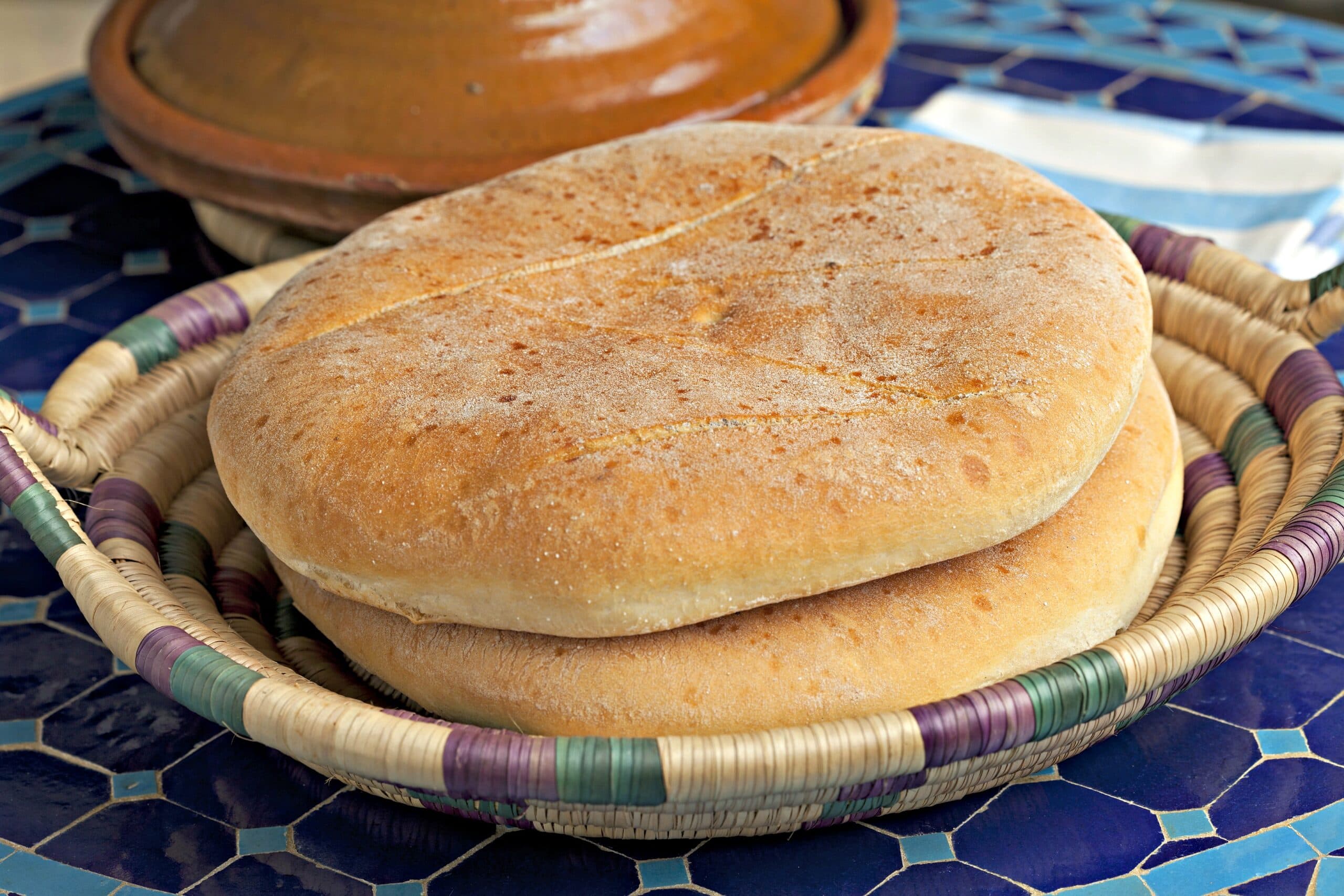
Kesra is the Algerian flatbread: round, soft and chewy, cooked on a flat pan and marked by the rings of the pan it is cooked on. It is eaten with savoury and sweet meals alike, and it is the domestic alternative to the French baguettes that fill Algerian and Tunisian bakeries as a legacy of colonisation.
Its names change across the country. It is khobz ftir in Algiers, kesra in the east, and aghroum n'tajin in Kabylia. It is native to eastern Algeria and is traditionally made with semolina rather than plain flour, along with oil, salt and water and nothing else. This particular recipe uses all purpose flour instead, which is a departure from the traditional semolina base and will give a softer, less characteristically grainy bread.
It is unleavened. There is no yeast, no rising, only a rest of twenty minutes or so to relax the dough so it stops springing back when rolled. A heavy pan works best, and a cast iron one with embossed rings gives the circular pattern kesra is recognised by. Sesame or nigella seeds are a common addition worked into the dough. It is served alongside Algerian soups and stews, and berkoukes in particular is conventionally eaten with it.
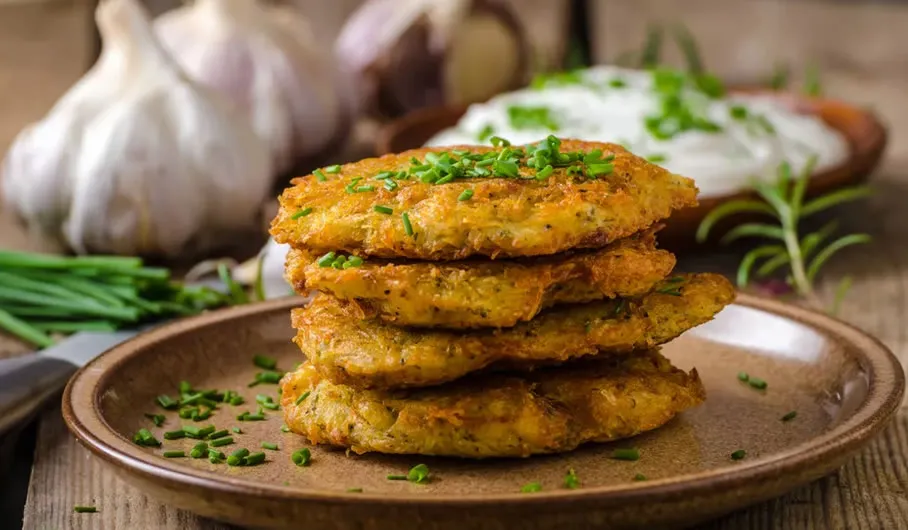
Maakouda is a Moroccan potato cake, mashed potato bound with egg and herbs, floured and deep fried until the outside crisps and the inside stays soft. It is street food, sold cheap and eaten either on its own or stuffed into a small baguette.
Meknes is where it is most associated, and the city is described as the wine capital of North Africa. Maakouda is sold from stalls there and across the country, and it appears in Algeria and Tunisia too under the same set of spellings: maaqouda, maqouda, makouda. The comparison the source draws is with falafel, and it holds up: a cheap fried snack, sold from a stall, eaten in bread. It has simply never travelled the way falafel has.
Ras el hanout is what marks it as Moroccan rather than a generic potato cake. The blend is optional in this recipe and the source strongly recommends it, and turmeric gives the colour. It is also a practical way to use up leftover mashed or baked potato, which is much of how it is made at home. Deep frying is traditional; the oven and the air fryer both work and are given as alternatives.
Les mentions alimentaires sont fournies par les contributeurs à titre indicatif. Elles ne sont pas vérifiées par AFN et dépendent des produits que vous achetez. En cas d’allergie grave, vérifiez vous-même chaque ingrédient. Cuisine, allergies et votre propre jugement