Nous utilisons des cookies essentiels au fonctionnement du site. Nous aimerions aussi déposer des cookies de mesure d’audience et des cookies publicitaires, uniquement avec votre accord. Vous pouvez choisir séparément pour chacun. Lire notre politique relative aux cookies
Loading
Recettes
Parcourez les archives par pays, par plat et par temps de cuisson.
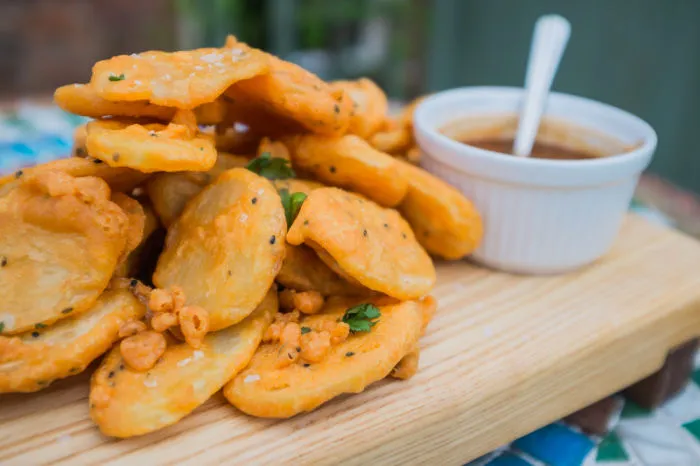
Bhajias are thinly sliced potatoes coated in a spiced gram flour batter and fried until crisp, and they are an East African street snack, popular in Kenya and Tanzania. They arrived from India and have been made locally long enough to be entirely at home.
Gram flour is what makes them work and what makes them naturally gluten free. Milled from chana dal, it fries into a crisp shell in a way wheat flour does not, and it carries an earthy, slightly nutty flavour of its own. Rice or corn flour goes in alongside for extra crispness.
They belong to the same Indian inheritance in East Africa as chapati, samosas and pilau masala, brought by Indian merchants and labourers over the nineteenth and twentieth centuries and absorbed completely into Kenyan and Tanzanian eating. What has changed locally is what goes with them: kachumbari, the tomato and onion salad, is the standard Kenyan accompaniment rather than the chutneys of India, though tamarind chutney and ketchup are both used. The batter should coat the back of a spoon, and it will thin as the potatoes go through it, so more flour is added as you go.
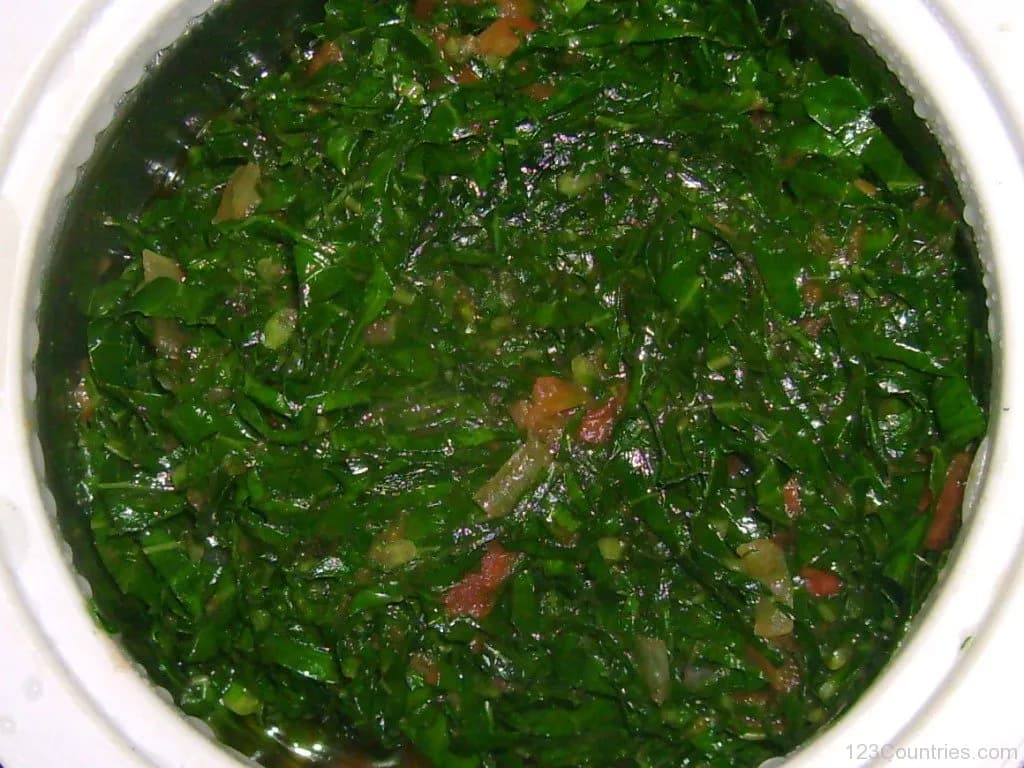
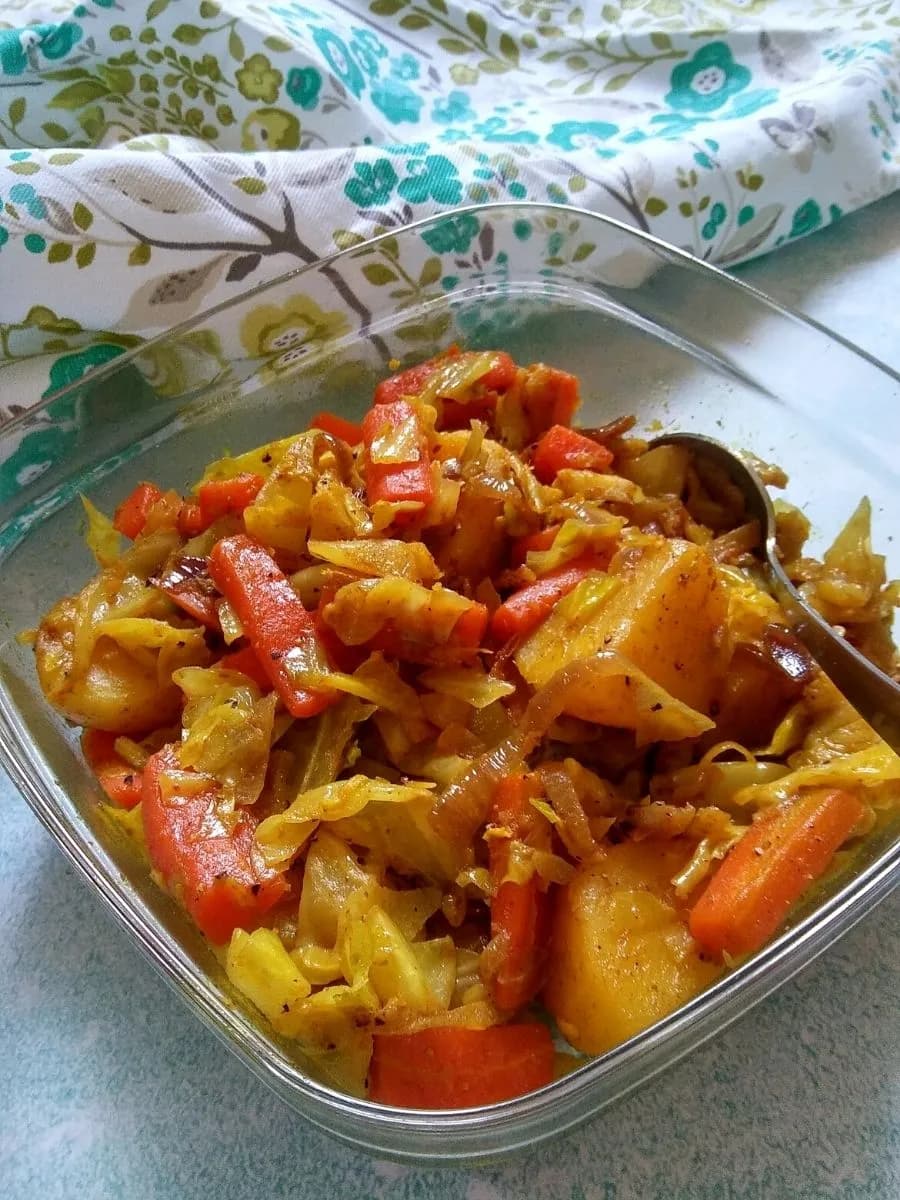
Sukuma wiki is braised collard greens, and the name tells you what it is for. In Swahili it means to push or stretch the week, and it describes a cheap, filling vegetable dish that makes the household's resources last. Served with ugali and perhaps a little roasted meat or fish, it is a typical Kenyan or Tanzanian meal.
Sukuma is the Swahili name for collard greens, called colewort in older English and often confused with kale. It is grown across Kenya, Tanzania and Uganda, it is inexpensive, and it is available all year round, which is exactly why it occupies the place it does. The greens are the most in demand vegetable in Kenya on both nutritional and economic grounds.
The method is simple and the order matters. Onion is softened first, the greens go in by the handful so each addition wilts before the next, and tomatoes and liquid follow. Twenty to thirty minutes of gentle cooking takes it from tough to tender. It is naturally vegan as written, which is unusual for a staple side dish, and it is often eaten that way rather than by choice. A chopped chilli is the most common addition.
Dried white beans cooked until tender, then finished with red onion and sliced tomatoes into a thick, soupy stew. It is Malagasy, and it is served everywhere on the island.
It is laoka, which is the useful word here. In Malagasy eating, rice is the meal and laoka is whatever accompanies it, the thing that goes on top of, or beside, a large plate of rice. Tsaramaso is one of the most popular laoka in the country, and it is eaten as a matter of course rather than as an occasion dish.
It is very often not vegetarian. Zebu meat, the humped cattle that are central to Malagasy life, makes it hen'omby sy tsaramaso, and pork makes it tsaramaso sy henakisoa. The shank is the cut the source recommends. This version is the plain one, which is also widely eaten.
The technique in the recipe is worth noting: the beans are cooked separately in water, seasoned only at the end, and a cup of their cooking liquid is kept back. That liquid is what the finished stew is loosened with, and it carries starch and flavour that plain water would not.
The source compares it to cassoulet, which is a reasonable shorthand, beans and meat cooked long and slow, though the seasoning is entirely different.
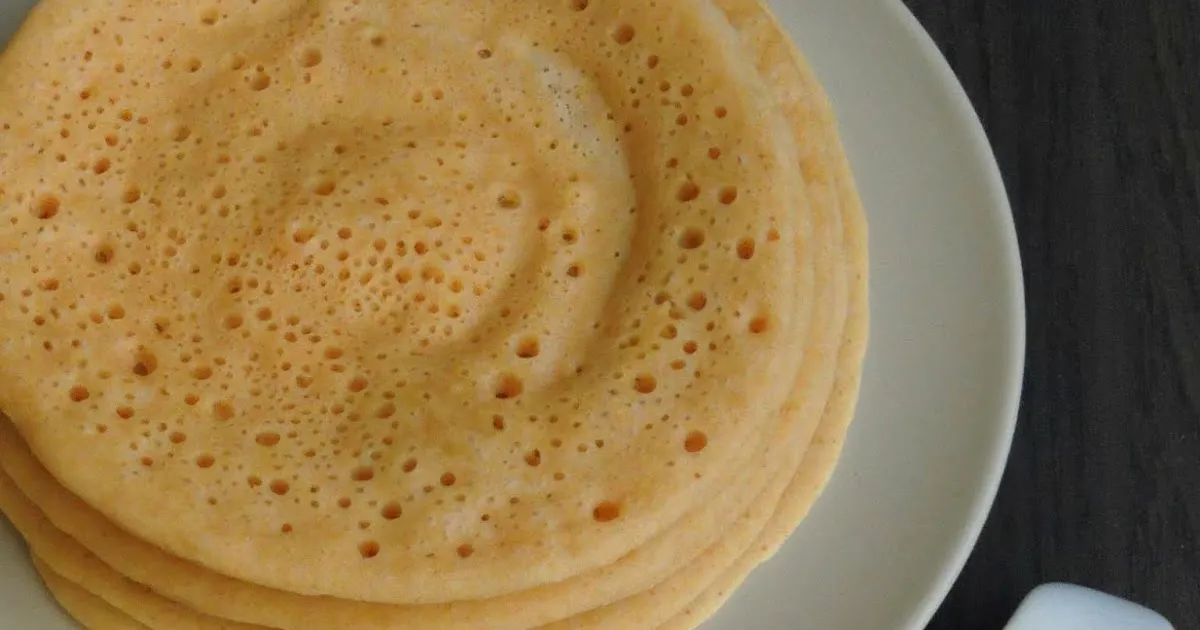
Gorraasa is a thick, spongy Sudanese flatbread cooked in a pan from a pourable batter rather than a kneaded dough. It is one of Sudan's two national breads, alongside kisra, and it is used as a tool as much as a food.
Its purpose shapes its texture. A round of gorraasa goes under stewed meat or a saucy dish, and pieces are torn off to pick food up, so it needs to be soft enough to tear cleanly and springy enough not to disintegrate under sauce. That is why it is thick and slightly elastic rather than crisp or brittle. It is often eaten with damaa, the Sudanese meat and tomato stew, in a combination known as gorraasa be dama.
Two things in the method are worth taking seriously. The batter must be thick, pancake-batter thick, because a thin one will not hold the bubbles that give the bread its sponginess. And it is cooked on one side only, over medium heat, until the top dries out completely. The heat needs watching: too high and the base burns before the top sets.
The source is emphatic about salting the batter properly, and it is right. Gorraasa made without enough salt is bland in a way that no accompaniment fixes, because there is nothing else in it.