Nous utilisons des cookies essentiels au fonctionnement du site. Nous aimerions aussi déposer des cookies de mesure d’audience et des cookies publicitaires, uniquement avec votre accord. Vous pouvez choisir séparément pour chacun. Lire notre politique relative aux cookies
Loading
Recettes
Parcourez les archives par pays, par plat et par temps de cuisson.
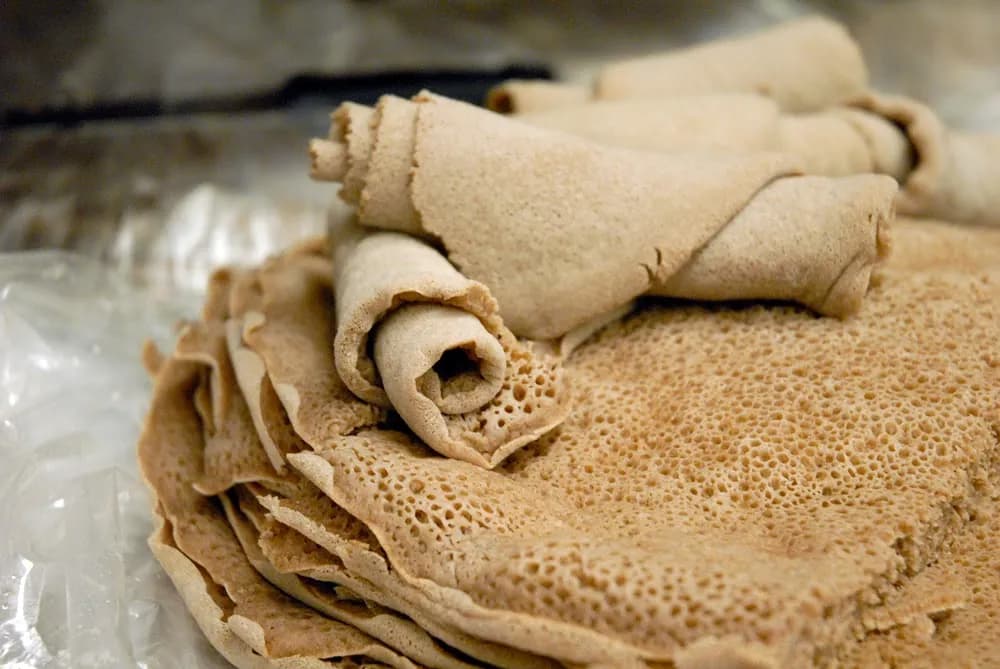
Injera is the fermented flatbread of Ethiopia and Eritrea, and it is not a side dish. It is the plate: stews and vegetables are spooned directly onto a large injera, and diners tear pieces from a second one to scoop, so the meal ends with the plate itself eaten.
Teff is what it is made from, a tiny round grain that grows in the Ethiopian highlands and is among the smallest cereals in the world. Teff carries almost no gluten, which means it cannot be raised in the way wheat bread is, and injera instead depends on fermentation. Wild yeasts and lactic bacteria in a starter, called ersho, work the batter over several days, producing the carbon dioxide that gives injera its distinctive surface of small holes, its spongy texture and its sour flavour.
That sourness is the point and it varies. A short fermentation gives a mild injera; three days or more gives the sharpness Ethiopians expect. The recipe here uses commercial yeast and a shorter rest, which is a practical shortcut rather than the traditional method, and it produces a milder bread. It also allows very fine millet flour in place of teff, which is easier to find but changes the flavour and the colour.
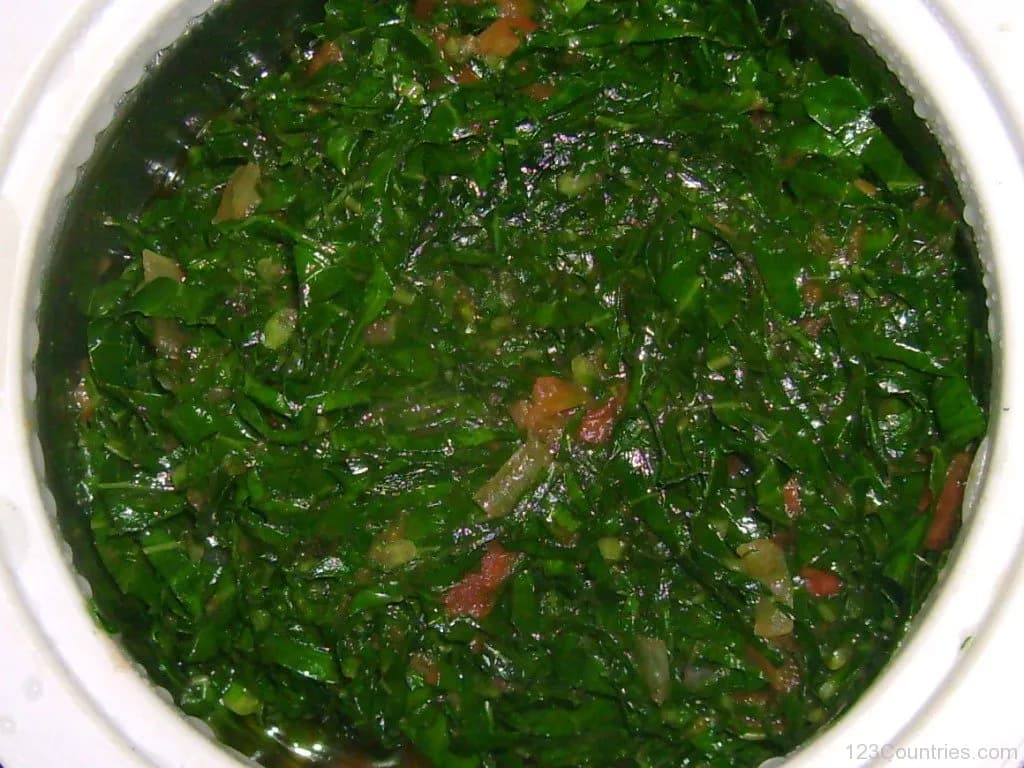
Sukuma wiki is braised collard greens, and the name tells you what it is for. In Swahili it means to push or stretch the week, and it describes a cheap, filling vegetable dish that makes the household's resources last. Served with ugali and perhaps a little roasted meat or fish, it is a typical Kenyan or Tanzanian meal.
Sukuma is the Swahili name for collard greens, called colewort in older English and often confused with kale. It is grown across Kenya, Tanzania and Uganda, it is inexpensive, and it is available all year round, which is exactly why it occupies the place it does. The greens are the most in demand vegetable in Kenya on both nutritional and economic grounds.
The method is simple and the order matters. Onion is softened first, the greens go in by the handful so each addition wilts before the next, and tomatoes and liquid follow. Twenty to thirty minutes of gentle cooking takes it from tough to tender. It is naturally vegan as written, which is unusual for a staple side dish, and it is often eaten that way rather than by choice. A chopped chilli is the most common addition.
Dried white beans cooked until tender, then finished with red onion and sliced tomatoes into a thick, soupy stew. It is Malagasy, and it is served everywhere on the island.
It is laoka, which is the useful word here. In Malagasy eating, rice is the meal and laoka is whatever accompanies it, the thing that goes on top of, or beside, a large plate of rice. Tsaramaso is one of the most popular laoka in the country, and it is eaten as a matter of course rather than as an occasion dish.
It is very often not vegetarian. Zebu meat, the humped cattle that are central to Malagasy life, makes it hen'omby sy tsaramaso, and pork makes it tsaramaso sy henakisoa. The shank is the cut the source recommends. This version is the plain one, which is also widely eaten.
The technique in the recipe is worth noting: the beans are cooked separately in water, seasoned only at the end, and a cup of their cooking liquid is kept back. That liquid is what the finished stew is loosened with, and it carries starch and flavour that plain water would not.
The source compares it to cassoulet, which is a reasonable shorthand, beans and meat cooked long and slow, though the seasoning is entirely different.