Nous utilisons des cookies essentiels au fonctionnement du site. Nous aimerions aussi déposer des cookies de mesure d’audience et des cookies publicitaires, uniquement avec votre accord. Vous pouvez choisir séparément pour chacun. Lire notre politique relative aux cookies

Loading
Recettes
Parcourez les archives par pays, par plat et par temps de cuisson.
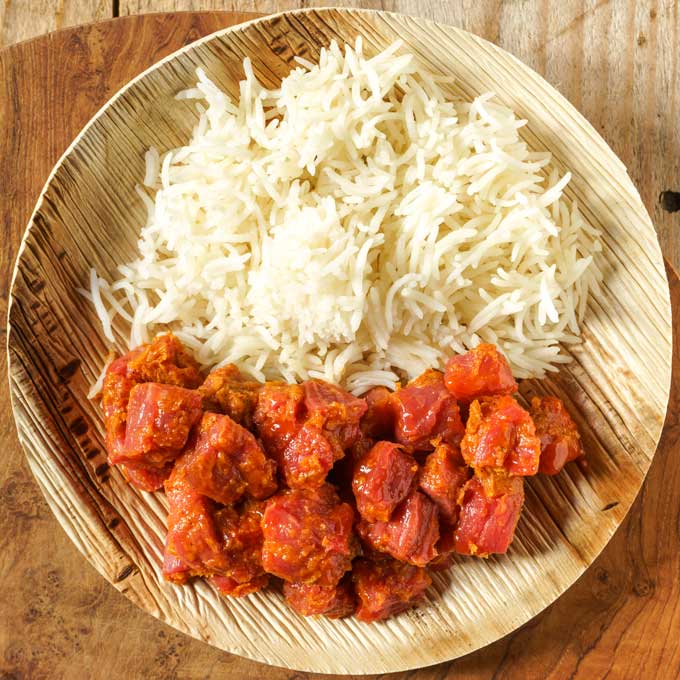
Gored gored is cubed raw beef, dressed in spiced clarified butter and served with chilli condiments. It is Ethiopian and Eritrean, and it is celebration food, served at holidays, at weddings, and when a household wants to mark an occasion.
Raw beef occupies a particular place in Ethiopian eating that has no real equivalent elsewhere in Africa. Gored gored uses cubes, usually tenderloin or another tender cut, tossed in niter kibbeh, butter clarified with ginger, garlic, korarima and other spices, which is one of the foundations of the whole cuisine. Kitfo, its close relative, uses minced rather than cubed beef and is more heavily worked with the spice.
The seasonings around it are the point. Mitmita is the fierce chilli blend usually served with it. Awaze, a paste built on berbere, is the other standard partner. Both are hot enough to be used sparingly and both are designed for exactly this.
It is eaten with injera, and often with ayib, the mild fresh cheese, which cools it.
Its exact origins are not well documented, accounts of how the dish arose are thin and largely speculative, and it is more honest to say that it is long-established than to repeat an origin story that cannot be supported.
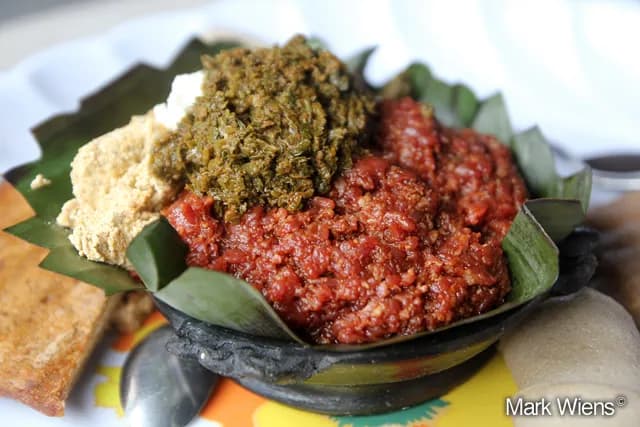
Kitfo is very finely minced raw beef, warmed through with spiced clarified butter and chilli. The name says what it is: kitfo comes from the Amharic for chopping finely. It is Ethiopian and Eritrean, and it is celebration food, a dish for major holidays, weddings and family occasions rather than an ordinary weeknight.
Two things define it. The first is niter kibbeh, the clarified butter infused with garlic, ginger, cardamom, fenugreek and other spices, which is what carries flavour into meat that is never exposed to direct heat. The second is mitmita, the fierce Ethiopian chilli blend built on pili-pili peppers with cardamom, cloves and salt. Both are what separate kitfo from any other steak tartare.
Doneness has its own vocabulary, and the names matter because they are what you order by. Tere kitfo is fully raw. Leb leb is warmed just enough to melt the butter through it. Yebesele is taken further still. Gored gored, which is on this site as its own recipe, is the closely related dish where the beef is cut into cubes rather than minced, same tradition, different knife work, noticeably different in the mouth.
It is served with injera, and usually alongside gomen, the collard greens, and ayib, the fresh Ethiopian cheese, whose mildness is there to answer the heat.
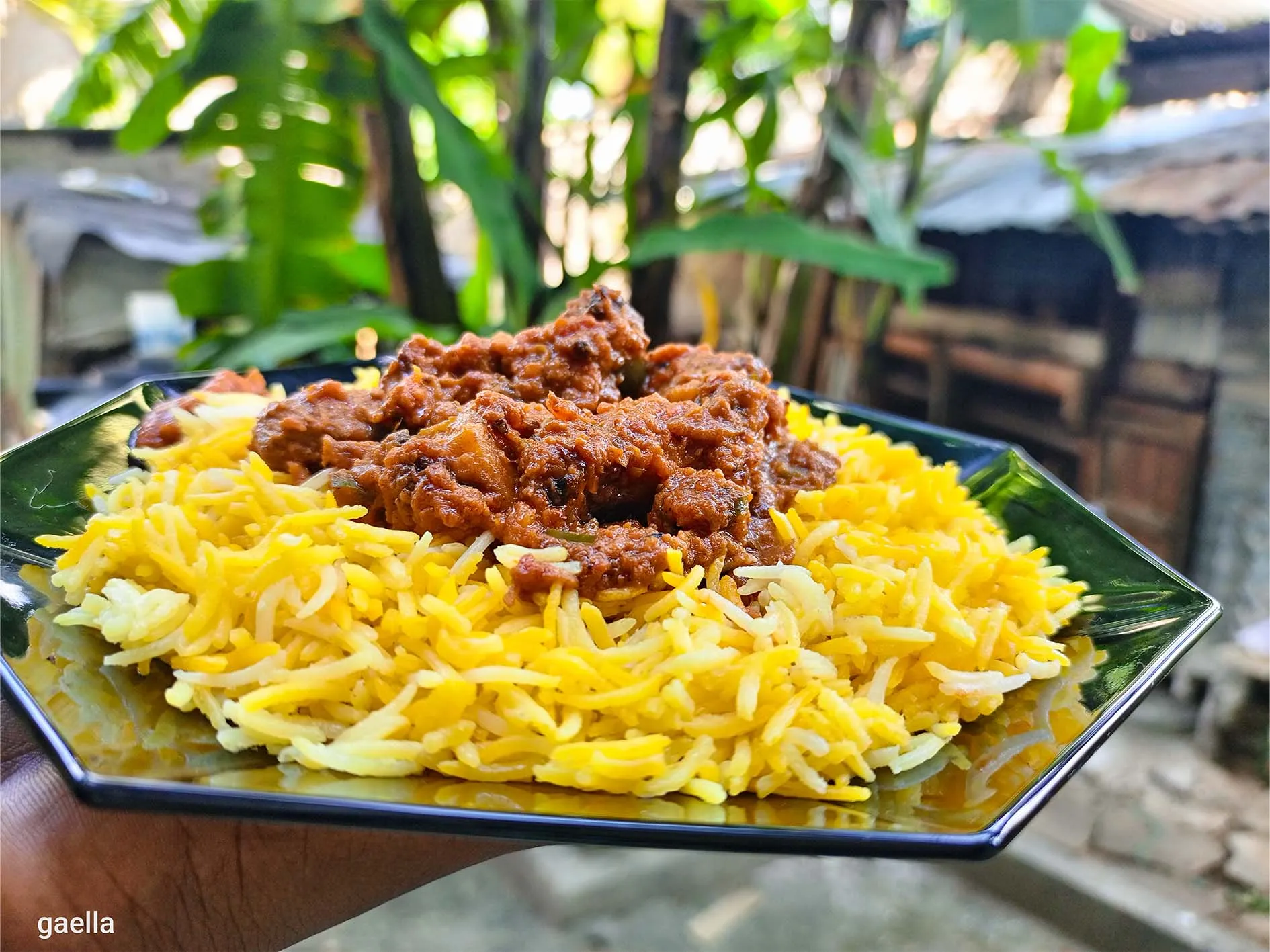
Kenyan biryani is a Swahili coast dish, and the coast is where the Indian Ocean has been depositing influences on East Africa for more than a thousand years. Arab, Persian and Indian traders working the monsoon routes brought rice, spices and techniques to Mombasa, Lamu and Zanzibar, and what developed there is neither Indian nor Arab but Swahili.
The biryani method itself is unmistakably South Asian: meat cooked in a spiced yoghurt gravy, rice parboiled separately with whole spices, the two layered and steamed together so the rice finishes in the gravy's steam. The Kenyan version keeps that structure. What it does differently is in the details, with fried onions used in quantity, tomato leaning heavier than in most Indian versions, and fried potatoes worked through the meat rather than served alongside.
It is occasion food. Biryani appears at Kenyan weddings, at Eid, and at the large family meals where the effort is justified by the number of people eating. The orange food colouring streaked through part of the rice, which purists elsewhere would query, is standard in Kenya and is part of what a Kenyan expects a biryani to look like. Served with kachumbari, the raw tomato and onion salad, it is one of the clearest expressions of what the coast is.
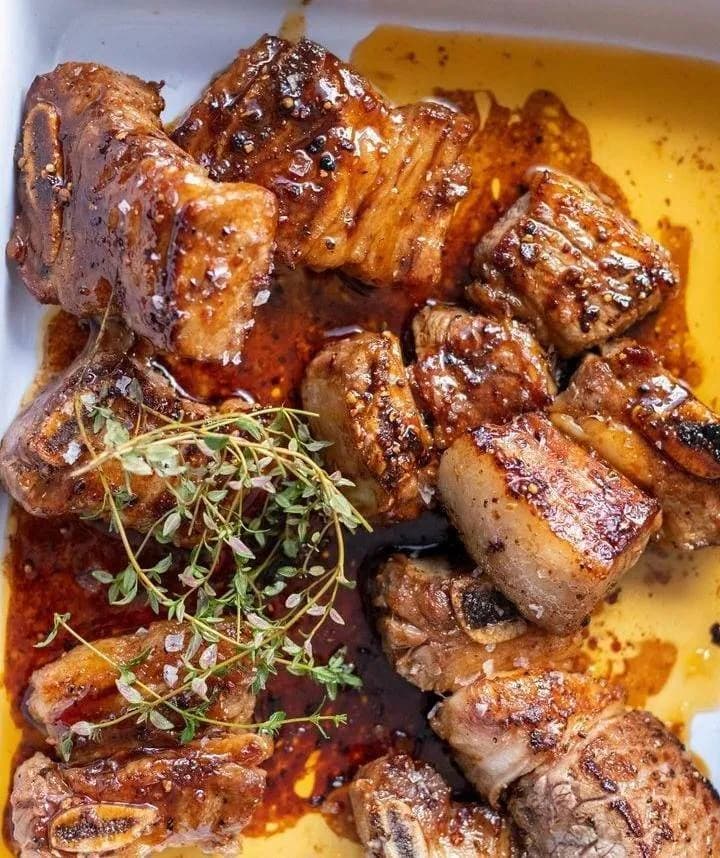
Nyama choma is Swahili for roasted meat, and the name is the entire description. Goat is the meat of choice in Kenya, cooked over charcoal at a low heat for hours, seasoned in its most orthodox form with nothing but salt. The restraint is deliberate: the dish is a test of the meat and the fire rather than of a marinade.
It is eaten on occasions rather than on weekdays. A weekend family gathering, a celebration, an afternoon that has been set aside for it. Nyama choma comes with ugali and kachumbari, the raw tomato and onion salad whose acidity cuts the fat, and the three together form a plate that is recognised across Kenya and Tanzania without variation in its structure.
The social arrangement around it is as fixed as the plate. The grilling is done outdoors and generally by men, standing around the fire, eating as they go and talking for as long as the meat takes. The meat is pulled from the bone with the fingers. Nyama choma is not a dish that is prepared and then served; the preparation is the event, and it is not designed to be hurried.
Les mentions alimentaires sont fournies par les contributeurs à titre indicatif. Elles ne sont pas vérifiées par AFN et dépendent des produits que vous achetez. En cas d’allergie grave, vérifiez vous-même chaque ingrédient. Cuisine, allergies et votre propre jugement