Nous utilisons des cookies essentiels au fonctionnement du site. Nous aimerions aussi déposer des cookies de mesure d’audience et des cookies publicitaires, uniquement avec votre accord. Vous pouvez choisir séparément pour chacun. Lire notre politique relative aux cookies

Loading
Recettes
Parcourez les archives par pays, par plat et par temps de cuisson.
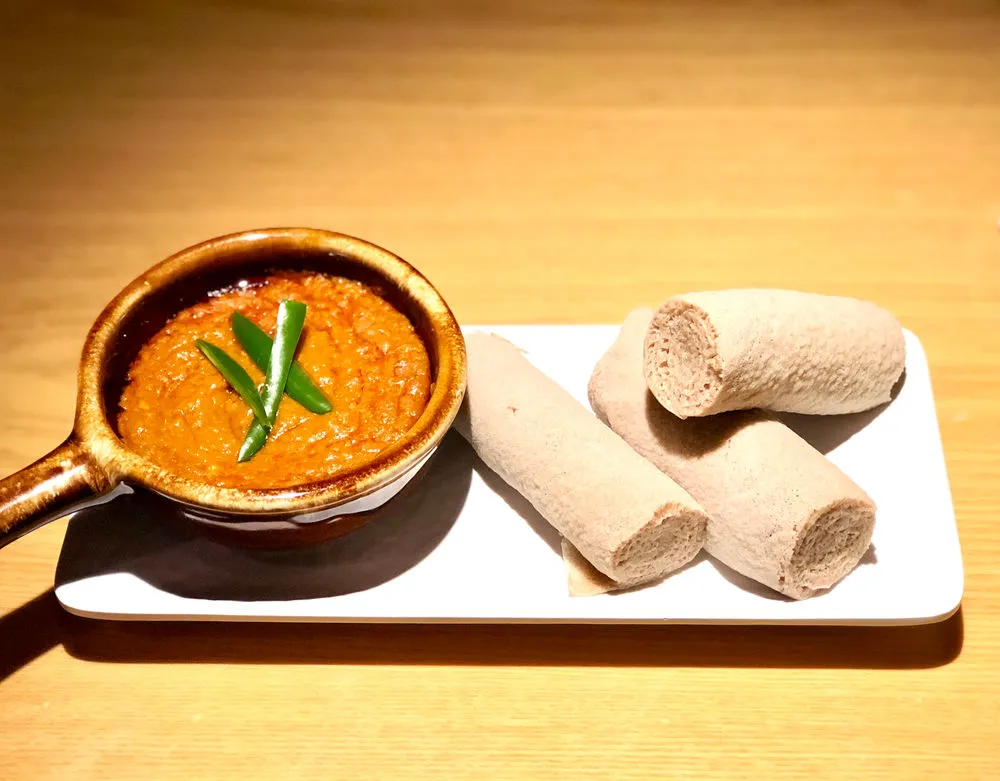
Shiro wat is ground chickpea stew, and it is among the most eaten dishes in Ethiopia and Eritrea. Onion, garlic, tomato and berbere are cooked down in oil, chickpea flour is whisked in, and the result thickens to something between a thick gravy and a puree, smooth enough to spread and eaten with injera.
Its position has a great deal to do with the religious calendar. Ethiopian Orthodox practice includes a very large number of fasting days, on which no meat, eggs or dairy are eaten, and shiro contains none of them. It is standard on Wednesdays and Fridays, through the eight weeks of Tsom, the Great Lent, and it is eaten during Ramadan by Ethiopian and Eritrean Muslims too. That is a dish serving two religions in one country without modification.
It is also cheap and quick, which explains the rest of its reach. Shiro powder, sold ready mixed with the spices already in it, is available across Ethiopia and increasingly abroad, in two kinds: mitten shiro, which is red and carries berbere, and netch shiro, which is white and mild. The dish takes different forms by consistency and name: shiro fessess is runny and served over injera with chillies, shiro tegamino is thick and cooked in an earthenware pot until it bubbles and caramelises at the base, and shiro fit fit shreds injera through it for breakfast.
Peas cooked briefly in a potato and stock base, blended with mint and lemon and finished with buttermilk. It is a British spring soup, and no country is claimed.
The short cooking is the entire technique. Peas lose their colour and their fresh sweetness rapidly once they are cooked, chlorophyll degrades with heat and acid, and the sugars that make young peas taste of anything begin converting to starch. Five minutes is what the recipe allows, and the instruction is explicit that longer will cost you the flavour. Everything else in the pot, the potato, the onions, the garlic, is cooked through first, and the peas go in at the very end.
The potato is doing structural work. It breaks down under the blender and thickens the soup, which is why no flour or cream is needed for body.
Buttermilk rather than cream is the other choice worth noting. It brings richness with acidity behind it, which lifts the whole thing where cream would flatten it. The trade-off is that it curdles at a rolling heat, so the soup must be warmed through gently.
It works hot or cold. Served cold it will thicken as it chills and needs loosening with more stock.
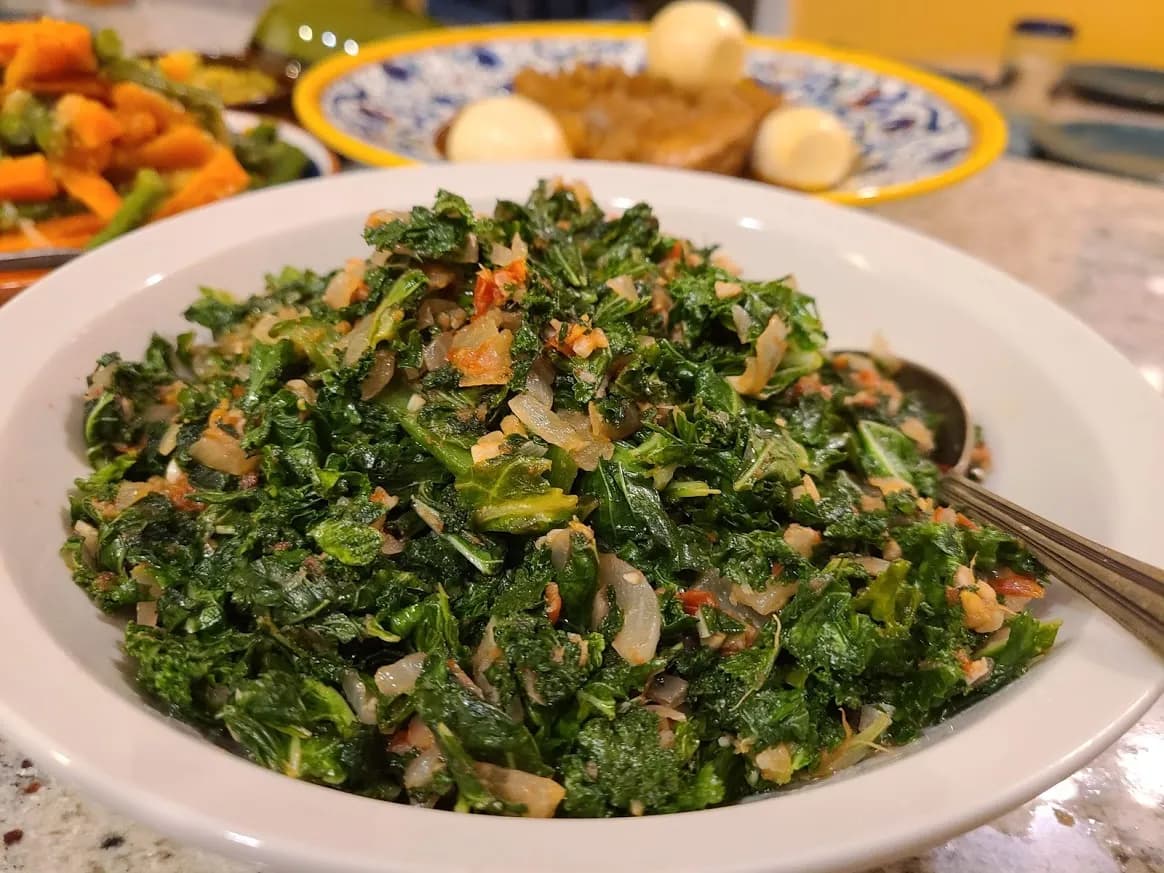
Gomen is the Ethiopian word for collard greens, and gomen wat is the dish made from them: greens braised down with onion, garlic, ginger and spice until they wilt but keep some bite. It appears on almost every Ethiopian platter, spooned onto injera alongside the meat and lentil stews.
It is also called ye'abasha gomen or abesha gomen. Abesha is a term used collectively for Ethiopians and Eritreans, so the name translates roughly as Ethiopian collard greens, distinguishing the local variety and preparation from others. Collards are eaten widely across the continent and beyond, from Tanzania and Kenya to Brazil, Portugal and the southern United States, but the Ethiopian treatment is specific.
Niter kibbeh is what makes it specific. It is clarified butter infused with herbs and spices during the clarifying, closely comparable to Indian ghee except for that infusion, and it is the fat almost all Ethiopian cooking is built on. Using plain butter or oil produces a perfectly good pan of greens; it does not produce gomen wat. Because of the butter, this is vegetarian rather than vegan, and a fasting version made with oil exists for the Orthodox fasting days when animal products are avoided.
Maharagwe is simply the Swahili word for beans, and the dish is red beans simmered with onion, tomato and spices in coconut milk. It is eaten across Kenya and is most often served with ugali, though rice and flatbreads are equally common.
The coconut milk places it on the Swahili coast. Coastal Kenyan cooking uses coconut in a way inland cooking does not, and it arrived through the same Indian Ocean trade that brought cardamom, cumin, turmeric and coriander into the region's food. Those spices are all here, and the presence of mild curry powder alongside them reflects the long South Asian presence in East Africa.
It reads as though it should be fiery and is not. The spice list is long and includes chilli, but the coconut milk rounds all of it off, so the finished dish is warm and aromatic rather than hot. It is also quick: with cooked or tinned beans it is on the table in under thirty minutes. The sauce should come up to just cover the beans and will thicken further as it cools, so it is worth stopping while it still looks slightly loose.