Nous utilisons des cookies essentiels au fonctionnement du site. Nous aimerions aussi déposer des cookies de mesure d’audience et des cookies publicitaires, uniquement avec votre accord. Vous pouvez choisir séparément pour chacun. Lire notre politique relative aux cookies

Loading
Recettes Nigeria
Parcourez les archives par pays, par plat et par temps de cuisson.
The Nigerian pancake, known colloquially as diet, is thin, dense and slightly crisp at the edges, and it is savoury as often as it is sweet. Onion and ground pepper go into the batter alongside the sugar, which produces something no other pancake tradition attempts: sweet, savoury and faintly hot in the same mouthful.
It sits a long way from the thick fluffy pancake of the American breakfast table. There is no raising agent and no attempt at height. The batter is loose, the pan is tilted to spread it thin, and the result has a dense bite and a lacy edge. Nigerians eat it at breakfast with tea, and just as readily as an afternoon snack with a cold drink.
What it is served with follows the same double logic as the batter. Honey, sugar, condensed milk, peanut butter and fresh fruit on the sweet side; pap, custard, oats and yogurt drinks such as kunu aya or zobo alongside. It is home food and street food at once, cheap to make from things most Nigerian kitchens already hold, and it belongs to no particular region of the country, which is unusual enough to be worth noting.
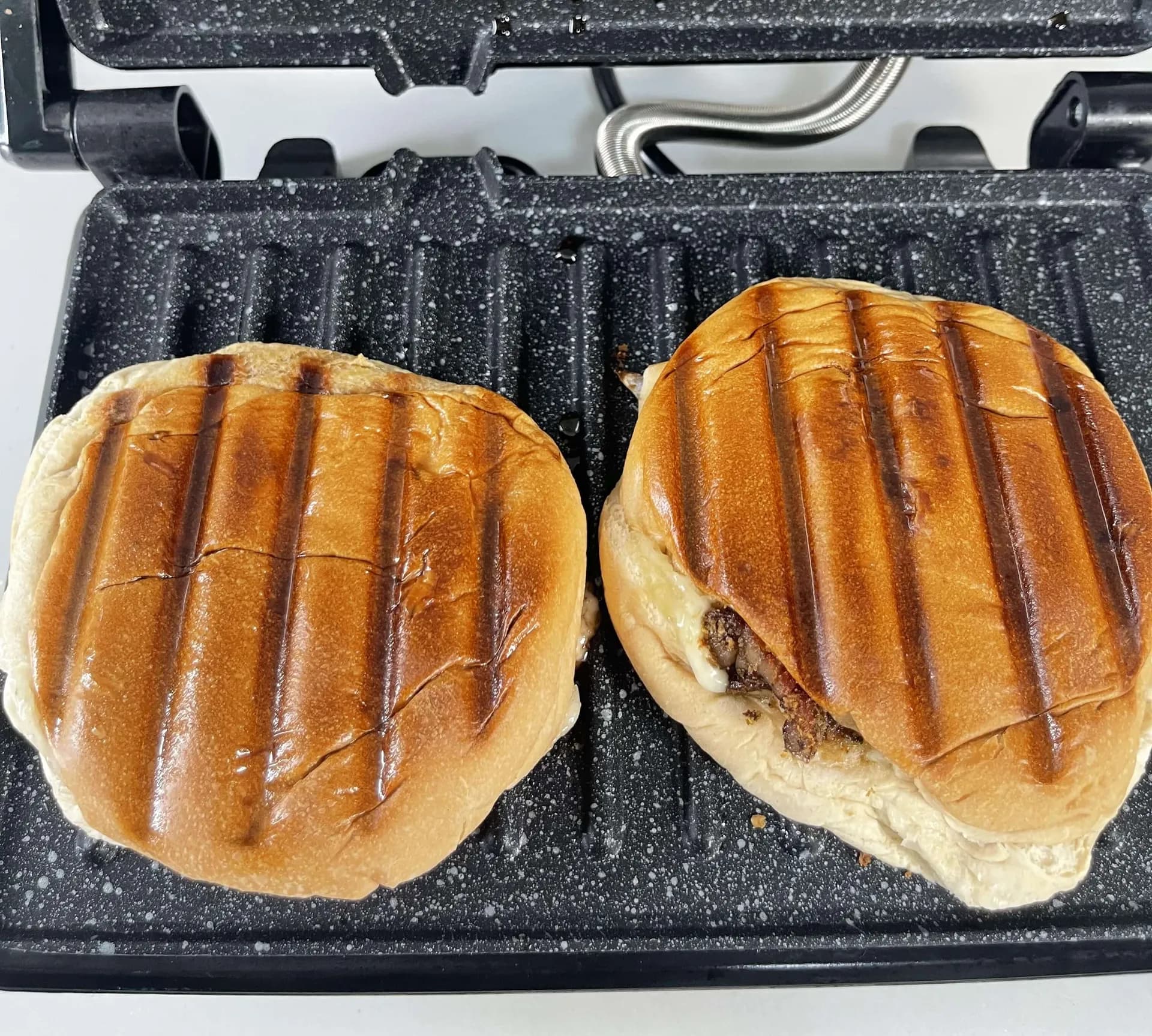
Suya toast is a sandwich: beef or chicken suya between slices of bread, dusted with suya spice, and grilled under a broiler until the outside crisps. It is a contemporary Nigerian invention rather than a traditional dish, and it exists because suya is so good that people put it in things.
Suya itself is the tradition here. It is skewered grilled meat coated in yaji, the spice blend built on ground peanuts, paprika, cayenne, ginger, garlic and onion powder, and it is sold from roadside grills across northern Nigeria and now the whole country. The mallam who grills it works over an open fire and the spice is applied before and after cooking.
Putting that into a toasted sandwich with mayonnaise, tomato and cucumber is a diaspora and urban move, and it works on the same logic as any good sandwich: something rich, something sharp, something crunchy. The suya spice does the heavy lifting. Because yaji contains ground peanuts, this carries a peanut allergen even though the sandwich itself looks nothing like a peanut dish, and that is worth stating plainly.
Oyster mushrooms grilled and tossed in suya spice. It is a plant-based version of the Nigerian street food, and it works better than most meat substitutions do.
**The traditional suya spice contains ground peanuts, and this recipe includes them.** The source flags it and offers to leave them out, which is honest, but it is worth stating clearly, because a peanut allergy and a suya spice blend are a genuinely dangerous combination and the name gives no warning.
Suya proper is skewered beef, ram or chicken rubbed in yaji, the spice blend of ground roasted peanuts, ginger, cayenne, garlic, onion powder and paprika, and grilled over open coals. It is Hausa in origin, from northern Nigeria, and it is sold across Nigeria, Cameroon, Niger, Ghana and parts of Sudan. Kyinkyinga is the Ghanaian name, agashe the Sudanese.
Oyster mushrooms are the right substitution and not an arbitrary one. Shredded, they have a fibrous, layered structure that genuinely resembles pulled meat, they take on the dry rub readily, and they char well. Most vegetables do neither.
The source's method is very compressed, one step reads "put in a preheated medium", with the word oven missing, and has been filled out below.