Nous utilisons des cookies essentiels au fonctionnement du site. Nous aimerions aussi déposer des cookies de mesure d’audience et des cookies publicitaires, uniquement avec votre accord. Vous pouvez choisir séparément pour chacun. Lire notre politique relative aux cookies

Loading
Recettes Nigeria
Parcourez les archives par pays, par plat et par temps de cuisson.
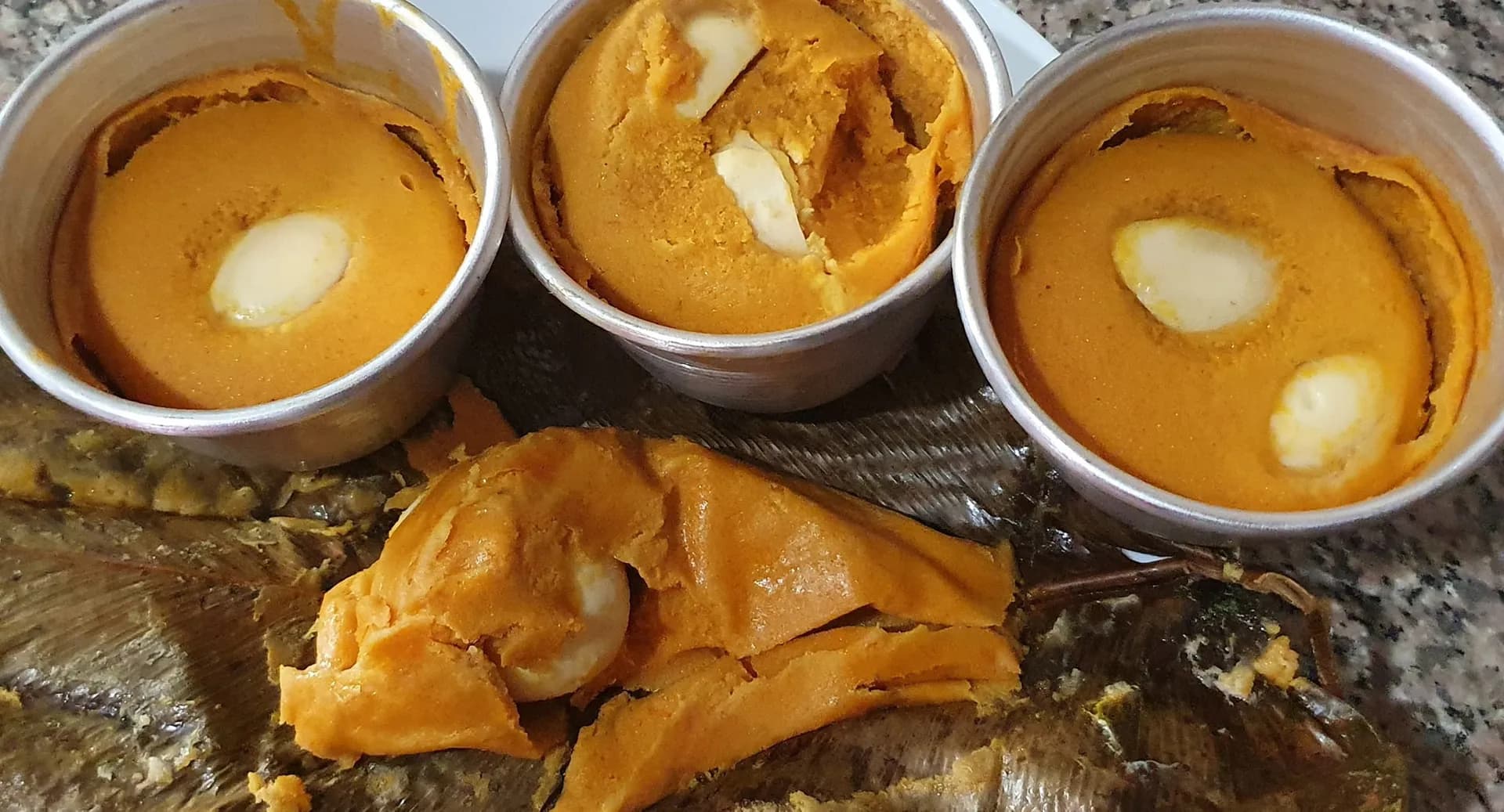
Moi moi is steamed bean pudding, and it is among the small group of Nigerian dishes that turn up everywhere: at breakfast, at parties, at weddings, in lunchboxes, beside jollof rice, and on its own. Black eyed peas or brown beans are soaked, peeled, blended with pepper and onion, seasoned, and steamed until they set.
The peeling is what most people underestimate. The bean skins have to come off before blending, because they are what stands between a smooth moi moi and a gritty one, and the quality of the blend decides the texture of the finished dish more than any other single factor. Nigerian markets have heavy duty commercial mills for exactly this reason, and home blenders often cannot manage it.
What it is steamed in changes the result and the name. Uma leaves, from Thaumatococcus daniellii, give the best flavour and cook fastest; banana leaves are the common alternative; aluminium foil and heatproof containers are the modern route. Nutmeg is the ingredient people leave out and then wonder why their moi moi does not taste like the one at the party. Egg, corned beef or bone marrow goes into the middle, and moi moi appears as a side to jollof and fried rice, as breakfast with pap or bread, and as a meal in itself.
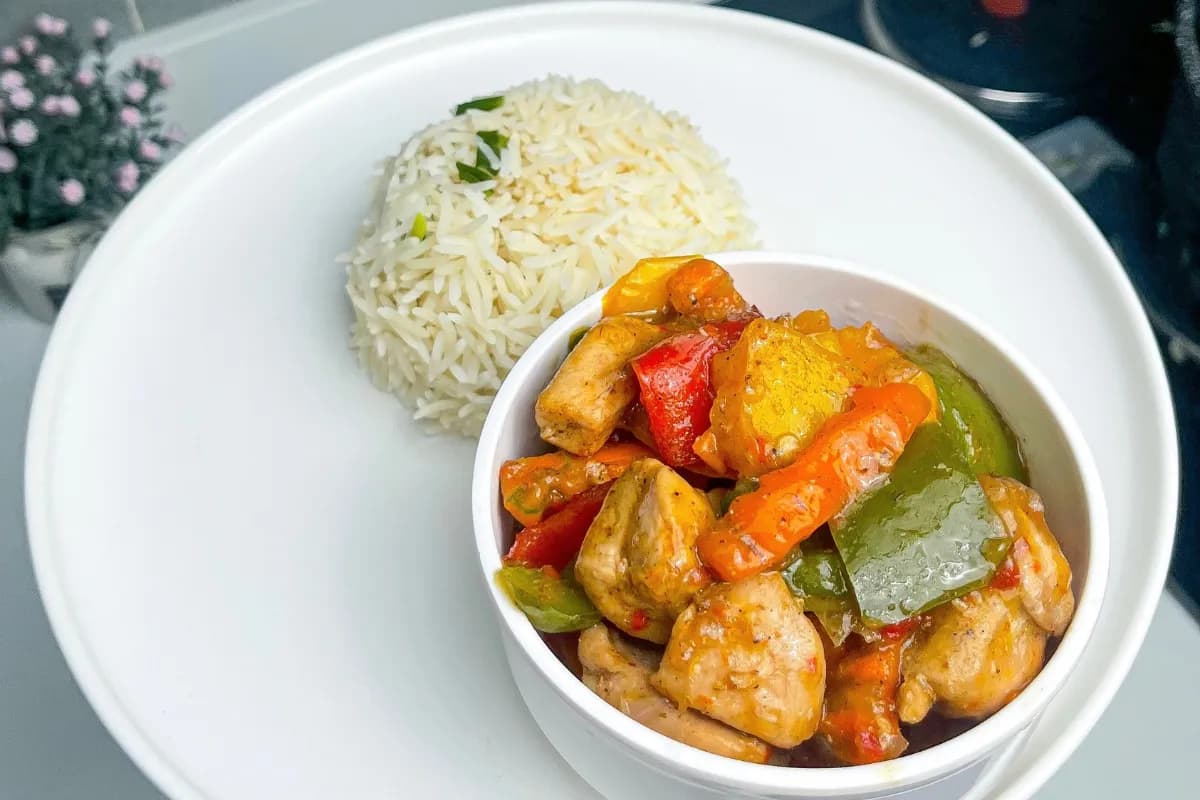
This is a Nigerian take on a curry sauce: chicken breast marinated in ginger, garlic and all purpose seasoning, cooked with carrots and bell peppers, and thickened with a cornstarch slurry rather than reduced or enriched with cream.
Two things mark it as Nigerian rather than South Asian. The first is yaji, the suya spice built on ground peanuts, paprika, cayenne, ginger and garlic, which goes in alongside the curry powder and gives an aromatic depth no Indian curry would have. The second is the cornstarch slurry, which is how a great many Nigerian sauces are thickened, giving a glossy sauce that clings rather than a reduced one.
The vegetables are meant to keep their bite. Carrots and bell peppers go in after the onion and are cooked only until slightly tender, which is characteristic of Nigerian party cooking, where texture and colour matter as much as flavour. The heat is moderate and adjustable through the scotch bonnet. Because yaji contains ground peanuts, this dish carries a peanut allergen despite nothing in its name suggesting one.
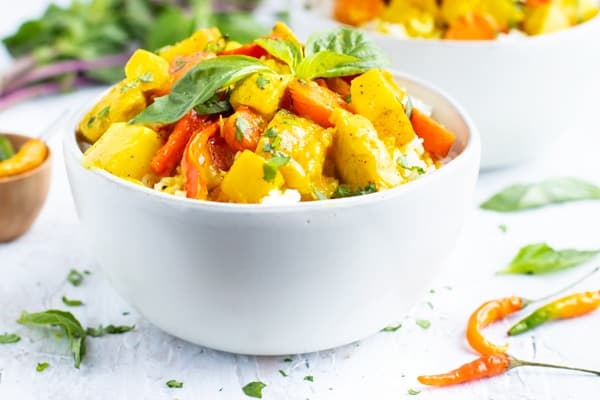
Coconut chicken curry is a one-pan dish of chicken simmered in coconut milk with a curry spice blend and whatever vegetables are to hand, broccoli, cabbage, peppers, potato, carrot.
The word curry is worth being precise about. It is not a single spice or a single dish. It comes from English usage during colonial rule in India, applied broadly to spiced saucy dishes, and it now covers an enormous range of unrelated cooking across South Asia, Southeast Asia, the Caribbean and East Africa. A curry powder sold in a jar is a blend, and the blends differ substantially between manufacturers and regions.
Coconut milk versions belong mainly to the coastal and tropical end of that range, southern India, Thailand, Malaysia, the Caribbean, and the Swahili coast of East Africa, where coconut is grown and used heavily.
This particular recipe is a general one rather than a regional tradition, which is its strength: it tolerates substitution well and is designed to be varied.
**Filed as Worldwide**, the recipe as written makes no specific national claim, so attributing it to any one cuisine would be inventing detail.