Nous utilisons des cookies essentiels au fonctionnement du site. Nous aimerions aussi déposer des cookies de mesure d’audience et des cookies publicitaires, uniquement avec votre accord. Vous pouvez choisir séparément pour chacun. Lire notre politique relative aux cookies

Loading
Recettes Nigeria
De Dambu With Veggies à Goat Meat Pepper Soup, de Ogidigbo (Igala Food) à Alkubus. Toute la cuisine Nigeria, telle qu'on la prépare chez soi.
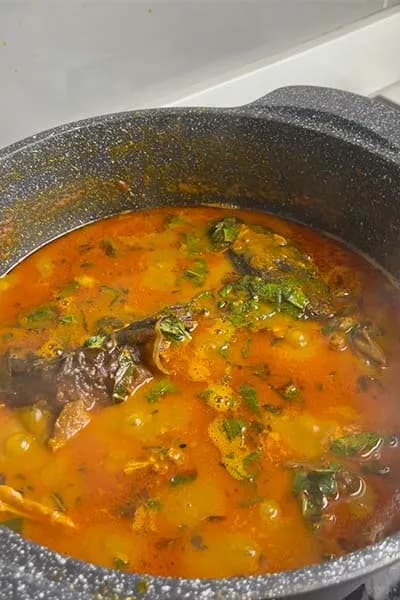
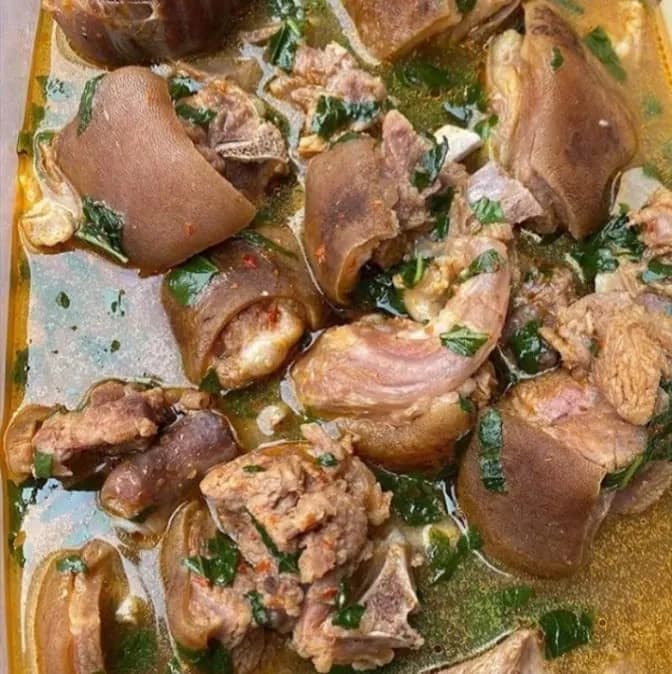
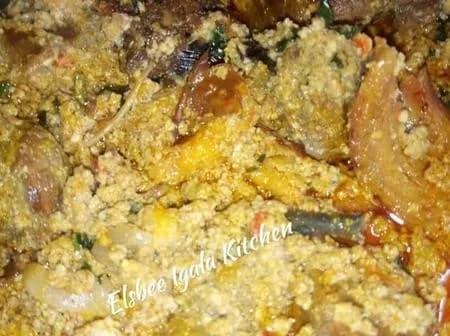
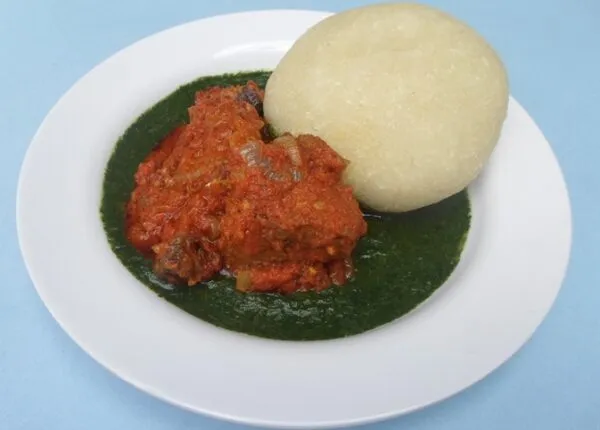
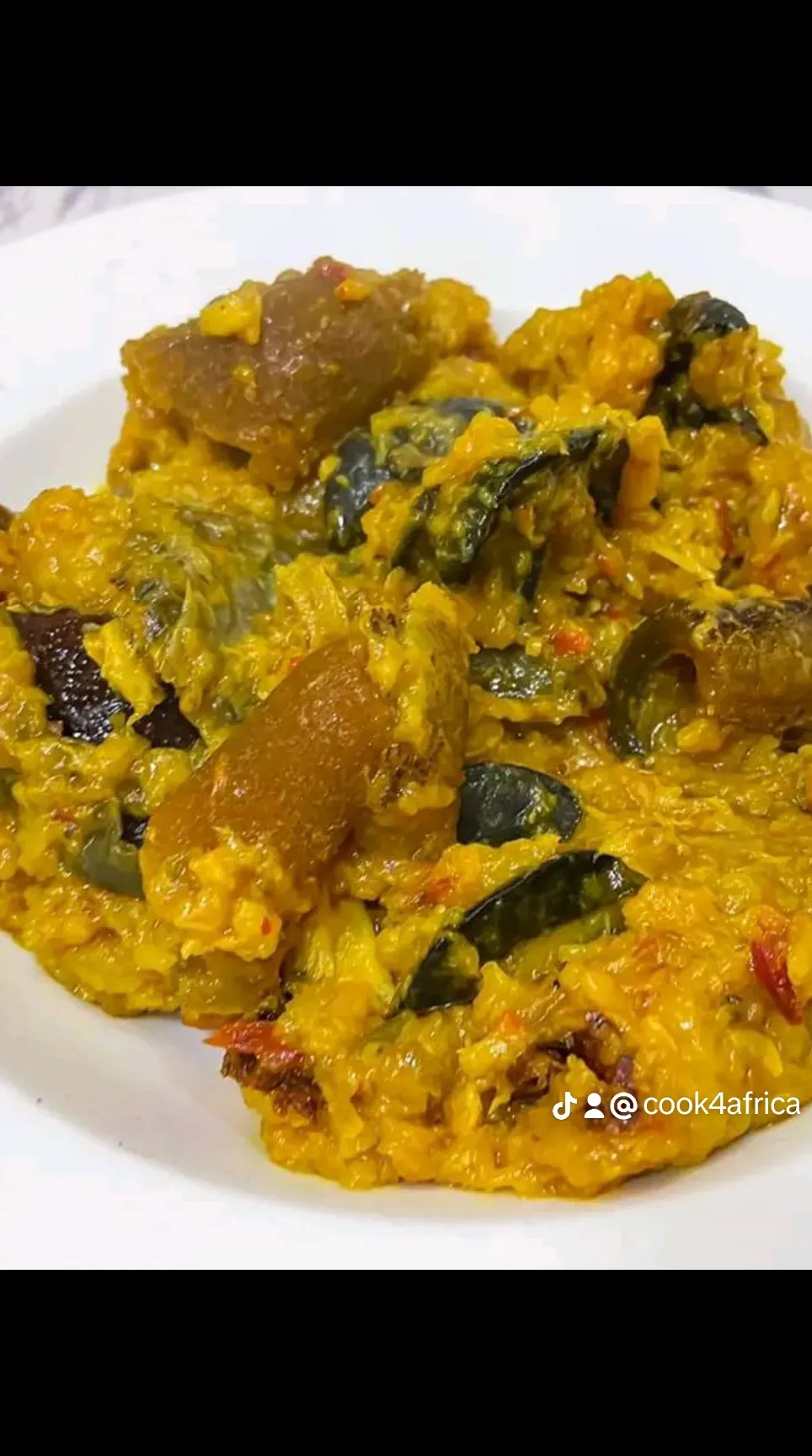
Ofe akwu is the Igbo palm nut soup, built on the extract pressed from palm fruit and cooked with goat meat, ponmo, stockfish and smoked fish. Akwu is the Igbo word for palm nut fruits, and ofe means soup, so the name is entirely descriptive.
It belongs to a family of palm fruit soups made across southern Nigeria under different names by different groups. Banga soup is the Niger Delta version, Urhobo and Isoko in origin; abak atama is the Akwa Ibom one; obe eyin is Yoruba. They share the same base and differ in the herbs and spices each tradition uses, which is what makes them distinct dishes rather than one dish with several names.
Palm fruit extract is not palm oil, and the distinction matters. The extract is the whole pulp of the cooked fruit suspended in water, thick and orange; palm oil is the fat pressed from the same fruit. Using palm oil in place of the extract gives a thin, oily soup instead of a rich one. Ofe akwu is served over white rice as often as with fufu, which distinguishes it from most Nigerian soups, and scent leaf goes in at the end.
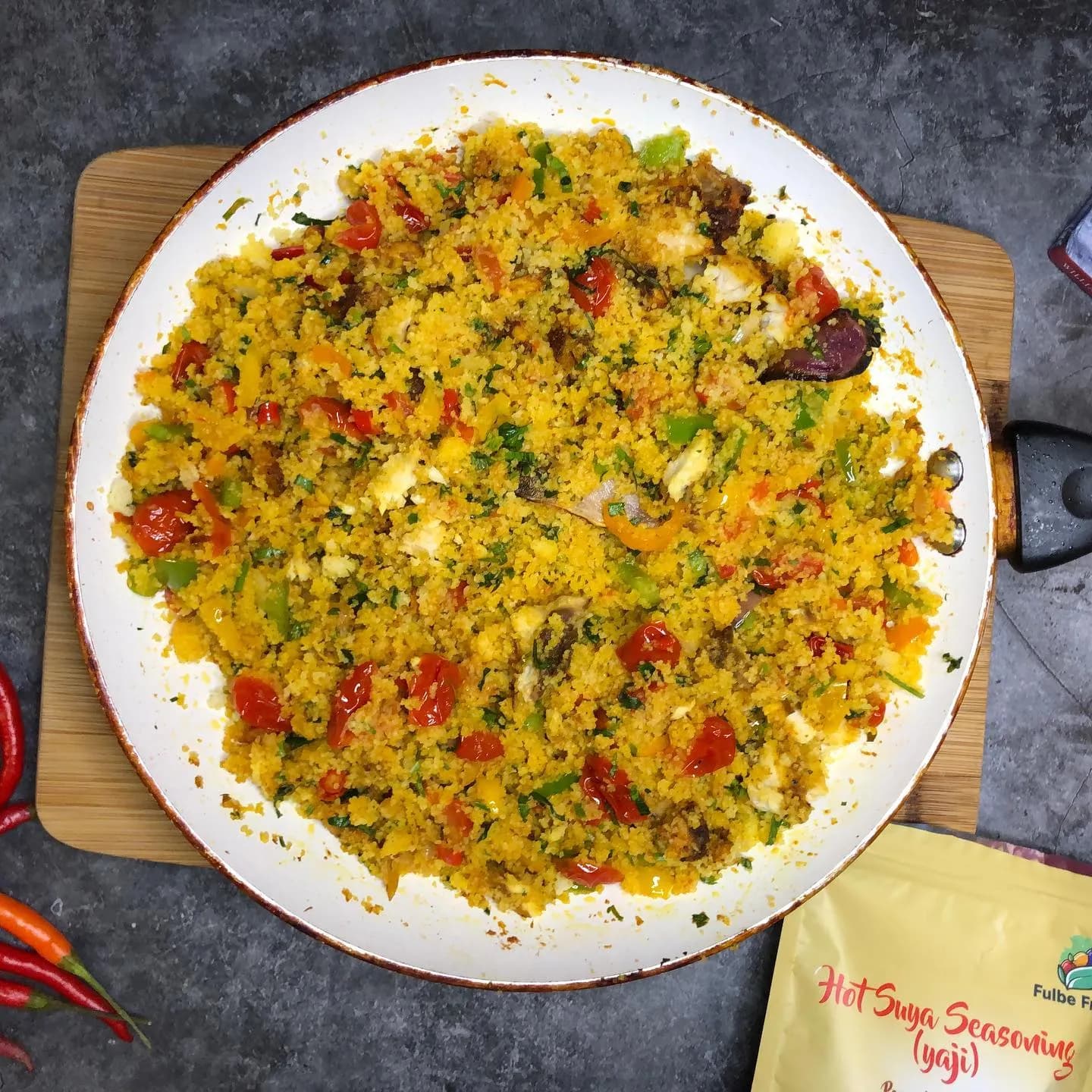
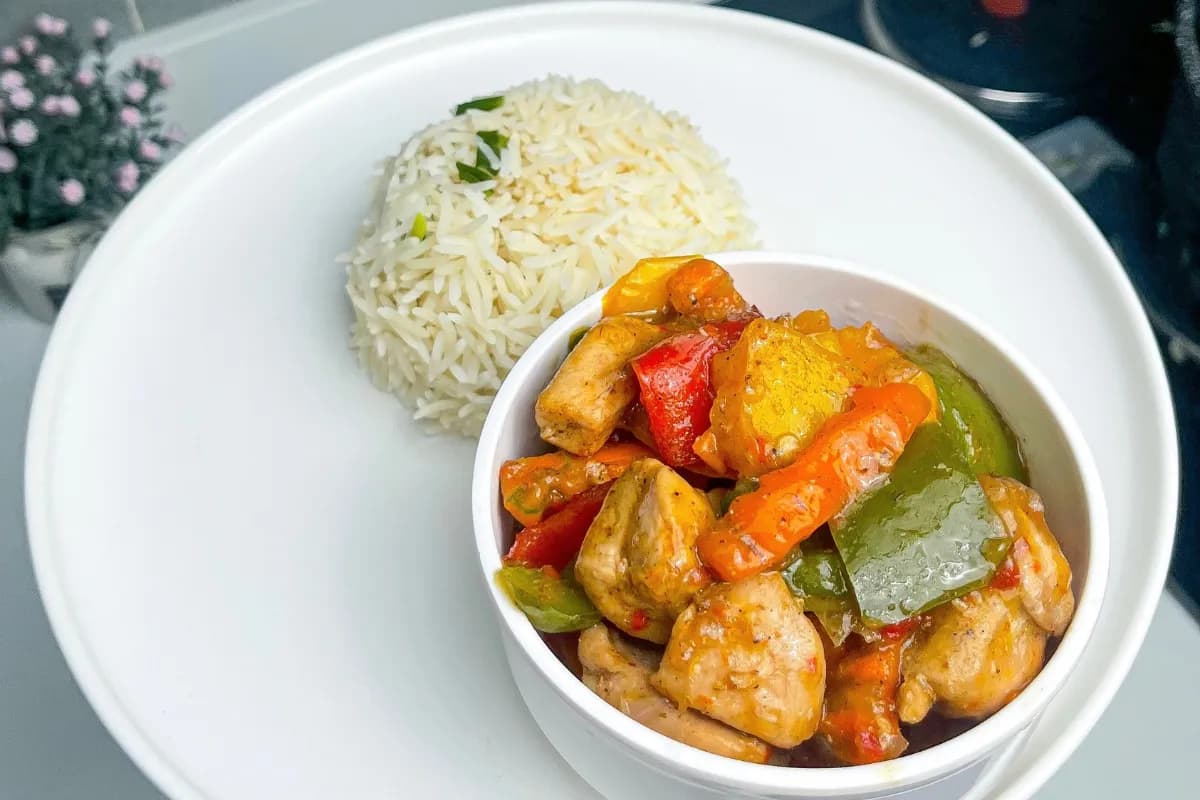
This is a Nigerian take on a curry sauce: chicken breast marinated in ginger, garlic and all purpose seasoning, cooked with carrots and bell peppers, and thickened with a cornstarch slurry rather than reduced or enriched with cream.
Two things mark it as Nigerian rather than South Asian. The first is yaji, the suya spice built on ground peanuts, paprika, cayenne, ginger and garlic, which goes in alongside the curry powder and gives an aromatic depth no Indian curry would have. The second is the cornstarch slurry, which is how a great many Nigerian sauces are thickened, giving a glossy sauce that clings rather than a reduced one.
The vegetables are meant to keep their bite. Carrots and bell peppers go in after the onion and are cooked only until slightly tender, which is characteristic of Nigerian party cooking, where texture and colour matter as much as flavour. The heat is moderate and adjustable through the scotch bonnet. Because yaji contains ground peanuts, this dish carries a peanut allergen despite nothing in its name suggesting one.
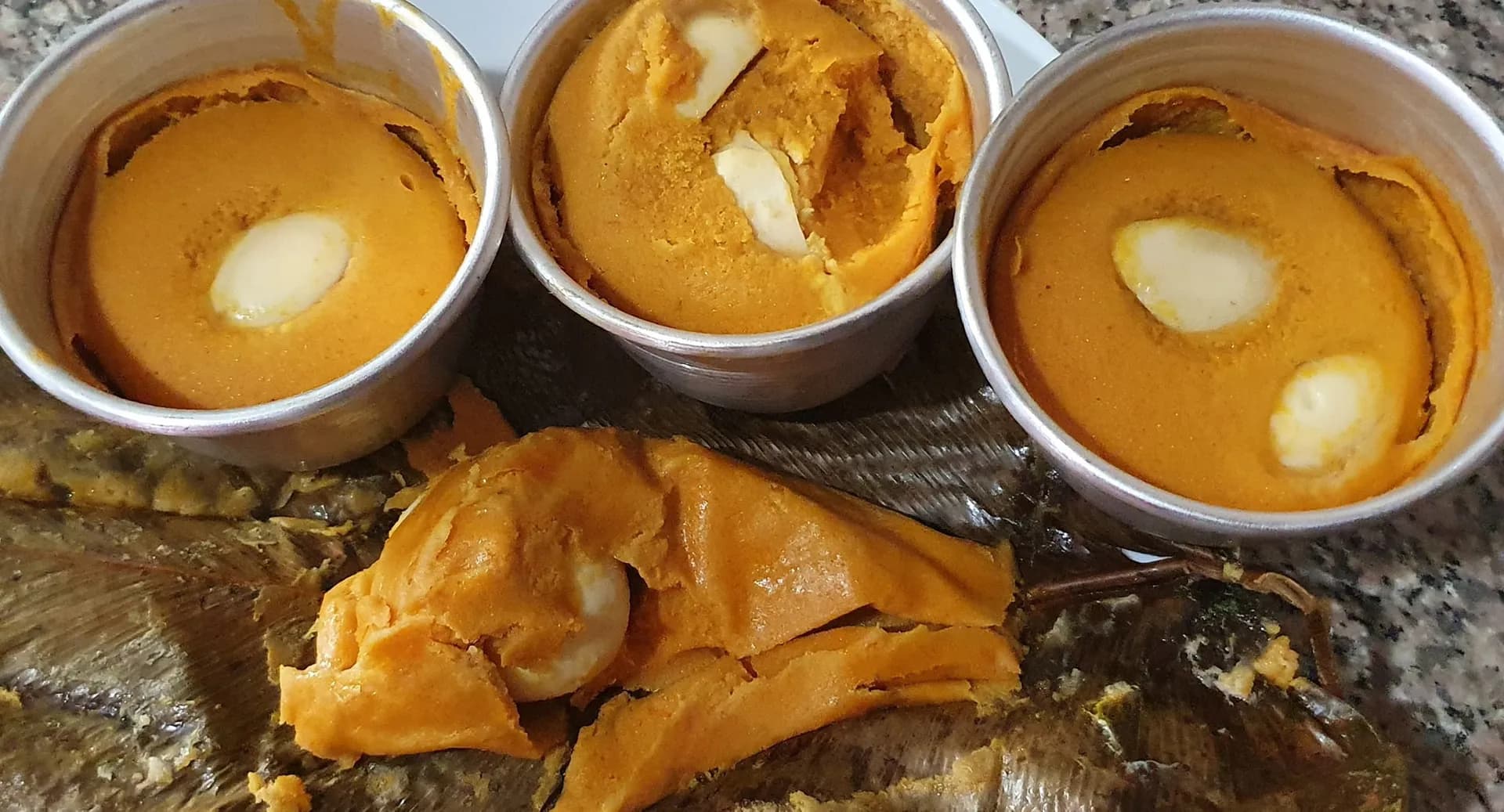
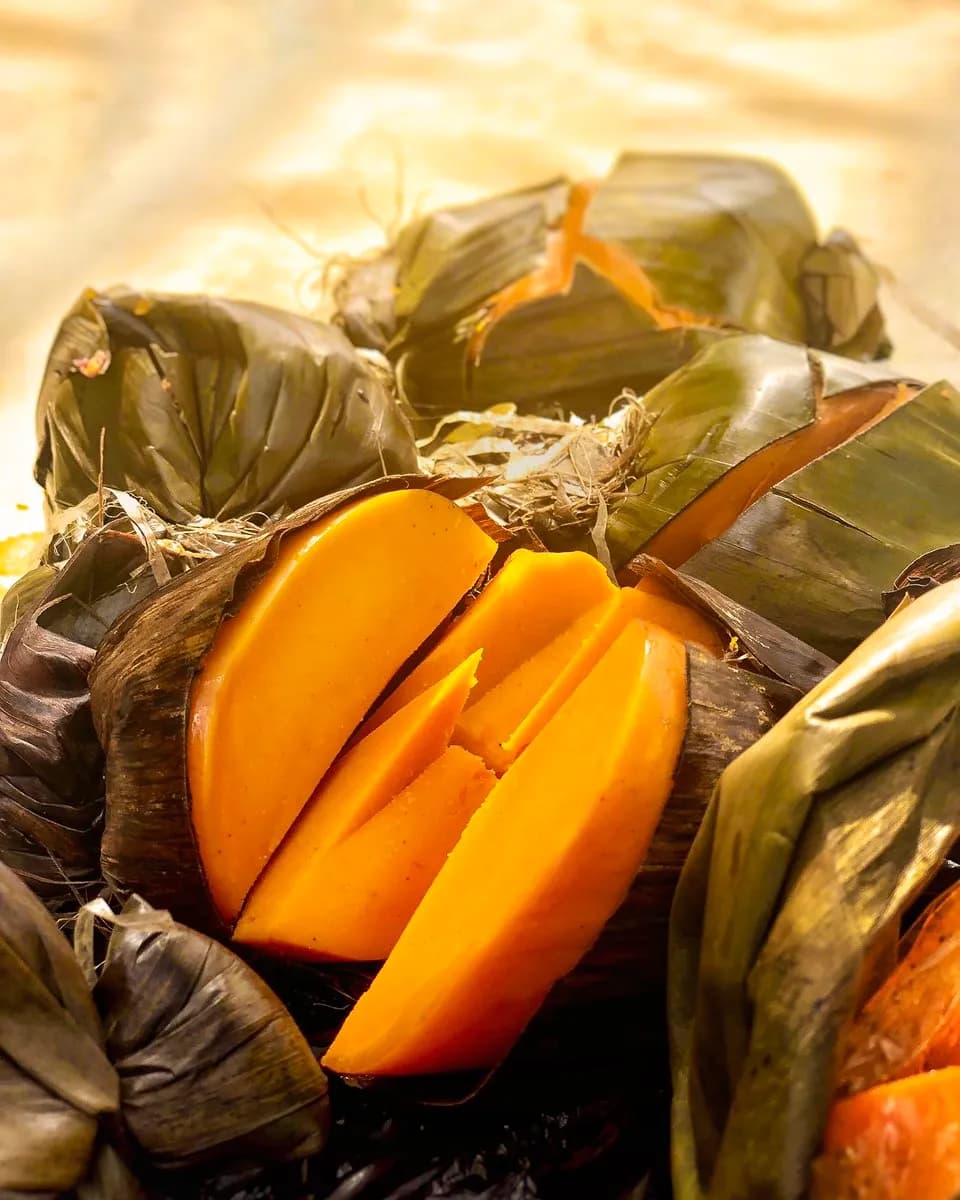
Ground melon seeds mixed with meat stock, fish and seasoning, then steamed in a water bath until set into a firm savoury pudding. It is Nigerian, and it is a different use of egusi from the soup that the seed is best known for.
Egusi is the seed of a melon grown across West Africa for the seeds rather than the flesh. Shelled, the kernels are pale and mild, and they are around half oil and a third protein, which is what makes this dish work at all, ground egusi has enough fat and protein to set into a solid pudding when steamed, in the same way a custard sets.
The construction is a direct relative of moi moi, the steamed bean pudding, and the technique is the same: a wet, seasoned mixture poured into moulds and cooked in a water bath, traditionally wrapped in plantain or banana leaves, now often in ramekins or foil. The leaves flavour the pudding as it steams, which foil does not.
The bain-marie is not optional. Direct heat would set the outside and curdle the mixture before the middle cooked; surrounding it with water holds the temperature down and gives an even, moist set throughout.
The source's nutritional discussion of egusi has not been carried across, though the oil and protein content is genuinely what makes the technique possible.
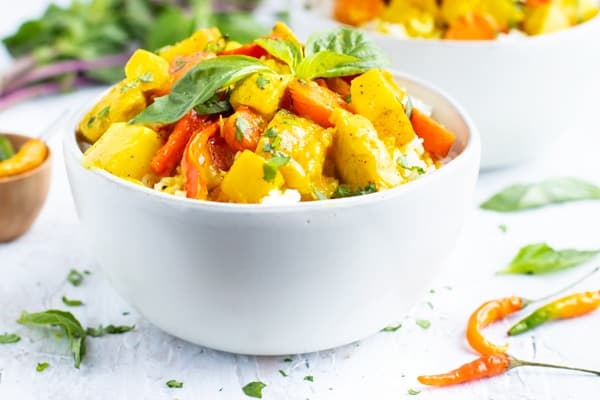
Coconut chicken curry is a one-pan dish of chicken simmered in coconut milk with a curry spice blend and whatever vegetables are to hand, broccoli, cabbage, peppers, potato, carrot.
The word curry is worth being precise about. It is not a single spice or a single dish. It comes from English usage during colonial rule in India, applied broadly to spiced saucy dishes, and it now covers an enormous range of unrelated cooking across South Asia, Southeast Asia, the Caribbean and East Africa. A curry powder sold in a jar is a blend, and the blends differ substantially between manufacturers and regions.
Coconut milk versions belong mainly to the coastal and tropical end of that range, southern India, Thailand, Malaysia, the Caribbean, and the Swahili coast of East Africa, where coconut is grown and used heavily.
This particular recipe is a general one rather than a regional tradition, which is its strength: it tolerates substitution well and is designed to be varied.
**Filed as Worldwide**, the recipe as written makes no specific national claim, so attributing it to any one cuisine would be inventing detail.