Nous utilisons des cookies essentiels au fonctionnement du site. Nous aimerions aussi déposer des cookies de mesure d’audience et des cookies publicitaires, uniquement avec votre accord. Vous pouvez choisir séparément pour chacun. Lire notre politique relative aux cookies

Loading
Recettes Nigeria
De Edo Black Soup à Nigerian Fisherman Soup, de Igbo Yam Porridge à Semovita. Toute la cuisine Nigeria, telle qu'on la prépare chez soi.
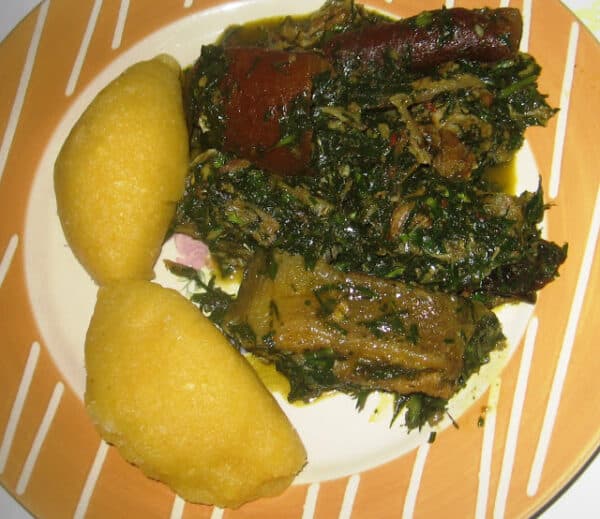
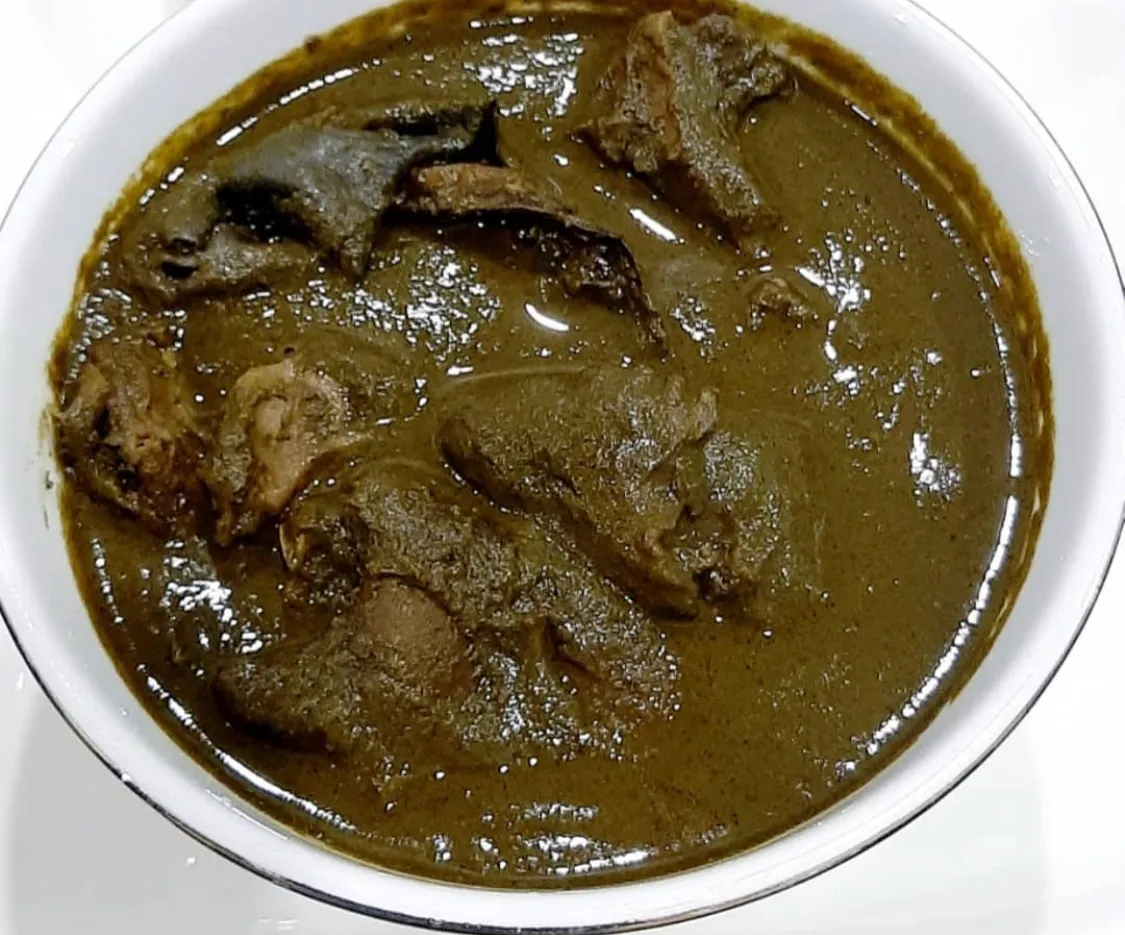
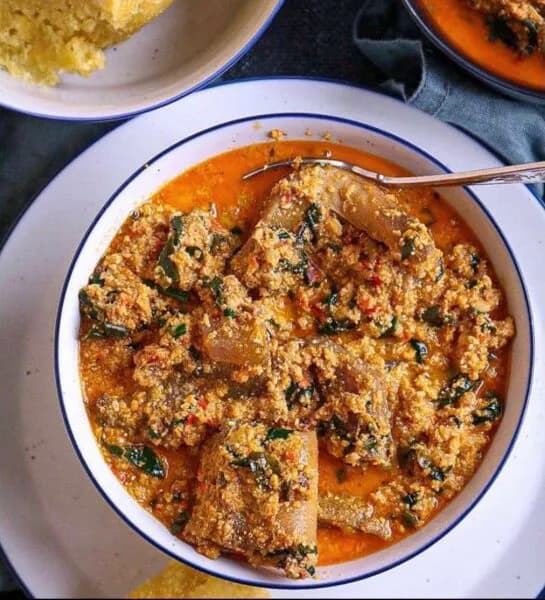
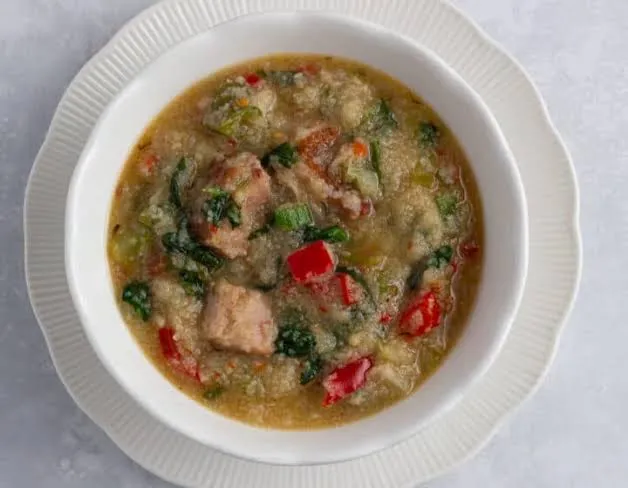
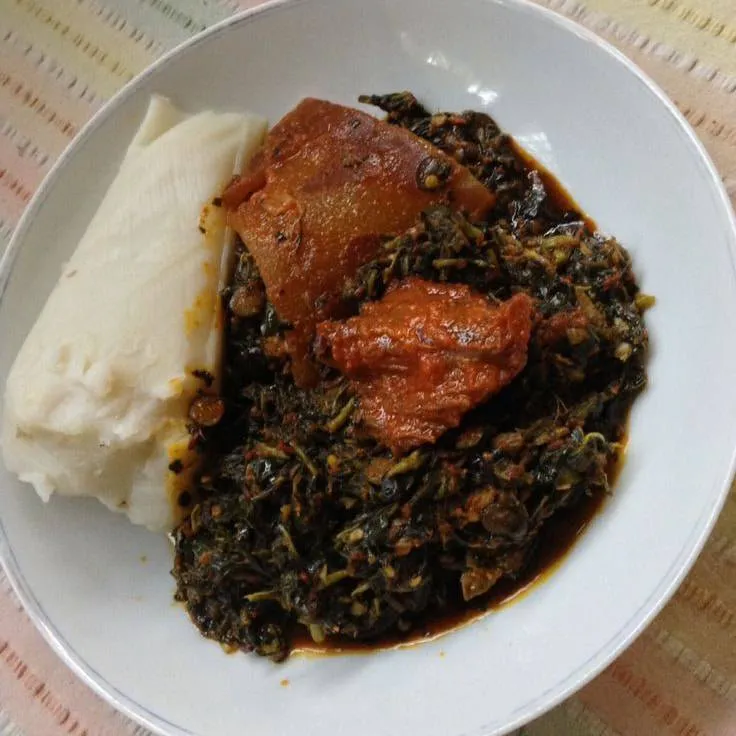
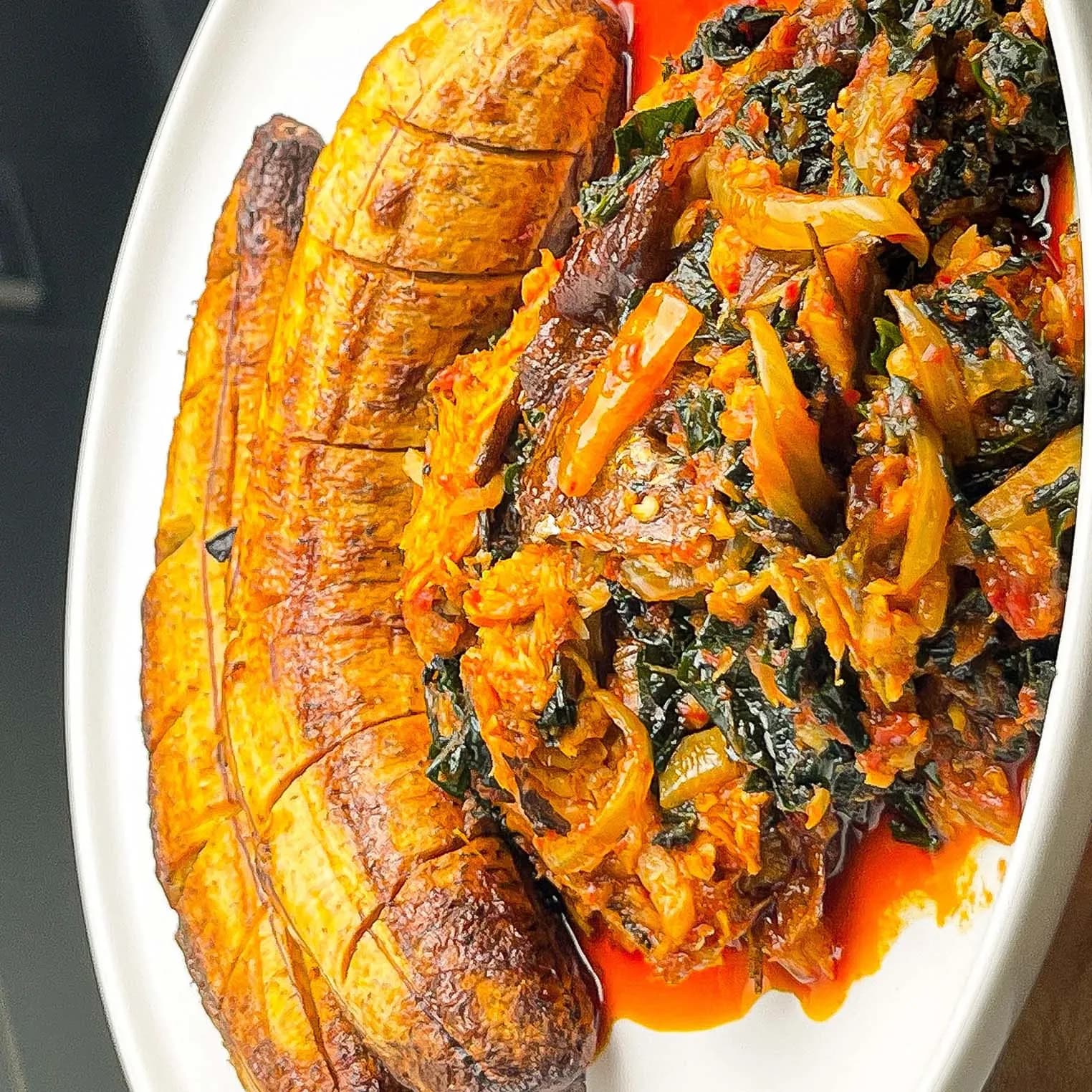
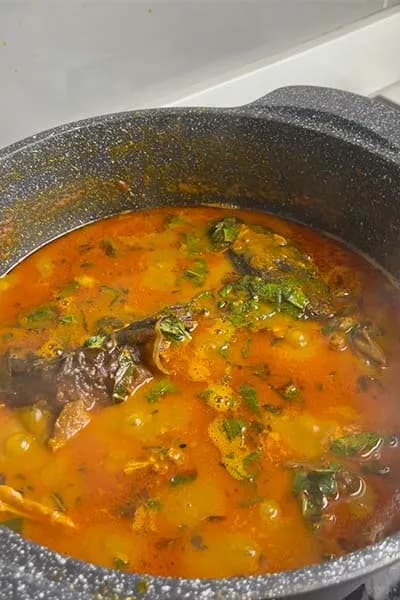
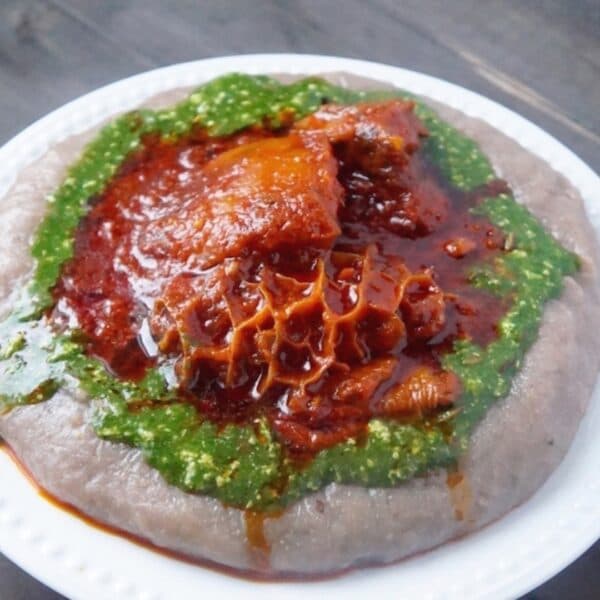
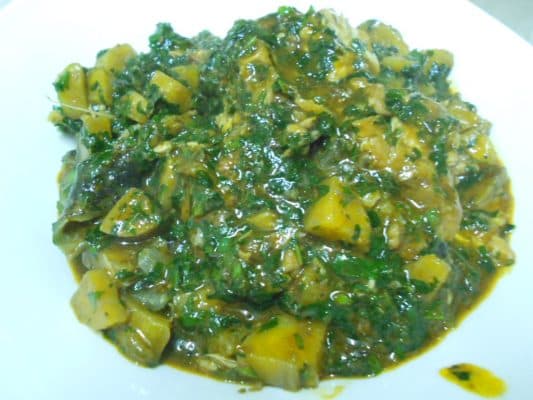
Afang soup belongs to the Efik and Ibibio people of Cross River and Akwa Ibom in southeastern Nigeria, and it is built on two vegetables that do quite different jobs.
Afang, okazi to the Igbo, and known botanically as Gnetum africanum, is a tough, wiry forest leaf with a faintly bitter edge. It is sliced extremely finely, almost shredded, because whole it would be unpleasant to eat. Waterleaf is the counterweight: soft, quick to wilt, and full of moisture, which is what gives the soup its body without much added liquid.
The pairing is the point, and it is what separates afang from edikang ikong, the other great vegetable soup of the same region. Edikang ikong uses waterleaf and ugu, the pumpkin leaf, and reads as sweeter and greener. Afang uses waterleaf and okazi, and carries that characteristic bitterness. People from the region can tell them apart instantly, and the leaf is the whole distinction.
Around the vegetables sits an assortment that scales with the household budget, beef, shaki, dried and fresh fish, periwinkle, crayfish, palm oil, pepper. It is a soup that has long been read as a marker of a generous table, and it is served with any of the swallows.
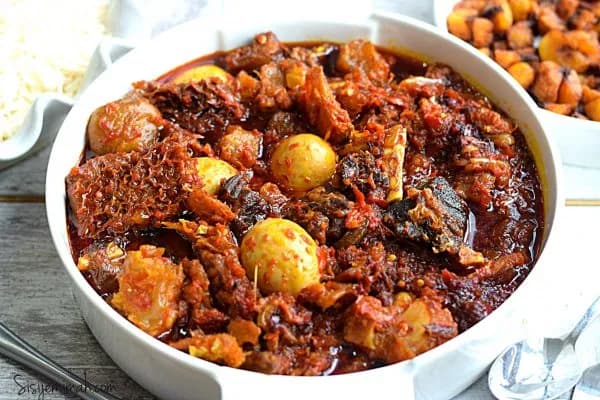
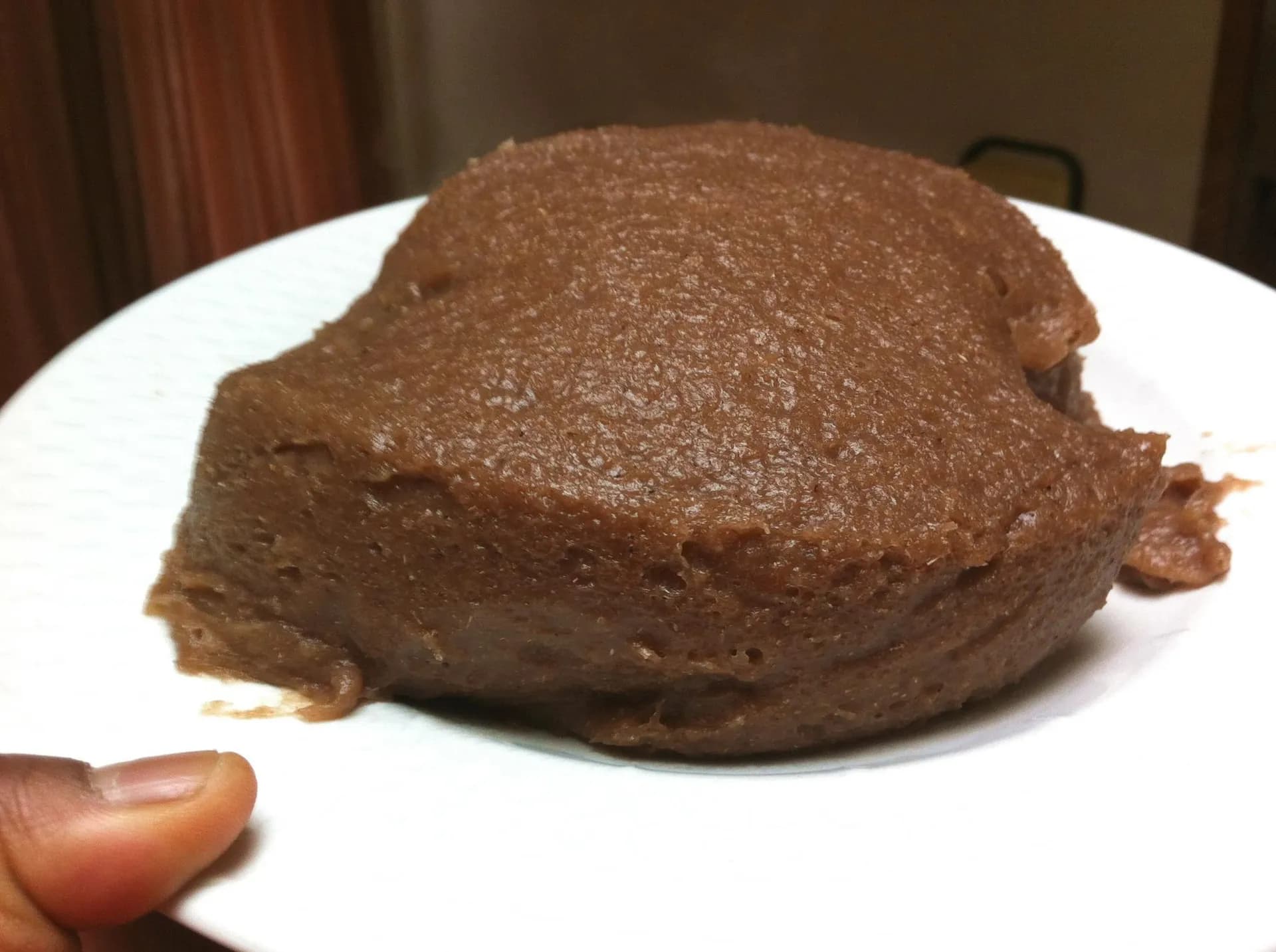
Eko and efo riro is a Yoruba pairing, and each half is a substantial dish in its own right. Eko, also called agidi, is a firm pudding set from fermented corn starch, sliced and eaten cold or at room temperature. Efo riro is the Yoruba vegetable stew, built on palm oil, blended pepper, locust beans and leafy greens with assorted meat and smoked fish through it.
The contrast is the point. Eko is cool, firm and slightly sour from the fermentation, with a clean corn flavour and almost nothing else going on. Efo riro is hot, oily, salty and densely flavoured. Putting them together works in the way that plain rice and a heavy curry work, and neither is quite right without the other.
Eko is traditionally set in wrapped leaves, which give it its characteristic shape and a faint aroma the greased mould does not reproduce. It is sold that way across southwestern Nigeria, most often alongside akara or moin moin at breakfast, though the pairing with efo riro makes it an evening meal. Riro means stirred, and the name describes the technique: the vegetables are stirred into the finished stew base rather than cooked in it, so they hold their texture.
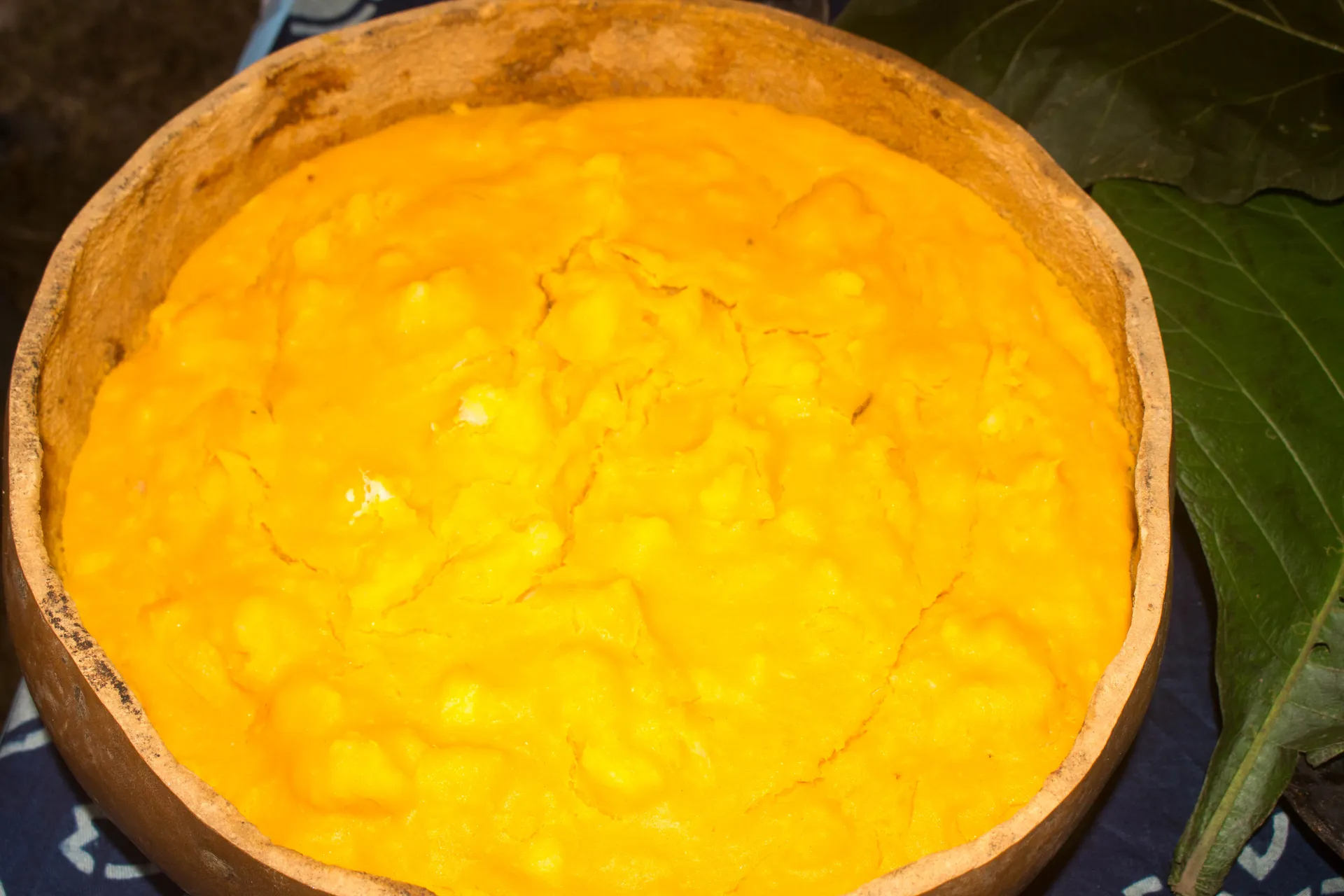
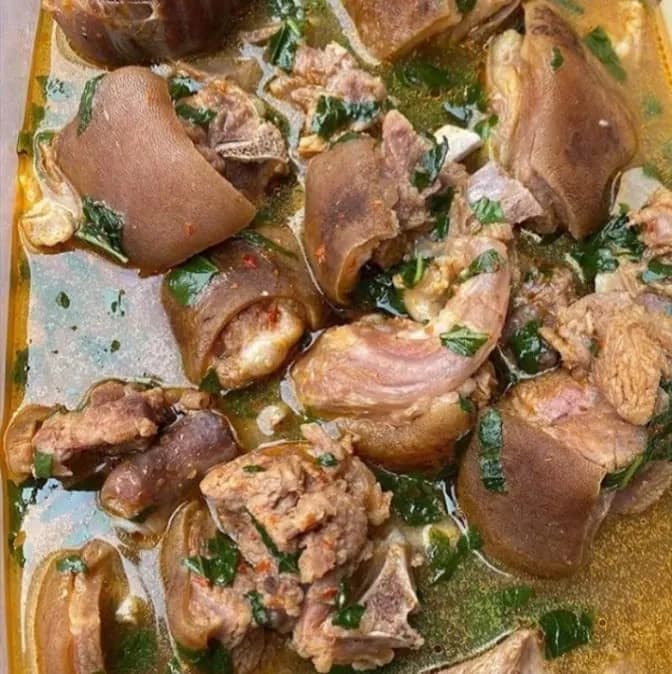
Ikokore, also called ifokore, is the water yam pottage of the Ijebu people of Ogun State, and the specific yam is what makes it. Water yam, isu ewura in Yoruba, is wetter and more mucilaginous than the white yam used in ordinary yam porridge, and grated rather than cut it produces a texture somewhere between a pudding and a porridge that no other yam reproduces.
The grating is the technique. Cut yam gives you yam porridge; grated water yam falls into the hot pot in irregular lumps that set as they cook, which is the texture Ijebu people are looking for and the reason the dish has its own name. Blending is possible but has to be done slowly, since a fine puree loses the lumps entirely.
It is community food. Ikokore was made at gatherings, festivals and ceremonies, prepared collectively by women working together, and it carries that association still. Ijebu people are direct about its status, and the pairing they will name without hesitation is ikokore with cold eba. It also improves overnight, which is a claim the source makes and which holds true for most Nigerian pottages.
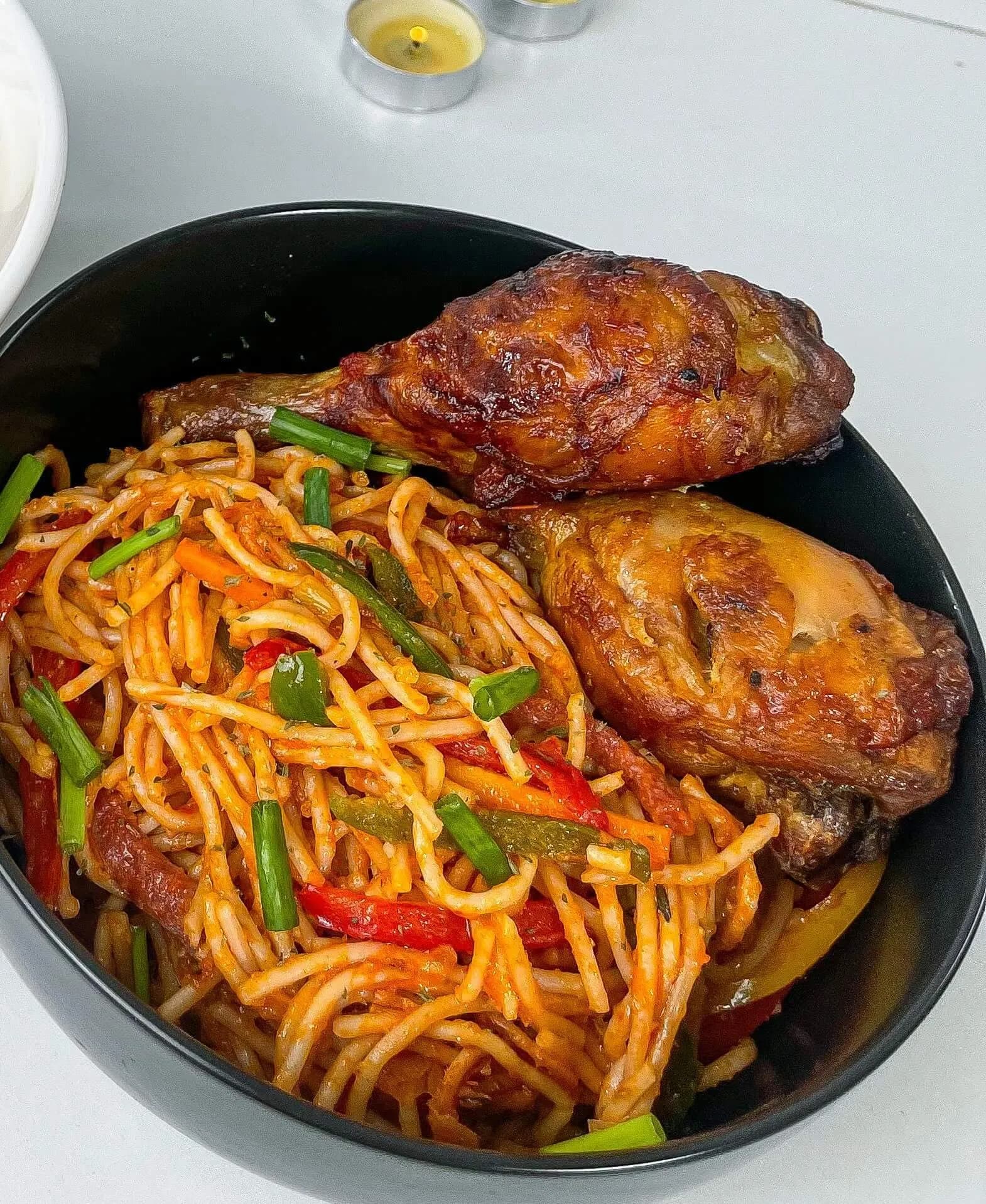
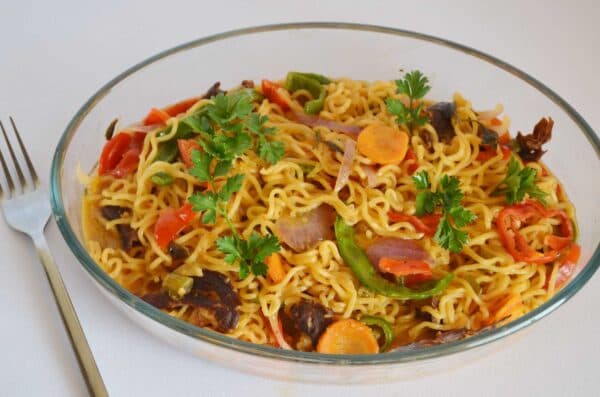
Jollof spaghetti applies the jollof method to pasta, and it is one of the most widely made contemporary dishes in Nigerian home kitchens. The pepper base is built exactly as it would be for rice, with blended tomato, tatashe and scotch bonnet reduced in oil with onion, ginger and garlic, and the spaghetti is finished in it so the strands take on the colour and the flavour rather than merely wearing it.
Spaghetti arrived in Nigeria through mid twentieth century trade and has become one of the country's most eaten starches, particularly in urban households where it is quick and cheap. What Nigerians did with it is characteristic: rather than adopting Italian technique, they applied their own most important cooking method to it. The same has happened with jollof couscous, jollof penne and jollof noodles.
It is weekday food rather than occasion food. Where jollof rice is the centrepiece of a party, jollof spaghetti is what gets made on a Tuesday, often with sausage or leftover chicken and whatever vegetables are in the house. It is served with eggs, fried plantain or chicken, and its status as a real Nigerian dish rather than a novelty is no longer in question among the people who eat it.