Nous utilisons des cookies essentiels au fonctionnement du site. Nous aimerions aussi déposer des cookies de mesure d’audience et des cookies publicitaires, uniquement avec votre accord. Vous pouvez choisir séparément pour chacun. Lire notre politique relative aux cookies

Loading
Recettes Nigeria
De Hausa Masa à Danwake Assorted, de Killishi (Beef Jerky) à Liver Suya (Liver Kebab). Toute la cuisine Nigeria, telle qu'on la prépare chez soi.
Jollof penne rigate is what happens when the Nigerian jollof method is applied to pasta rather than rice, and it has become a genuine staple of home cooking rather than a novelty.
The logic is straightforward once you see it. Jollof is not really a rice dish, it is a technique. A base of blended tomato, red pepper, onion and chilli is cooked down hard in oil until the raw edge burns off and the mixture darkens, and then the starch is cooked in that base so it takes on the colour and flavour all the way through rather than being sauced at the end. Apply that to pasta and you get jollof pasta.
Penne rigate is the shape most associated with it, and the ridges are the reason, they hold the thick tomato base in a way smooth pasta does not.
It sits in the same family as the spaghetti dishes cooked across Nigeria and Ghana, and it belongs to the same broad West African habit of taking an imported staple and cooking it by local rules rather than the rules it arrived with. In Nigerian homes it is weeknight food, lunchbox food and party food, and it is one of the dishes most likely to be cooked by someone learning to cook for themselves.
Oyster mushrooms grilled and tossed in suya spice. It is a plant-based version of the Nigerian street food, and it works better than most meat substitutions do.
**The traditional suya spice contains ground peanuts, and this recipe includes them.** The source flags it and offers to leave them out, which is honest, but it is worth stating clearly, because a peanut allergy and a suya spice blend are a genuinely dangerous combination and the name gives no warning.
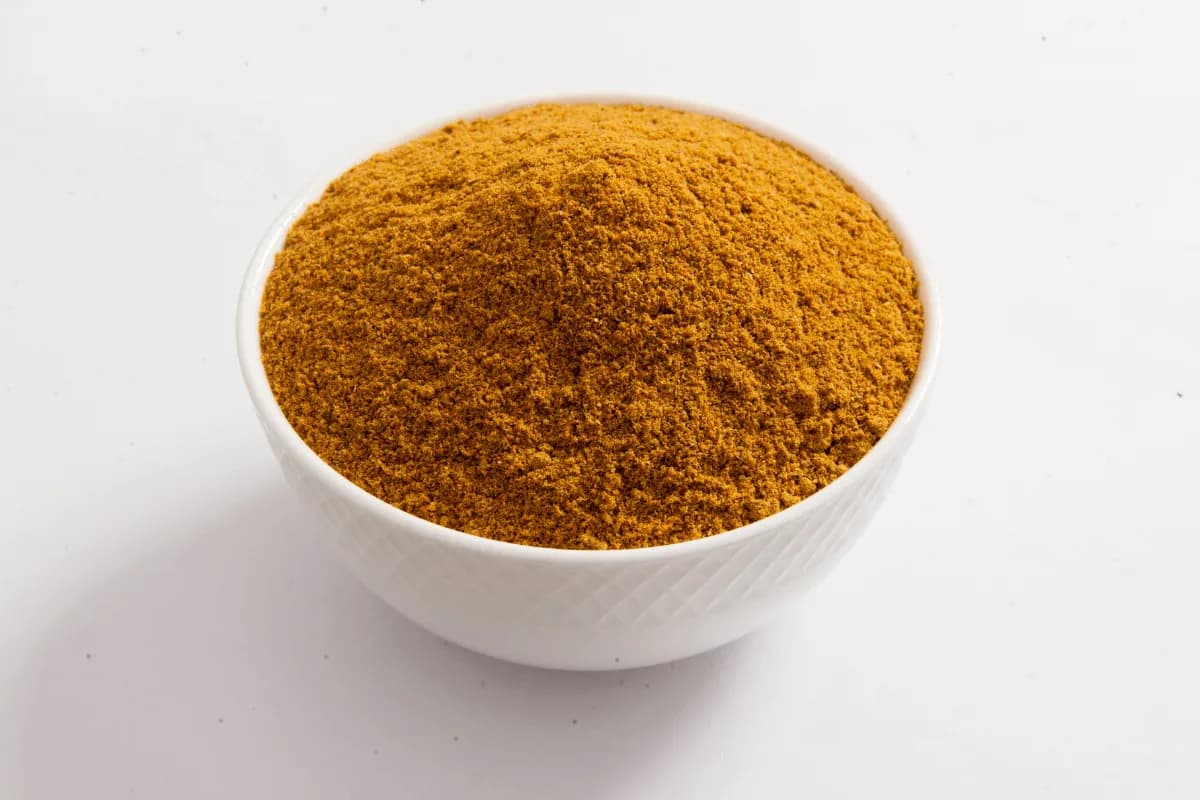
Suya proper is skewered beef, ram or chicken rubbed in yaji, the spice blend of ground roasted peanuts, ginger, cayenne, garlic, onion powder and paprika, and grilled over open coals. It is Hausa in origin, from northern Nigeria, and it is sold across Nigeria, Cameroon, Niger, Ghana and parts of Sudan. Kyinkyinga is the Ghanaian name, agashe the Sudanese.
Oyster mushrooms are the right substitution and not an arbitrary one. Shredded, they have a fibrous, layered structure that genuinely resembles pulled meat, they take on the dry rub readily, and they char well. Most vegetables do neither.
The source's method is very compressed, one step reads "put in a preheated medium", with the word oven missing, and has been filled out below.
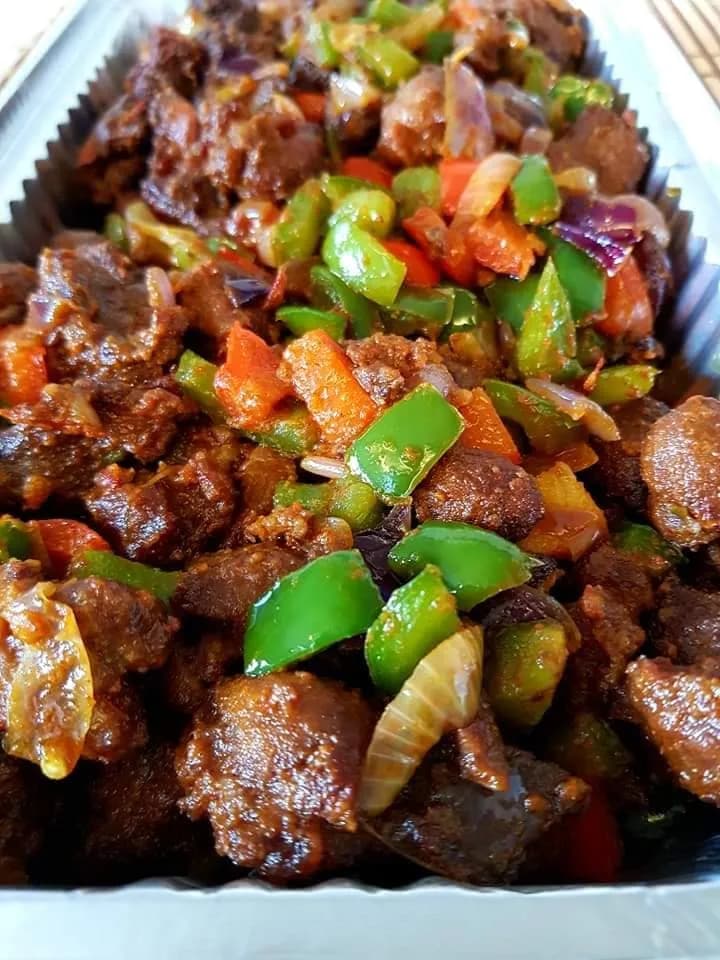
Asun is smoked or roasted goat meat tossed through a fierce pepper and onion mix, and it is one of the fixtures of the Nigerian owambe, the large Yoruba party that runs on food and music. It arrives as part of the small chops circuit, alongside puff puff and peppered snails, and it disappears fast.
Goat is the whole point. Yoruba speakers call it ogunfe, and it carries a stronger, more mineral flavour than beef that stands up to the quantity of scotch bonnet involved. The meat is simmered until tender before it ever meets fire, then roasted or grilled to dry the surface and pick up smoke, and only then does it go into the pepper mix. Skipping the first stage is the most common way it goes wrong, since goat that has not been softened stays tough no matter how long it spends in the pan.
Sliced onions and bell peppers go in for sweetness against the heat rather than for bulk. Whether asun is a starter or something else is a matter people disagree about: the source archive files it under both appetizer and dessert, and Nigerians treat it as a small chop, a side to jollof rice, or a main course with plantain, depending entirely on the occasion.
Suya is skewered meat coated in yaji, a dry peanut based spice blend, and it is the best known street food in Nigeria. It comes from the Hausa people of the north, where it is also called tsire, and it spread from there across West Africa. Sudan has a close relative in agashe.
Yaji is what makes it suya rather than grilled meat. The blend is built on ground peanut, usually in the form of kuli kuli crushed to a powder, with ginger, chilli, onion powder and other seasonings, and the peanut is what gives suya its particular nuttiness and the slightly gritty coating that clings to the meat. Meat without yaji is not suya, whatever else is done to it.
Beef and ram are the traditional cuts, along with kidney, liver and tripe, and chicken is the newer arrival that has become common. It is sold at night from roadside grills, cut on a board and handed over in newspaper with sliced raw onion, tomato and cabbage, and the raw onion alongside the hot spice is not a garnish but part of how it is eaten. The one thing worth knowing before making it is that yaji contains peanut, which matters to anyone with an allergy.