Nous utilisons des cookies essentiels au fonctionnement du site. Nous aimerions aussi déposer des cookies de mesure d’audience et des cookies publicitaires, uniquement avec votre accord. Vous pouvez choisir séparément pour chacun. Lire notre politique relative aux cookies
Loading
Recettes Morocco
Parcourez les archives par pays, par plat et par temps de cuisson.
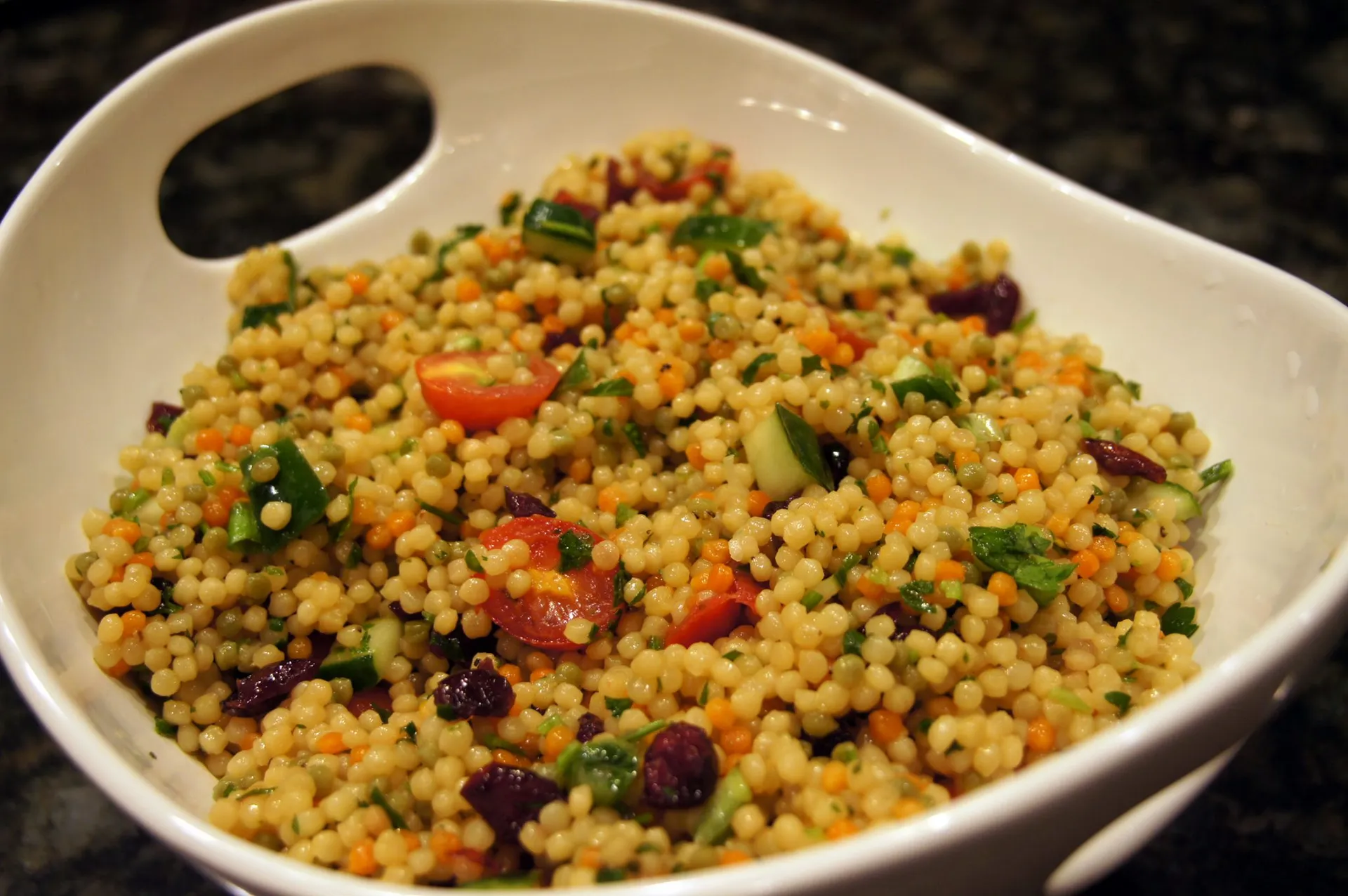
How to prepare instant couscous: boiling water or stock poured over, covered, left to steam, then fluffed. This is a technique page for a staple ingredient rather than a recipe for a dish, and it is filed as such.
Couscous is North African, specifically Berber in origin, and it is a staple across Morocco, Algeria, Tunisia and Libya. Its status was recognised by UNESCO in 2020, when the knowledge and practices around couscous were inscribed on the Representative List of the Intangible Cultural Heritage of Humanity in a joint submission by Algeria, Mauritania, Morocco and Tunisia.
It is not a grain, despite looking like one. Couscous is pasta, durum wheat semolina moistened, rolled into tiny granules and dried. Three sizes are common: Moroccan, the smallest; Israeli or pearl couscous, about the size of peppercorns; and Lebanese, the largest.
The traditional method has nothing to do with pouring boiling water on. Couscous is steamed, usually more than once, in the upper chamber of a couscoussier over a stew whose vapours flavour it as it cooks. That is how it is made for a proper meal in North Africa and the results are much lighter.
Almost all couscous sold in supermarkets is pre-steamed and dried, which is why the rehydration method here works.
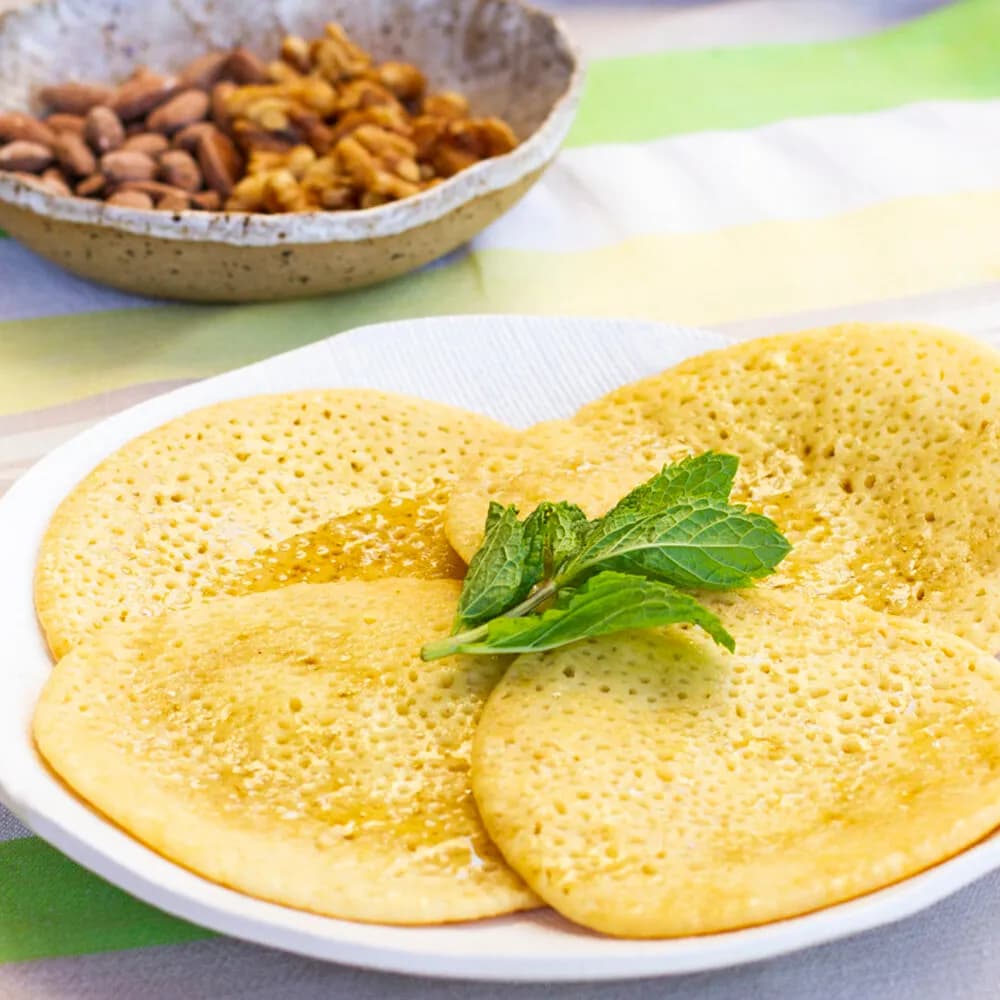
Beghrir are Moroccan semolina pancakes, cooked on one side only, whose entire surface opens into hundreds of small holes as they cook. They are served warm with a honey and butter sauce, and they are strongly associated with Ramadan, eaten at iftar to break the fast and at suhoor before dawn.
The holes are the whole thing, and they are not decoration. Yeast in a thin, blended batter produces carbon dioxide; as the pancake sets on the hot pan, the bubbles rise and burst through the surface, leaving an open honeycomb that absorbs the sauce like a sponge. That is why beghrir is never turned over, flipping it would seal the holes shut and defeat the purpose. Some regions do flip them briefly to dry the top, and those are sometimes called khringos, though in Casablanca that word means something else entirely.
Fine semolina is what makes it work, and it is also what gives beghrir its pale yellow colour. Recipes vary in how much they cut it with plain flour; the more semolina, the yellower and more characteristic the result.
The batter is very similar to that used for Arab qatayef, the lacy pancakes folded around fillings. Beghrir can be used the same way, though it is not traditional.
Taktouka is roasted peppers and grated tomato cooked down with onion, garlic, cumin and paprika into a thick warm salad. It is Moroccan, also popular in Algeria, and it is a mezze dish rather than a leaf salad.
The name explains the texture. It comes from the Arabic taktak, meaning to grind or pound, and the vegetables end up soft and broken down rather than crisp. That is why the source opens by pre-empting the obvious question, why a salad needs a recipe, and it is a fair point: taktouka requires cooking, and cooking is most of it.
It has regional names worth knowing. In eastern Morocco it is called flifla; in Algeria, felfla mechouia. Zaalouk, the aubergine version, is its closest sibling and works the same way.
Grating the tomatoes rather than dicing them is the technique the source recommends and it is a good one. Cutting a tomato in half and grating the cut face against a box grater extracts the pulp and leaves the skin behind in your hand, no peeling, no blanching, and a smoother result.
This dish is closely related to matbucha, the Moroccan-Jewish version, which is on this site. Matbucha is cooked longer, without onion or cumin, and the two are genuinely distinguished by community and by seasoning rather than being the same recipe under two names.
Ghoriba bahla is a Moroccan shortbread, crumbly and cracked across the top, made with toasted sesame, fried almonds and a great deal of fat. It is eaten with Libyan tea, Maghrebi mint tea and Arabic coffee, and versions of it are made across Egypt, Morocco and Libya.
Ghoriba is simply the Arabic word for cookie, and it names a whole family rather than one biscuit. What identifies this one is the cracks. Bahla loosely translates as silly, or silly stranger, and the name refers to the fissures that open across the surface as the cookie bakes. One Moroccan guide is quoted rendering it as stupid cookies, which gives a fair sense of the affection in the name.
Two fats and two nuts do the work. Butter and neutral oil together, with a little sesame oil, give a texture that neither alone produces, and the sesame is toasted while the almonds are fried, which are different treatments producing different results. The dough is deliberately crumbly and cannot be rolled: each cookie is formed by hand into a ball and pressed flat between the palms so the edges are thinner than the middle. Traditionally a special pan gives them concave backs and encourages more cracking.
Les mentions alimentaires sont fournies par les contributeurs à titre indicatif. Elles ne sont pas vérifiées par AFN et dépendent des produits que vous achetez. En cas d’allergie grave, vérifiez vous-même chaque ingrédient. Cuisine, allergies et votre propre jugement