Asida (Flour Pudding)
35 minMedium


Cookies sur African Food Network
Nous utilisons des cookies essentiels au fonctionnement du site. Nous aimerions aussi déposer des cookies de mesure d’audience et des cookies publicitaires, uniquement avec votre accord. Vous pouvez choisir séparément pour chacun. Lire notre politique relative aux cookies

Parcourez les archives par pays, par plat et par temps de cuisson.
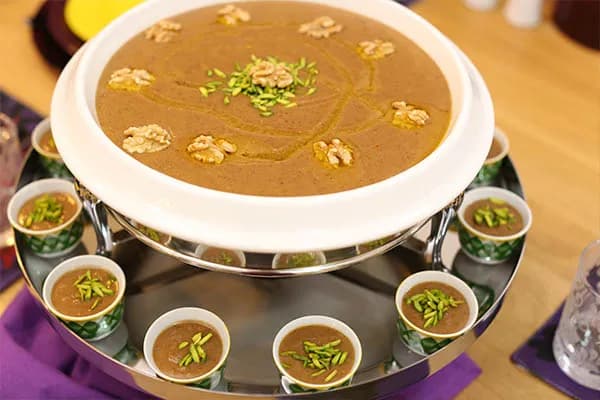
Asida is a cooked flour pudding from the Maghreb, eaten with honey or date syrup and melted butter. Its first recorded appearance is in the Arabic cookbook Kitab al-Tabikh, around the tenth century, which makes it one of the older dishes in this collection with a documented date. It is communal food. Like bazeen, asida is served on a large flat plate called a gas'a and eaten with the fingers, though spoons are used. The distinction the source draws between the two is worth keeping: bazeen has Amazigh origins and is purely North African, while asida has an Arabic name and versions of it are made across the Arabian Peninsula as well. In Libya it is a breakfast dish, eaten to carry someone through a working day, and it appears at celebrations: births, Eid, Mawlid. The plain version is simply flour cooked in water, turned out, and served with a hollow pressed into the top for honey or date syrup, with melted butter or ghee poured around it. This particular recipe is a considerably richer version built on a date paste with cardamom, cinnamon, fenugreek, saffron, rose water and walnuts, which is a celebration preparation rather than the everyday one.
35 minMediumLibya
Recette de Blessing · Africook
Rien ici pour le moment
Tout effacer