Nous utilisons des cookies essentiels au fonctionnement du site. Nous aimerions aussi déposer des cookies de mesure d’audience et des cookies publicitaires, uniquement avec votre accord. Vous pouvez choisir séparément pour chacun. Lire notre politique relative aux cookies

Loading
Recettes Ghana
De Kontomire Stew à Kenkey, de Wasawasa à Angwa Moo. Toute la cuisine Ghana, telle qu'on la prépare chez soi.
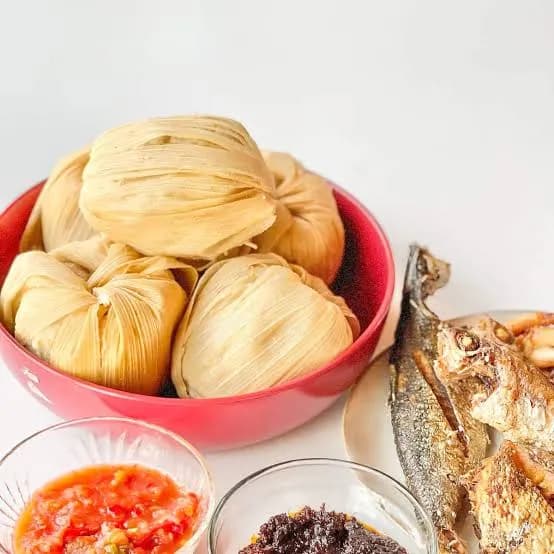
Wasawasa is made from yam peelings. Not yam, but the skin that most kitchens discard: dried, ground into flour, and steamed into a coarse grain that eats something like couscous. It is a dish that exists because nothing was wasted, and it has outlived the scarcity that produced it to become a food people specifically want.
It belongs to Dagbon and the wider north of Ghana, and it is eaten in Burkina Faso and other parts of West Africa under related names. In Tamale and across the northern region it is street food and household food at once, sold with a hot pepper sauce and fried fish and often garnished with cabbage, carrot and sliced potato.
The steaming happens twice, with a wash in between, which is the technical heart of the dish and the part that cannot be shortened. The flour is moistened until it forms small lumps, steamed, washed, drained, and steamed again on low heat, and only then is it dressed with groundnut oil and salt. That second steam is what turns it from damp meal into separate grains. It is served with beans, pasta or salad as well as the standard pepper sauce and fish, and it makes a full plate from an ingredient that costs almost nothing.
Whole tilapia scored, marinated in an oil-based spice mixture, oven-grilled, then coated in a fresh green pepper base and returned to the heat. The two-stage seasoning is what makes it, and it is a West African approach rather than a simple marinade.
The first stage is a dry-spice oil: vegetable oil with fish seasoning, white and black pepper, ginger, garlic, onion powder and lemon juice, worked into the cuts. The second is a green pepper base built in a food processor from green and red scotch bonnets, bell peppers, spinach, dill, coriander, ginger, garlic and onion, fried briefly in oil and then smeared over the part-cooked fish.
That green base is the interesting part. Blending leafy greens and fresh herbs into a pepper sauce is characteristic of Ghanaian and wider West African fish cookery, and it gives colour and a fresh, sharp finish that a marinade applied only at the start cannot. The scoring is not decorative either: two or three cuts on each side let both stages of seasoning reach the flesh rather than sitting on the skin. Tilapia is native to African fresh waters and is the fish most associated with Ghanaian grilling, usually eaten with banku.
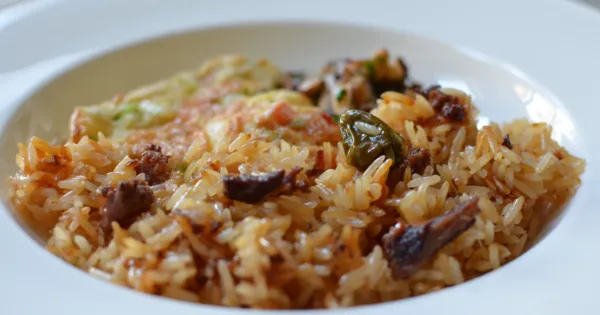
Angwa moo is oiled rice, and the Akan name says it plainly. Onions are browned in oil, rice goes in and is fried briefly, then water is added and the whole thing cooks together. The result is golden, faintly sweet from the caramelised onion, and unlike fried rice in one important respect: the rice is raw when it enters the oil rather than cooked and cooled.
Ghanaians treat it as the emergency dish, and they are cheerful about saying so. It is what a child cooks when a parent is not home, what a young man living alone makes because it needs almost nothing, and what gets made when there is no time and no plan. That does not make it lesser. The browning of the onion is doing real work, and a well made angwa moo has a depth that its ingredient list does not predict.
The traditional accompaniment is ground pepper made in an earthenware asanka, with tinned sardines or fried eggs alongside, and that combination is the version most Ghanaians picture. The salted beef known as tolobeef, cured at home over two days, is the more considered addition. The crisp scorched layer at the bottom of the pot is prized and fought over, which is the case for rice dishes across the continent, and the way to get it is to let the rice finish in its own steam without stirring.
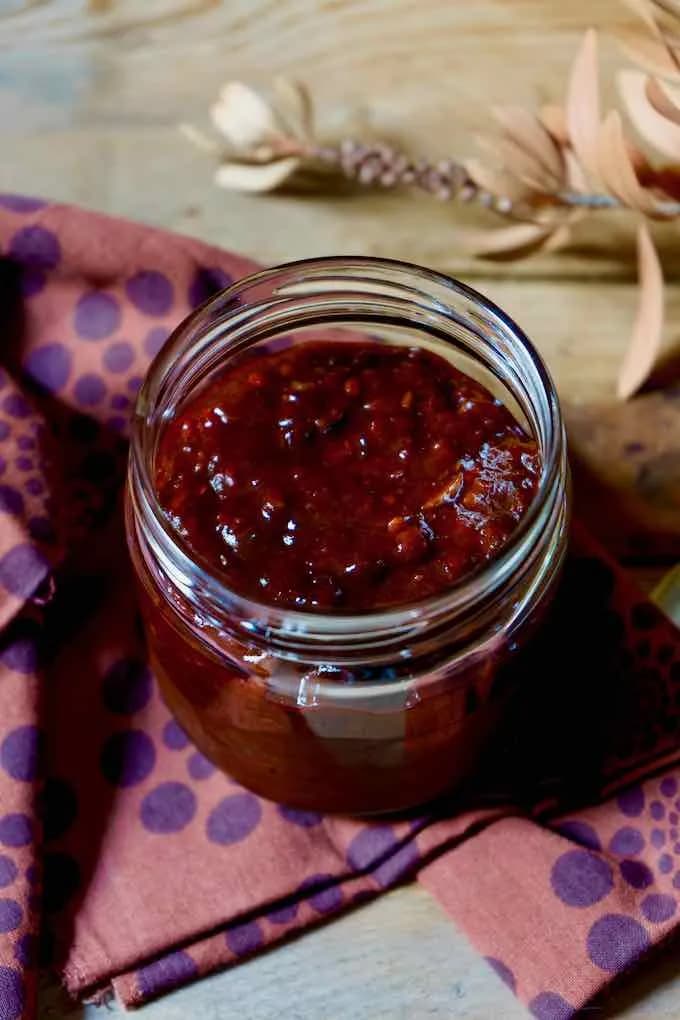
Shito is Ghana's dark chilli condiment, and it is one of the few West African sauces that keeps for months. Dried shrimp, ground smoked fish, chilli, onion, ginger and garlic are cooked down slowly in a large quantity of oil until the whole thing turns nearly black, and the oil that rises to the top is what preserves it.
The name is simply the Ga word for pepper. It is made differently in every region and village, and it comes coarse or smooth, medium or extremely hot, depending on the household. What does not change is the smokiness, which comes from ground smoked fish and dried shrimp rather than from any smoking of the sauce itself. That combination has been compared to Malaysian sambal belacan, which works on the same principle of dried seafood cooked into chilli paste.
It goes with almost everything: waakye, kenkey, plain rice, fried plantain, yam, beans. Ghanaians abroad travel with jars of it. Its keeping quality is the practical reason it exists in the quantities it does, since a batch made once will sit in the cupboard for two or three months with the oil layer intact, and in the fridge after that.