Nous utilisons des cookies essentiels au fonctionnement du site. Nous aimerions aussi déposer des cookies de mesure d’audience et des cookies publicitaires, uniquement avec votre accord. Vous pouvez choisir séparément pour chacun. Lire notre politique relative aux cookies

Loading
Recettes Ghana
De Kontomire Stew à Kenkey, de Ghana Jollof Rice à Wasawasa. Toute la cuisine Ghana, telle qu'on la prépare chez soi.
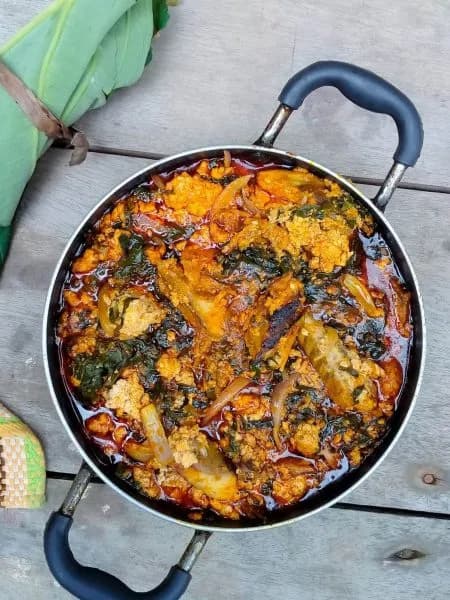
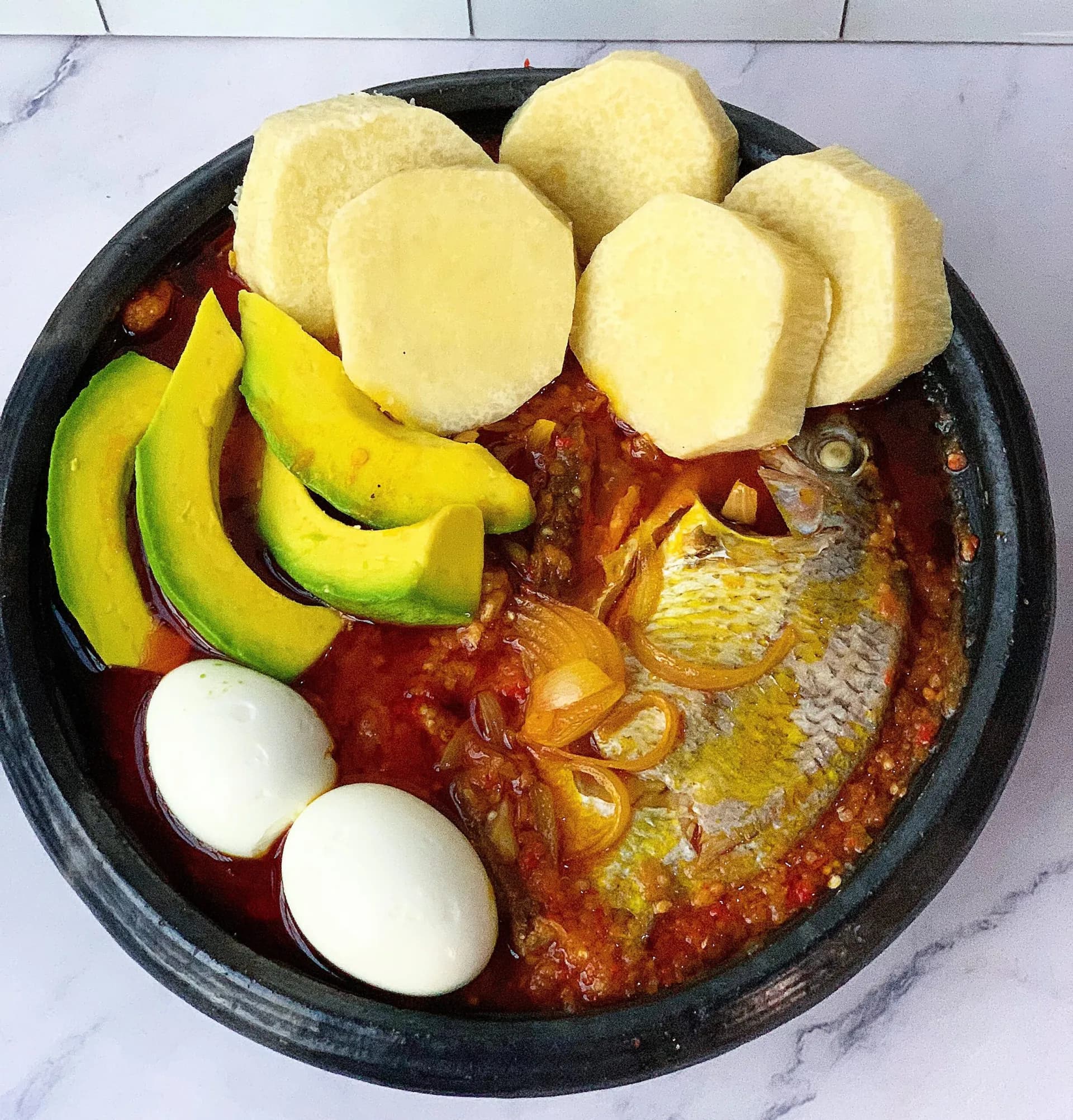
Garden egg stew is a West African palm oil stew built on garden eggs, the small white and green African aubergines that are nothing like the large purple ones sold in most supermarkets. They are firmer, more bitter and hold their shape, and they are eaten across Ghana and Nigeria both cooked and raw.
This version is a seafood one, with prawns, shrimp and smoked mackerel, and it departs from the plain garden egg stew in one further respect: a spoonful of peanut butter goes into the ground pepper base. That is not universal but it is a recognised West African move, giving body and a background richness that thickens the stew without flour.
What it is served with is the point. The stew is made to go with yam, plantain and cocoyam, all cooked plain, and the contributor is explicit that palm oil is what makes that combination work. Vegetable oil is possible and gives a different, lighter dish. The method also uses an air fryer to char the peppers, tomatoes and onion before grinding, which is a modern substitute for roasting them over an open flame, and it produces the same smokiness. Contains peanut.
Kelewele is Ghanaian spiced fried plantain: ripe plantain cut into cubes, tossed in a paste of ginger, chilli, garlic and spices, rested, then fried until the outside crisps and the inside stays soft. It is one of the country's best known street foods and is sold from stalls in the evening across Accra.
The spicing is what distinguishes it, and it is worth being clear about this because the source is not. **Kelewele is not the same as aloco.** Aloco is the Ivorian name for plain fried ripe plantain, salted and nothing more, and the same dish is dodo in Nigeria and makemba in the Congo. Kelewele is marinated first, and the ginger and chilli are the entire reason it has its own name.
Ginger, hot pepper and salt are the base, and nutmeg, garlic, onion and lemon appear in most versions. The rest matters: ten to twenty minutes lets the spice paste get into the cut faces of the plantain rather than sitting on the surface. It is eaten on its own, with roasted peanuts, or alongside rice and bean dishes, and it is sometimes described as vegetarian meat for the substance it lends a plate. Traditionally it is fried in red palm oil.
Whole tilapia scored, marinated in an oil-based spice mixture, oven-grilled, then coated in a fresh green pepper base and returned to the heat. The two-stage seasoning is what makes it, and it is a West African approach rather than a simple marinade.
The first stage is a dry-spice oil: vegetable oil with fish seasoning, white and black pepper, ginger, garlic, onion powder and lemon juice, worked into the cuts. The second is a green pepper base built in a food processor from green and red scotch bonnets, bell peppers, spinach, dill, coriander, ginger, garlic and onion, fried briefly in oil and then smeared over the part-cooked fish.
That green base is the interesting part. Blending leafy greens and fresh herbs into a pepper sauce is characteristic of Ghanaian and wider West African fish cookery, and it gives colour and a fresh, sharp finish that a marinade applied only at the start cannot. The scoring is not decorative either: two or three cuts on each side let both stages of seasoning reach the flesh rather than sitting on the skin. Tilapia is native to African fresh waters and is the fish most associated with Ghanaian grilling, usually eaten with banku.
Tatale is the Ghanaian plantain pancake, made from plantains so ripe their skins have blackened, mashed with onion, ginger and pepper, bound with corn flour and fried in spoonfuls. It is street food and a side dish, and it is sometimes called the golden pancake for its colour.
It exists because of thrift. Overripe plantain is too soft to fry as slices and too sweet to use as a starch, and tatale is what was worked out to use it. That origin is common to a great many good dishes and it is worth stating rather than glossing over.
Its traditional partner is aboboi, the Bambara bean stew, and the two are eaten together as a complete meal across Ghana. It is also served warm as an appetizer with beans in various forms. It is eaten in Nigeria as well. The source claims a link between the dish and Tatale, a district in northern Ghana. That district exists, but the connection to the dish is not something the record supports, and it is flagged rather than repeated as fact.