
Nous utilisons des cookies essentiels au fonctionnement du site. Nous aimerions aussi déposer des cookies de mesure d’audience et des cookies publicitaires, uniquement avec votre accord. Vous pouvez choisir séparément pour chacun. Lire notre politique relative aux cookies

Loading
Recettes Ethiopia
Parcourez les archives par pays, par plat et par temps de cuisson.
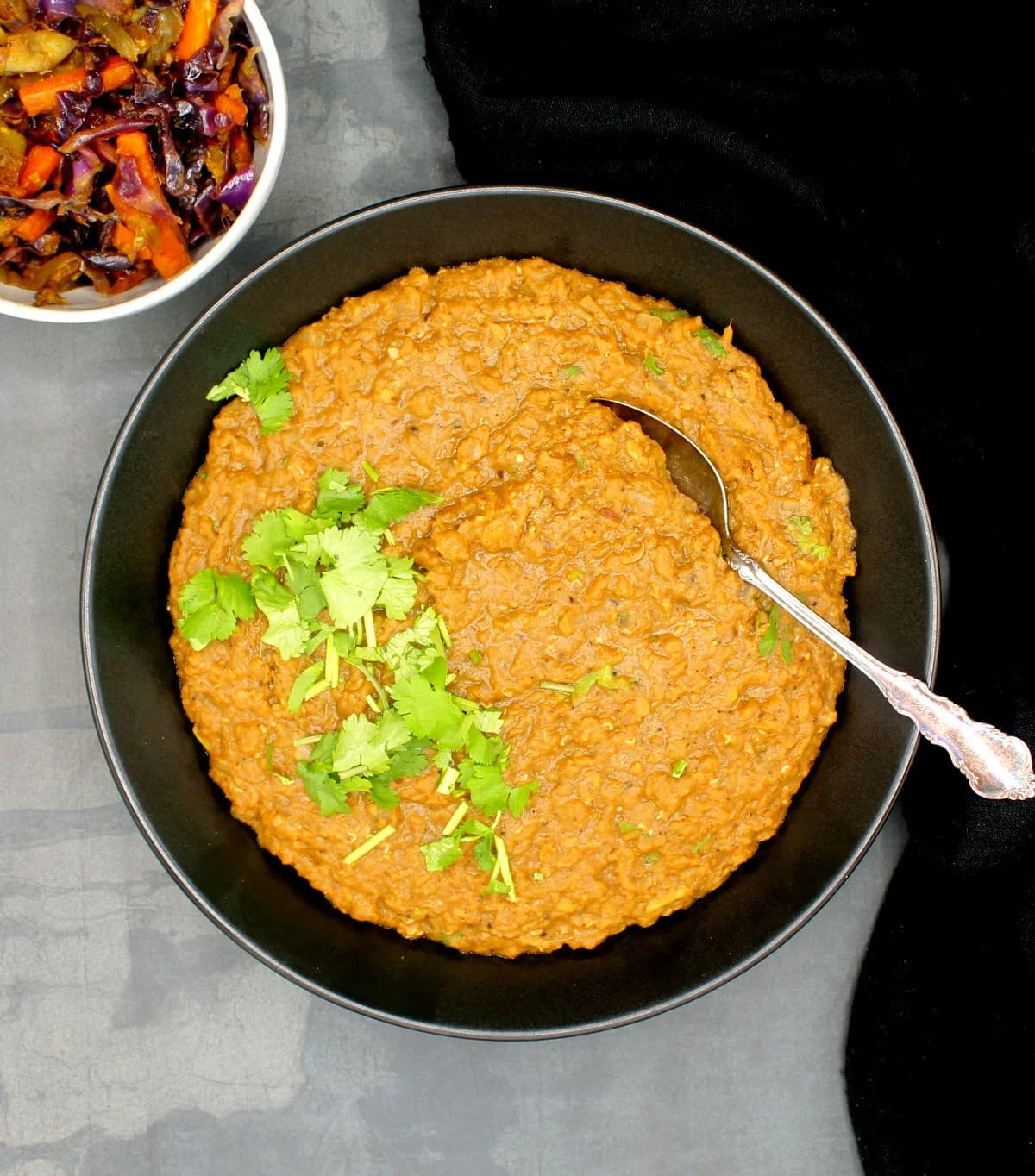
Misir Wot is one of Ethiopia's most widely eaten and internationally celebrated dishes, a deeply spiced red lentil stew made with berbere spice blend and niter kibbeh (Ethiopian spiced butter) that develops extraordinary depth and complexity from such simple ingredients. The lentils break down completely during cooking, creating a thick, creamy stew that carries the bold spice profile throughout. The dish is a staple of the Ethiopian Orthodox Christian fasting diet, during which meat and dairy are avoided for significant portions of the year. It is one of the dishes that has made Ethiopian vegetarian and vegan cooking celebrated globally, proof that plant-based food can be intensely flavourful and deeply satisfying.
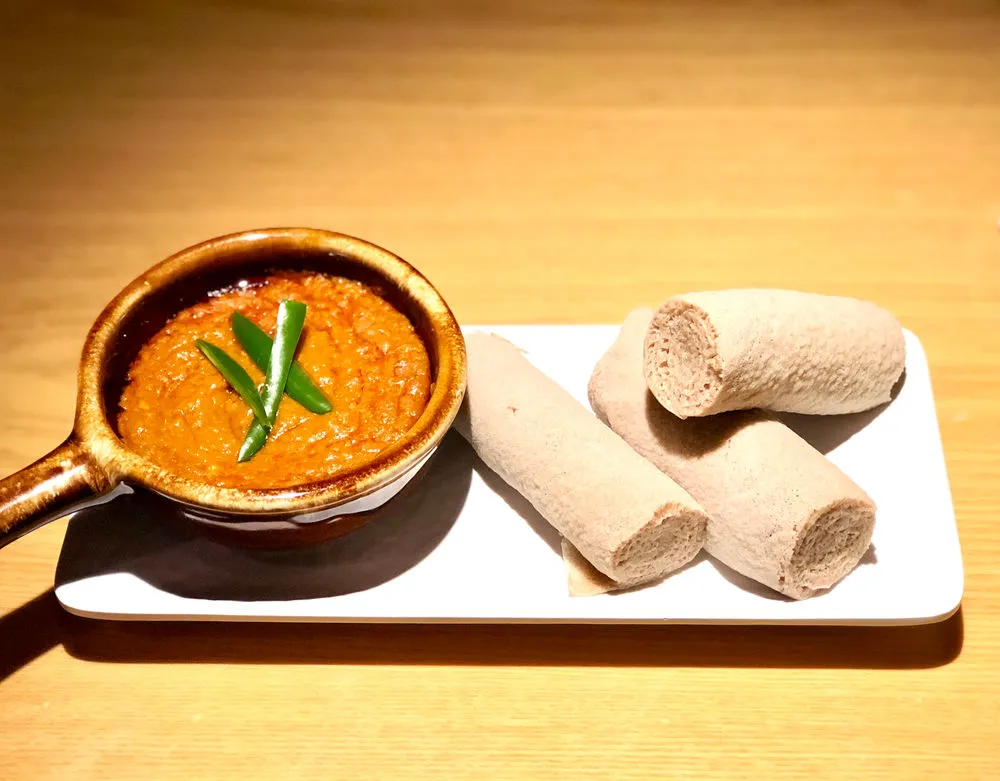
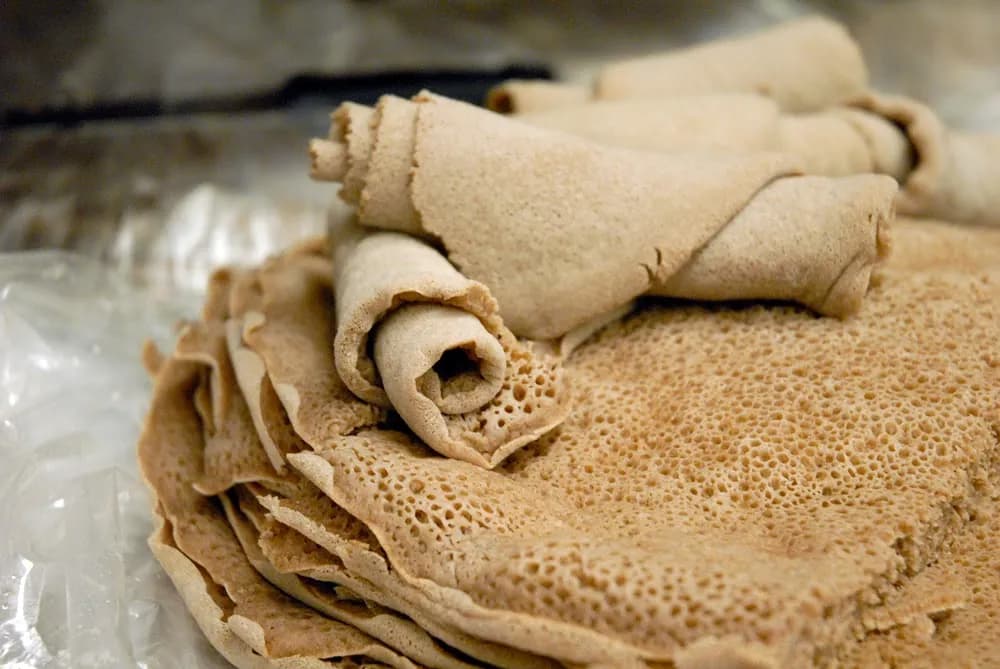
Injera is the fermented flatbread of Ethiopia and Eritrea, and it is not a side dish. It is the plate: stews and vegetables are spooned directly onto a large injera, and diners tear pieces from a second one to scoop, so the meal ends with the plate itself eaten.
Teff is what it is made from, a tiny round grain that grows in the Ethiopian highlands and is among the smallest cereals in the world. Teff carries almost no gluten, which means it cannot be raised in the way wheat bread is, and injera instead depends on fermentation. Wild yeasts and lactic bacteria in a starter, called ersho, work the batter over several days, producing the carbon dioxide that gives injera its distinctive surface of small holes, its spongy texture and its sour flavour.
That sourness is the point and it varies. A short fermentation gives a mild injera; three days or more gives the sharpness Ethiopians expect. The recipe here uses commercial yeast and a shorter rest, which is a practical shortcut rather than the traditional method, and it produces a milder bread. It also allows very fine millet flour in place of teff, which is easier to find but changes the flavour and the colour.
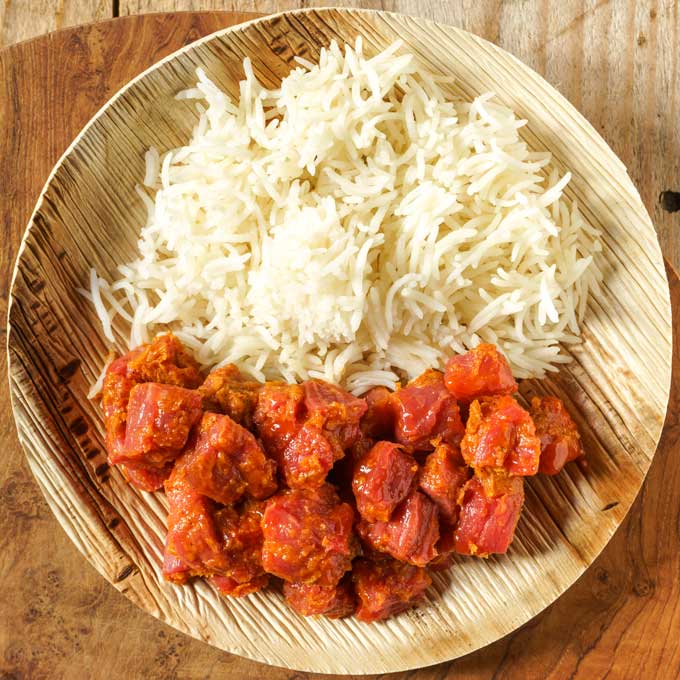
Tibs is one of Ethiopia's most popular and widely eaten dishes, a quick stir-fry of beef (or lamb) with onions, tomatoes, rosemary, and jalap peppers cooked in niter kibbeh until the meat is caramelised at the edges and the vegetables are softened and aromatic. It appears on every Ethiopian restaurant menu worldwide and is eaten at home as an everyday meal and at celebrations alike. The dish is deceptively simple in preparation but deeply satisfying in flavour. The niter kibbeh carries its complex spice profile into the meat as it sears, and the fresh rosemary adds an aromatic brightness that is characteristic of Ethiopian cooking. Tibs can be served wet (with more sauce) or dry (seared until the moisture is reduced), and the preference varies by region and individual taste.
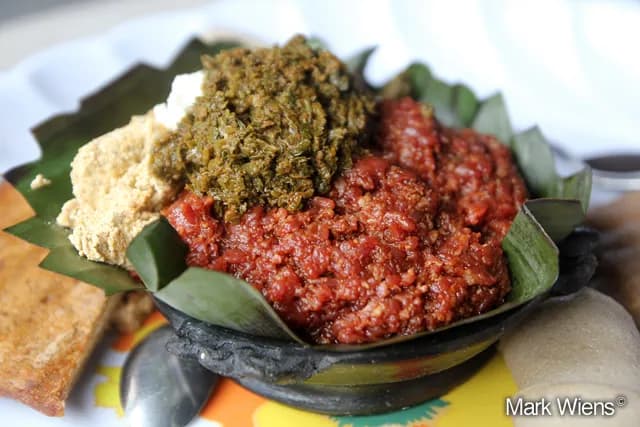
Kitfo is very finely minced raw beef, warmed through with spiced clarified butter and chilli. The name says what it is: kitfo comes from the Amharic for chopping finely. It is Ethiopian and Eritrean, and it is celebration food, a dish for major holidays, weddings and family occasions rather than an ordinary weeknight.
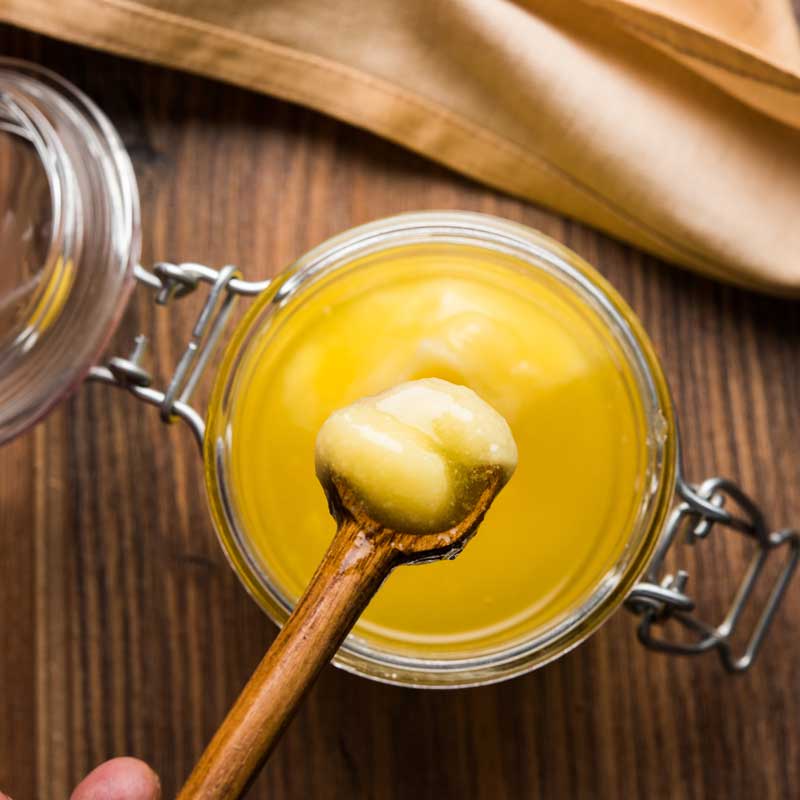
Two things define it. The first is niter kibbeh, the clarified butter infused with garlic, ginger, cardamom, fenugreek and other spices, which is what carries flavour into meat that is never exposed to direct heat. The second is mitmita, the fierce Ethiopian chilli blend built on pili-pili peppers with cardamom, cloves and salt. Both are what separate kitfo from any other steak tartare.
Doneness has its own vocabulary, and the names matter because they are what you order by. Tere kitfo is fully raw. Leb leb is warmed just enough to melt the butter through it. Yebesele is taken further still. Gored gored, which is on this site as its own recipe, is the closely related dish where the beef is cut into cubes rather than minced, same tradition, different knife work, noticeably different in the mouth.
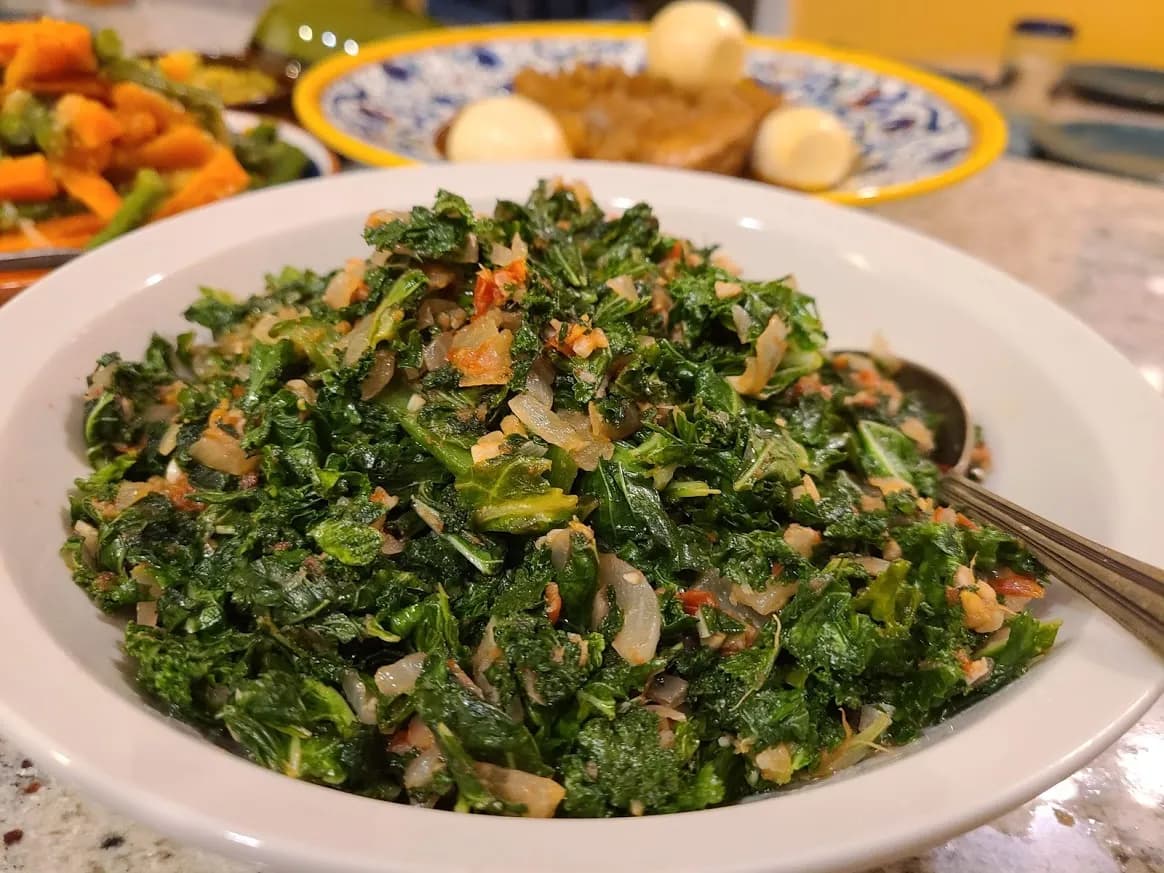
It is served with injera, and usually alongside gomen, the collard greens, and ayib, the fresh Ethiopian cheese, whose mildness is there to answer the heat.