


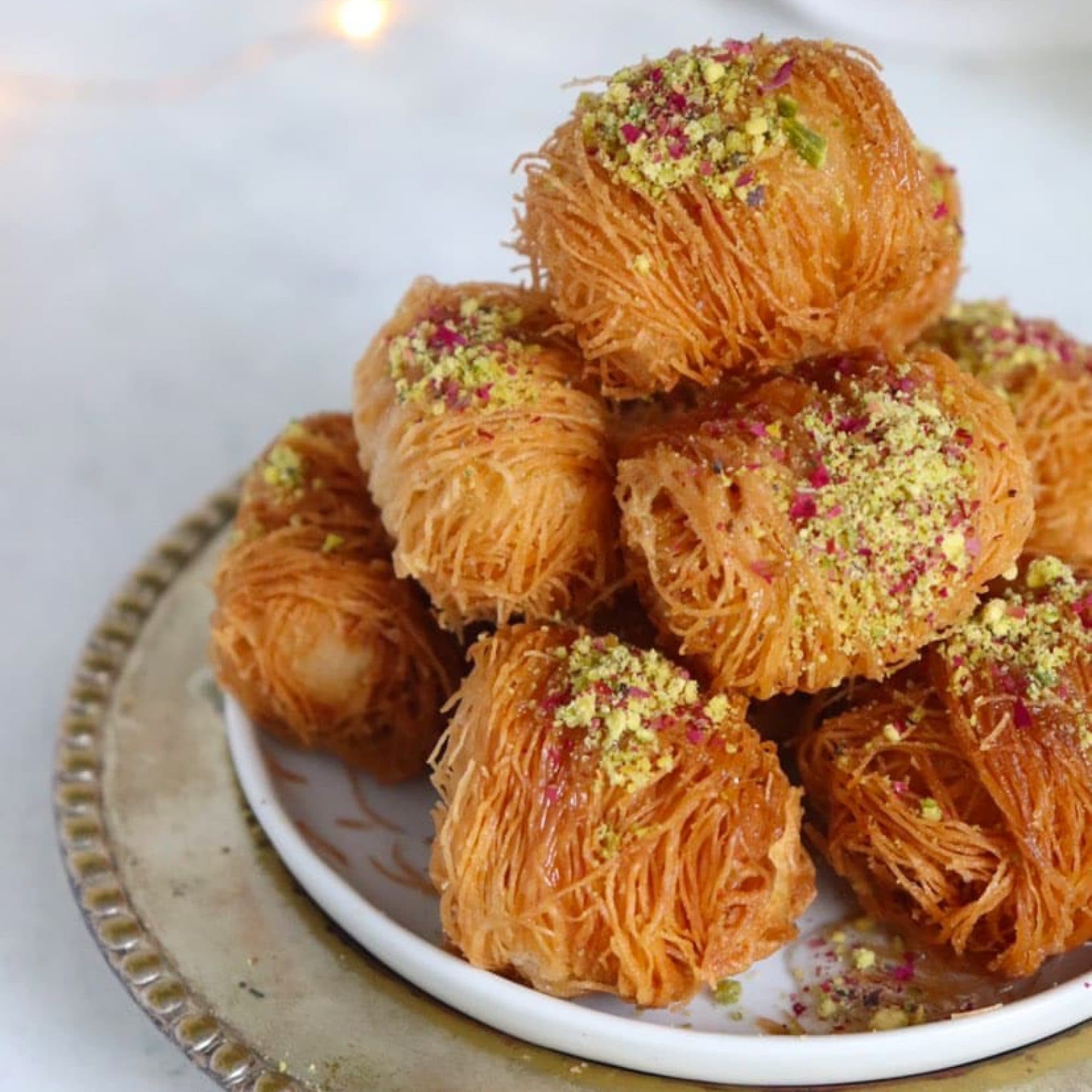
Kanafeh
Kanafeh, konafa in Egypt, knafeh across the Levant, is a pastry built from kadaif, the fine shredded dough sometimes called angel hair, layered with cheese or cream, baked in ghee until the strands turn deep gold, and soaked in sugar syrup while still hot. Its origins are Levantine rather than African. The most commonly cited account places its invention in Damascus in the seventh century, and an early version appears in Kitab al-Tabikh, a thirteenth-century Andalusian cookery manuscript. From there it spread across the Ottoman world. In Egypt it has become genuinely Egyptian. Konafa is inseparable from Ramadan, sold by weight from bakery windows through the whole month, made at home in large trays, and eaten after iftar alongside qatayef. Egyptian versions lean towards cream, nuts and dried fruit as often as cheese, which distinguishes them from the Palestinian knafeh nabulsieh built on stretchy akkawi cheese and stained orange. The texture is the point of the dish, and it depends on a single rule: the syrup and the pastry must be at opposite temperatures. Hot syrup on hot pastry makes it soggy. Cool syrup poured over pastry straight from the oven keeps the strands crisp while the inside stays molten. Rose or orange blossom water in the syrup is standard, and crushed pistachio or walnut goes on top.
EgyptDeborah