


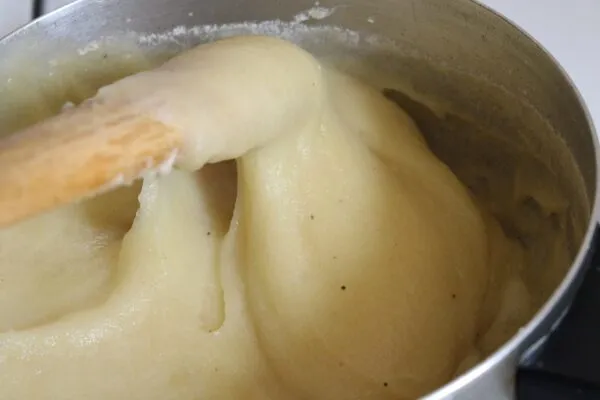
Fufu
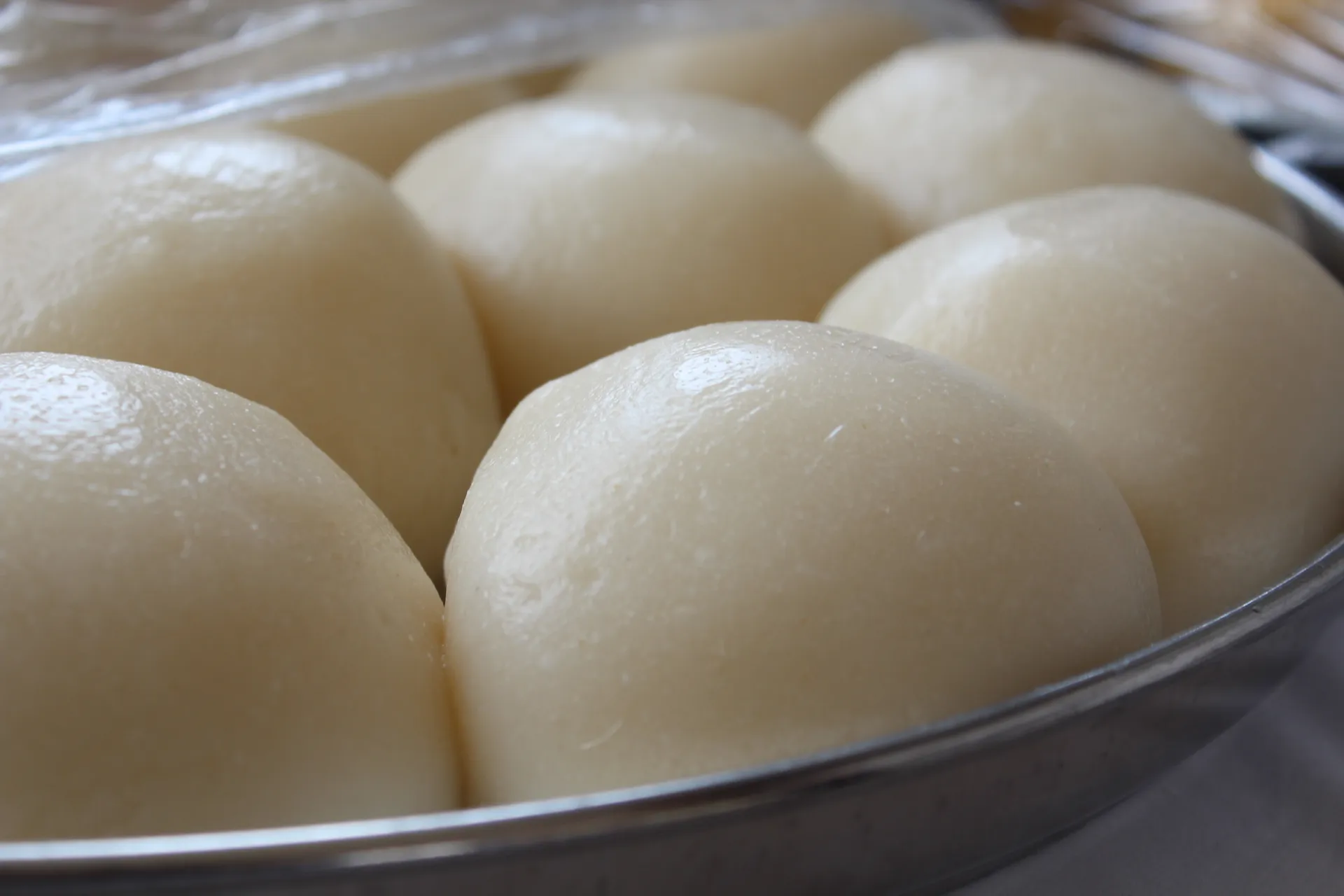
Fufu is starch pounded to a smooth elastic mass, and it is among the most widely eaten things in West and Central Africa. The word comes from Twi, spoken in Ghana and Côte d'Ivoire, where it means to mash or to combine, and the sound of a mortar and pestle working in rhythm is the sound of fufu being made. What goes into it depends entirely on where you are. West Africa favours white yam, sometimes with plantain. Central Africa favours cassava. Plantain, cocoyam, semolina, rice and combinations of flours all appear, and each gives a different texture and a slightly different name. That variability is why fufu is better understood as a category than a recipe. It crossed the Atlantic with enslaved West Africans and survived. Foo foo and fou fou in the Caribbean are made with plantain or cornmeal, coocoo in Barbados is the same idea, and Cuban, Jamaican and Puerto Rican versions carry sweet plantain and pork fat. Whatever the base, it is eaten the same way: a piece is pulled off with the fingers, an indentation is pressed in with the thumb, and it is used to scoop soup or stew. It is never eaten alone, and its slightly tangy, near neutral flavour is what lets a heavily seasoned soup do the talking.
Côte d'Ivoire50 minFoodChef