Nous utilisons des cookies essentiels au fonctionnement du site. Nous aimerions aussi déposer des cookies de mesure d’audience et des cookies publicitaires, uniquement avec votre accord. Vous pouvez choisir séparément pour chacun. Lire notre politique relative aux cookies
Loading
Recettes Algeria
De Dobara à Mtewem, de Chekhchoukha à Tajine Zitoun. Toute la cuisine Algeria, telle qu'on la prépare chez soi.
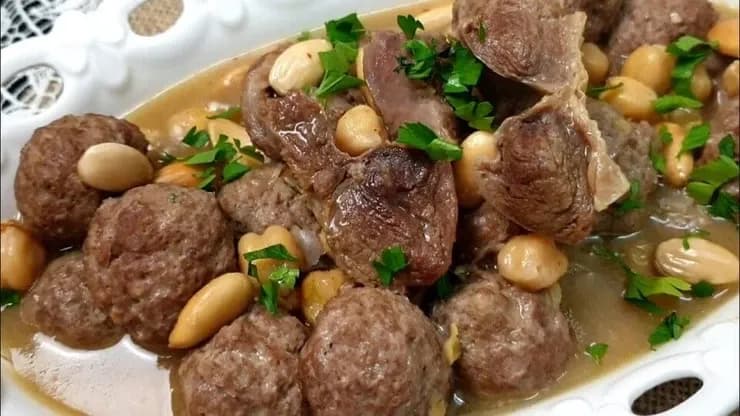
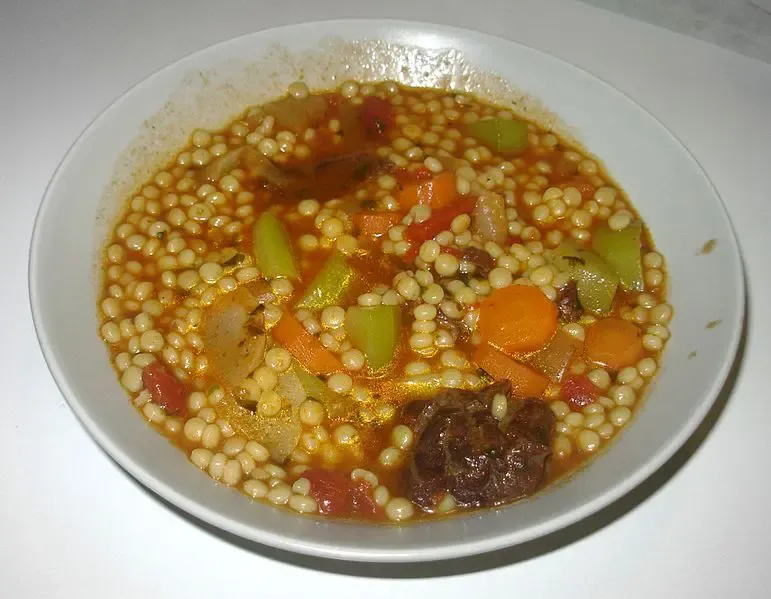
Mtewem is an Algerian dish of meatballs and meat cooked together with chickpeas in a garlic heavy sauce, and the name says exactly what it is. Mthawem derives from the Arabic for garlic, and the quantity used is the point rather than an aromatic detail.
It belongs to Algiers, where the original preparation is made with a white sauce, and it appears at the occasions that matter: Ramadan evenings, weddings and celebrations. Most families now make it with a red tomato based sauce, which has become the more common version, and cooks disagree about which is correct in the way that families always do about a dish attached to celebration.
Cumin carries it alongside the garlic. The meatballs are formed small, about the size of a walnut, and are added to the sauce only after the meat and chickpeas have already cooked, so they poach gently rather than breaking up. Some households press a blanched almond into the centre of each one, a touch that belongs to the wider North African habit of hiding something in a dish for the person who finds it. Cinnamon divides opinion and is entirely optional.
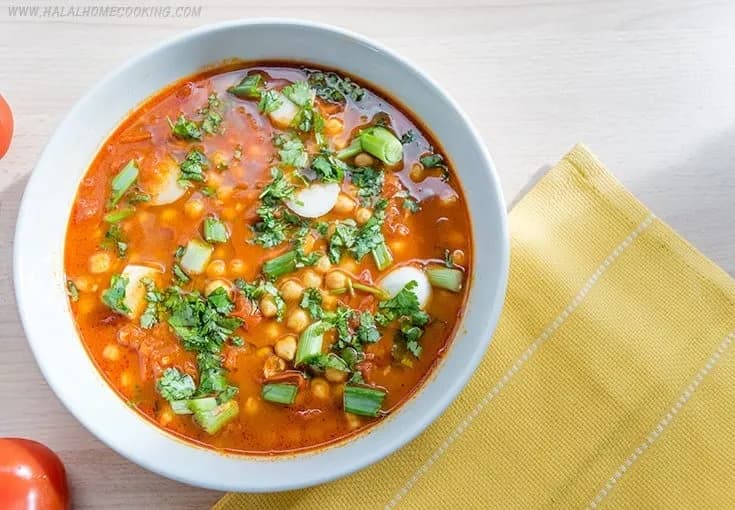
Dobara is a chickpea and fava bean soup from Biskra in northeastern Algeria, and it is winter food in a place that gets genuinely cold at night despite sitting on the edge of the Sahara. It is also spelled doubara, and it is known widely enough by its region that Algerians call it doubara Biskra.
It is vegan by construction rather than by choice. Meat is expensive in Algeria and many households cannot buy it regularly, and dobara is one of the dishes that answers that directly: beans, chickpeas, spices and bread, filling enough that nobody at the table is thinking about what is missing. It is also the dish that gets made when a guest arrives unannounced, because the components are always in the house.
The heat is not incidental. Harissa goes in, and so do chilli, black pepper and paprika, and Algerians describe the warmth it produces as the reason to eat it in winter. What makes it distinctive is that the fresh elements go in at the table rather than in the pot: grated tomato, chopped coriander, garlic, pickled peppers, lemon slices and olive oil are added to each bowl as it is served, so the dish is finished by whoever is eating it.
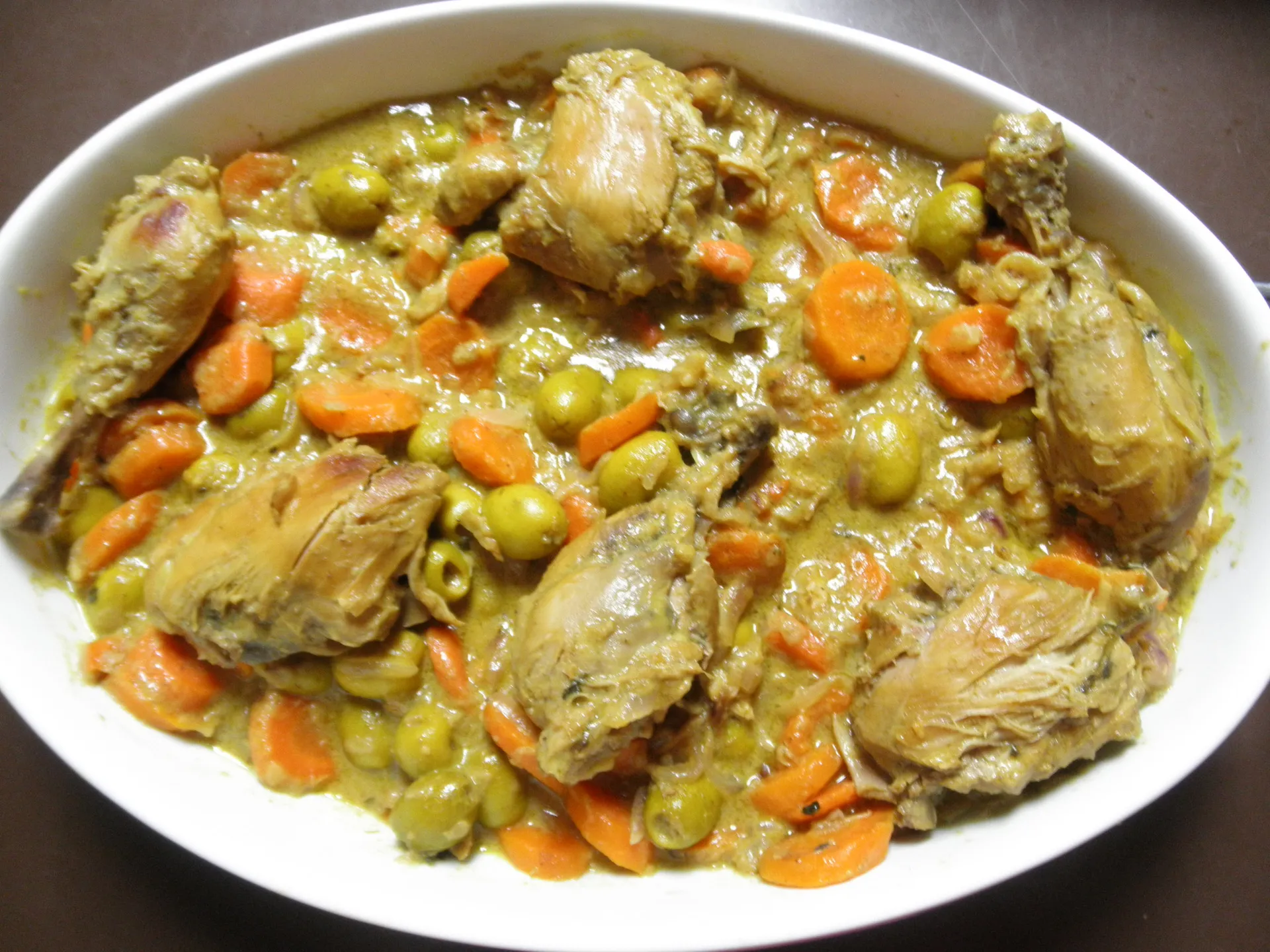
Tajine zitoun is an Algerian chicken and olive dish, zitoun meaning olives in Arabic, and it is a fixture at iftar during Ramadan and at occasions generally. Chicken, green olives, onion and carrot are cooked together and the sauce is finished with lemon juice and, in most versions, a little flour to thicken it.
It looks like a Moroccan tagine and is not one, though both countries cook in earthenware and the resemblance is real. What distinguishes Algerian cooking, and this dish in particular, is the spice handling: restrained rather than layered, letting the olives and lemon carry the flavour instead of burying them under a heavy blend. Saffron or turmeric provides the colour.
The olives need attention. Two cups of green olives brings a lot of salt with it, and the recipe is explicit about washing them well before use. Some cooks blanch them briefly for the same reason. Cooking the chicken bones in the broth and removing them before serving is the other technique worth noting: the source describes deboning the breast first, using the bones to build the sauce, then returning the browned meat at the end, which gives depth without anyone having to negotiate bones at the table.
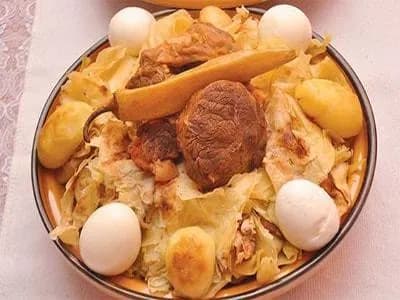
Chekhchoukha, also written chakhchoukha, is torn flatbread under a spiced meat and chickpea sauce, and the name describes the tearing. It comes from tacherchert in the Chaouia language, meaning to crumble or to tear into small pieces, and the bread is broken by hand rather than cut.
It is a Chaoui dish, from the Aurès mountains of eastern Algeria, and it spread from there into Constantine, Biskra and the rest of the country. Its origin is in shepherds' food, the substantial thing eaten on returning home on cold winter nights, and it kept that character even as it became a dish for festive occasions and celebrations rather than everyday eating.
The bread is rougag, also called trid, a very thin round flatbread made from fine semolina. It is torn, steamed briefly to soften, then heaped on a plate and covered with marqa, the sauce of diced lamb, tomato, onion and chickpeas spiced with dried red chilli, caraway, ras el hanout, black pepper and cumin. Two versions are recognised: chakhchoukha of Biskra, which is this one, and chakhchoukha dfar, which uses a different flatbread and differs in taste and thickness. Which pot it is made in also varies, with some cities using clay and others iron.