Nous utilisons des cookies essentiels au fonctionnement du site. Nous aimerions aussi déposer des cookies de mesure d’audience et des cookies publicitaires, uniquement avec votre accord. Vous pouvez choisir séparément pour chacun. Lire notre politique relative aux cookies
Loading
Recettes Algeria
De Mtewem à Chekhchoukha, de Rachta à Baklawa. Toute la cuisine Algeria, telle qu'on la prépare chez soi.
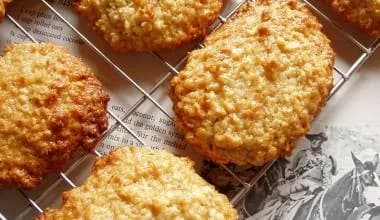
Makroud el louse is the almond version of makroud, and it is a genuinely different cookie from the one that name usually brings to mind. Ordinary makroud is a semolina pastry stuffed with date paste and deep-fried, then soaked in syrup. Makroud el louse has no semolina, no dates and no frying: it is ground almonds, sugar and egg, shaped, baked, dipped in an orange-flower syrup and rolled in icing sugar.
"Louse" is the Algerian word for almond, so the name simply distinguishes the almond one. Both are cut on the diagonal into the same lozenge shape, which is where the shared name comes from, makroud derives from the Arabic for something cut at an angle. The shape is the family resemblance; the ingredients are not.
Because there is no flour in the dough, this version is naturally gluten-free, which is unusual among North African pastries and is worth knowing if you need it. One caution: the source's own instructions send you to a floured work surface, which would undo that. Use icing sugar or a little extra ground almond instead.
These are keeping cookies. Sealed in a tin they hold for over a month, which is why they are made in quantity for Eid, Ramadan and weddings rather than a few at a time.
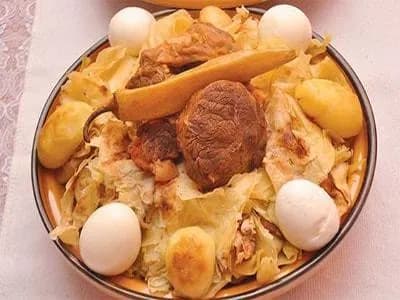
Chekhchoukha, also written chakhchoukha, is torn flatbread under a spiced meat and chickpea sauce, and the name describes the tearing. It comes from tacherchert in the Chaouia language, meaning to crumble or to tear into small pieces, and the bread is broken by hand rather than cut.
It is a Chaoui dish, from the Aurès mountains of eastern Algeria, and it spread from there into Constantine, Biskra and the rest of the country. Its origin is in shepherds' food, the substantial thing eaten on returning home on cold winter nights, and it kept that character even as it became a dish for festive occasions and celebrations rather than everyday eating.
The bread is rougag, also called trid, a very thin round flatbread made from fine semolina. It is torn, steamed briefly to soften, then heaped on a plate and covered with marqa, the sauce of diced lamb, tomato, onion and chickpeas spiced with dried red chilli, caraway, ras el hanout, black pepper and cumin. Two versions are recognised: chakhchoukha of Biskra, which is this one, and chakhchoukha dfar, which uses a different flatbread and differs in taste and thickness. Which pot it is made in also varies, with some cities using clay and others iron.
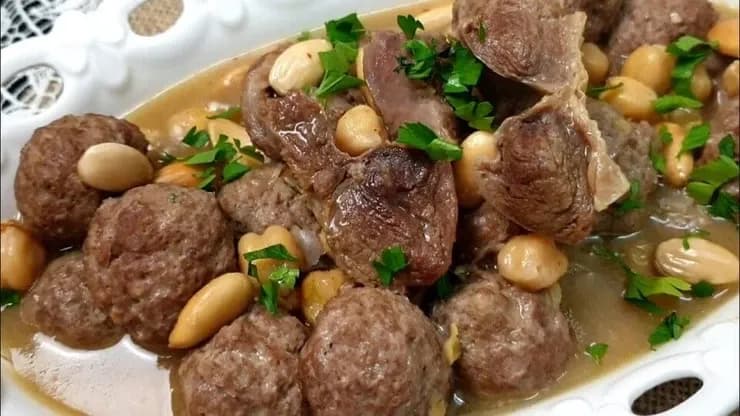
Mtewem is an Algerian dish of meatballs and meat cooked together with chickpeas in a garlic heavy sauce, and the name says exactly what it is. Mthawem derives from the Arabic for garlic, and the quantity used is the point rather than an aromatic detail.
It belongs to Algiers, where the original preparation is made with a white sauce, and it appears at the occasions that matter: Ramadan evenings, weddings and celebrations. Most families now make it with a red tomato based sauce, which has become the more common version, and cooks disagree about which is correct in the way that families always do about a dish attached to celebration.
Cumin carries it alongside the garlic. The meatballs are formed small, about the size of a walnut, and are added to the sauce only after the meat and chickpeas have already cooked, so they poach gently rather than breaking up. Some households press a blanched almond into the centre of each one, a touch that belongs to the wider North African habit of hiding something in a dish for the person who finds it. Cinnamon divides opinion and is entirely optional.
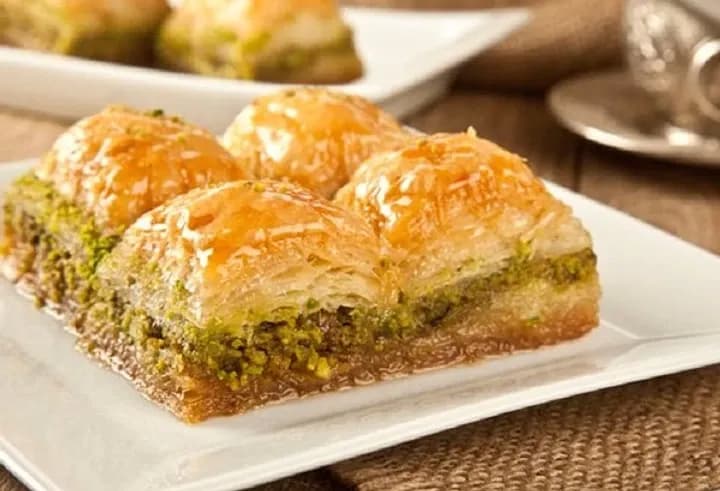
Baklawa is layered phyllo pastry filled with crushed nuts and soaked in honey syrup, and in Algeria it is festive food, made for occasions rather than everyday. It is an Ottoman inheritance, and versions of it are made from the Balkans to Egypt under closely related names.
The regional differences are real. Turkish fistikli baklava is made with pistachios and a simple sugar syrup. Middle Eastern versions scent the syrup with rosewater. Greek baklava uses walnuts with a generous quantity of cinnamon. The Algerian version leans on almonds and walnuts with honey, and this recipe follows the walnut and cinnamon line, which sits closer to the Greek than to the Turkish.
Three components make it, and thinking about it that way makes it manageable: the phyllo, the nut mixture, and the syrup. The rule that decides whether it works is temperature. Cooled syrup goes onto hot pastry, never hot onto hot, and you should hear it sizzle when it hits. Get that wrong and the layers go soggy instead of staying crisp. It then needs four to six hours, or overnight, for the syrup to work through, so it cannot be made and served the same afternoon.