


Berkoukes
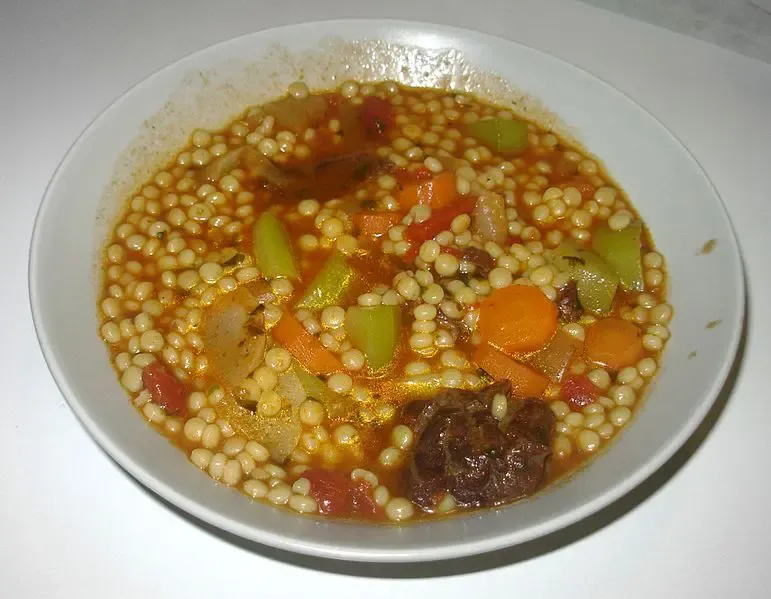
Berkoukes is both a pasta and the dish made from it. The pasta is hand-rolled semolina in small balls, larger than couscous and smaller than a pea, and the dish is the Algerian Berber stew built around it with meat, seasonal vegetables and pulses. It has several names depending on region: aïche, m'hamessa, abazine. The distinction between berkoukes and m'hamsa is size, with berkoukes the larger balls and m'hamsa the smaller. The grains are rolled by hand in a wide dish, traditionally wood or earthenware and now usually metal, which is slow work and why most households buy it ready made. It is winter food and it carries a season. Berkoukes is eaten in Algeria and northeastern Morocco through the cold months and particularly in January, when it marks the harvest of beans, dried fruit and meats, and it reads as a dish of abundance and generosity. The Kabylia version includes quedid, the dried meat also called achadhelouh, along with khlili, the dried mutton fat, and cultured smen. It is served with kesra or another rustic country bread. The source struggles for a word for its consistency and settles on scoup, which is fair: it is too thick for soup and too brothy for stew.
Algeria1 hr 20 minBlessing