Nous utilisons des cookies essentiels au fonctionnement du site. Nous aimerions aussi déposer des cookies de mesure d’audience et des cookies publicitaires, uniquement avec votre accord. Vous pouvez choisir séparément pour chacun. Lire notre politique relative aux cookies
Loading
Recettes
Parcourez les archives par pays, par plat et par temps de cuisson.
Oyster mushrooms grilled and tossed in suya spice. It is a plant-based version of the Nigerian street food, and it works better than most meat substitutions do.
**The traditional suya spice contains ground peanuts, and this recipe includes them.** The source flags it and offers to leave them out, which is honest, but it is worth stating clearly, because a peanut allergy and a suya spice blend are a genuinely dangerous combination and the name gives no warning.
Suya proper is skewered beef, ram or chicken rubbed in yaji, the spice blend of ground roasted peanuts, ginger, cayenne, garlic, onion powder and paprika, and grilled over open coals. It is Hausa in origin, from northern Nigeria, and it is sold across Nigeria, Cameroon, Niger, Ghana and parts of Sudan. Kyinkyinga is the Ghanaian name, agashe the Sudanese.
Oyster mushrooms are the right substitution and not an arbitrary one. Shredded, they have a fibrous, layered structure that genuinely resembles pulled meat, they take on the dry rub readily, and they char well. Most vegetables do neither.
The source's method is very compressed, one step reads "put in a preheated medium", with the word oven missing, and has been filled out below.
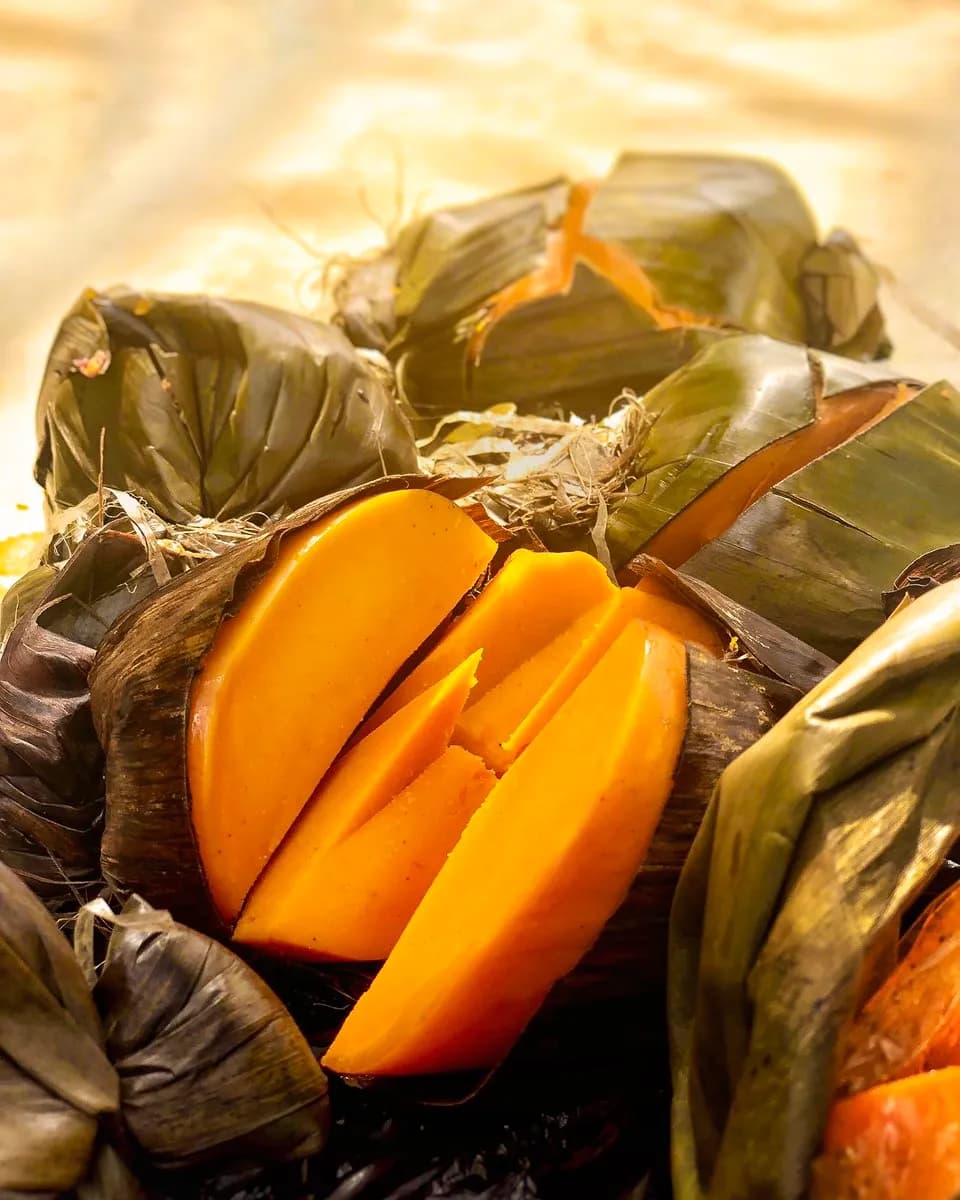
Okpa is a steamed pudding of Bambara nut flour and palm oil, wrapped and cooked in boiling water until it sets solid. It is the street food of Enugu, and anyone travelling into the city from Onitsha or Lagos will hear the sellers calling okpa di oku, meaning okpa is hot.
Bambara groundnut is an indigenous African legume, grown long before peanuts arrived from South America, and it is the same nut behind several dishes across the continent. It is known as jugo beans in southern Africa, and okpa itself is also called igba and ntucha. The seeds come in small pods and are extremely hard, so hard that domestic grinders cannot handle them and only industrial mills will do the job. That is why okpa flour is bought rather than made.
Restraint is the principle. Bambara nuts have a good flavour of their own, and the source is emphatic that adding onions and crayfish ruins it, which is unusual advice in Nigerian cooking where those two go into almost everything. Palm oil, salt, stock cubes and pepper are the whole seasoning. The mixture looks alarmingly watery when mixed, and that is correct. The ratio in the recipe gives the right texture, and using less water produces something rock hard.
Wasawasa is made from yam peelings. Not yam, but the skin that most kitchens discard: dried, ground into flour, and steamed into a coarse grain that eats something like couscous. It is a dish that exists because nothing was wasted, and it has outlived the scarcity that produced it to become a food people specifically want.
It belongs to Dagbon and the wider north of Ghana, and it is eaten in Burkina Faso and other parts of West Africa under related names. In Tamale and across the northern region it is street food and household food at once, sold with a hot pepper sauce and fried fish and often garnished with cabbage, carrot and sliced potato.
The steaming happens twice, with a wash in between, which is the technical heart of the dish and the part that cannot be shortened. The flour is moistened until it forms small lumps, steamed, washed, drained, and steamed again on low heat, and only then is it dressed with groundnut oil and salt. That second steam is what turns it from damp meal into separate grains. It is served with beans, pasta or salad as well as the standard pepper sauce and fish, and it makes a full plate from an ingredient that costs almost nothing.
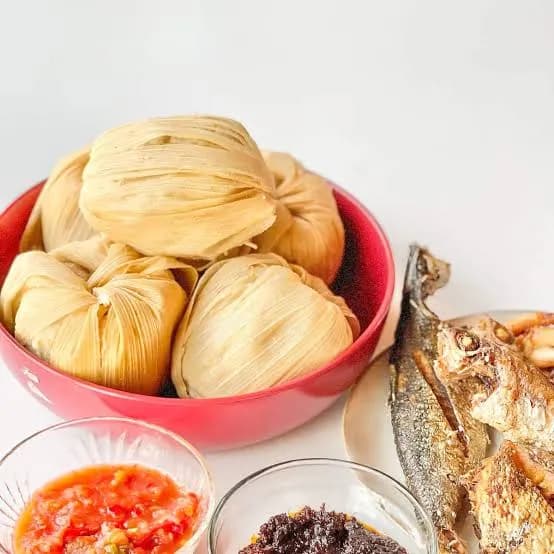
Kenkey is fermented maize dough, wrapped in banana leaf or corn husk and steamed into firm parcels. It is sour, and the sourness is the whole character of it. The fermentation runs one to three days before anything is cooked, and a kenkey that has been rushed is immediately identifiable to anyone who eats it regularly.
It comes from the Ga people of Accra and the surrounding coast, who have been making it for centuries, and it has spread across Ghana without losing that origin. Ga kenkey and Fante kenkey are recognised as distinct: the wrapping differs, and so does the ratio of fermented to fresh dough, which changes how sour the finished parcel is.
Kenkey is street food in the most functional sense. It is bought in its wrapping, which serves as the plate, and eaten with fried fish, shito and a raw pepper and tomato grind, standing up or sitting on a bench. The wrapping is not presentation; it is what the dough is steamed in and what keeps it for days without refrigeration. That combination of sour dough, hot pepper and fried fish is one of the most recognisable plates in West Africa.