Nous utilisons des cookies essentiels au fonctionnement du site. Nous aimerions aussi déposer des cookies de mesure d’audience et des cookies publicitaires, uniquement avec votre accord. Vous pouvez choisir séparément pour chacun. Lire notre politique relative aux cookies
Loading
Recettes
Parcourez les archives par pays, par plat et par temps de cuisson.
Boeber is a Cape Malay sweet milk drink, thick with vermicelli and sago and scented with cardamom, cinnamon and rose water. It sits somewhere between a drink and a pudding, and Cape Town households do not find the ambiguity a problem.
Its place in the calendar is precise. Boeber is served on the fifteenth night of Ramadan, marking the midpoint of the fast for those who have completed the first fifteen days. That single fixed date gives it a weight that a dish eaten year round does not carry: it belongs to a moment, and its appearance signals that the moment has arrived.
The drink comes from the Cape Malay community, whose ancestors were brought to the Cape from Indonesia, India and East Africa, and boeber carries the marks of all three. It has close relatives across that map. Malaysians break the fast with bubur lambuk, a porridge; Trinidadian households serve sawine at Eid al-Fitr; kheer and payasam on the Indian subcontinent are its nearest kin, most likely carried to the Cape by enslaved and later indentured Indians. In South Africa itself, the Afrikaans melkkos is the comparable dish. Boeber is what all of those became in one place.
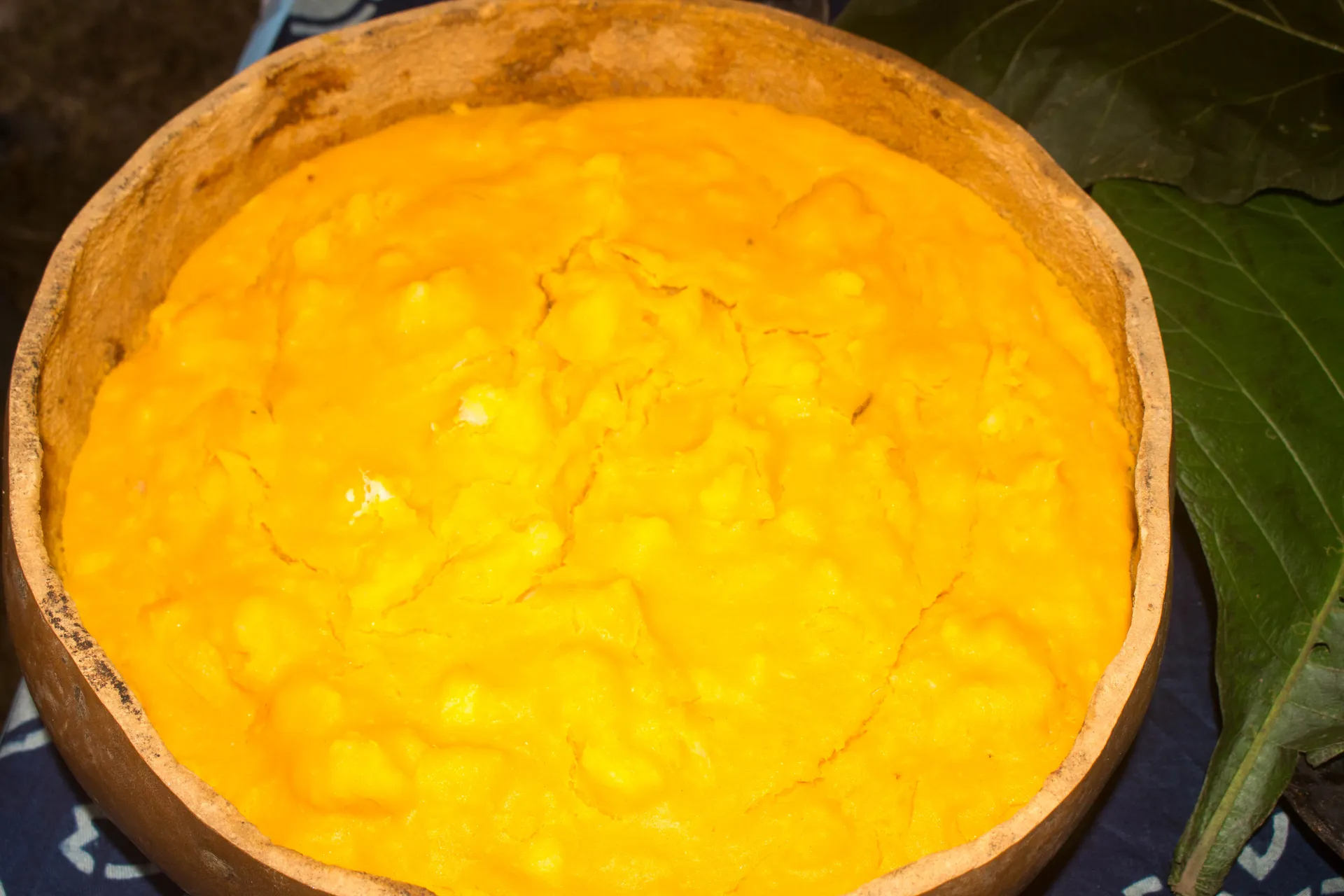
Yam is not simply a staple crop among the Igbo of south-eastern Nigeria. It is the crop, tied to land, status and the agricultural calendar in a way no other food is, and the yam that goes into this porridge carries that weight into an ordinary weekday meal.
Yam porridge is the most direct way to eat it. Slices are cooked until they begin to break down and thicken their own liquid, so the dish is both the yam and the sauce it makes. What marks the version out as Igbo rather than as one of the several other Nigerian yam pottages is the seasoning: ogiri, the fermented seasoning made from oil bean or melon seed, and uziza leaves, whose peppery aroma goes in at the very end. Palm oil supplies the colour and the richness, crayfish the savoury base.
Ogiri is the ingredient that decides the dish. Its fermented depth is what separates an Igbo yam porridge from a Yoruba or Hausa preparation of the same root, and households that leave it out are making something else. The porridge is eaten at breakfast and as a light lunch, and it belongs to ordinary domestic cooking rather than to any occasion.
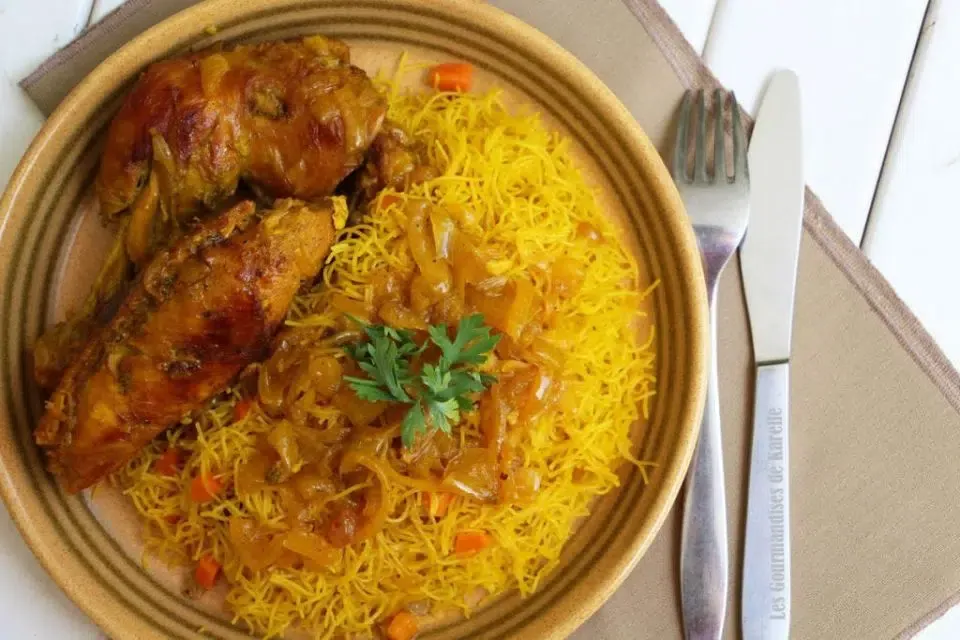
Vermicelle poulet is Senegalese celebration food that happens to be very easy to make, which is an unusual combination. Broken rice vermicelli is toasted in butter and steamed, and braised chicken in a mustard and onion sauce is served over it. That is the whole dish.
It appears at weddings, baptisms and the gatherings that mark occasions, and it is found in the most modest Senegalese households and in the country's best restaurants without much changing between them. Its status comes from the vermicelli rather than the technique, since imported wheat and rice noodles carried a cost and a cachet that plain rice did not.
The sauce is the Senegalese signature. Yellow mustard and onion cooked down together, sharpened with vinegar, is the same base that carries chicken yassa, and it is one of the most recognisable flavour combinations in the country's cooking. The mustard is not a French borrowing so much as a French ingredient absorbed completely into a Senegalese idiom. Thickened lightly with flour and spooned over toasted vermicelli, it makes a dish that looks like far more work than it is.
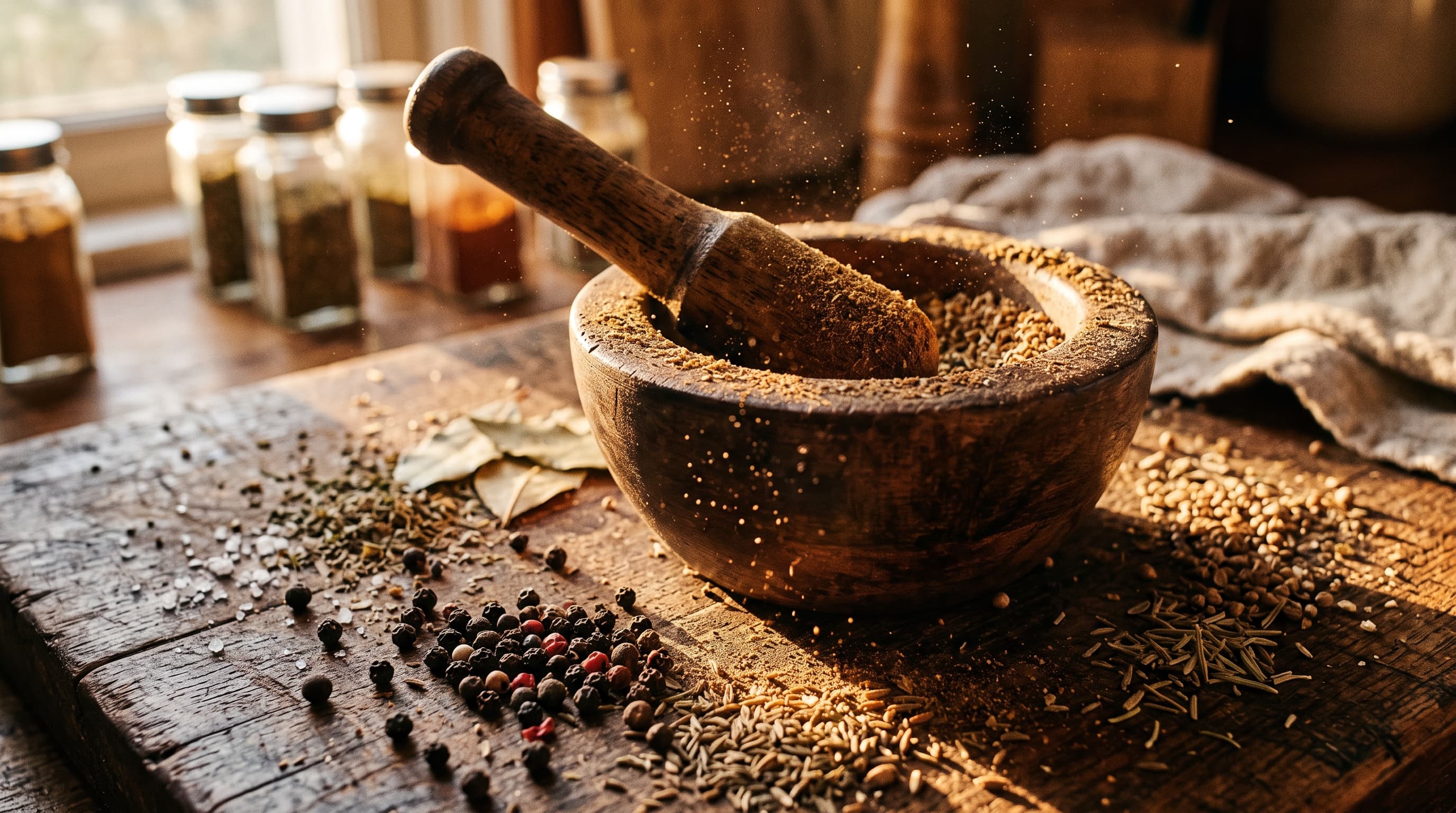
Pilau is the spiced rice of the East African coast: rice cooked with cumin, cardamom, cloves, cinnamon and turmeric until every grain carries the spice. It is celebration food across Kenya, Tanzania, Uganda and Zanzibar, made for weddings, for Eid, and whenever a guest of consequence arrives.
It reached the Swahili coast through centuries of Indian Ocean trade, and the family it belongs to runs from Persian polow through Central Asian plov to South Asian pulao. The East African version is milder than the Indian one and does not use curry, which is the distinction the source draws and it is a fair one. The defining spice mix has its own name, pilau masala, and there is a recipe for it on this site.
An important note about this page. Its written description is of a full pilau: caramelised beef, potatoes, tomatoes and pilau masala simmered in meat stock. The recipe card attached to it is something else entirely, a plain spiced rice with no meat, no potatoes and no stock. The recipe below follows the card, since that is the actual recipe on the page, and the result is a good vegetarian side dish. It is not, however, the celebratory beef pilau the description promises.
Browning the onions properly is the step that matters most in either version.