Nous utilisons des cookies essentiels au fonctionnement du site. Nous aimerions aussi déposer des cookies de mesure d’audience et des cookies publicitaires, uniquement avec votre accord. Vous pouvez choisir séparément pour chacun. Lire notre politique relative aux cookies

Loading
Recettes
Parcourez les archives par pays, par plat et par temps de cuisson.
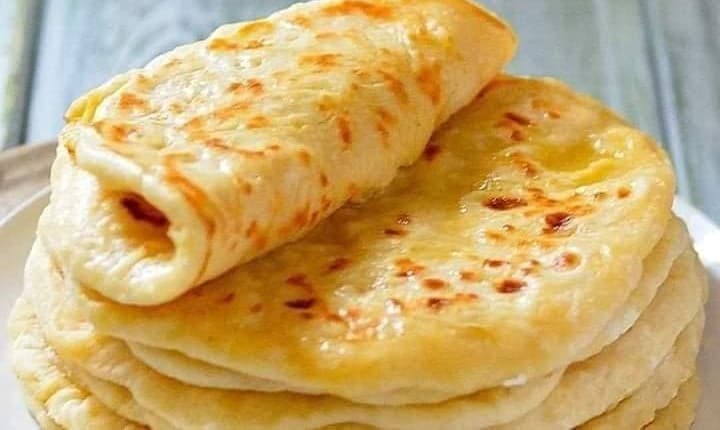
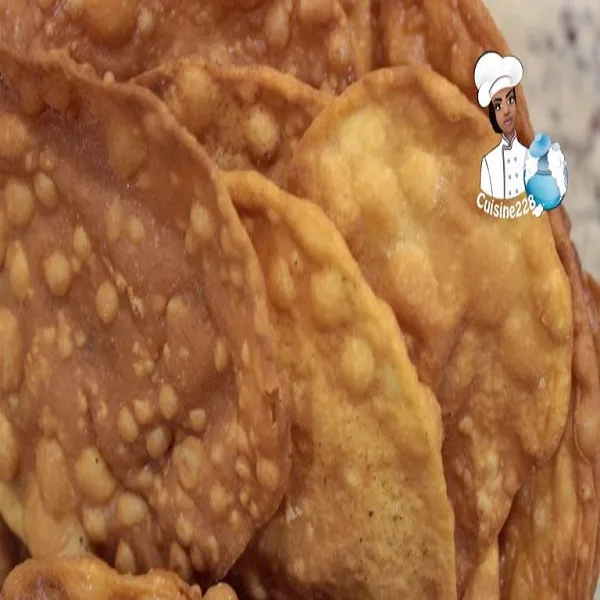
The Nigerian pancake, known colloquially as diet, is thin, dense and slightly crisp at the edges, and it is savoury as often as it is sweet. Onion and ground pepper go into the batter alongside the sugar, which produces something no other pancake tradition attempts: sweet, savoury and faintly hot in the same mouthful.
It sits a long way from the thick fluffy pancake of the American breakfast table. There is no raising agent and no attempt at height. The batter is loose, the pan is tilted to spread it thin, and the result has a dense bite and a lacy edge. Nigerians eat it at breakfast with tea, and just as readily as an afternoon snack with a cold drink.
What it is served with follows the same double logic as the batter. Honey, sugar, condensed milk, peanut butter and fresh fruit on the sweet side; pap, custard, oats and yogurt drinks such as kunu aya or zobo alongside. It is home food and street food at once, cheap to make from things most Nigerian kitchens already hold, and it belongs to no particular region of the country, which is unusual enough to be worth noting.
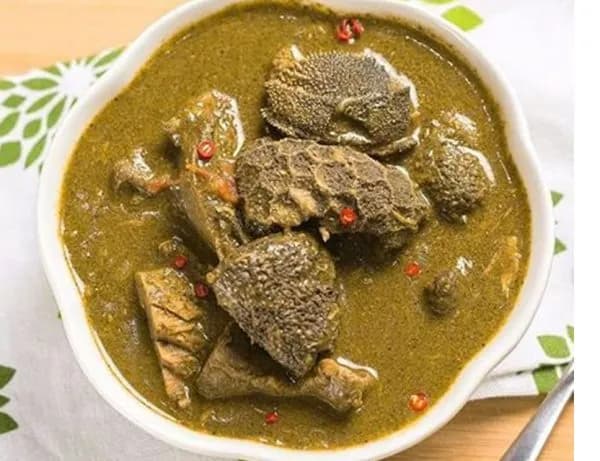
Miyan kuka is Hausa soup made from powdered baobab leaves, and it is the one Northern Nigerian dish that people warn you about before they serve it. It is dark green, mucilaginous and thick, and it does not look like anything anyone finds appetising on first sight. Northerners are entirely aware of this and serve it anyway, because the taste is not in dispute even where the appearance is.
Kuka is the dried and ground leaf of the baobab, sold as a dark green powder in markets across the north and instantly recognisable to anyone who has shopped there. The powder is whisked into a seasoned stock at the very end of cooking, which is where the soup gets both its body and its drawing texture. It is also called luru.
Nigeria's soups map closely onto its peoples, and miyan kuka is the north's entry in that map: Yoruba households have ewedu, Igbo have ofe ugba, Edo have bitter leaf soup, the riverine south has fisherman soup. Miyan kuka is eaten with tuwon shinkafa, tuwon dawa or any swallow, and it is one of the dishes that is genuinely better on the second day, which is a claim its cooks make readily and which holds up.
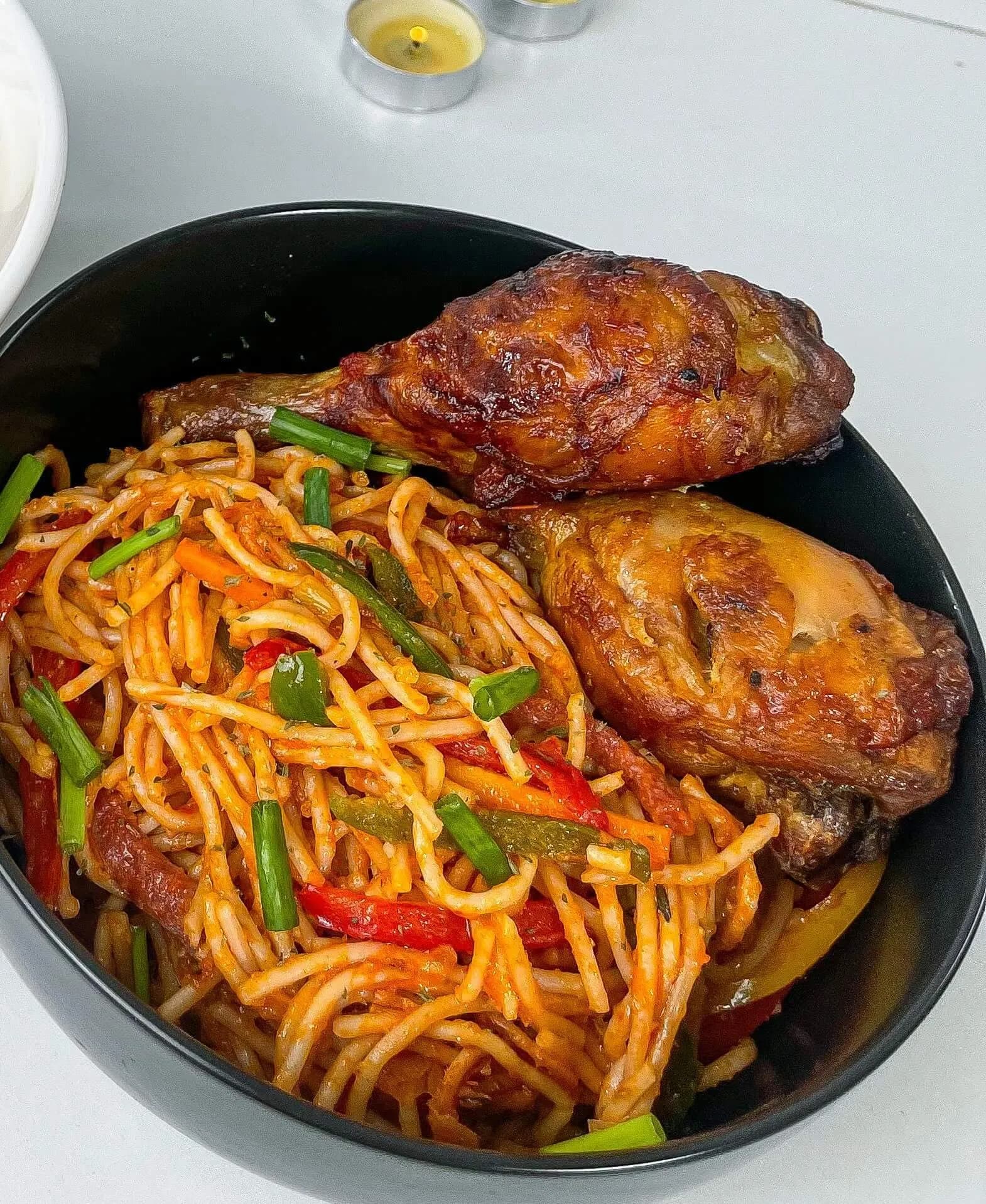
Jollof spaghetti applies the jollof method to pasta, and it is one of the most widely made contemporary dishes in Nigerian home kitchens. The pepper base is built exactly as it would be for rice, with blended tomato, tatashe and scotch bonnet reduced in oil with onion, ginger and garlic, and the spaghetti is finished in it so the strands take on the colour and the flavour rather than merely wearing it.
Spaghetti arrived in Nigeria through mid twentieth century trade and has become one of the country's most eaten starches, particularly in urban households where it is quick and cheap. What Nigerians did with it is characteristic: rather than adopting Italian technique, they applied their own most important cooking method to it. The same has happened with jollof couscous, jollof penne and jollof noodles.
It is weekday food rather than occasion food. Where jollof rice is the centrepiece of a party, jollof spaghetti is what gets made on a Tuesday, often with sausage or leftover chicken and whatever vegetables are in the house. It is served with eggs, fried plantain or chicken, and its status as a real Nigerian dish rather than a novelty is no longer in question among the people who eat it.
Ogi is fermented cereal porridge, sour, smooth and pale, and it is among the first things most Nigerians ever eat. It is called akamu in Igbo and pap in English, and it is made from maize, sorghum or millet steeped in water for up to three days, wet milled, sieved to remove the husks, and then fermented for several more days until it turns distinctly sour.
That sourness is the point and it is what separates ogi from any other cereal porridge. It also does real work: fermentation makes the grain more digestible and gives ogi a probiotic character, which is a large part of why it has been the standard weaning food for Nigerian infants for generations and why it is given to people who are unwell or recovering.
The same base goes in two directions. Thinned and cooked, it is the porridge eaten at breakfast with akara, moin moin, fried plantain or bread. Cooked much thicker and left to set, it becomes agidi or eko, sliced and eaten with pepper soup or stew. Across the region the names change without the thing changing much: koko in Ghana, uji in Kenya, where it is more often made from millet and sorghum. Three grains are used in Nigeria, and white corn, yellow corn and guinea corn each give a slightly different result.