Nous utilisons des cookies essentiels au fonctionnement du site. Nous aimerions aussi déposer des cookies de mesure d’audience et des cookies publicitaires, uniquement avec votre accord. Vous pouvez choisir séparément pour chacun. Lire notre politique relative aux cookies

Loading
Recettes
Parcourez les archives par pays, par plat et par temps de cuisson.
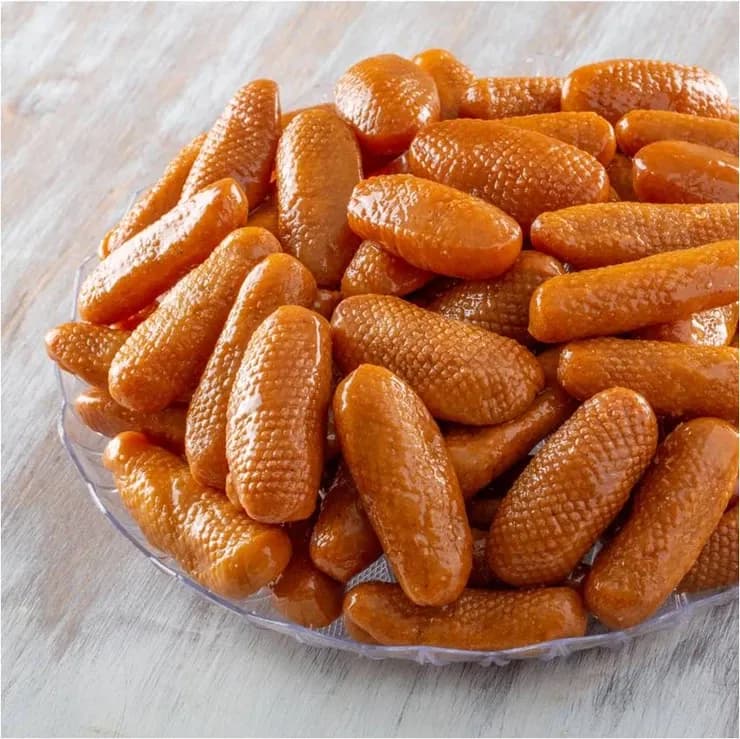
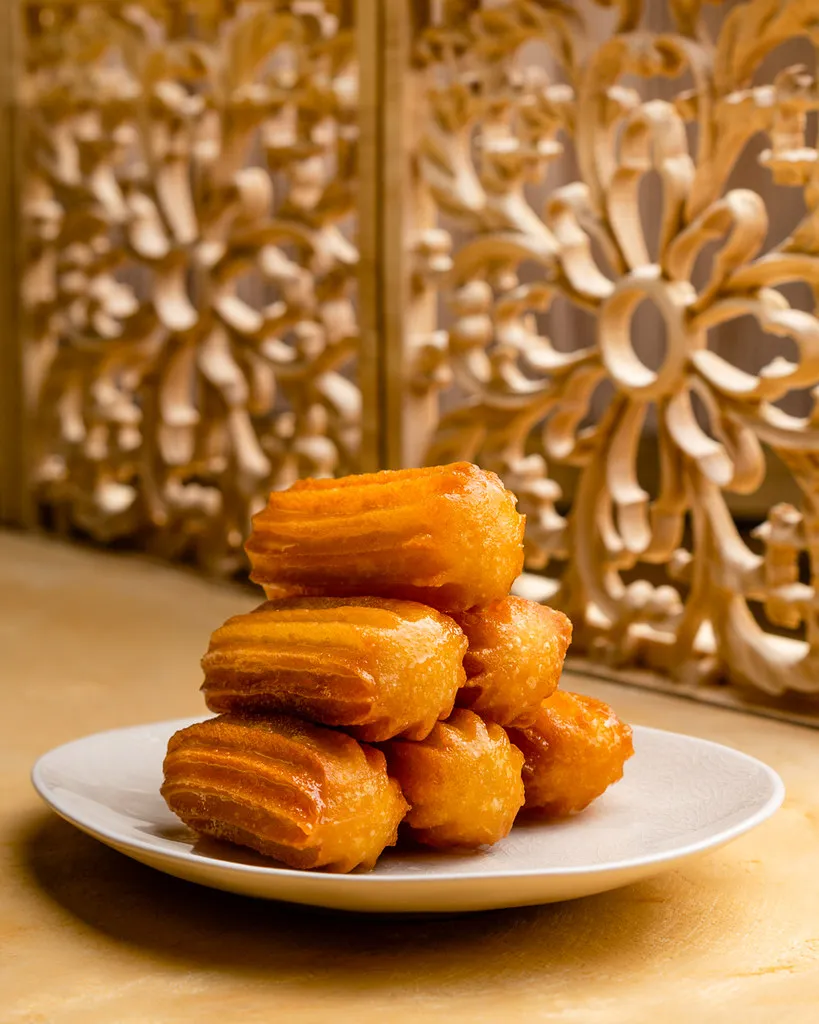
Makroud is a North African semolina pastry, filled, cut into diamonds, fried and then soaked in honey syrup. Diamond is the literal meaning of the word, and the shape is the point of the name.
It belongs principally to Algeria and Tunisia, and it is also made in parts of Morocco, Libya and Malta. Where exactly it began is contested. Some accounts place it in the oases of Mzab and the steppes of Sétif in Algeria; others link it to Kairouan, the spiritual capital of Tunisia, which hosted the first national makroud festival in May 2008. It is written variously as makrout, maqroudh and maqrouth.
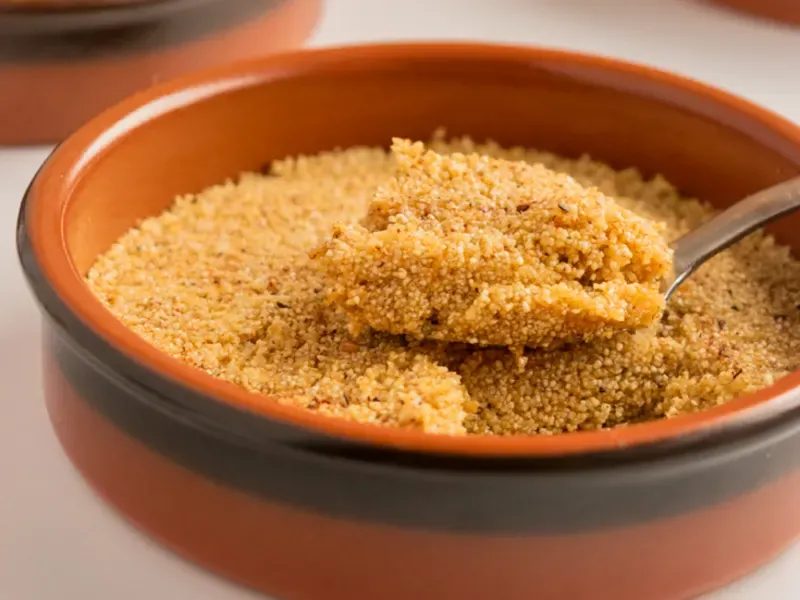
The filling is the thing that varies most and the thing this recipe departs on. Traditional makroud is packed with dates, and figs and almonds appear as alternatives. **This recipe uses an almond filling rather than the date one**, which is a legitimate variation but not the classic. The semolina base is where the technique lives: it is rubbed with oil and butter and rested for at least two hours, ideally overnight, until it resembles wet oily sand. That rest is not optional. It is what allows the dough to come together with very little water and stay tender rather than tough.
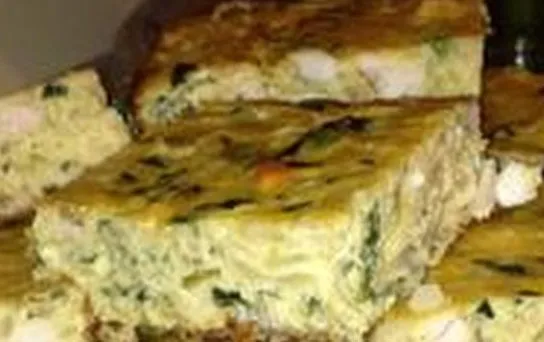
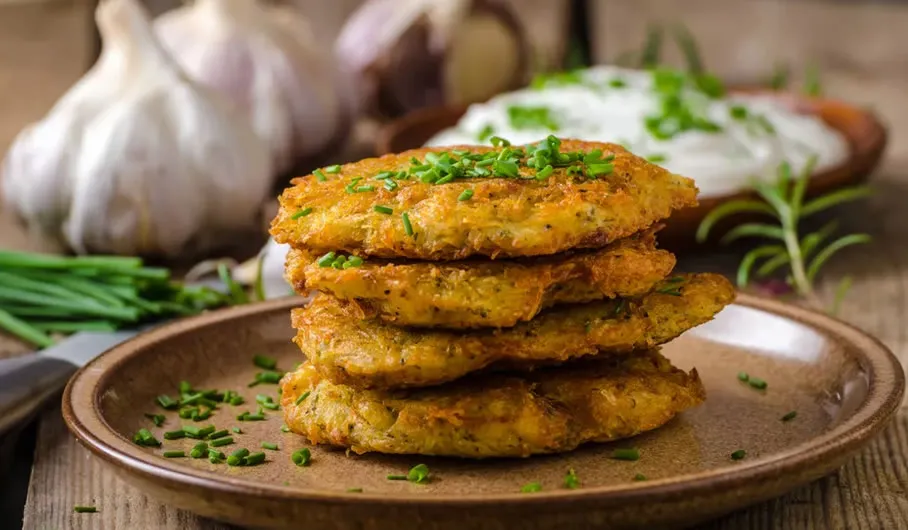
Maakouda is a Moroccan potato cake, mashed potato bound with egg and herbs, floured and deep fried until the outside crisps and the inside stays soft. It is street food, sold cheap and eaten either on its own or stuffed into a small baguette.
Meknes is where it is most associated, and the city is described as the wine capital of North Africa. Maakouda is sold from stalls there and across the country, and it appears in Algeria and Tunisia too under the same set of spellings: maaqouda, maqouda, makouda. The comparison the source draws is with falafel, and it holds up: a cheap fried snack, sold from a stall, eaten in bread. It has simply never travelled the way falafel has.
Ras el hanout is what marks it as Moroccan rather than a generic potato cake. The blend is optional in this recipe and the source strongly recommends it, and turmeric gives the colour. It is also a practical way to use up leftover mashed or baked potato, which is much of how it is made at home. Deep frying is traditional; the oven and the air fryer both work and are given as alternatives.
Zalabya are small round balls of yeasted batter, deep-fried until crisp and dipped briefly in cold sugar syrup. They are Egyptian street food, sold from kiosks all over the country for very little, and they are eaten most of all during Ramadan.
The source's description is the best one: think of them as the round part that is missing from a doughnut. They are crunchy outside and light and airy inside, and the syrup is absorbed only into the outer layer, so biting into one gives a burst of sweetness against a plain interior rather than sweetness all the way through.
The names travel. Loukoumades in Greece, lokma in Turkey, zalabya or zalabia in Egypt, and loqmet al-qadi, the judge's bite, across the Arabic-speaking world. Versions are eaten all around the Mediterranean and into South Asia, where jalebi is a related but differently shaped relative.
The batter is very wet, closer to a thick pouring batter than a dough, and that is what makes them light. It is dropped by the spoonful straight into the oil rather than shaped.
The syrup should be cool when the hot balls go in, for the same reason as koeksisters: the temperature difference draws it in.
The source's ingredient list has run its headings into the list and one water quantity is malformed.
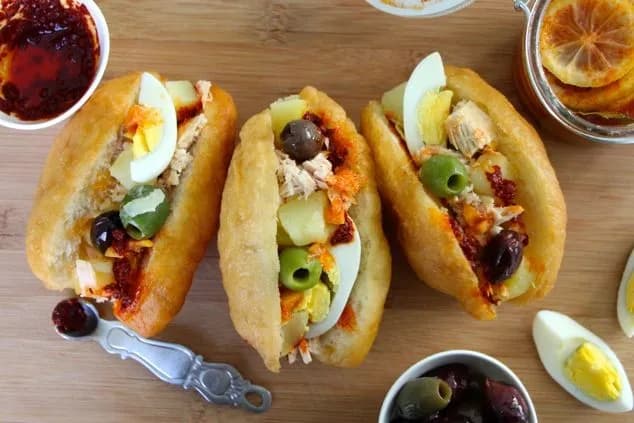
A fricassé is a small oval roll of enriched dough, deep-fried and then split and packed with tuna, potato, olives, egg and harissa. It is Tunisian street food, and it is one of the country's most recognisable things to eat.
The word does not mean what it means elsewhere. In French, a fricassée is a braise of meat in a white sauce; in Tunisia and its diaspora it means this sandwich and nothing else. That divergence is complete enough that searching the French term will not find you the Tunisian food.
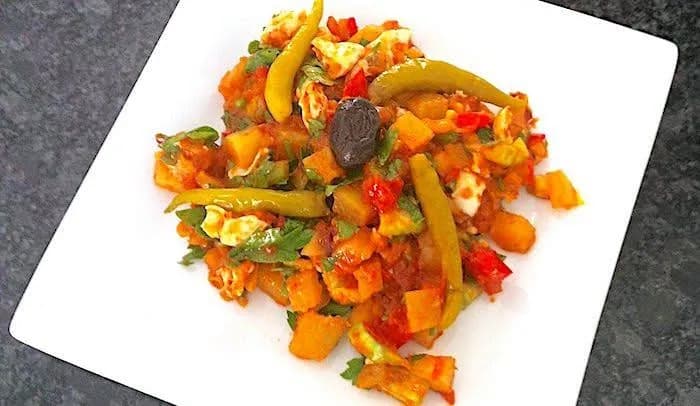
The filling is the point and it is fixed by convention rather than by recipe: tuna in olive oil, cooked potato, black olives, egg and harissa, with slata méchouia, the grilled pepper and tomato salad, very often alongside. Capers and preserved lemon appear in some versions. What matters is that the bread is fried rather than baked, which gives a rich, slightly greasy roll that stands up to a wet filling.
**A significant gap in the source.** Its ingredient list contains only the dough, yeast, water, flour, egg, oil, salt. Not one of the filling ingredients it spends its article describing appears in it. The filling below has been reconstructed from that description and flagged.
**It contains eggs and fish.**