Nous utilisons des cookies essentiels au fonctionnement du site. Nous aimerions aussi déposer des cookies de mesure d’audience et des cookies publicitaires, uniquement avec votre accord. Vous pouvez choisir séparément pour chacun. Lire notre politique relative aux cookies
Loading
Recettes
Parcourez les archives par pays, par plat et par temps de cuisson.
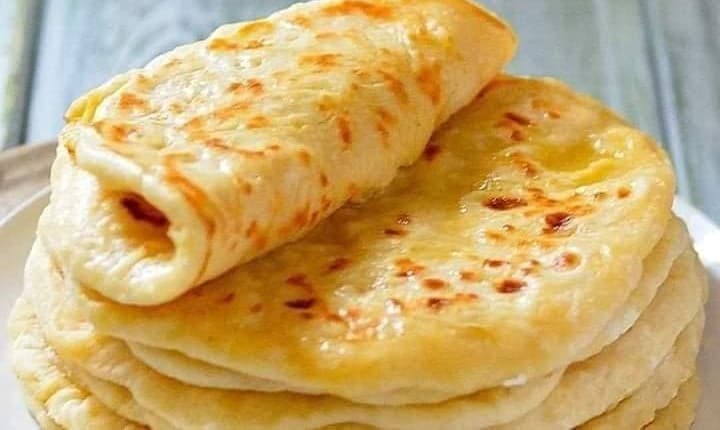
The Nigerian pancake, known colloquially as diet, is thin, dense and slightly crisp at the edges, and it is savoury as often as it is sweet. Onion and ground pepper go into the batter alongside the sugar, which produces something no other pancake tradition attempts: sweet, savoury and faintly hot in the same mouthful.
It sits a long way from the thick fluffy pancake of the American breakfast table. There is no raising agent and no attempt at height. The batter is loose, the pan is tilted to spread it thin, and the result has a dense bite and a lacy edge. Nigerians eat it at breakfast with tea, and just as readily as an afternoon snack with a cold drink.
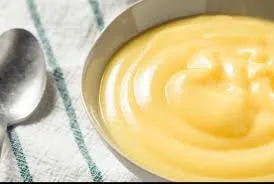
What it is served with follows the same double logic as the batter. Honey, sugar, condensed milk, peanut butter and fresh fruit on the sweet side; pap, custard, oats and yogurt drinks such as kunu aya or zobo alongside. It is home food and street food at once, cheap to make from things most Nigerian kitchens already hold, and it belongs to no particular region of the country, which is unusual enough to be worth noting.
Ogi is fermented cereal porridge, sour, smooth and pale, and it is among the first things most Nigerians ever eat. It is called akamu in Igbo and pap in English, and it is made from maize, sorghum or millet steeped in water for up to three days, wet milled, sieved to remove the husks, and then fermented for several more days until it turns distinctly sour.
That sourness is the point and it is what separates ogi from any other cereal porridge. It also does real work: fermentation makes the grain more digestible and gives ogi a probiotic character, which is a large part of why it has been the standard weaning food for Nigerian infants for generations and why it is given to people who are unwell or recovering.
The same base goes in two directions. Thinned and cooked, it is the porridge eaten at breakfast with akara, moin moin, fried plantain or bread. Cooked much thicker and left to set, it becomes agidi or eko, sliced and eaten with pepper soup or stew. Across the region the names change without the thing changing much: koko in Ghana, uji in Kenya, where it is more often made from millet and sorghum. Three grains are used in Nigeria, and white corn, yellow corn and guinea corn each give a slightly different result.
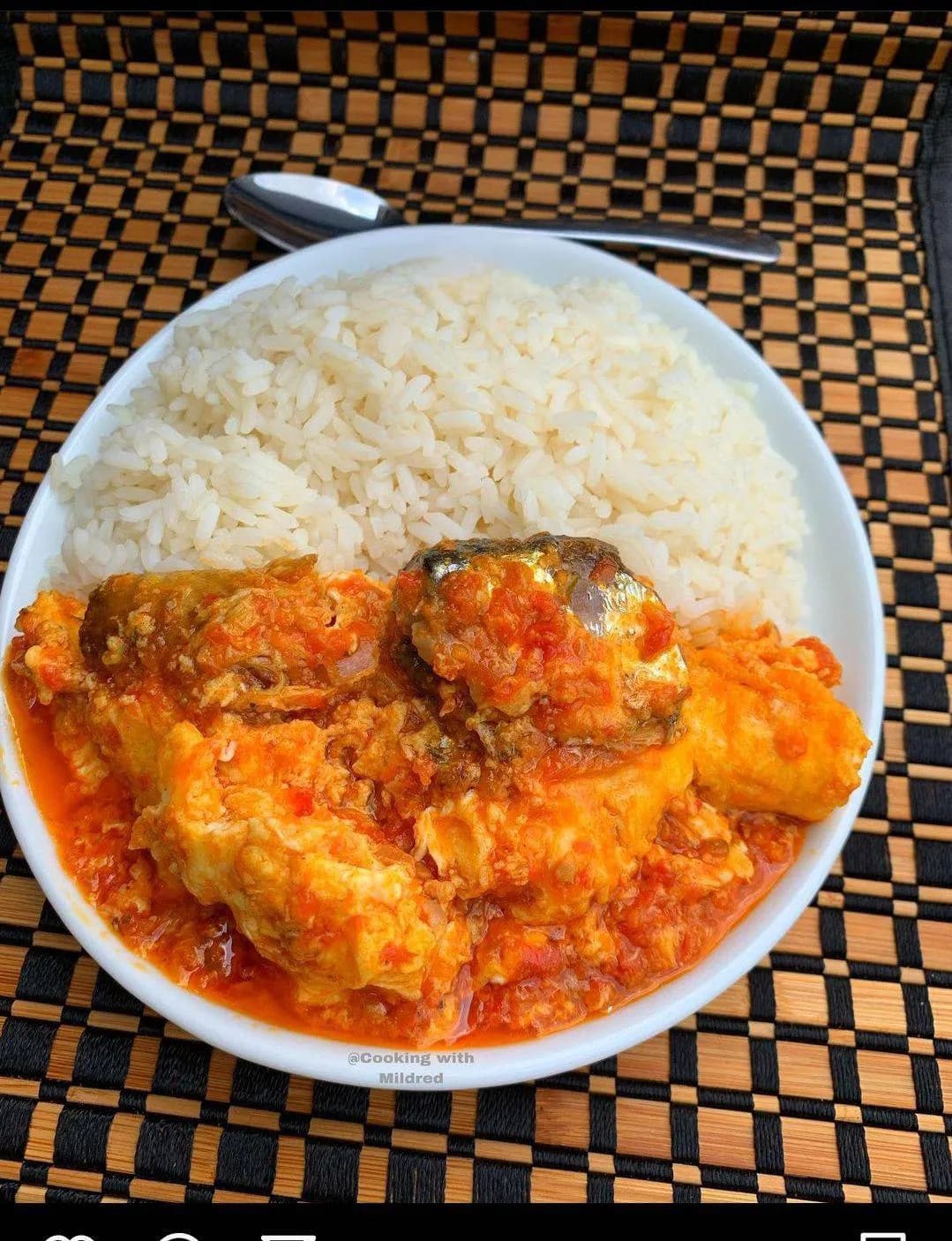
Egg stew is tomatoes, onions and eggs cooked down together with pepper, and it is made across West Africa as a fast breakfast or light meal. This version carries two additions that place it more precisely: kobi and sardines.
Kobi is salted, dried tilapia, a Ghanaian staple that is fried at the start so its salt and savour go into the oil before anything else joins it. It is one of the preserved fish that West African cooking relies on, alongside stockfish, smoked mackerel and dried prawn, and it gives a depth that fresh fish does not. Tinned sardines going in at the end is a common and thoroughly modern addition.
The source names no country, and the kobi points to Ghana without settling it, so none is attributed here. What the dish is depends on how the eggs are treated: added and left mostly alone they set in curds through the tomato base; stirred continuously they disperse and the stew turns uniform. Both are made. It is eaten with bread, yam or plantain, and it is genuinely quick, which is much of the point of it.
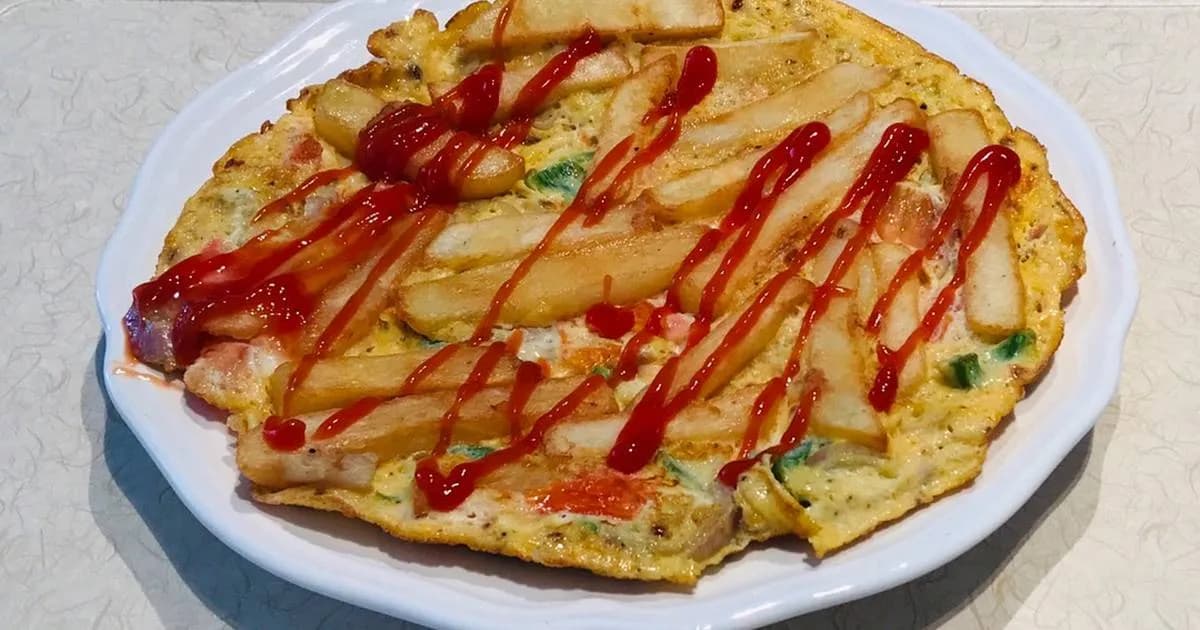
Chips mayai is chips set into an omelette and cooked as a single flat cake. The name is literal, chipsi is chips, mayai is eggs in Swahili, and it is one of the defining Tanzanian street foods, also known as zege.
It is sold from stalls across the country and cooked to order: fries already made, eggs beaten with chopped onion, tomato, green pepper and coriander, the two combined in a hot pan and turned once. Minced meat goes in where a heartier version is wanted. It arrives with kachumbari, the East African tomato and onion salad, and tomato sauce.
The comparison the source draws with Spanish tortilla is apt and worth thinking about, because the difference is instructive. A tortilla española uses potato sliced thin and cooked gently in oil until soft, folded into egg and set slowly into something dense and custardy. Chips mayai uses chips, already fried, already crisp, and cooks fast, so the potato keeps some of its structure and the egg stays lighter. Same two ingredients, entirely different results, and the potato cut is what does it.
It is eaten at any hour: breakfast, a late-night meal after drinking, or a snack in between. Nothing about it is formal.