

Nous utilisons des cookies essentiels au fonctionnement du site. Nous aimerions aussi déposer des cookies de mesure d’audience et des cookies publicitaires, uniquement avec votre accord. Vous pouvez choisir séparément pour chacun. Lire notre politique relative aux cookies
Loading
Recettes
Parcourez les archives par pays, par plat et par temps de cuisson.
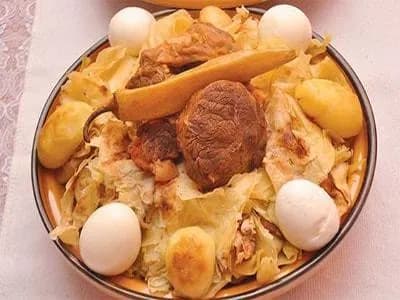
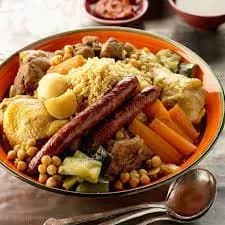
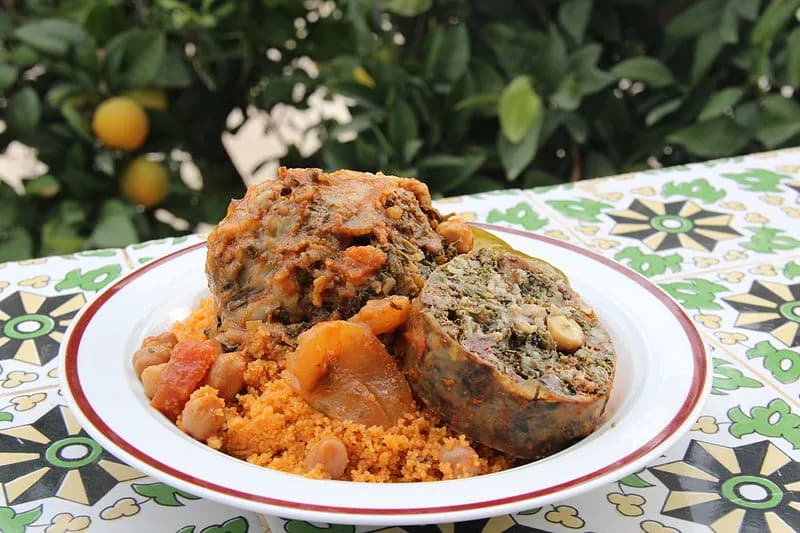
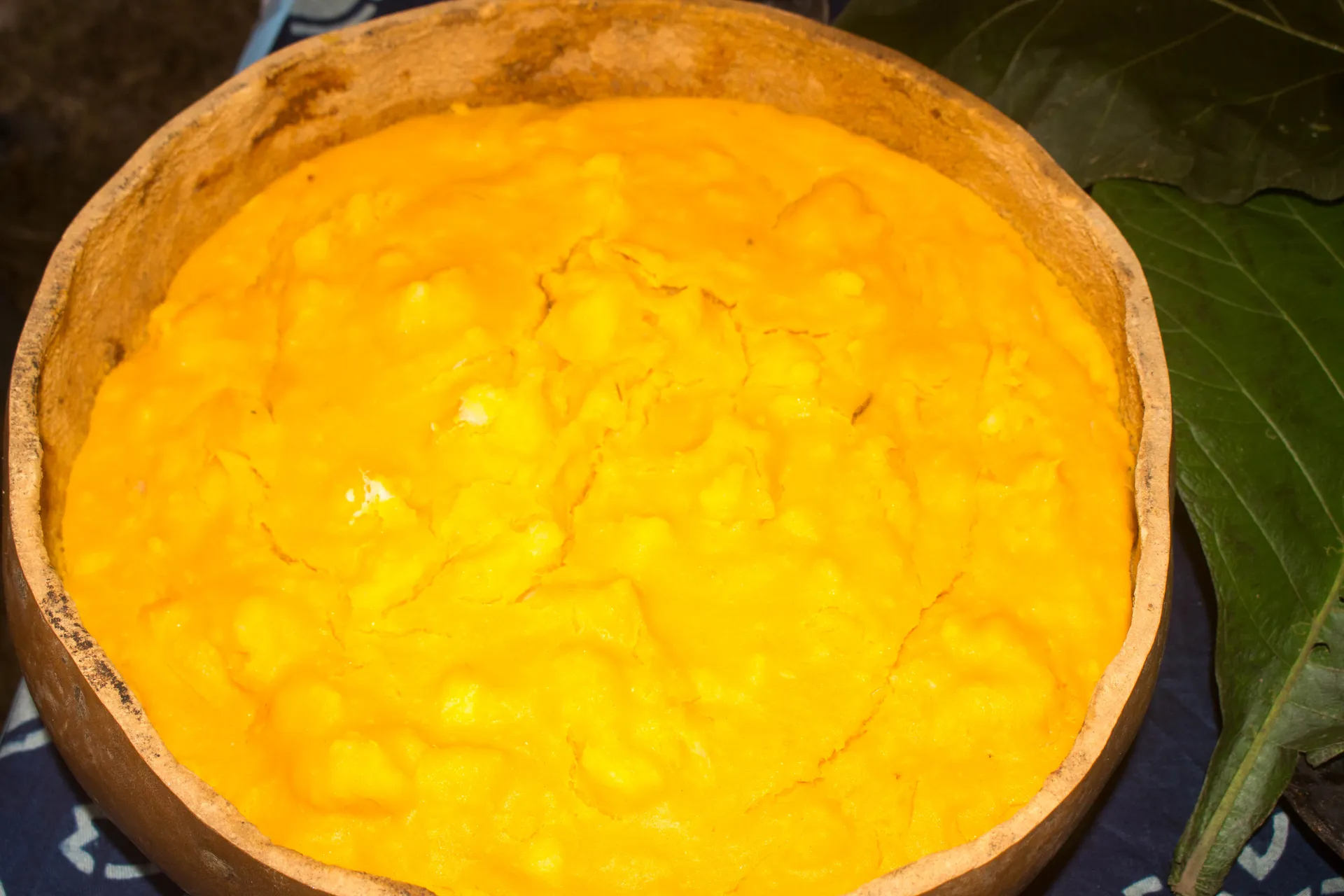
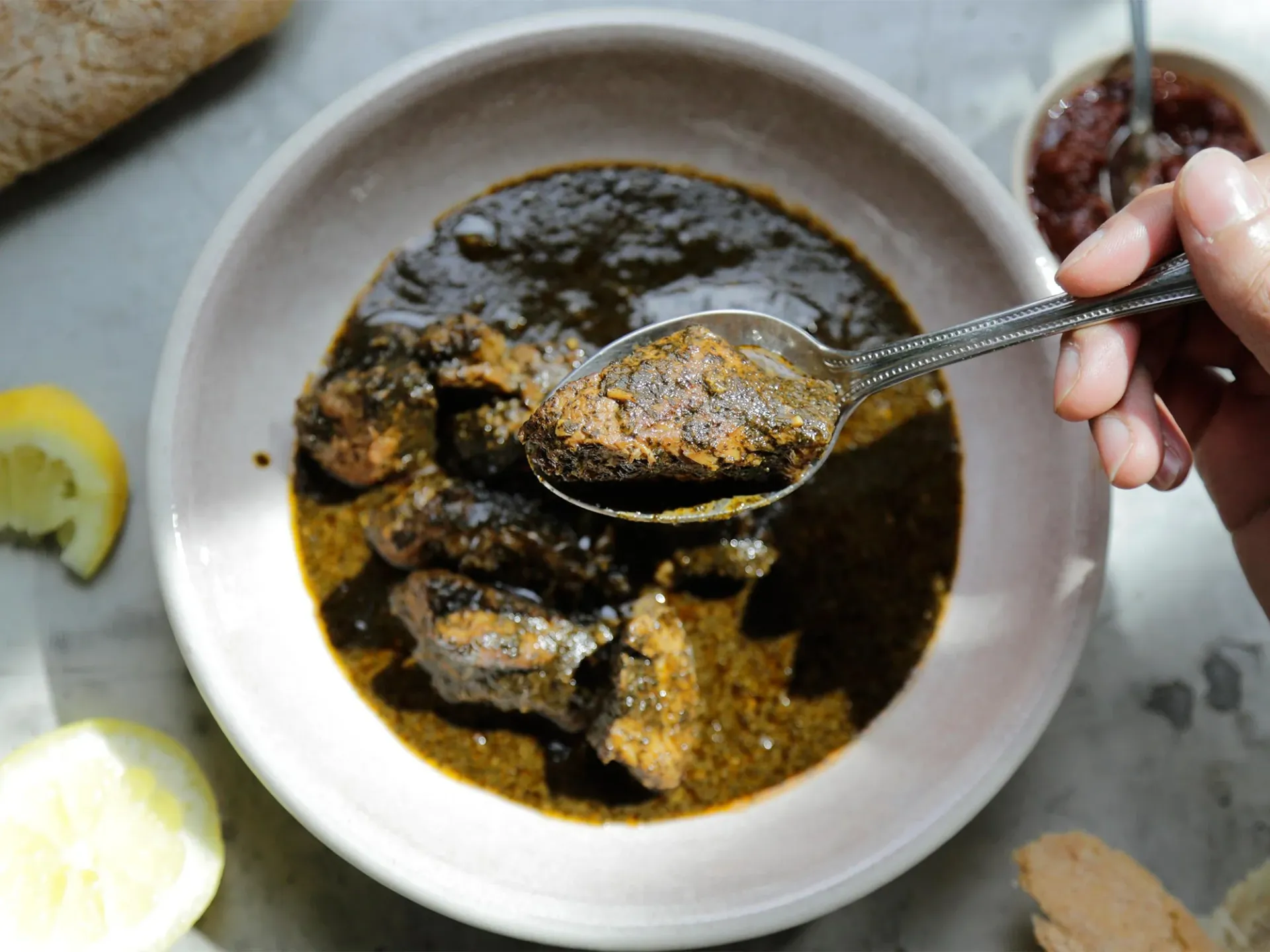
Chekhchoukha, also written chakhchoukha, is torn flatbread under a spiced meat and chickpea sauce, and the name describes the tearing. It comes from tacherchert in the Chaouia language, meaning to crumble or to tear into small pieces, and the bread is broken by hand rather than cut.
It is a Chaoui dish, from the Aurès mountains of eastern Algeria, and it spread from there into Constantine, Biskra and the rest of the country. Its origin is in shepherds' food, the substantial thing eaten on returning home on cold winter nights, and it kept that character even as it became a dish for festive occasions and celebrations rather than everyday eating.
The bread is rougag, also called trid, a very thin round flatbread made from fine semolina. It is torn, steamed briefly to soften, then heaped on a plate and covered with marqa, the sauce of diced lamb, tomato, onion and chickpeas spiced with dried red chilli, caraway, ras el hanout, black pepper and cumin. Two versions are recognised: chakhchoukha of Biskra, which is this one, and chakhchoukha dfar, which uses a different flatbread and differs in taste and thickness. Which pot it is made in also varies, with some cities using clay and others iron.
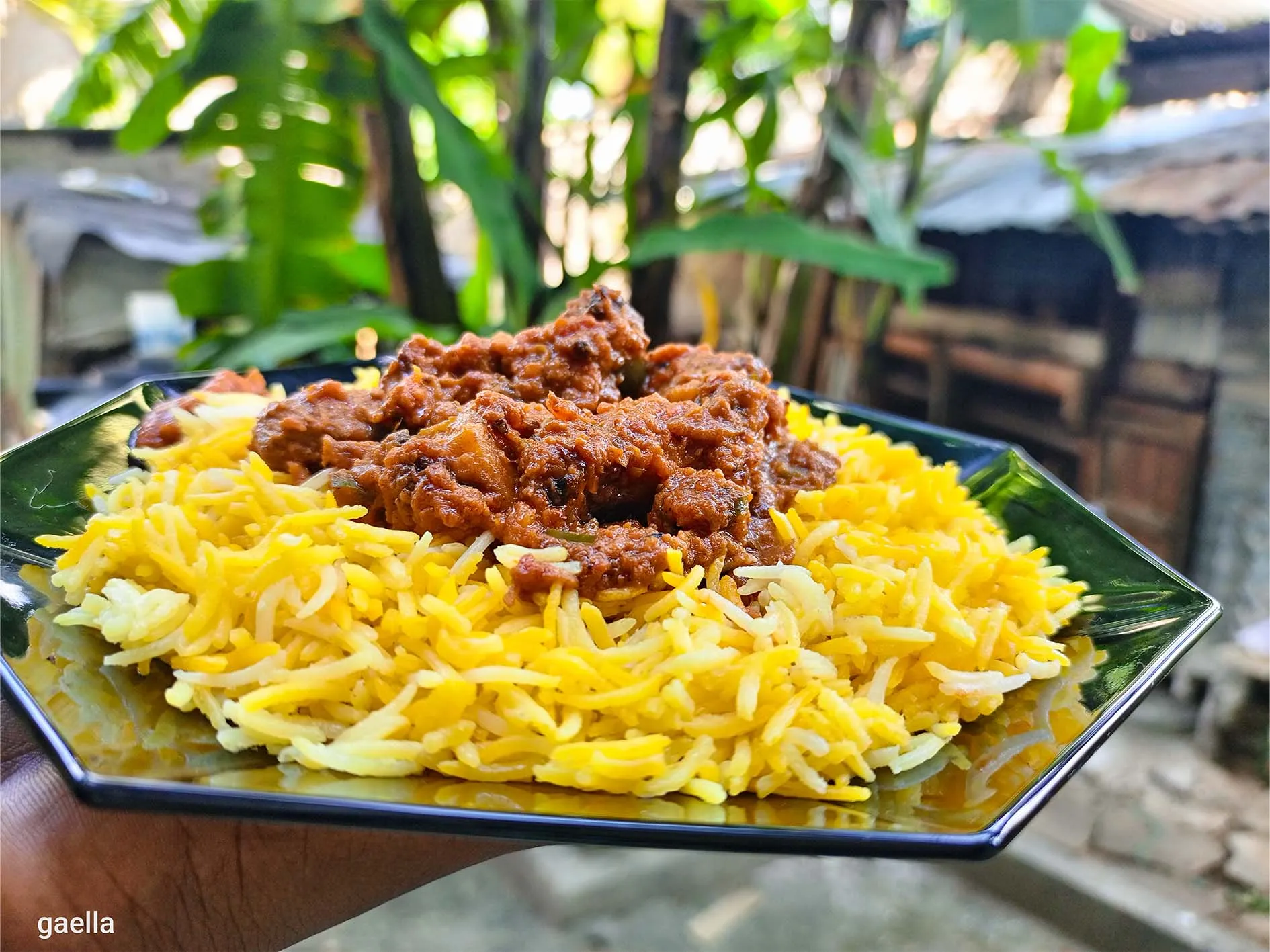
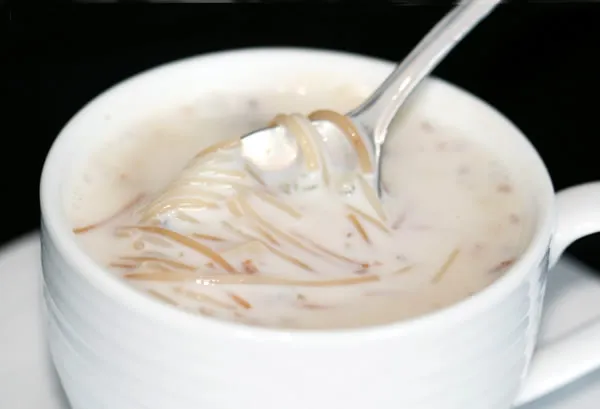
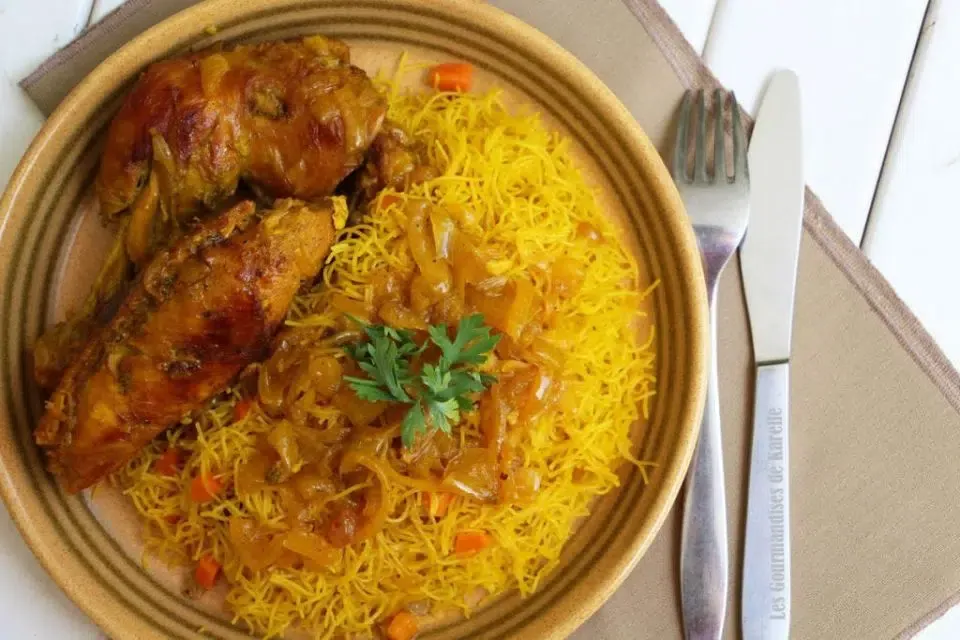
Vermicelle poulet is Senegalese celebration food that happens to be very easy to make, which is an unusual combination. Broken rice vermicelli is toasted in butter and steamed, and braised chicken in a mustard and onion sauce is served over it. That is the whole dish.
It appears at weddings, baptisms and the gatherings that mark occasions, and it is found in the most modest Senegalese households and in the country's best restaurants without much changing between them. Its status comes from the vermicelli rather than the technique, since imported wheat and rice noodles carried a cost and a cachet that plain rice did not.
The sauce is the Senegalese signature. Yellow mustard and onion cooked down together, sharpened with vinegar, is the same base that carries chicken yassa, and it is one of the most recognisable flavour combinations in the country's cooking. The mustard is not a French borrowing so much as a French ingredient absorbed completely into a Senegalese idiom. Thickened lightly with flour and spooned over toasted vermicelli, it makes a dish that looks like far more work than it is.
Zobo is the Nigerian name for a deep red infusion made from dried hibiscus calyces, and it is one of the few drinks that crosses every line in the country, sold from coolers at motor parks, poured at weddings, made at home in large jugs and kept cold for whoever passes through.
The same flower travels under different names almost everywhere it is drunk. In Senegal and much of francophone West Africa it is bissap. In Ghana it is sobolo. Across the Caribbean it is sorrel, carried there through the Atlantic trade and now inseparable from Christmas. In Egypt it is karkade. The plant is Hibiscus sabdariffa, and what is steeped is not the petal but the calyx, the fleshy cup left behind after the flower falls.
What varies from house to house is what goes in beside it. Ginger and cloves are near universal in the Nigerian version. Beyond that the argument is open, pineapple skin, garden egg leaf, cucumber, lemongrass, a stick of cinnamon. Sweetness is the real dividing line: purists take it plain and tart, while most drinkers add sugar or fruit juice until it turns almost like a cordial.
It is caffeine-free, which is part of why it is poured for everyone including children, and it holds its colour for days in the fridge.
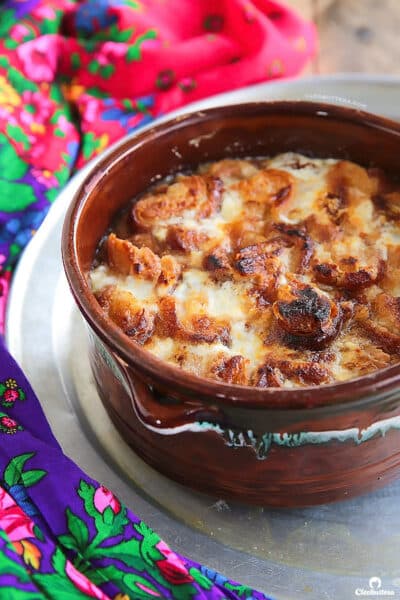
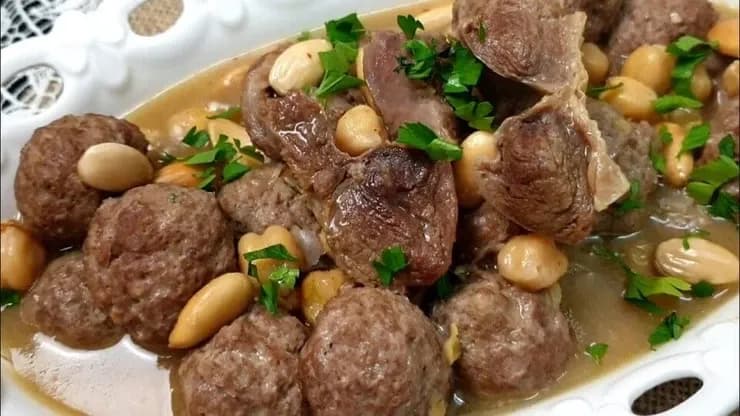
Mtewem is an Algerian dish of meatballs and meat cooked together with chickpeas in a garlic heavy sauce, and the name says exactly what it is. Mthawem derives from the Arabic for garlic, and the quantity used is the point rather than an aromatic detail.
It belongs to Algiers, where the original preparation is made with a white sauce, and it appears at the occasions that matter: Ramadan evenings, weddings and celebrations. Most families now make it with a red tomato based sauce, which has become the more common version, and cooks disagree about which is correct in the way that families always do about a dish attached to celebration.
Cumin carries it alongside the garlic. The meatballs are formed small, about the size of a walnut, and are added to the sauce only after the meat and chickpeas have already cooked, so they poach gently rather than breaking up. Some households press a blanched almond into the centre of each one, a touch that belongs to the wider North African habit of hiding something in a dish for the person who finds it. Cinnamon divides opinion and is entirely optional.