Nous utilisons des cookies essentiels au fonctionnement du site. Nous aimerions aussi déposer des cookies de mesure d’audience et des cookies publicitaires, uniquement avec votre accord. Vous pouvez choisir séparément pour chacun. Lire notre politique relative aux cookies
Loading
Recettes
Parcourez les archives par pays, par plat et par temps de cuisson.
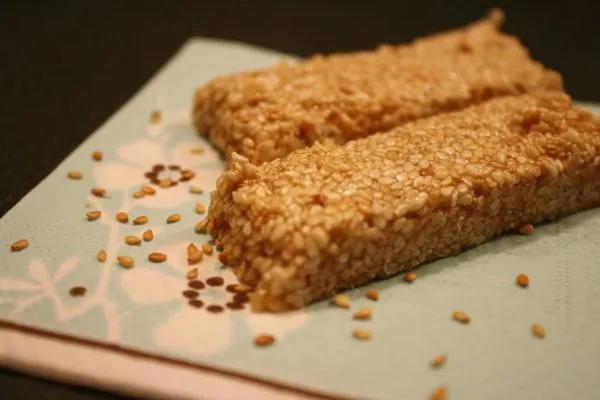
Benne is the Wolof and Bambara word for sesame, and it is the word that carries this dish's history. Sesame was cultivated across West Africa long before the Atlantic slave trade, and enslaved West Africans carried the seed and the word with them to the Americas, where both survived.
Benne cakes as they exist today are most strongly associated with the Gullah Geechee communities of the South Carolina and Georgia Lowcountry, where the seed was planted, the name was kept, and the thin crisp sesame wafer became a regional speciality that Charleston still sells. That makes them a diaspora food rather than a West African one: African in origin, African in name, and developed into their current form on the other side of the ocean.
The association with good luck travelled too, and it is the reason benne cakes appear at Kwanzaa, the African American celebration established in 1966, where they are served as a snack before the meal. The source for this recipe places them in West Africa and gives Ghana, Nigeria and Togo as the cuisine, which is where the seed and the word come from rather than where this particular cookie was developed. Both halves of that story are true and neither is complete on its own.
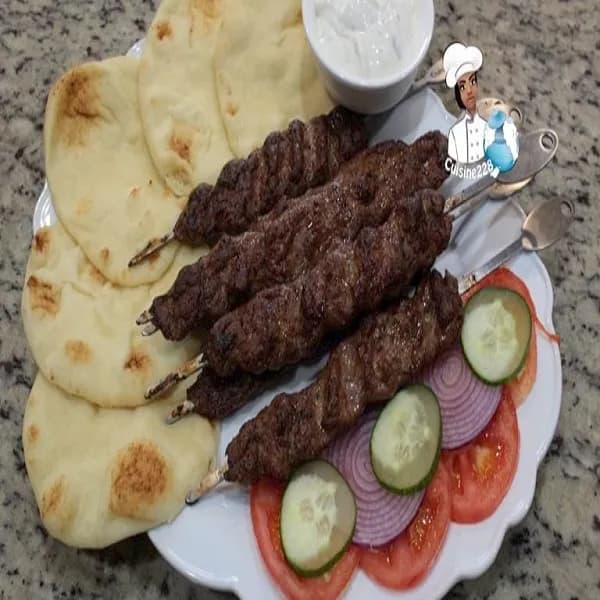
Kofta is minced meat, seasoned and shaped by hand, and it runs across an enormous stretch of the world: from the Balkans through Turkey, the Levant and Egypt, across the Arabian peninsula, into Central Asia and the Indian subcontinent, and along the North African coast. The Egyptian version is lamb or beef with onion, parsley, mint and a warm spice mix, moulded onto skewers and grilled.
Its written history is old. Recipes appear in the earliest surviving Arab cookbooks, where large ground lamb meatballs were glazed in saffron and egg yolk, a technique that later reached Europe and was known there as gilding or endoring. From the Arab world it travelled east, and nargisi kofta was served at the Mughal court in India.
In Egypt, kofta belongs to the grilled meat restaurants that exist in every town, where it is cooked alongside kebab, grilled chicken and tarb and served with rice, bread and salad. The distinction Egyptians draw between kofta and kebab is worth knowing: kebab is cubed meat on a skewer, kofta is minced meat shaped by hand. It is essentially sausage without a casing, and the comparison to a hamburger, sometimes made, misses that it is almost never served in bread.
Alkubus is a Hausa steamed wheat bread from Northern Nigeria, plain by design and made to be eaten with something else. It is soft, faintly sour from the yeast, and it holds its shape well enough to be cut into rounds or wedges.
Its role on the plate is the role bread plays across the north: the thing that carries the soup. Alkubus is eaten most often with miyan taushe, the pumpkin and groundnut soup, and it also goes with agushi soup, vegetable soup, cabbage stew or a plain tomato sauce. That pairing with miyan taushe is the one Northern Nigerians name first.
There are two ways to make it and they produce different things. Baked in a greased pan and topped with carrot and onion, it is a loaf to be cut and eaten in slices. Portioned into wrappers and steamed over boiling water, it comes out softer and denser, closer to a dumpling, and that is the method the recipe here follows. Steaming rather than baking runs through a great deal of Hausa cooking, from dambu to danwake to masa, and alkubus belongs to that family more than it does to any oven tradition.
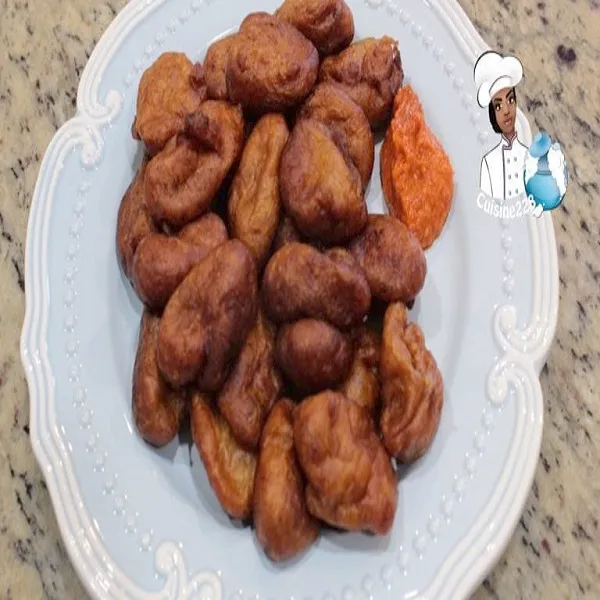
Klako, also written krakro, is a West African fritter made from mashed ripe plantain, and it is the plantain rather than the banana that matters. Ripe plantain has the sweetness and the starch to hold a fritter together; ordinary banana turns to liquid. The recipe here is savoury, seasoned with ginger, garlic, paprika and cayenne, which is the version most commonly eaten across Côte d'Ivoire, Togo and Ghana.
That savoury treatment is worth stating clearly, because the sweet version is what most people expect from anything called a banana fritter. Both exist. Sweet versions with sugar, egg and milk are made across the region and across the Caribbean, and the two have travelled together, which is no accident: the same cooking crossed the Atlantic with enslaved West Africans, and Caribbean banana fritters are a direct relation rather than a coincidence.
Plantain is abundant across the humid West African belt and very little of it is wasted. Fritters are one of several answers to fruit that has ripened past the point of frying in slices, alongside kelewele, the spiced fried plantain cubes of Ghana, and the many plantain and flour combinations across the region. They are made at home, sold at roadside stands, and eaten hot with the fingers, which is when they are at their best.