Nous utilisons des cookies essentiels au fonctionnement du site. Nous aimerions aussi déposer des cookies de mesure d’audience et des cookies publicitaires, uniquement avec votre accord. Vous pouvez choisir séparément pour chacun. Lire notre politique relative aux cookies
Loading
Recettes
Parcourez les archives par pays, par plat et par temps de cuisson.
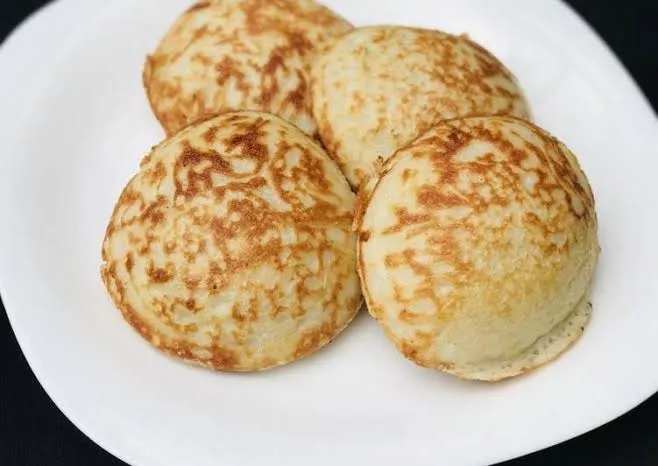
Masa, also called waina, is a fermented rice cake from the Hausa of Northern Nigeria: small, round, spongy underneath and browned on the surface, cooked in a dedicated pan with shallow round wells. It belongs to the Hausa, one of the largest ethnic groups in Africa, and it is among the dishes most closely identified with them.
The fermentation is what makes it. Rice is soaked, ground with cooked rice, and left to rise overnight, and the mild sourness that develops is what separates masa from any other rice pancake. The holes that open across the surface as it cooks are the visible evidence of that ferment, and a masa without them has not been left long enough.
It is breakfast food and snack food, sold from street stands and in markets across the north, and it appears at celebrations and family gatherings. What goes with it varies by household and by time of day: honey, groundnut oil, a peppery stew, or yaji, the same spice blend used on suya. Masa is a dish that has held its association with one people while spreading well beyond them, which is a fair description of how Hausa food generally has travelled through Nigeria.
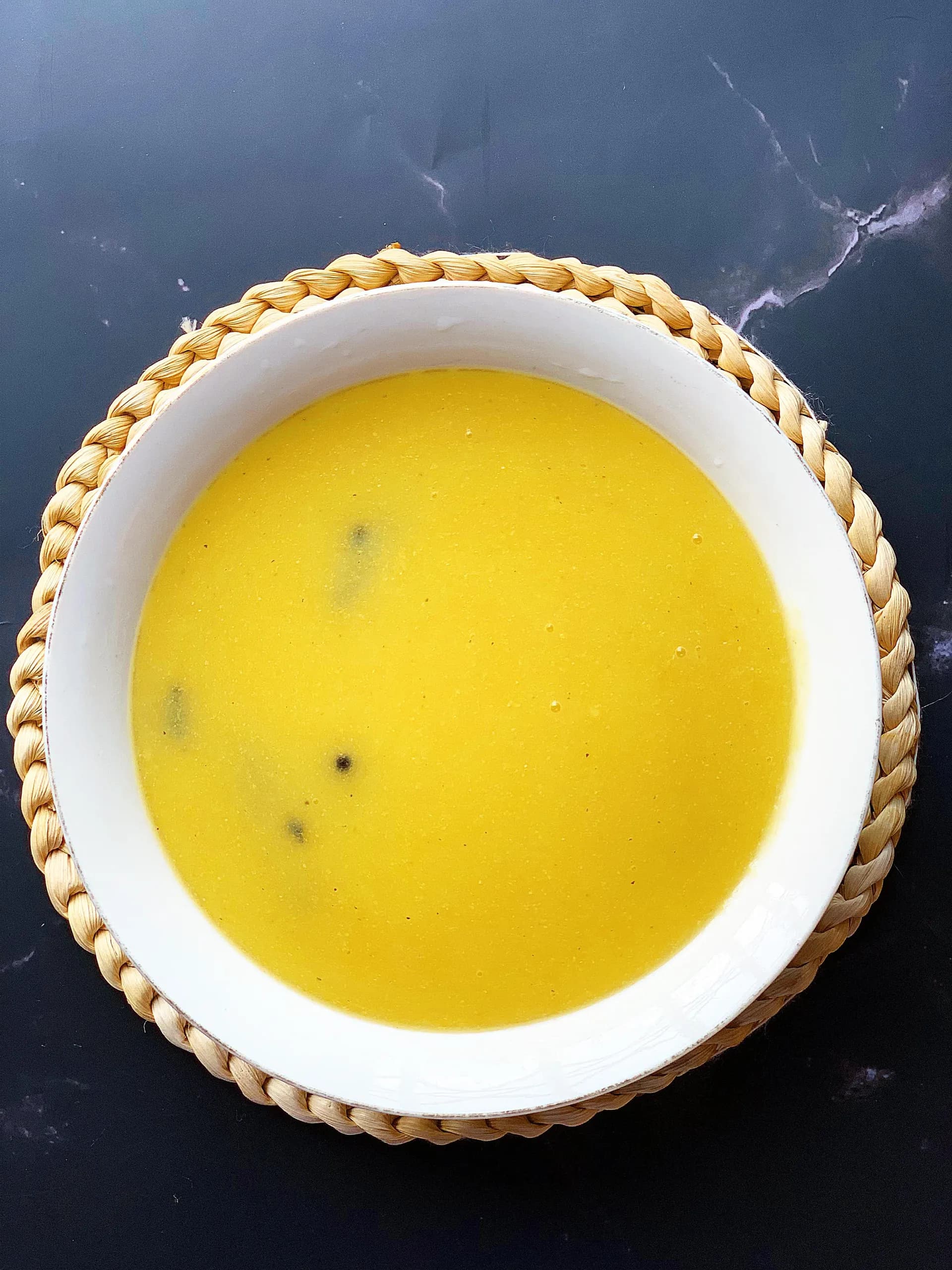
Ogi is fermented cereal porridge, sour, smooth and pale, and it is among the first things most Nigerians ever eat. It is called akamu in Igbo and pap in English, and it is made from maize, sorghum or millet steeped in water for up to three days, wet milled, sieved to remove the husks, and then fermented for several more days until it turns distinctly sour.
That sourness is the point and it is what separates ogi from any other cereal porridge. It also does real work: fermentation makes the grain more digestible and gives ogi a probiotic character, which is a large part of why it has been the standard weaning food for Nigerian infants for generations and why it is given to people who are unwell or recovering.
The same base goes in two directions. Thinned and cooked, it is the porridge eaten at breakfast with akara, moin moin, fried plantain or bread. Cooked much thicker and left to set, it becomes agidi or eko, sliced and eaten with pepper soup or stew. Across the region the names change without the thing changing much: koko in Ghana, uji in Kenya, where it is more often made from millet and sorghum. Three grains are used in Nigeria, and white corn, yellow corn and guinea corn each give a slightly different result.
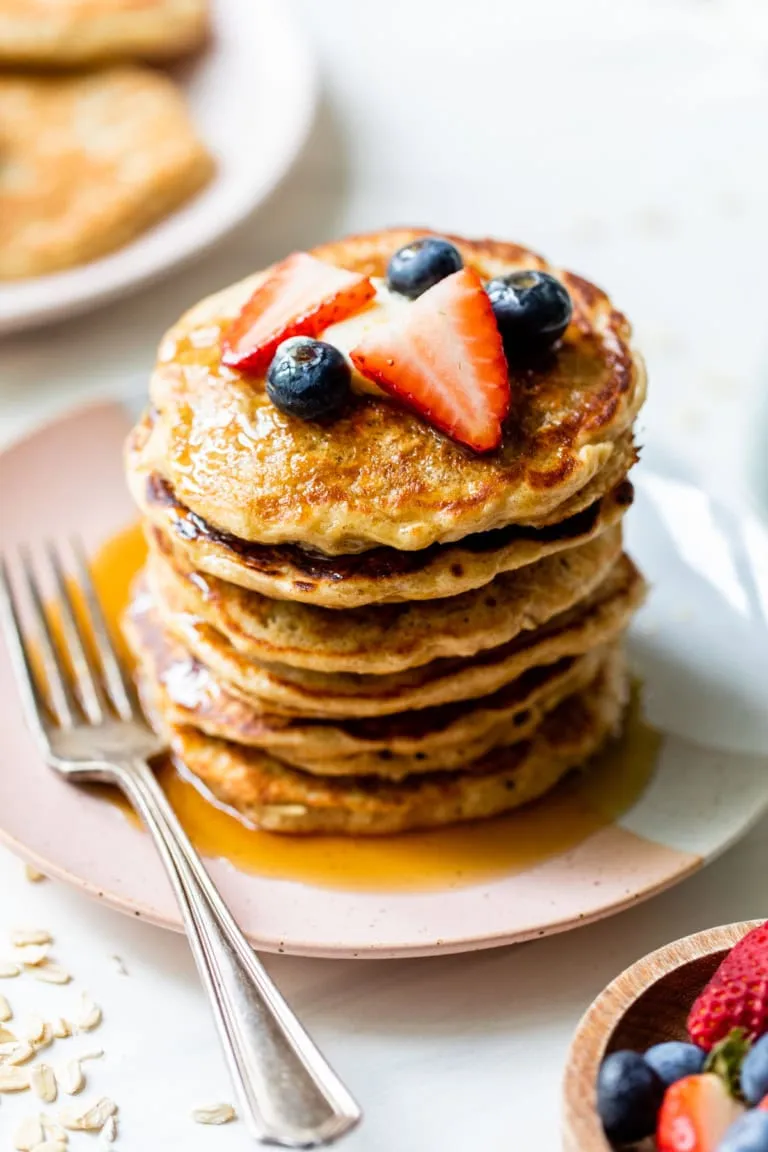
The thick, risen pancake is a North American and British form rather than an African one, and the source for this recipe says so directly: it describes itself as a basic UK recipe. It is included here as a plain reference version, not as a dish with a claim on the continent.
That distinction matters because Africa has its own pancakes and they are not this. The Nigerian pancake, known colloquially as diet, is thin, dense and deliberately savoury, carrying onion and ground pepper in the batter alongside the sugar. Hausa masa is a fermented rice cake, spongy and slightly sour, cooked in a pan of round wells. Ethiopian injera is a fermented teff flatbread that functions as a plate. Each of those is a distinct thing with its own technique and its own place at a table.
What this recipe offers is the baking powder raised, egg and milk enriched, butter cooked pancake that most of the world now recognises from breakfast menus. It is genuinely good and genuinely simple, and there is no reason not to make it. There is also no reason to describe it as African cooking, and the honest position is to present it as what it is.
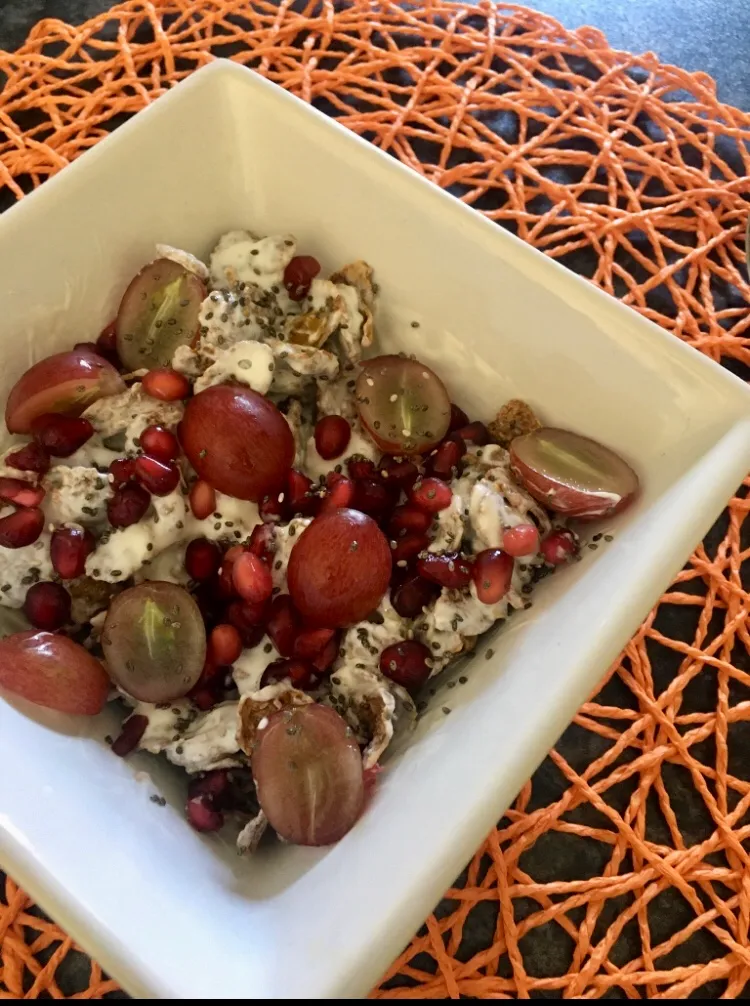
This is an assembled breakfast bowl rather than a recipe in the usual sense: shop-bought bran flakes stirred through plain yoghurt, topped with halved red grapes and pomegranate seeds, and finished with chia seeds.
It carries no country and no cuisine, and it would be dishonest to give it one. Bran flakes are a commercial breakfast cereal, chia seeds are a South American crop that became a global health food product in the last twenty years, and pomegranate arils and grapes are sold in supermarkets everywhere. Nothing in it is specific to a place.
That is not a criticism of the dish, which is a perfectly good breakfast and takes five minutes. It is simply what it is, and it sits in the Worldwide Recipes collection rather than being presented as African food. Africa has a great many breakfast cereals and porridges of its own, ogi and koko from fermented maize or millet, uji in East Africa, ful in Egypt, kunun zaki in northern Nigeria, and any of those would be a different entry entirely.
Les mentions alimentaires sont fournies par les contributeurs à titre indicatif. Elles ne sont pas vérifiées par AFN et dépendent des produits que vous achetez. En cas d’allergie grave, vérifiez vous-même chaque ingrédient. Cuisine, allergies et votre propre jugement