Nous utilisons des cookies essentiels au fonctionnement du site. Nous aimerions aussi déposer des cookies de mesure d’audience et des cookies publicitaires, uniquement avec votre accord. Vous pouvez choisir séparément pour chacun. Lire notre politique relative aux cookies

Loading
Recettes
Parcourez les archives par pays, par plat et par temps de cuisson.
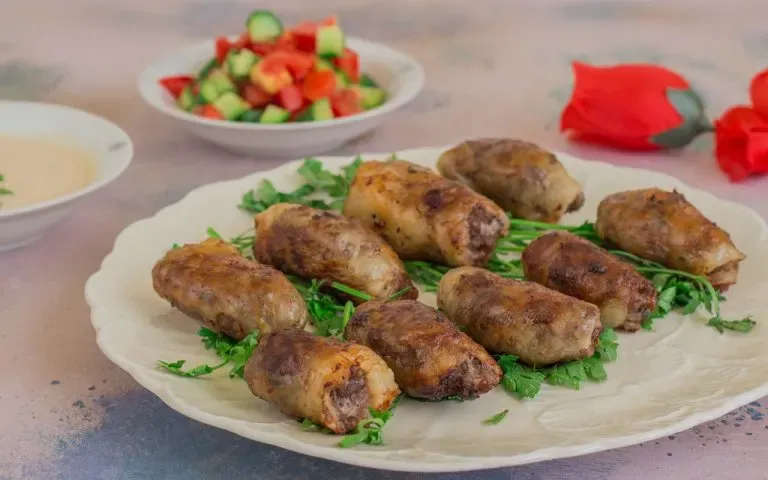
Tarb is kofta wrapped in caul fat and grilled, and the caul is what the dish is named for. Tarb is the Egyptian word for the lacy membrane of fat that surrounds a lamb's stomach, and wrapping seasoned minced lamb in it produces something that ordinary kofta cannot: the fat renders during cooking, bastes the meat from the outside in, and crisps to a golden shell.
Its occasion is Eid al-Adha, the festival of sacrifice, and the connection is direct rather than customary. Eid al-Adha involves the slaughter of an animal and the distribution of its meat, and caul fat is one of the parts that becomes available when a whole lamb is broken down at home. A dish built on caul is a dish that belongs to the moment when a whole animal is being used, which is why tarb appears then and rarely otherwise.
Kofta itself runs across Egypt and the whole Middle East, minced meat with onion, parsley and spices, formed and grilled. Tarb is the version that takes it somewhere richer, and Egyptians treat it as a heavy dish for a family celebration rather than everyday food. It is found in the grilled meat restaurants that specialise in kofta, kebab and grilled chicken across Egypt, served with rice or pasta.
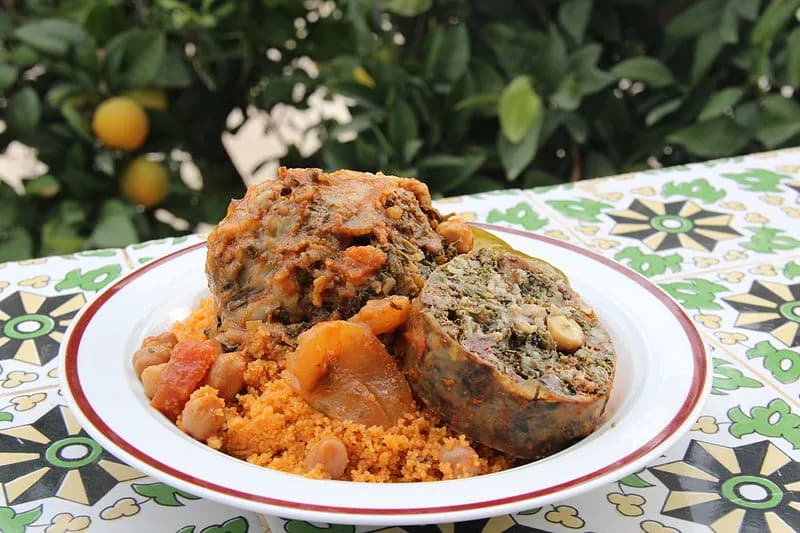
Chekhchoukha, also written chakhchoukha, is torn flatbread under a spiced meat and chickpea sauce, and the name describes the tearing. It comes from tacherchert in the Chaouia language, meaning to crumble or to tear into small pieces, and the bread is broken by hand rather than cut.
It is a Chaoui dish, from the Aurès mountains of eastern Algeria, and it spread from there into Constantine, Biskra and the rest of the country. Its origin is in shepherds' food, the substantial thing eaten on returning home on cold winter nights, and it kept that character even as it became a dish for festive occasions and celebrations rather than everyday eating.
The bread is rougag, also called trid, a very thin round flatbread made from fine semolina. It is torn, steamed briefly to soften, then heaped on a plate and covered with marqa, the sauce of diced lamb, tomato, onion and chickpeas spiced with dried red chilli, caraway, ras el hanout, black pepper and cumin. Two versions are recognised: chakhchoukha of Biskra, which is this one, and chakhchoukha dfar, which uses a different flatbread and differs in taste and thickness. Which pot it is made in also varies, with some cities using clay and others iron.
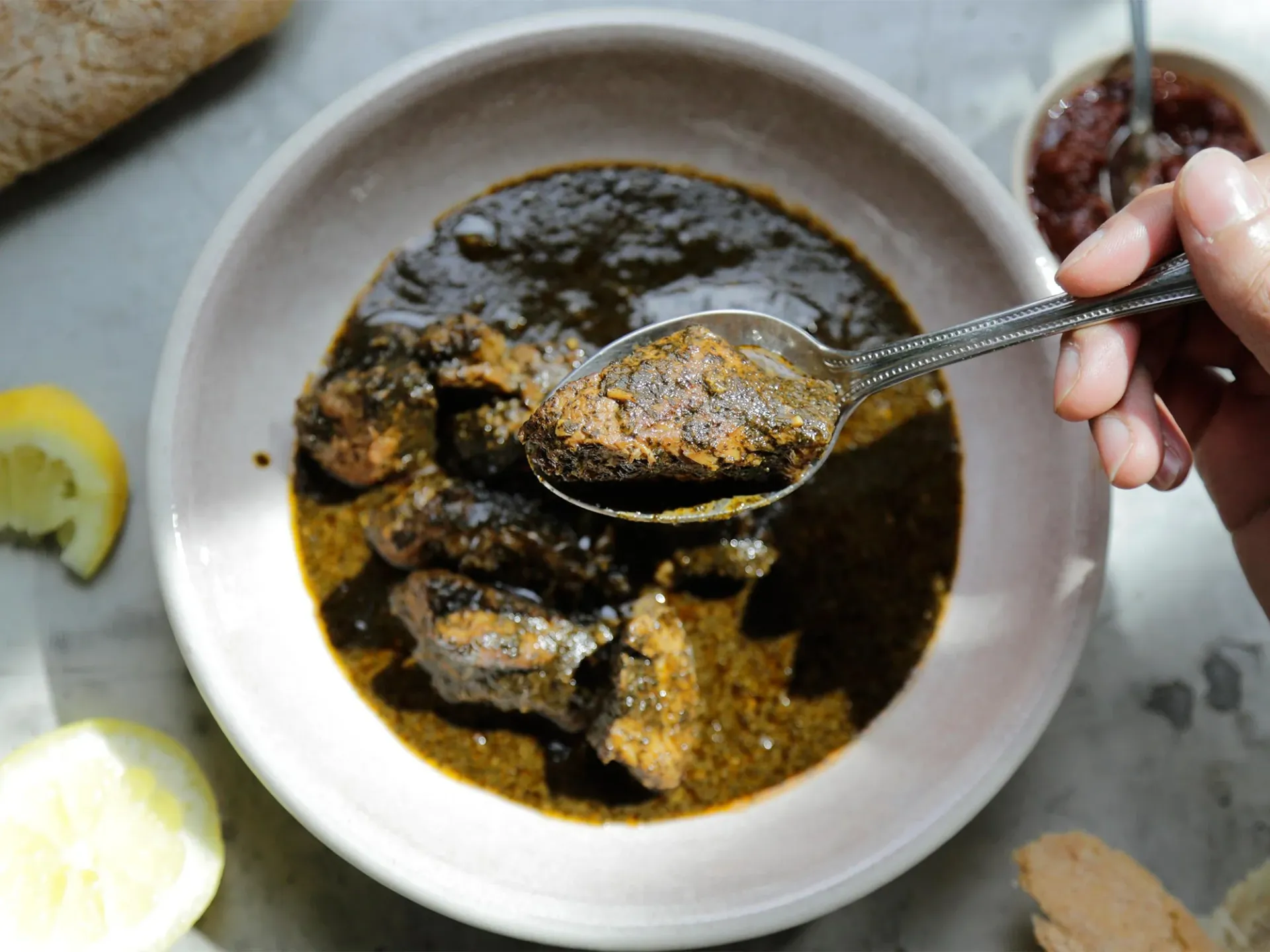
Tunisian mloukhia is not the dish of the same name eaten in Egypt, and the difference is fundamental. Egyptians cook the fresh leaves of jute mallow into a green soup. Tunisians dry the leaves, grind them to a powder, and cook that powder in oil for hours until it turns from green to deep brown and finally to something close to black. The two share a plant and almost nothing else.
The name carries a claim. Mloukhia derives from the Arabic malik, meaning king, and in Tunisia the dish is called the delicacy of the king. It is cooked slowly over the low heat of a kanoun, a charcoal brazier, for at least eight hours in the traditional method, and it is not unusual for the paste to be started the evening before and finished the next day.
Its occasions are precise and they cross religious lines. Tunisian Muslims eat it on Ras el am, the first day of the Hegira new year, so that the year begins under the sign of green, which is the colour of Islam and of hope. It appears at the end of mourning periods and on the first day of Eid al-Fitr. The Jews of Nabeul kept the same custom and now cook mloukhia for Rosh Hashanah. Tunisians say plainly that there is no middle position on it: you love it or you do not.
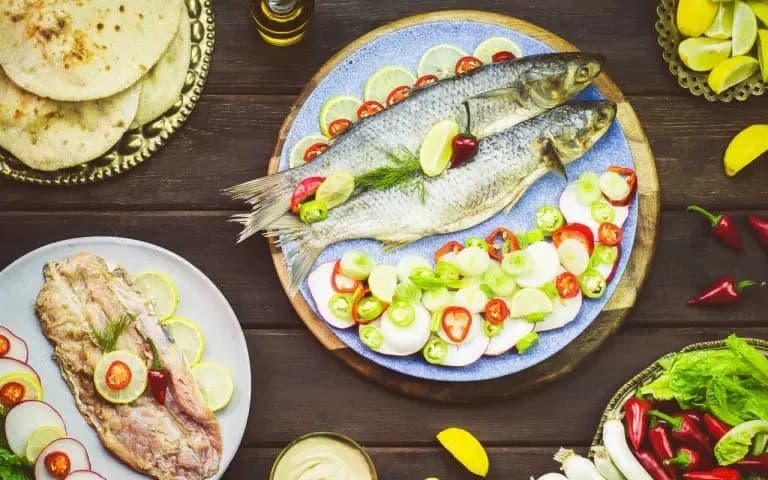
Feseekh is mullet salted heavily and left to ferment for two to three weeks until it turns silvery and develops its notoriously powerful smell. It is eaten at Sham El-Nessim, the Egyptian spring festival whose origins reach back to pharaonic times, and it is one of the oldest continuously eaten preparations anywhere.
**This preparation carries a serious and well-documented food safety risk, and it must be stated plainly.** Improperly prepared feseekh causes botulism poisoning in Egypt every year, sometimes fatally, and the Egyptian health ministry issues public warnings before Sham El-Nessim annually. The conditions the method describes, fish sealed in airtight containers, without refrigeration, for weeks, are precisely those in which *Clostridium botulinum* produces its toxin. In Egypt feseekh is traditionally bought from licensed fassakhani, specialist salters who do this professionally, and the strong advice is to buy it from a reputable source rather than attempting it at home.
The recipe is recorded here because it is a genuine and historically significant part of Egyptian foodways, and because AFN's job is to document rather than to omit. It is not recommended as a home project.
One error worth noting: feseekh is made from mullet, and the source's ingredient list specifies herring, a different fish, and the basis of a different preparation, renga, which is eaten alongside it.
Les mentions alimentaires sont fournies par les contributeurs à titre indicatif. Elles ne sont pas vérifiées par AFN et dépendent des produits que vous achetez. En cas d’allergie grave, vérifiez vous-même chaque ingrédient. Cuisine, allergies et votre propre jugement