Nous utilisons des cookies essentiels au fonctionnement du site. Nous aimerions aussi déposer des cookies de mesure d’audience et des cookies publicitaires, uniquement avec votre accord. Vous pouvez choisir séparément pour chacun. Lire notre politique relative aux cookies
Loading
Recettes
Parcourez les archives par pays, par plat et par temps de cuisson.
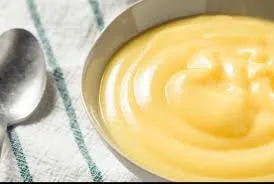
Ogi is fermented cereal porridge, sour, smooth and pale, and it is among the first things most Nigerians ever eat. It is called akamu in Igbo and pap in English, and it is made from maize, sorghum or millet steeped in water for up to three days, wet milled, sieved to remove the husks, and then fermented for several more days until it turns distinctly sour.
That sourness is the point and it is what separates ogi from any other cereal porridge. It also does real work: fermentation makes the grain more digestible and gives ogi a probiotic character, which is a large part of why it has been the standard weaning food for Nigerian infants for generations and why it is given to people who are unwell or recovering.
The same base goes in two directions. Thinned and cooked, it is the porridge eaten at breakfast with akara, moin moin, fried plantain or bread. Cooked much thicker and left to set, it becomes agidi or eko, sliced and eaten with pepper soup or stew. Across the region the names change without the thing changing much: koko in Ghana, uji in Kenya, where it is more often made from millet and sorghum. Three grains are used in Nigeria, and white corn, yellow corn and guinea corn each give a slightly different result.
Chikuanga, also called kwanga, is fermented cassava pounded to a dense paste, wrapped and cooked into a firm loaf that is sliced and eaten with stews. It is made across Angola and the Congo basin, and the source associates it particularly with northeastern Angola.
The long soak at the start is the whole process, and it is not a convenience step. Cassava is soaked for two full days at minimum, during which it ferments, and that fermentation is what makes it safe. Raw cassava contains cyanogenic glycosides which release cyanide, and soaking, fermenting and cooking are the traditional sequence developed over centuries to remove them. This is one of the clearest examples anywhere of a food processing technique that exists for a reason people worked out long before anyone could explain the chemistry. Longer soaking gives a softer, more sourly fermented result.
Traditionally the finished paste is wrapped in banana or marantaceae leaves before its final cooking, and the leaves flavour it as it steams. The source's method substitutes cling film and string, which works but loses that. Where leaves are available they are worth using.
The source calls Angola the Democratic Republic of Angola, which is not its name, the country is the Republic of Angola. Kwanga is also strongly associated with the Democratic Republic of the Congo, which may be where the confusion arose.
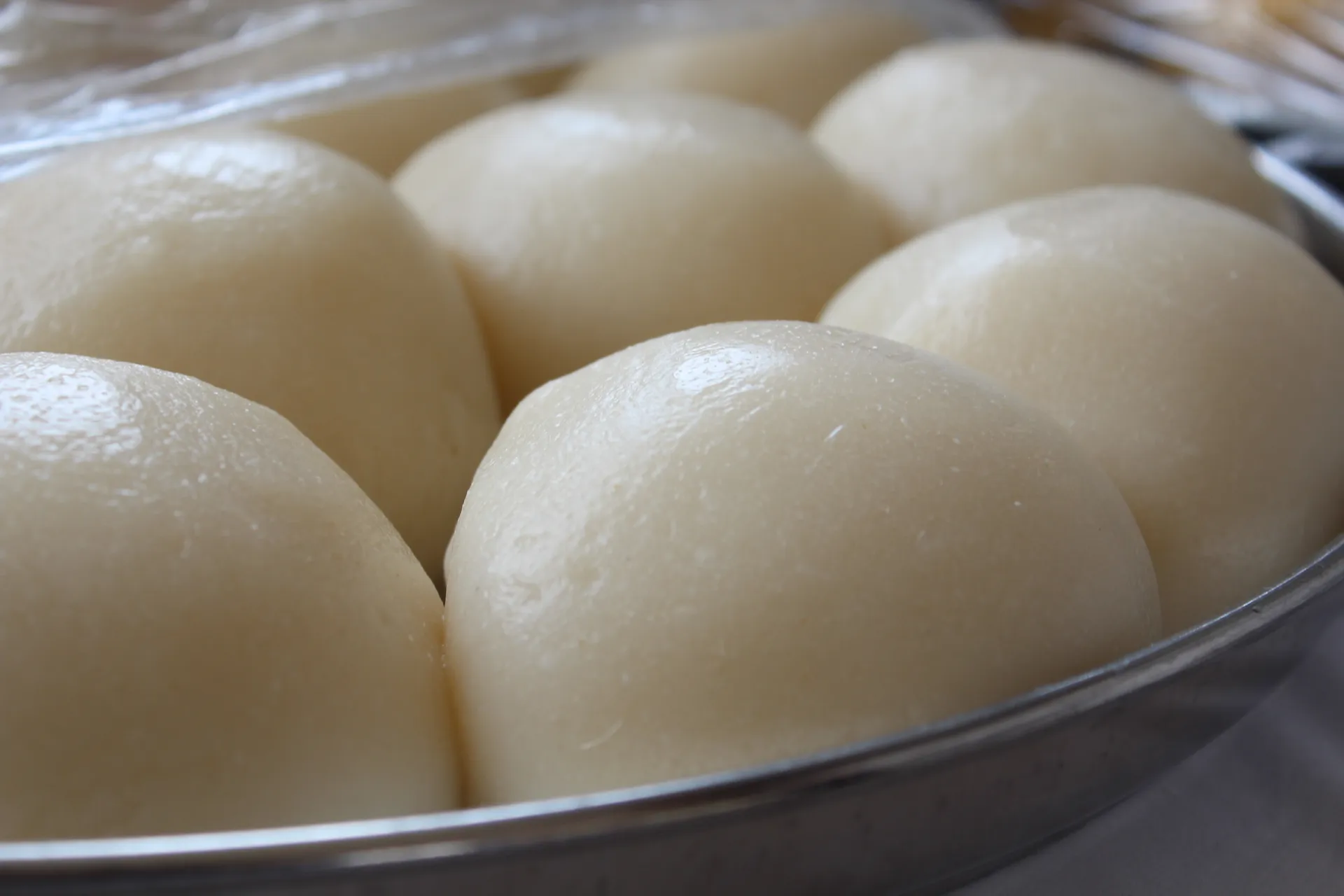
Placali is fermented cassava paste, cooked to a smooth elastic mass and eaten with soup. It is one of the principal swallows of Côte d'Ivoire, and it is also eaten in Togo, where it is known as agbelima koumè.
The fermentation is what separates it from the many other cassava preparations of the region. Cassava is grated, crushed and left for two days before any cooking, and the acidity that develops gives placali a distinct sourness that plain cassava fufu does not have. The texture is looser and stickier than pounded fufu, and it is deliberately kept that way: the amount of water left in before cooking decides how soft the finished placali will be, and Ivorian cooks adjust it to preference.
Cassava reached West Africa from South America through Portuguese Atlantic trade, and Côte d'Ivoire has built an unusually large part of its food on it. Attiéké, the fermented cassava couscous, gari and tapioca all come from the same root, and placali sits alongside them as the swallow form. It is eaten with palm nut soup, okra sauce or kpala, and the pairing with a rich palm based soup is the one most associated with it.
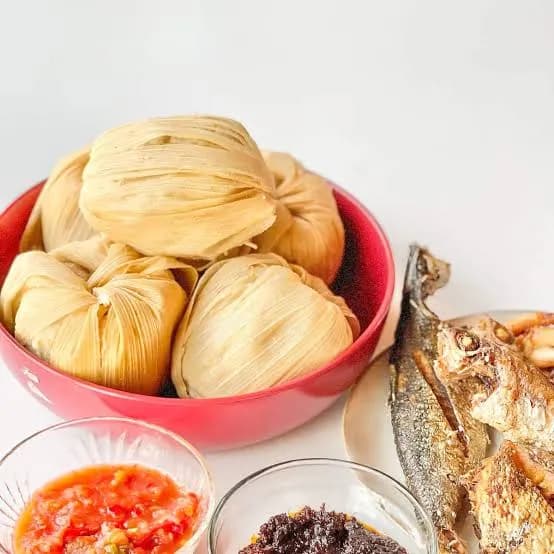
Kenkey is fermented maize dough, wrapped in banana leaf or corn husk and steamed into firm parcels. It is sour, and the sourness is the whole character of it. The fermentation runs one to three days before anything is cooked, and a kenkey that has been rushed is immediately identifiable to anyone who eats it regularly.
It comes from the Ga people of Accra and the surrounding coast, who have been making it for centuries, and it has spread across Ghana without losing that origin. Ga kenkey and Fante kenkey are recognised as distinct: the wrapping differs, and so does the ratio of fermented to fresh dough, which changes how sour the finished parcel is.
Kenkey is street food in the most functional sense. It is bought in its wrapping, which serves as the plate, and eaten with fried fish, shito and a raw pepper and tomato grind, standing up or sitting on a bench. The wrapping is not presentation; it is what the dough is steamed in and what keeps it for days without refrigeration. That combination of sour dough, hot pepper and fried fish is one of the most recognisable plates in West Africa.
Les mentions alimentaires sont fournies par les contributeurs à titre indicatif. Elles ne sont pas vérifiées par AFN et dépendent des produits que vous achetez. En cas d’allergie grave, vérifiez vous-même chaque ingrédient. Cuisine, allergies et votre propre jugement