Nous utilisons des cookies essentiels au fonctionnement du site. Nous aimerions aussi déposer des cookies de mesure d’audience et des cookies publicitaires, uniquement avec votre accord. Vous pouvez choisir séparément pour chacun. Lire notre politique relative aux cookies
Loading
Recettes
Parcourez les archives par pays, par plat et par temps de cuisson.
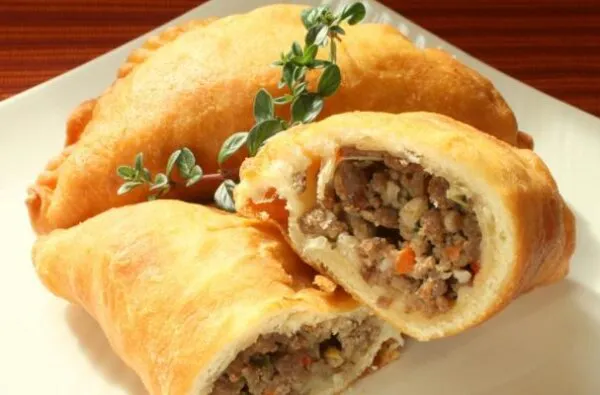
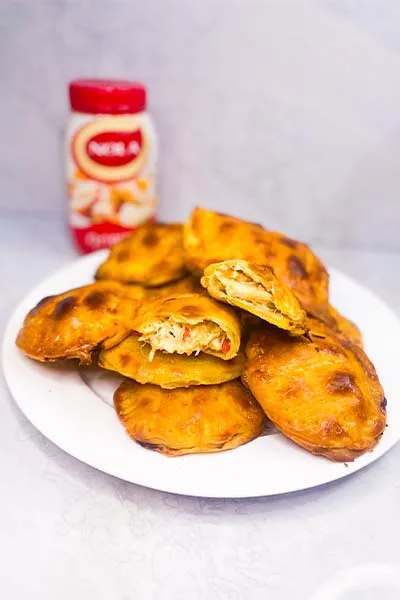
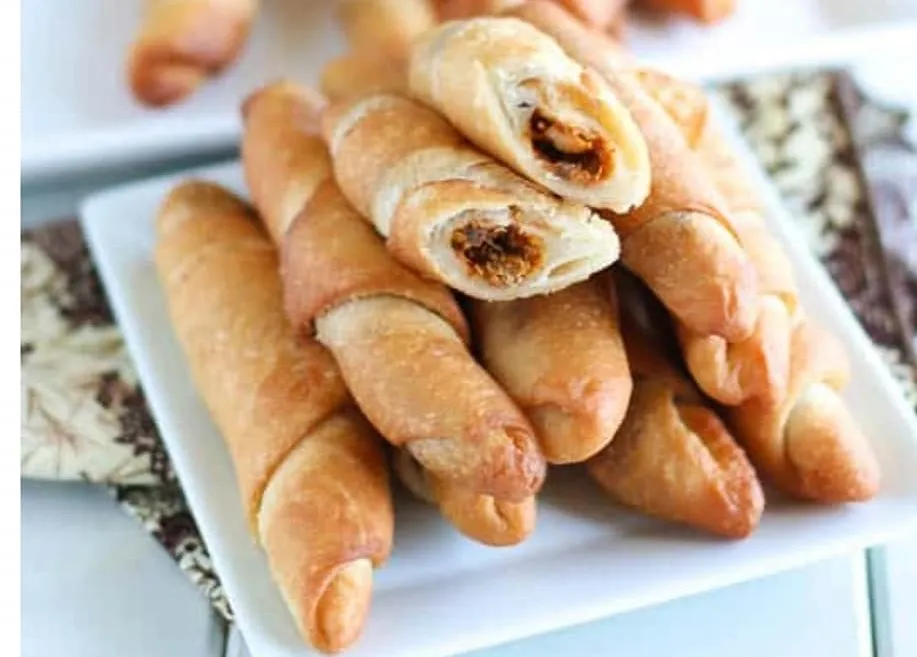
The Nigerian meat pie is a hand pie with a short, slightly flaky crust around minced beef, potato and carrot in a thick gravy. It is not the same thing as a British meat pie or a Jamaican patty, though it is related to both, and Nigerians will tell you the difference immediately: the pastry is denser and less sweet than a patty, and the filling is chunkier and more heavily seasoned than a British one.
It is everywhere. Meat pies are sold from bakeries, from glass warmers in petrol stations, from hawkers at bus stops, and at every party alongside puff puff, chin chin and spring rolls on the small chops platter. They are eaten as breakfast, as brunch, as a snack, and with a soft drink or chilled juice.
The pastry is where it is won or lost. The ratio of fat to flour is treated as a rule rather than a guideline in Nigerian kitchens: half the weight of the flour in margarine, and getting that ratio wrong is the single most common reason a home made meat pie comes out hard. The other is oven heat, which has to be watched rather than trusted, since ovens differ and an overbaked pie is dry.
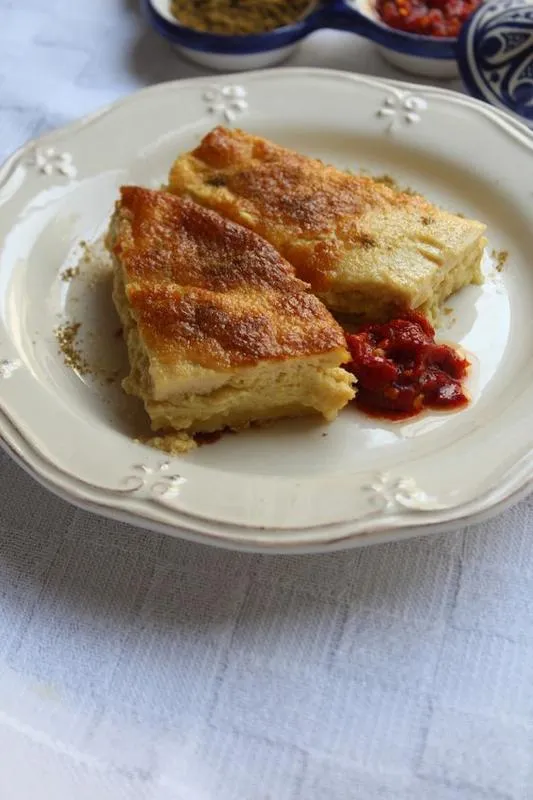
Garantita is a baked chickpea flour flan, sliced and eaten hot in a piece of baguette with cumin and harissa. It is Algerian street food in the most literal sense: sold from carts and small counters, cheap enough to be a default lunch, and eaten standing up.
Its names change across the country. Garantita in Algiers, calentica in Oran, and karantita, karen or el hami in the west. In Algiers it also goes by el kebda el beida, the white liver, and it is described without embarrassment as the poor man's sandwich, which is a statement about price rather than quality.
The origin story is a good one and should be treated as a story. It is said to come from Spanish soldiers at the fort of Santa Cruz in Oran in the 18th century, who ran out of provisions and had only chickpea flour, water and oil left, and whose cook combined them. The name is then traced to the Spanish caliente, meaning hot. The connection to Spanish chickpea cooking is real, since similar chickpea flour preparations exist across the western Mediterranean, but the specific tale of the soldiers is folklore rather than record. One rule is not negotiable: garantita is eaten hot, never cold.
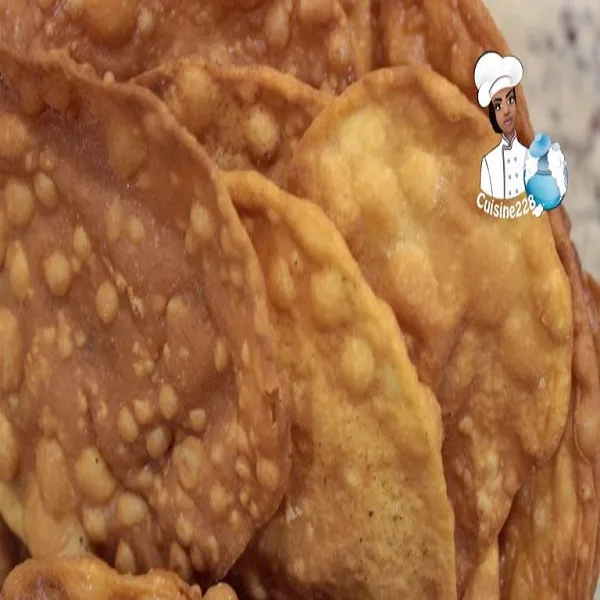
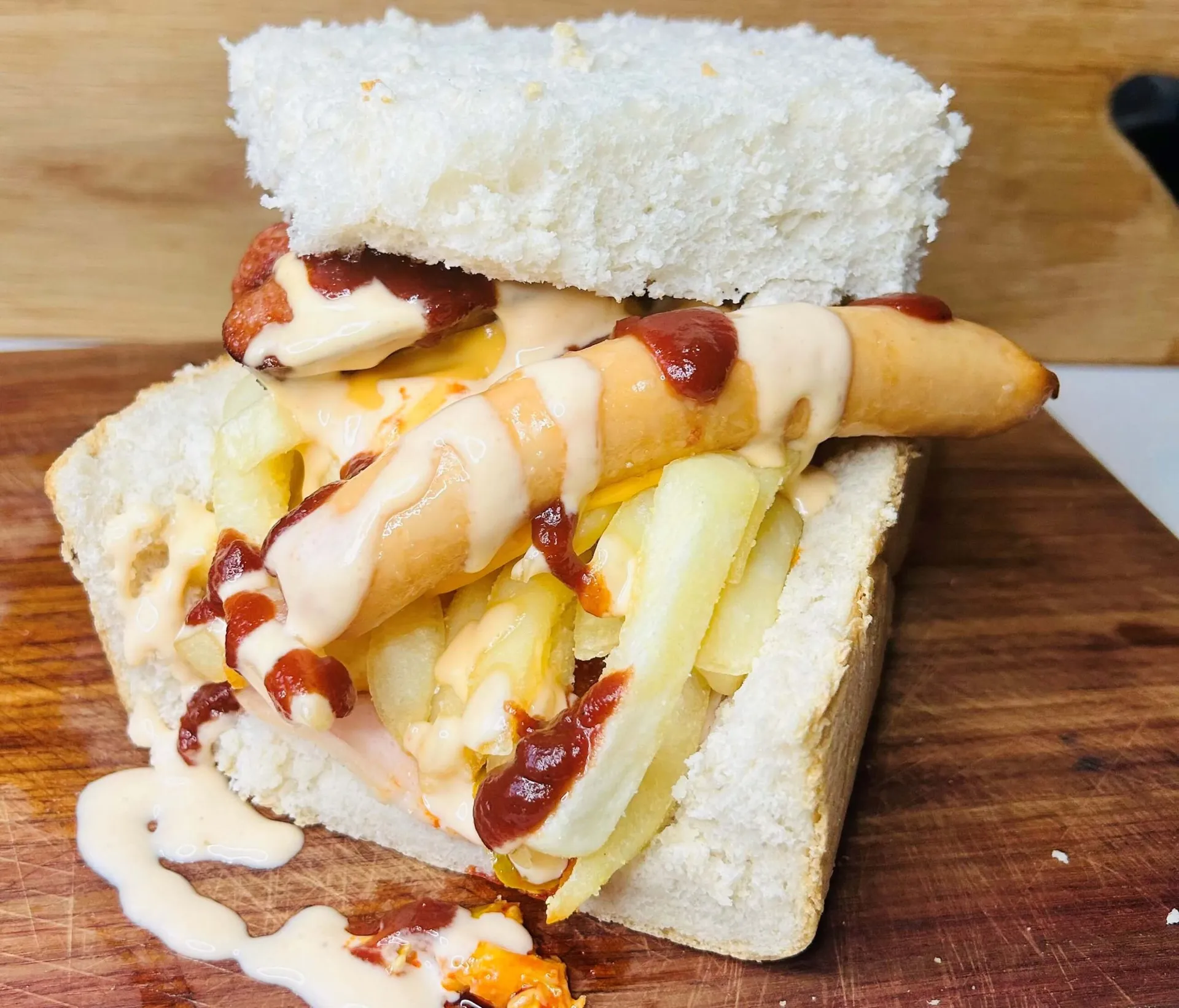
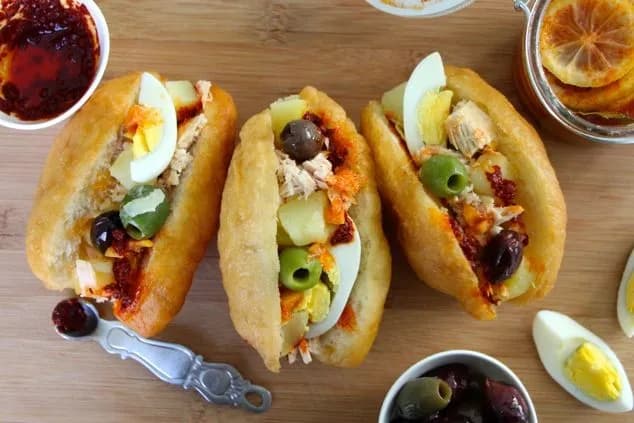
A fricassé is a small oval roll of enriched dough, deep-fried and then split and packed with tuna, potato, olives, egg and harissa. It is Tunisian street food, and it is one of the country's most recognisable things to eat.
The word does not mean what it means elsewhere. In French, a fricassée is a braise of meat in a white sauce; in Tunisia and its diaspora it means this sandwich and nothing else. That divergence is complete enough that searching the French term will not find you the Tunisian food.
The filling is the point and it is fixed by convention rather than by recipe: tuna in olive oil, cooked potato, black olives, egg and harissa, with slata méchouia, the grilled pepper and tomato salad, very often alongside. Capers and preserved lemon appear in some versions. What matters is that the bread is fried rather than baked, which gives a rich, slightly greasy roll that stands up to a wet filling.
**A significant gap in the source.** Its ingredient list contains only the dough, yeast, water, flour, egg, oil, salt. Not one of the filling ingredients it spends its article describing appears in it. The filling below has been reconstructed from that description and flagged.
**It contains eggs and fish.**
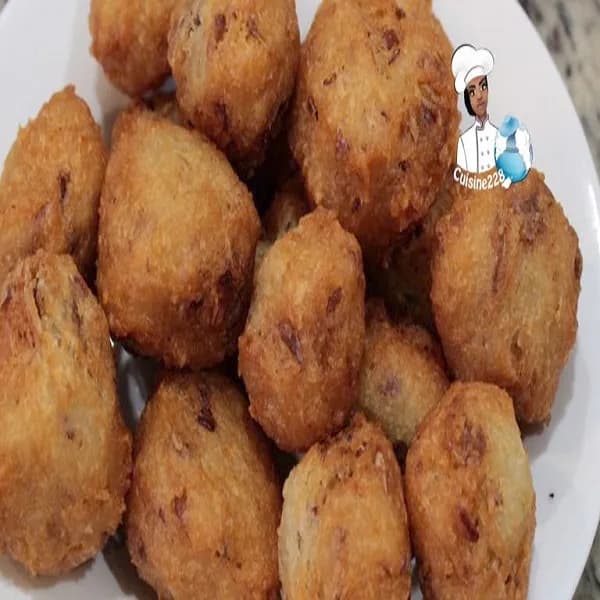
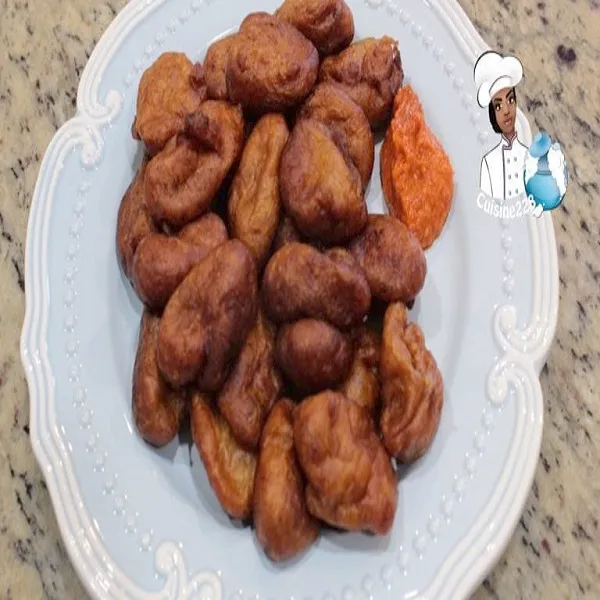
Overripe bananas mashed with grated cassava, seasoned with salt and deep-fried into small golden balls. In Cameroon it is street food sold nationwide, and it is also celebration food, a fixture at Christmas parties and weddings.
What sets it apart from the many other West African banana fritters is the starch. Most versions bind mashed banana with wheat flour, rice flour or cornmeal; this one uses grated cassava, which is why it is also called accra cassava. Cassava is worked into an enormous number of forms in Cameroonian cooking, fufu, garri, bobolo sticks, and this is one more. The result is chewier and denser than a flour-based fritter, with the cassava's faint sourness cutting the sweetness of the fruit.
Overripe bananas are not a compromise here, they are the requirement. A firm banana has neither the sweetness nor the softness the mixture needs, and the dish exists partly as a way of using fruit that has gone too far to eat out of hand.
The usual accompaniment is African pepper sauce, which is worth taking seriously: the contrast between a sweet fried fritter and a fierce chilli sauce is the whole point of eating them together.